Malta has long attracted businesses looking for a favorable EU tax environment, an English-speaking workforce, and a well-developed regulatory framework. But there’s a catch that most incorporation guides gloss over: opening a business bank account is genuinely difficult, and for non-traditional businesses — crypto, gaming, fintech — it can be close to impossible with the mainstream banks.
This is the reality on the ground. Here’s how to navigate it.
Why Business Banking in Malta Is So Hard
The short version: Malta was placed on the FATF grey list in 2021, which triggered a sweeping tightening of banking compliance across the entire financial sector. Malta was removed from the grey list in June 2022, but the banks haven’t relaxed much. If anything, their appetite for risk has permanently shrunk.
The result is that even straightforward businesses — consultancies, e-commerce companies, software firms — can face rejection from the two largest banks. For anything touching crypto, gaming, or financial services, expect rejection as the default unless you come very well prepared.
The Big Banks: Bank of Valletta and HSBC Malta
These two institutions dominate Malta’s banking landscape, but both have adopted conservative low-risk policies that make them difficult to work with for new business customers.
Bank of Valletta (BOV) is the largest bank in Malta. For business accounts, their bureaucracy is formidable. Long processing times, in-person requirements, extensive documentation, and a tendency to decline anything they don’t immediately understand. Customer reviews reflect this consistently — the experience is slow, unpredictable, and often frustrating.
HSBC Malta has traditionally been the more professional of the two, but equally conservative when it comes to onboarding new business customers. Important context: in December 2025, HSBC Continental Europe signed a definitive agreement to sell its 70.03% stake to CrediaBank (a Greek bank, formerly Attica Bank) for €200 million. Completion is expected late 2026 or early 2027, pending MFSA/ECB/Bank of Greece approval. HSBC Malta continues to operate normally for now, but opening a new business account with an institution mid-acquisition is an additional variable you probably don’t need.
For most businesses, particularly non-Maltese-owned or non-traditional ones, neither of these banks is a realistic first stop.
Alternative Banks: Agribank and Sparkasse
For businesses that can’t get through the door at BOV or HSBC, there are alternatives worth approaching.
Agribank is the name that comes up most often among businesses that have been rejected elsewhere. It’s a smaller commercial and agricultural bank, but it has consistently been more willing to work with companies that have legitimate but non-traditional business models — including those with crypto exposure. If you need a Maltese IBAN that can actually send and receive transfers to crypto exchanges, Agribank is your best option among local banks.
Sparkasse Bank Malta, a subsidiary of the German Sparkassen Group, is primarily focused on private banking and investment services, but it does offer corporate accounts. It’s been helpful for some companies that have struggled with the larger institutions. More niche than Agribank for standard business banking, but worth a call if you have a wealth management or custody component to your operations.
Other banks operating in Malta include APS Bank, Lombard Bank, and BNF Bank. These can be worth approaching, particularly APS Bank which has been growing its retail and business offering. None are guaranteed easy wins, but they’re less bureaucratically rigid than BOV.
One thing to expect across all of these alternatives: application fees. It’s standard practice for smaller Maltese banks to charge a processing fee (often a few hundred euros) just to evaluate your application. They’ll also typically charge higher ongoing fees than the big banks. Factor this into your cost-benefit calculation.
The Practical Option: Wise for Business
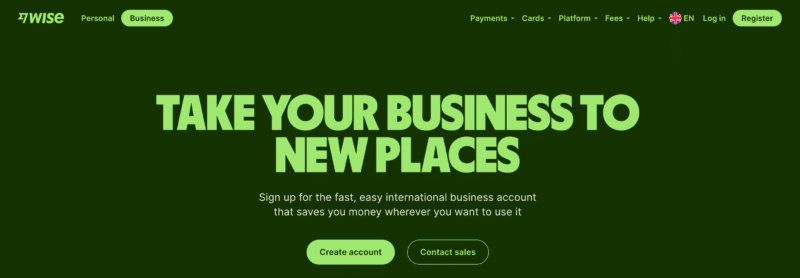
For many Malta-registered businesses — especially those with international transactions — Wise Business is the most sensible starting point.
Wise is not a bank in the traditional sense, but it offers:
- A multi-currency business account with a real EU IBAN
- Local account details in EUR, GBP, USD, and other currencies
- Debit cards for company spending
- Transparent, low fees on currency conversions — far better than any Maltese bank’s rates
- Fast, simple account opening with no branch visits
For companies doing international transactions — paying contractors abroad, receiving payments from foreign clients — Wise is genuinely excellent. Many companies operating out of Malta use it as their primary or only banking solution, particularly in the early stages before they’ve navigated the local banking maze.
The limitation: Wise doesn’t offer business loans, overdraft facilities, or the kind of local banking infrastructure that some clients or partners will expect. If you’re dealing with Maltese government entities or larger local businesses, having a local Maltese IBAN from an actual bank still carries weight.
Open a business account with Wise
Crypto and Gaming Businesses
If your business operates in crypto or online gaming, be aware that even getting through Malta’s regulatory licensing process doesn’t solve your banking problem.
Malta Gaming Authority (MGA) licensing and VFA/CASP licensing from the MFSA are real achievements — they give you EU regulatory standing and the ability to operate. But they don’t come with a bank account. BOV and HSBC will still decline you. Even more accommodating banks will subject you to enhanced due diligence, extended timelines, and higher fees.
For crypto businesses, Agribank is the most commonly cited Maltese banking option that will actually engage. Beyond that, many businesses in this space rely on specialized payment processors and EMI (Electronic Money Institution) providers that operate across the EU rather than trying to force a relationship with a traditional Maltese bank.
The practical playbook for most crypto or gaming companies operating out of Malta:
- Wise or Revolut Business for day-to-day operations and international payments
- Agribank for a local Maltese IBAN and crypto-adjacent transfers
- A specialist payment processor for merchant banking if you’re handling customer funds
The Honest Summary
Business banking in Malta remains harder than it should be. The FATF grey list period did lasting damage to the banks’ risk appetite, and while the country’s regulatory standing has improved, the banks haven’t noticeably loosened up.
If you’re a clean, simple business — consulting, software, professional services — you have a reasonable shot at BOV or APS Bank with a complete application and patience. If you’re in crypto, gaming, or anything else that raises a compliance eyebrow, start with Wise for your operational banking needs, work on Agribank as your local option, and go in with realistic expectations about timelines and fees.
It’s not a great situation, but it’s a manageable one if you plan for it upfront rather than discovering it after you’ve already incorporated.



Leave a Reply