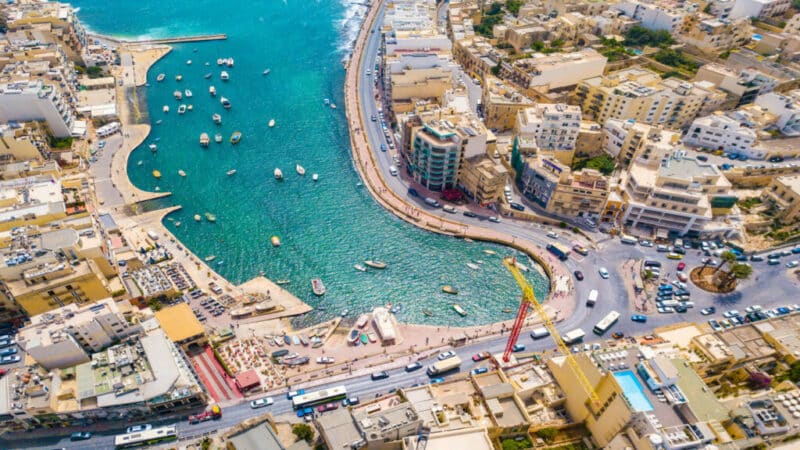
Malta, a small Mediterranean island nation, has become an attractive destination for expats, entrepreneurs, and digital nomads due to its pleasant climate, rich history, and business-friendly environment.
It also happens to be the country where I was born and raised, although I left in my mid-twenties due to several issues that have remained largely unresolved. While I left and am happily living elsewhere, I still consider the island country to be an interesting proposition for expats who want to make a tax optimization move and also experience a different lifestyle than what they are used to.
Malta has become well-known internationally for being a low-tax jurisdiction, although the Maltese themselves pay up to 35% in tax. The reason for the low-tax reputation is that there are a number of attractive programs for individuals and their families considering a move to Malta.
Last updated: March 2026. Malta’s tax and residency landscape is evolving due to EU regulations and global minimum tax initiatives. Consult a qualified tax advisor before making any decisions based on this article.
Let’s do a quick rundown of the programs available.
The Global Residence Programme
The Global Residence Programme (GRP) is designed for non-EU nationals who want to establish their tax residence in Malta. This scheme provides a flat tax rate of 15% on foreign-sourced income remitted to Malta, with a minimum annual tax liability of EUR 15,000. The program is open to individuals who own or rent property in Malta and are not employed in Malta. The program also allows for the tax-free importation of personal belongings and vehicles. In addition, the Malta Global Residence Programme can also be combined with the 6/7 tax refund scheme.
The Malta Retirement Program
The Malta Retirement Program (MRP) is designed specifically for retirees who are looking to spend their retirement years in Malta. It offers attractive tax benefits to individuals who are over 55 years of age, have a stable income from outside Malta, and who are able to meet a minimum annual income requirement. Successful applicants are granted a special tax status that limits their liability to tax only on income received in Malta and income remitted to Malta, with a minimum tax payable of EUR 7,500 per year.
The Residence Program
The Residence Program offers non-EU/EEA/Swiss citizens the opportunity to obtain a Maltese residence permit. Successful applicants are granted the right to live and work in Malta, as well as travel freely within the Schengen Area. The program requires applicants to make a financial contribution to the Maltese government, invest in property or rent a property, and meet other eligibility requirements.
The scheme provides a flat tax rate of 15% on foreign-sourced income remitted to Malta, with a minimum annual tax liability of EUR 15,000. The program is open to individuals who own or rent property in Malta and are not employed in Malta. The program also allows for the tax-free importation of personal belongings and vehicles.
The Highly Qualified Persons Program
The Highly Qualified Persons Program (HQPP) is designed for individuals who hold senior positions in eligible companies in Malta’s financial services, aviation, and gaming sectors. The scheme provides a flat tax rate of 15% on qualifying income, including employment income, fringe benefits, and director’s fees. The program is open to individuals who earn a minimum gross income of EUR 75,000 per annum and have a relevant employment contract.
Citizenship by Investment — Program Closed
Important update: Malta’s citizenship-by-investment programs have been discontinued. The original Malta Individual Investor Programme (MIIP) and its successor, the Maltese Exceptional Investor Naturalisation (MEIN) scheme, were both terminated following a European Court of Justice ruling in April 2025 that found Malta’s investment-based citizenship program violated EU law.
As of April 2025, all donation or investment-based citizenship schemes in Malta are closed. They have been replaced by a Citizenship by Merit framework, which grants citizenship based on exceptional contributions to Malta or humanity in areas such as science, innovation, culture, entrepreneurship, or philanthropy — rather than financial investment. This is a fundamentally different program that is not accessible through financial contribution alone.
Malta Startup Visa Program
The Malta Startup Visa Programme is aimed at non-EU/EEA/Swiss entrepreneurs who want to establish their startup in Malta. This program provides fast-track visa processing and access to a supportive ecosystem of mentors, investors, and other resources. The 6/7 tax refund scheme can also be applied to eligible startup companies that meet certain conditions, such as having at least one director or employee residing and paying taxes in Malta.
Digital Nomad Visa
Malta’s Nomad Residence Permit allows remote workers to stay in Malta for up to one year (renewable up to three additional times, for a total of four years) while working for a company or clients based outside of Malta. To be eligible, applicants must earn at least EUR 42,000 annually (EUR 3,500 per month), provide proof of income from the last three months, have health insurance covering Malta, and hold a clean criminal record. The permit also allows for dependents to accompany the applicant. Applicants must spend at least five cumulative months per year in Malta to maintain the permit.
The program is aimed at attracting remote workers to Malta and encouraging them to spend money on the island while working remotely. It is available only to third-country nationals (non-EU, non-EEA, and non-Swiss citizens).
The FATF Greylisting — Resolved
In 2021, Malta was placed on the Financial Action Task Force (FATF) grey list due to deficiencies in its anti-money laundering framework. This was a significant reputational blow, raising concerns about the country’s financial credibility. However, Malta implemented substantial reforms and was officially removed from the FATF grey list in June 2022, just one year after being listed.
As of 2026, Malta is not listed as a non-cooperative jurisdiction by any major international body. That said, Malta’s tax policies continue to attract scrutiny from EU institutions and international observers concerned about profit shifting and aggressive tax avoidance.
The Impact of Global Minimum Tax (Pillar Two) on Malta
One of the most significant developments for Malta’s tax model is the OECD’s Pillar Two global minimum tax initiative, which establishes a 15% minimum effective tax rate for multinational groups with revenues above EUR 750 million.
Malta’s famous 6/7 tax refund system — which effectively reduces the corporate tax rate from 35% to approximately 5% for non-domiciled shareholders — could be impacted for large multinational groups. If the effective tax rate in Malta falls below 15% after accounting for the refund, top-up taxes may apply under Pillar Two.
In response, Malta has introduced the Final Income Tax Without Imputation (FITWI) regime in 2025, which offers a streamlined 15% corporate tax rate — precisely matching the Pillar Two minimum. Companies must choose between the traditional refund system and the new FITWI regime, and the election is binding for a minimum of five years. Malta has also deferred full implementation of its own Pillar Two domestic top-up tax (QDMTT) until the end of 2029.
For smaller companies that fall below the Pillar Two revenue threshold (EUR 750 million), the traditional 6/7 refund system continues to operate as before, making Malta still very attractive for small and medium-sized businesses.
Negative Perceptions of the Programs
There have been reports of some abuses of these programs, particularly the Malta Residence and Visa Program. Critics have argued that the program has been used by wealthy individuals as a means to buy residency, with some dubbing it a “golden visa” scheme.
Additionally, there have been concerns about the impact of such programs on the local property market. Critics have argued that the influx of foreign buyers has driven up property prices, making it harder for locals to find affordable housing.
Moreover, some people have expressed concern that these programs may be used as a means for tax evasion. While the programs themselves are legitimate and legal, there have been reports of individuals using them to hide assets or evade taxes in their home countries.
Negative perceptions about these programs are also fueled by the fact that they are often associated with the wealthy elite. Some people view these programs as a way for the rich to avoid paying their fair share of taxes and to live a privileged lifestyle while ordinary people struggle to make ends meet.
These criticisms are not necessarily reflective of the programs themselves, but rather the potential for abuse and misuse by some individuals. As with any program or policy, there will always be those who seek to take advantage of it for their own gain.
Moving to Malta – What to Consider
If you’re considering setting up in Malta, this guide will provide you with the essential information to get started.
Residency and Visa Requirements
To set up in Malta, first determine the type of visa or residency permit you require. EU, EEA, and Swiss nationals can live and work in Malta without a visa. However, if you are a non-EU/EEA/Swiss citizen, you may need to apply for a visa or a residence permit, depending on your plans and the duration of your stay. You can find more information on the Maltese Identity Malta Agency website.
Registering a Business
Malta offers a business-friendly environment with various types of legal entities to choose from, such as a limited liability company (LLC), partnership, or sole proprietorship. You will need to register your business with the Malta Business Registry and obtain a tax identification number. Additionally, you may need to apply for specific licenses or permits, depending on your industry.
In my view, Malta remains one of the top places in Europe to register your business. This applies especially to internet-based businesses in particular. You can read my article about setting up companies in Malta for more information.
Banking
Malta has a number of solid banks, although they have become notoriously strict and demanding when opening new accounts. Depending on your situation, you might find that opening a bank account at a Maltese bank is an unnecessarily painful process. If that’s the case, I would recommend using an online bank like Revolut or Wise instead. You can also read the article I wrote on opening bank accounts in Malta.
In fact, I would recommend opening accounts with those two online banks even if you do manage to open a Maltese bank account. See my guide to the best online bank accounts in Europe for a full comparison of the options. It is much easier to transfer money between friends and operate multiple currencies using Revolut and Wise than any Maltese bank.
Taxation
Malta has a progressive income tax system, and tax rates range from 0% to 35%. The country also has an extensive network of double taxation treaties with numerous countries to avoid double taxation. VAT in Malta is set at 18% for most goods and services. It’s essential to understand the tax implications for your business and personal income, so consulting with a local accountant is recommended.
Of course, Malta is also known as a place where expats move to in order to obtain advantageous tax treatment. If you’re interested in exploring that option, I suggest you have a consultation with a Maltese lawyer to see what would work in your situation.
Cost of Living
Malta’s cost of living has risen notably in recent years and is no longer as affordable as it once was compared to other European countries. The cost of food, transportation, and utilities remains relatively moderate, but housing costs have increased significantly — particularly in popular expat areas.
As a rough guide for 2026, a single person should budget approximately EUR 1,550-1,650 per month (including rent), while couples can expect to spend EUR 2,200-2,400 per month. These figures vary considerably depending on location and lifestyle.
Finding a Place to Live
Malta offers various types of accommodations, from apartments to traditional townhouses and villas. Popular areas for expats include Sliema, St. Julian’s, and Valletta. You can search for rental properties on local websites or work with a real estate agent to find a suitable place to live.
Expats can expect to pay around EUR 950-1,600 per month for a one-bedroom apartment in central areas like Sliema, St. Julian’s, and Valletta, with prices varying based on the specific property, amenities, and location within these areas. More affordable options can be found in areas like Birkirkara, Msida, Mosta, and Qormi.
Healthcare
Malta has a high-quality public healthcare system that is free for residents, including EU citizens. Private healthcare is also available, and many expats opt for private health insurance to access a broader range of services and shorter waiting times.
Climate
Malta enjoys a Mediterranean climate, with hot and dry summers and mild winters. The island receives an average of 300 days of sunshine per year, making it an ideal destination for those seeking warm weather year-round. However, summers can be very hot and humid, with temperatures reaching over 30 degrees Celsius. Winters are mild but can be rainy and windy. Overall, Malta’s climate is one of its biggest draws for expats and tourists alike.
Culture and Lifestyle
Malta has a rich cultural heritage, with influences from its Phoenician, Roman, Arab, and British history. The country is known for its stunning architecture, delicious cuisine, and vibrant festivals, such as the Carnival in February and the Isle of MTV music festival in June. Expats can enjoy a variety of activities in Malta, including swimming, hiking, and exploring the island’s historical sites. The island also has a thriving nightlife scene, particularly in areas like St. Julian’s and Paceville.
Networking and Integration
Joining local expat groups and attending networking events can help you connect with like-minded individuals and ease your transition to life in Malta. There are various social and professional networking groups and platforms available to help you establish connections within your industry and the local community.
Safety
Malta is considered a safe country, with low levels of crime and violence. The country has a well-trained police force and a low incidence of terrorism. However, expats should still take precautions to protect their personal safety, such as avoiding isolated areas at night and keeping valuables secure.
Work and Business Environment
Malta has a growing economy, with a focus on financial services, gaming, and tourism. The country has a business-friendly environment, with low corporate tax rates and various incentives for businesses.
Language
Malta has two official languages, Maltese and English. English is widely spoken throughout the country, with most official documents and signs being in English. This makes it an attractive destination for English-speaking expats and businesses. Additionally, many Maltese people speak other languages, such as Italian and French, due to the country’s close proximity to these countries and its history of colonization.
Education
Malta’s education system is modeled after the British system, with schools offering primary, secondary, and tertiary education. There are a variety of schools available, including public, private, and international schools. English is the main language of instruction in most schools, with Maltese also taught as a second language. The University of Malta is the country’s main university, offering undergraduate and postgraduate programs in a range of fields.
In my opinion, the level of education in Malta is good, but not on par with the best international options. The biggest benefit of educating your children in Malta is that you get free schooling in English, which is quite unique internationally if you go outside the big English-speaking nations.
On the other hand, if you’re really after giving the best education to your kids, you will find much better private schooling options abroad. I can personally compare it with the options available in Spain, and to me, there is no doubt that the private schools in Spain, particularly those adopting the American model, are far superior to any option in Malta.
Conclusion
For a current, honest picture of what day-to-day life in Malta looks like, read my recent piece on what it’s like living in Malta in 2026 before committing to the move.
Setting up in Malta can be an exciting and rewarding experience. By understanding the legal requirements, finding suitable accommodation, and building a network, you’ll be well on your way to enjoying all that this Mediterranean gem has to offer.
It can also be a very frustrating experience if you don’t do your research properly and go in with the wrong expectations. Most expats are not prepared for what life on a crowded tiny island, especially if they come from big countries. Making this move can certainly provide some psychological challenges in the adaptation period, so if I had one piece of advice, it would be to find the right people to help you out, and try to make friends as early as possible. A few visits before you make a definite move are also essential, in my opinion.
If you need more specific information, feel free to ask, and I would be happy to help. I can also connect you to my trusted lawyers and other professionals in Malta.
Related





Leave a Reply