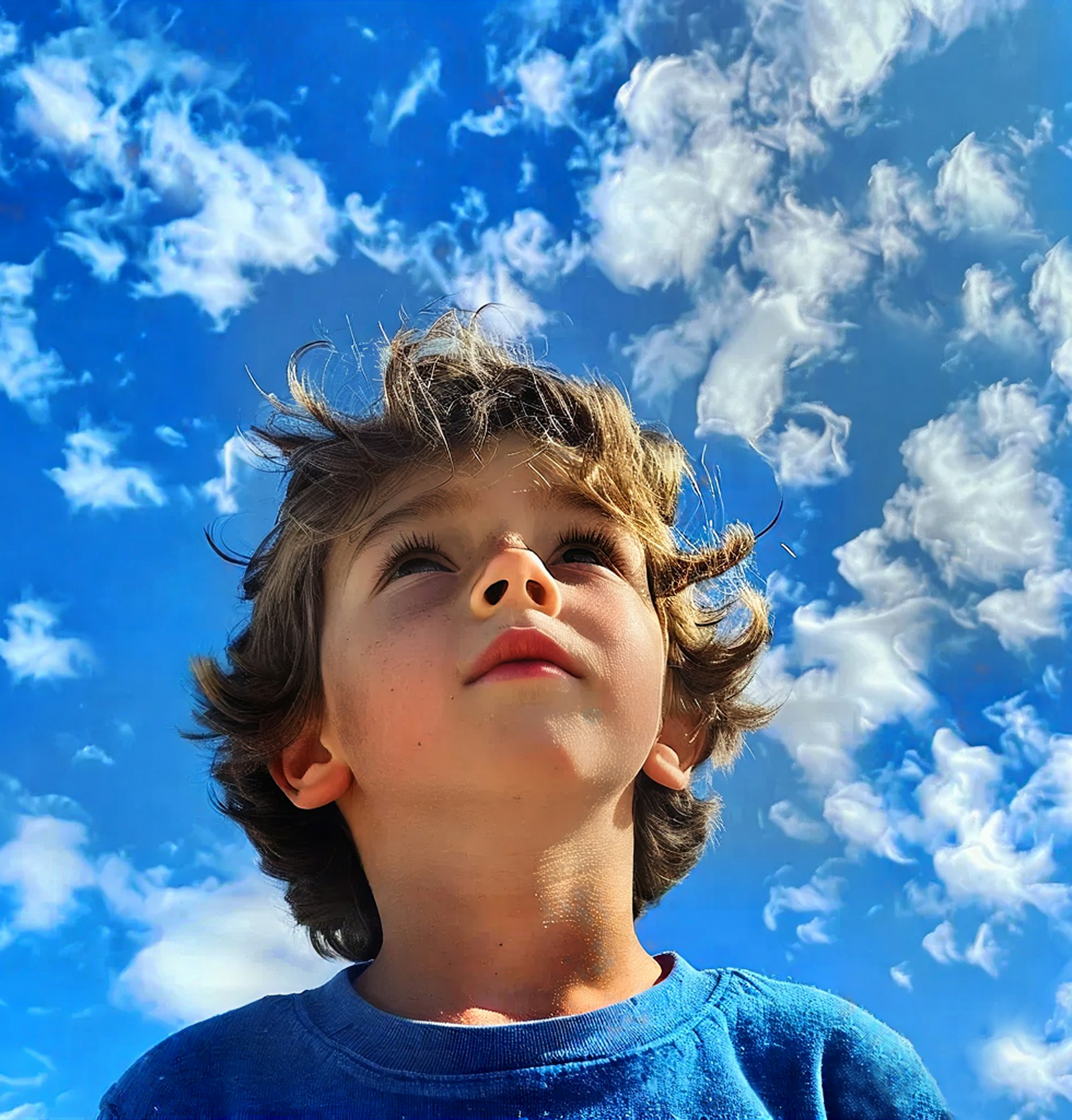
When I was a kid growing up in Malta, everywhere else felt like another planet. Foreign countries were enormous, impossibly distant places full of people who spoke languages I couldn’t understand, ate food I’d never seen, and lived in ways that seemed completely alien to my tiny island existence.
Now I’ve been living abroad for years, and somewhere along the way the foreignness just wore off. I order coffee without thinking about what language I’m speaking. I navigate cities that would have overwhelmed twelve-year-old me without even looking up from my phone. But it’s not just the moving abroad that did it. Getting older does the same thing to everything, not just foreign countries. None of it got smaller. I just caught up.
And I’m not sure that’s entirely a good thing.
When Everything Was Possible
When you’re seven or eight, the world is basically a promise. Everything is ahead of you and none of it has gone wrong yet. You draw pictures of yourself as an astronaut. You tell people you’re going to save the rainforest or build robots or discover a new planet. The house you’ll live in will be enormous. You and the person you marry will be perfect together. You’ll start a business that makes you rich, or maybe you’ll be famous, or maybe both. The details are vague but the feeling is certain: your life is going to be extraordinary.
Every kid I knew had some version of the impossible dream. Living on a space station. Becoming a racing driver. Being a rock star. None of it felt like fantasy at the time. It all felt like something that was simply coming, the same way learning to drive or leaving school was coming.
Part of why those dreams felt so real is that our parents had built a world for us where nothing truly bad could get in. We lived inside a bubble and didn’t know it. The bills got paid by someone else. The difficult phone calls happened in another room. If something went wrong, a grown-up fixed it. The world we actually experienced was curated, even if nobody called it that, and in that curated version the future was just this enormous open space full of things to discover and prizes to be won.
And it wasn’t just personal ambition. The world itself seemed to be heading somewhere good. Adults were working on things. Technology would fix the big problems. By the time I was old enough to care, the hard stuff would be sorted.
Looking back, I think the real loss isn’t that none of those specific things happened. It’s not that I didn’t become an astronaut or live in a mansion. It’s that the world stopped feeling like a place where those things were even possible. You don’t just lose the dreams. You lose the ability to dream like that at all.
And here’s what catches you off guard: even when you do get what you wanted, it doesn’t feel the way you thought it would. You build the business. You move to the city. You find the person. And after the initial high fades, you’re mostly the same person in a nicer setting, wondering why the feeling didn’t stick. You keep thinking the next thing will be the one that does it, and it never quite is.
The Slow Accumulation
The disillusionment doesn’t arrive all at once. It’s more like water wearing away at stone.
You get scammed for the first time and you feel stupid. By the third time, you’ve stopped trusting strangers with friendly smiles. You watch someone you respected turn out to be a fraud, and then it happens with someone else, and eventually you’re sizing up everyone you meet, looking for the catch. Which is practical and sad in equal measure.
You read the news long enough and the stories start repeating with different names. The financial crisis that was caused by the same greed as the last one. A leader who promised everything and delivered nothing, then another one, then another. The company that claimed to be making the world better while doing the opposite. Outrage gives way to a kind of dull recognition, which is worse than the outrage ever was, because at least the outrage meant you still expected better.
Someone once said that inside every cynical person is a disappointed idealist, and I think that’s exactly right. You don’t start out cynical. Nobody does. You start out believing that people are mostly good and the world is mostly fair, and then you accumulate enough evidence to the contrary that something hardens. It’s not really a choice you make. It’s more like scar tissue forming over something that got hurt too many times. The armour goes on without you deciding to put it on, and after a while you forget what it felt like without it.
The world isn’t less beautiful than it was when you were a child. But you’ve seen enough of how people actually behave that the beauty has competition now.
The Internet Made It Worse
When I was young, if you wanted to know what Tokyo looked like, you had to find a book or hope a documentary came on TV. That scarcity made the eventual discovery electric.
Now you can Street View your way through Shibuya while sitting on the toilet. You can watch a 4K drone flyover of Machu Picchu during your lunch break. You can read seventeen blog posts about “hidden gems” in Lisbon before you’ve even booked the flight. By the time you arrive, you’ve already consumed the experience in compressed, filtered form. The real thing feels like a rerun.
I think about this more because of when I was born. I’m a Xennial, part of maybe the last generation that had a genuinely unmediated childhood. We played outside until the streetlights came on. If we wanted to know something, we had to find a book or ask someone who might know. Boredom was a regular companion, and it forced us to invent things, imagine things, sit with not knowing. Mystery was the default state because there was no way to instantly resolve it.
Now I watch my own kids grow up in a world where that kind of mystery barely has time to form before someone can look up the answer. They’ll never know what it felt like to wonder about something for weeks, to carry a question around with no way to settle it, and to find that the wondering itself was the good part. I got to live on both sides of that transition, and I’m not sure the trade was worth it.
But worse than the lost novelty is the constant exposure to the worst of everything. Every scam, every disappointing revelation about someone you admired, delivered to your phone throughout the day. Previous generations got to be naive about things happening far away. We don’t get that. The ugliness is as accessible as the beauty, and it loads faster.
Then Your Body Joins In
There’s a particular cruelty to the forties. Just when your mind has accumulated enough disappointment to make you properly cautious, your body starts sending its own messages.
You wake up and something hurts for no reason. You pull a muscle doing something you’ve done a thousand times before without thinking. Recovery from a workout, an illness, even a bad night’s sleep takes twice as long as it should. The doctor starts using phrases like “at your age” and “perfectly normal for this stage” and you want to ask what stage exactly, because you were twenty-five about four years ago. Whatever you thought was wrong with your body at thirty-five, you’d give quite a lot to have it back at forty-five.
It’s not just physical either. You notice you’re slower to pick things up. Learning something new used to feel like an adventure and now it often just feels like work. You have less energy for starting things. The ambition is still there somewhere, but it has to fight a tiredness that didn’t used to exist and a voice asking whether you really want to go through the early phase again, the part where everything is hard and nothing works yet.
And around you, things start breaking in other ways. Friends get divorced. Parents get ill. Kids grow up and need you less, which you thought you wanted until it actually happened. The social world you built without really trying in your twenties and thirties starts thinning out. People get busy with their own version of all this.
None of this is unusual. It’s just the deal. But nobody sits you down at twenty and explains what the deal is, so when it arrives it feels personal.
And then you realise the roles have completely flipped. As a child, you lived inside the bubble your parents built, and the world was this safe, exciting place waiting to be explored. Now you’re the one building the bubble for your own kids, and you can see all the things your parents kept from you. Your parents are getting older and you worry about the phone call that might come one morning. Your kids are young and fragile and you can barely watch them climb a wall without running scenarios in your head. The business you built is still going but you’re not entirely sure how. Some mix of luck and hard work and things you can’t fully control. You walk around with this constant low-level awareness that any of it could come apart, for reasons you might not see coming. Life doesn’t feel like a promise anymore. It feels fragile.
And time, which used to feel like this endless resource you could burn through without consequence, starts converting itself into units that make you uncomfortable. You only get about 52 weekends with your two-year-old before they turn three. Maybe eight Christmases where your kids genuinely believe in magic. Once you start counting like that, the shrinking stops being a metaphor. It’s just arithmetic.
The Paradox of Knowing More
I didn’t expect this part though.
The deeper you go into anything, the more you appreciate how improbable it is that it works at all. A marriage that’s lasted twenty years. A business that’s still running. A friendship that survived distance and time and all the ways people change. On the surface these things look simple, even boring. But once you understand how many things had to go right, how many small decisions had to land the right way, how easily any of it could have fallen apart, you start to see them differently.
A child is amazed because they don’t understand. But someone who has built something, kept something alive, held something together through the hard parts, can be amazed because they do. They know exactly what it cost.
That’s a different kind of wonder. Quieter, less ecstatic, but real. And earned in a way the childhood version never was.
Borrowing Their Eyes
Having kids changed this in a way I didn’t see coming.
My son asked me once, when he was about three, why there are clouds in the sky. It sounds like a simple question until you actually try to answer it and realise you can’t really explain it, not properly, not in a way that accounts for the strangeness of it. Water evaporates, rises, condenses into droplets that somehow hang there in shapes that change every time you look. I stood there staring up at the sky with him, genuinely stumped, and for a few seconds the clouds were as mysterious as they must have been the first time I ever noticed them.
My kids stare at pigeons like they’re dinosaurs. Because, in a sense, they are. I just stopped noticing. They’ll crouch at the edge of a puddle for ten minutes watching a leaf spin in circles, completely absorbed. They point at the moon as if they’ve personally discovered it.
The instinct is to smile, nod, and keep walking. You’ve seen a thousand moons. You have places to be. But if you actually stop, get down to their level, and try to see what they’re seeing, something shifts. The moon is absurd. A rock, glowing in the sky, pulling the oceans around. You knew that, but you stopped feeling it. They haven’t learned to stop feeling it yet.
What I didn’t realise is that kids don’t just show you the world through fresh eyes. They drag you into the present tense, which turns out to be the only place wonder actually lives. When you’re watching your daughter stare at a beetle crossing the pavement, you’re not thinking about the news or your inbox or the slow erosion of everything. You’re just there. And being just there, it turns out, is enough for as long as it lasts.
I’ve started following their attention instead of redirecting it. When my kid wants to stop and watch a street musician, I don’t check my phone. I watch too. When they’re fascinated by how water comes out of a fountain, I try to remember that I once found that just as miraculous.
And I play with them. Not just the stuff I think is cool, like remote control cars and Lego, but the baby stuff too. Sitting on the floor with soft toys, making up voices, imagining entire worlds out of nothing. That’s where the real gems are. It feels silly at first, but that kind of unstructured pretending is how you actually get into their heads and start seeing the world the way they see it. Not through your filters. Through theirs.
It doesn’t always work. You can’t trick yourself back into wonder. But sometimes, if you stay in it long enough, the adult brain quiets down and you catch a flash of it. The world as raw experience, before you learned to categorise and file everything away.
What I Think Now
I don’t think you get back to the way the world looked when you were eight. You can’t unknow what you know. You can’t unsee the scams and the disappointments and the patterns. Your body is going to keep reminding you that you’re not who you were at twenty-five, no matter how much you’d prefer it didn’t.
But I’ve started to think the childhood version of wonder was never really the point. As a kid, the world amazed you because you didn’t understand it. That’s not depth. That’s just ignorance wearing a nice outfit.
What I think you can get to, if you’re honest about everything you’ve lost and you don’t try to pretend it didn’t happen, is something harder to name. Not the innocent wonder, because that’s gone and it’s not coming back. And not the cynicism either, because cynicism is just where hope goes when it’s been kicked enough times. Something in between, maybe, where you can look at the world knowing full well how broken parts of it are and still find it worth paying attention to. Wonder that has been through the gauntlet and come out the other side, rather than wonder that never had to face anything.
Choosing to keep finding meaning in things when you know how fragile that meaning is, when you’ve watched it collapse in other people’s lives and in your own, might be the hardest thing there is. It would be easier to just stay behind the armour. Most days you’re tempted. But the armour numbs everything, not just the bad stuff, and a life spent behind it is smaller than the one you’re trying to protect yourself from.
I still catch it sometimes. On a mountain road with the top down and the smell of pine coming through. Or watching one of my kids discover something for the first time and feeling the echo of when I discovered it too. The world cracks open for a second and I get a glimpse of how it used to look. Not because I’ve forgotten everything I’ve learned, but because all of it is there at once, the beauty and the ugliness and the tiredness and the gratitude, and for a moment it doesn’t cancel out. It just sits together.
The world didn’t shrink. I just learned what it actually is. And I won’t pretend that’s always a comfortable thing to know. But on the good days, and they still come around more often than you’d expect, it’s enough.
Related





Leave a Reply