
In reality, daily life feels increasingly chaotic, unfair, and psychologically exhausting.
This is not an outsider’s rant. It’s the perspective of someone who has seen the country change over the last decade and now struggles to recognise it.
What Malta Still Gets Right
Before getting into what is going wrong, it is only fair to acknowledge what Malta still does well.
The weather is hard to beat. Over 300 days of sunshine a year, mild winters, and warm, swimmable seas from May through November. The country is English-speaking, which makes it uniquely accessible compared to most of southern Europe.
Malta’s compactness means you can fit a remarkable amount into a single day: work, the beach, dinner out, and still be home early. The food scene has improved significantly. Family and community ties remain strong.
And there are real career opportunities that did not exist a generation ago, thanks to the financial services, iGaming, and maritime sectors that have set up on the island, drawn largely by Malta’s regulatory and tax framework rather than organic growth, but providing employment and economic activity nonetheless.
None of this erases what follows, but ignoring it would be dishonest.
Wealth Without Class
One of the most jarring features of modern Malta is how disconnected money is from culture, class, or refinement.
Plenty of people are doing very well financially, yet this has not translated into better public behaviour, higher standards, or more civic pride. If anything, it often feels like the opposite: more money, less respect for others.
Policing, Corruption, and Being “Untouchable”
Policing often feels non-existent. Corruption is not subtle; it is widely assumed.
There is a strong perception that many people are effectively above the law thanks to political connections or influence. Even at street level there is little respect for basic rules or common decency.
A classic example: owning a garage means very little when someone feels perfectly entitled to park in front of it anyway, and often acts as if they have every right to do so.
Driving in Malta Is Not for the Faint-Hearted
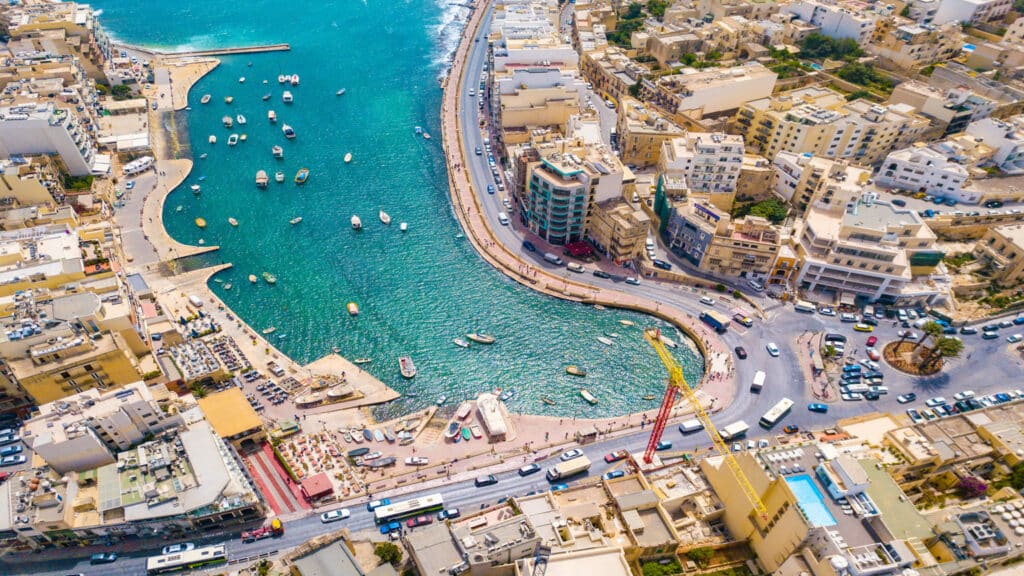
Malta is effectively one continuous urban area with an extraordinary number of cars crammed into 316 square kilometres. The congestion is obvious to anyone who spends time on the island, and it gets worse with every visit.
Some people point out that traffic is bad in any major city, and to a certain extent, that is true. But most major cities also have functional public transport and metro systems. Malta has neither. In London, Barcelona, or Berlin, you can leave the car at home and still get anywhere you need to go. Those cities also have extensive cycling infrastructure. In Malta, cycling anywhere is genuinely risky. So you are stuck in the car.
In most countries, you can also choose to live outside the city and avoid the worst of it while still having access to essential services. In Malta, the only comparable option would be to move to Gozo, and for most people, that is not a realistic choice.
Now add the human element. Turn signals are optional. Being overtaken aggressively or forced to overtake from the so-called “slow” lane is normal. Road rage is common.
In 2025 there was even a murder linked to a traffic incident. If you are hoping for swift justice, prepare for disappointment. Court cases drag on for years, a problem Malta shares with many European countries, though Malta’s small size makes the lack of progress harder to excuse, and there are no real guarantees that justice will ever be done.
Infrastructure That No Longer Copes
With 1,806 people per square kilometre, Malta’s infrastructure is visibly straining.
Endless roadworks with little coordination. Summer power cuts. Patchy internet and mobile coverage even in residential areas. Water quality problems that people quietly accept as normal.
Some of this is an inevitable consequence of rapid population growth rather than outright failure. But the gap between Malta’s economic ambitions and the infrastructure supporting daily life is growing, not shrinking.
Construction as Daily Trauma
The cranes are not a metaphor. They define daily life.
Dust, noise, blocked streets, unsafe practices, all largely unenforced. Developments appear overnight with no regard for neighbours, structural impact, or liveability. It creates the constant feeling that you have no control over your own environment.
Malta does still have more open spaces than many residents give it credit for. The countryside in the north and west of the island can still surprise you. But in the urban core where most people live and work, the construction pressure is relentless.
A Constant Air of Amateurism
There is an ever-present sense of amateurism in how things are done and how people interact.
If you do not speak Maltese you are partially insulated, because you are spared from understanding the running commentary around you, which is often negative, loud, and emotionally charged.
Health Care: Under Growing Pressure
Malta’s public health system is free, universal, and geographically accessible. These are genuine advantages that should not be taken for granted. No one in Malta is hours away from a hospital, and the system still has dedicated, capable people working within it.
That said, the pressure is mounting. The OECD’s 2025 Country Health Profile for Malta reports that occupancy rates for curative care beds are above the EU average, and the situation at Mater Dei’s emergency department became so strained that in January 2025, the government signed a deal to outsource non-complicated emergency cases to three private hospitals.
Waiting times for specialist referrals and elective procedures have worsened since the pandemic, according to both the WHO and the OECD.
Private care has long been the norm for primary care in Malta, and is increasingly becoming the only option for anyone who wants timely specialist diagnosis or treatment. Out-of-pocket health spending in Malta stands at 31% of total health expenditure, nearly double the EU average of 16%. The WHO found that nearly 7% of Maltese households face catastrophic health spending, with the burden falling hardest on the poorest fifth of the population (22%) and households headed by older people (14%).
Malta also has the highest obesity rate in the EU, with nearly two out of three adults classified as overweight and male obesity at 28.7%, the highest in Europe. Among 15-year-olds, 32% are overweight or obese, around 1.5 times the EU average. This is not just a lifestyle issue. It places enormous strain on an already stretched health system, driving demand for chronic disease management, diabetes care, cardiovascular treatment, and joint replacements.
The system was built for a smaller population and has not scaled to match demand. Malta’s population grew by 32% in just ten years, mainly through an influx of expatriate workers, and the healthcare infrastructure has not kept pace.
Raising Kids in Malta
For families, there is one major upside: foreign children can get an English-first education in the public system. In most European countries that would require expensive private schooling.
There are more kids’ activities than in the past, and sports facilities are generally decent. But Malta’s small size, isolation, lack of real nature beyond the sea, and shrinking diversity eventually become limiting.
Perhaps the most telling statistic: Malta now has the lowest fertility rate in the entire EU at just 1.01 births per woman in 2024, down from 1.06 in 2023 and well below the EU average of 1.34. Despite population growth of 32% in a decade, that growth is almost entirely driven by immigration, not by families choosing to have children here.
Housing Without Community
New developments are not neighbourhoods. They are financial products.
No green space. No walkability. No shared identity. Apartments are built to flip, not to live in. You don’t build social fabric with one-bedroom investor boxes.
Malta as a Tourist Destination
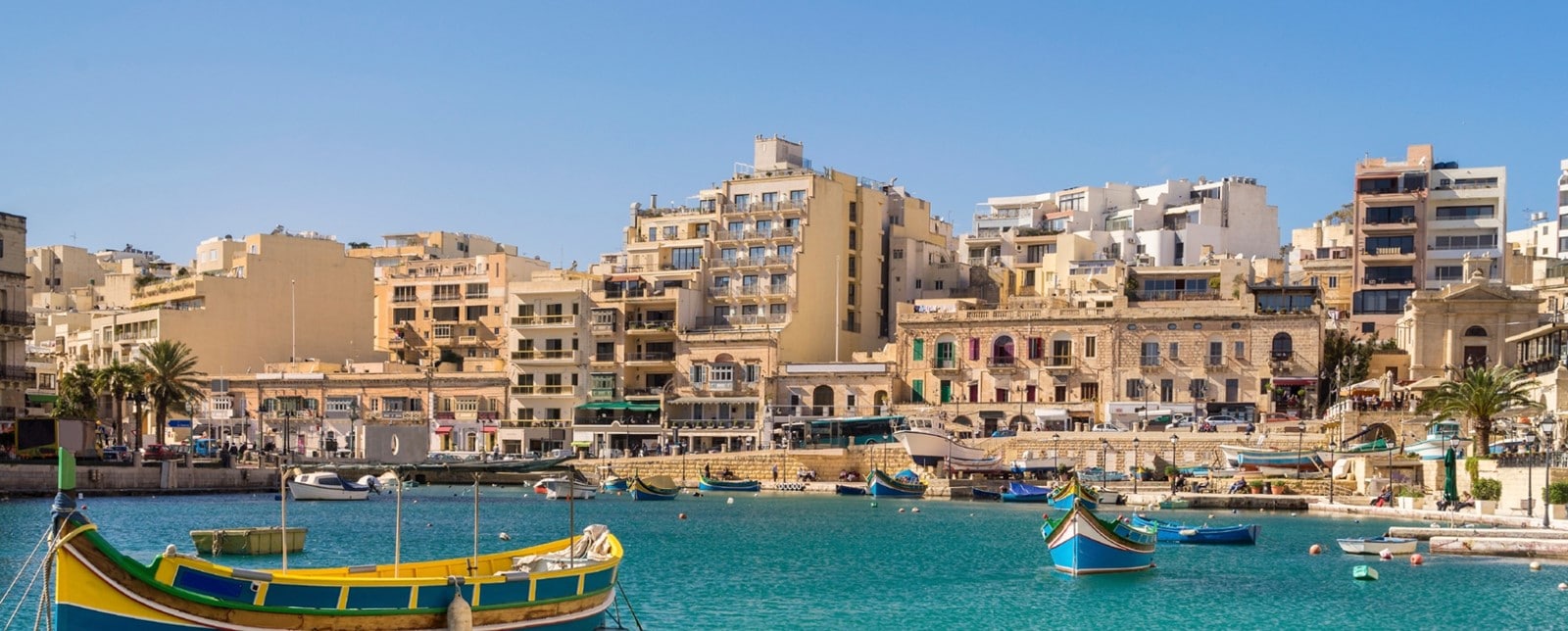
For low-cost tourism, Malta still works. For higher-end travellers, unless you are coming specifically for diving, history, or yachting, there are far better destinations in Europe. The only exception is cruise liner tourism, since as a tourist on a ship you get to experience entry into one of the most scenic ports in Europe and a heavily curated day visiting the best-preserved locations in Malta, giving you a false impression of the islands.
For everyone else the islands feel overpopulated, and the pressure is visible everywhere.
The Money Paradox
On paper, Malta is one of the richest countries in Europe. In the World Happiness Report, it barely cracks the top 50, ranking behind Kosovo, Belize, and El Salvador.
That gap tells you everything.
Malta’s economic output is genuinely impressive, and to its credit the country is not solely reliant on tourism. Financial services, iGaming (whatever you think of its usefulness to humanity), and maritime logistics have created real career opportunities that did not exist a generation ago. But let’s be clear: these industries are here primarily because of Malta’s regulatory framework, tax structure, and the historical advantage of being an English-speaking country. On top of that, the real estate sector has turned into a machine: build, sell, repeat. The bubble never seems to burst.
The question is whether any of this wealth is translating into a better life. I don’t think it is.
What do you actually do with a higher salary if you are stuck in the same traffic, or worse? If the nature around you is being chipped away year by year? If the infrastructure is visibly crumbling under the weight of a population it was never designed for? If everyone around you is stressed, rushing, and short-tempered? If trust in the institutions that are supposed to serve you is eroding?
With more money you should be able to improve your life. In most places, you can. In Malta, you are still facing the same problems every single day, and no salary fixes that. It is a false gain.
The IMF’s 2025 assessment of Malta says it plainly: the labour-intensive, immigration-led growth model is approaching its limits. Gaming and tourism are nearing saturation. Structural reforms are needed. Even the people whose job it is to measure economic success are saying the current path has a ceiling.
It is easy to make money in Malta today. It is harder to live well.
From Positivity to Collective Exhaustion
A decade ago there was still a sense of optimism. Criticising the country was frowned upon.
Today it is the opposite. I wrote a longer piece on the real state of Malta back in 2022 that goes deeper into the same themes. Complaining is constant, and even without following Maltese news it is impossible to escape the negativity. It is draining.
Randomness and Extremes
Malta has become a land of extremes.
You may meet the kindest, most helpful person one minute, and an absolute animal the next. This unpredictability keeps everyone permanently on edge. Humans crave predictable environments. Malta now offers anything but.
The Psychological Cost
The real damage is not just physical. It is mental.
The noise. The unpredictability. The lack of accountability. The sense that standards are optional. Over time this grinds people down. You stop expecting things to work. You adapt to dysfunction.
That is the real tragedy.
The Maltese Exodus
More and more Maltese are leaving, but not all for the same reasons or the same places.
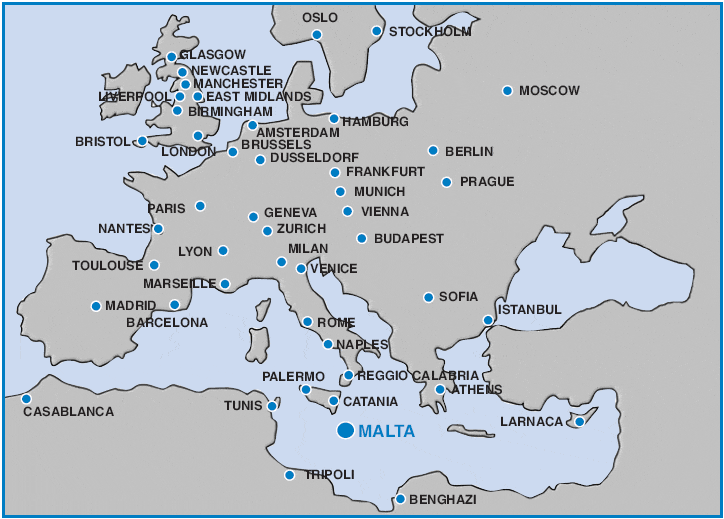
Sicily is the most visible trend. An increasing number of Maltese are buying property there or relocating if they can work remotely. The draw is specific: proximity to Malta, access to real nature, excellent cuisine, and property prices that make Maltese real estate look absurd. It is not that Sicily is a better place to live in a direct comparison. It has its own well-documented problems, including higher unemployment, worse bureaucracy, and infrastructure that in many areas makes Malta look efficient. There is a reason Sicilians themselves have been leaving the island for decades. But for remote workers on Maltese salaries who want more space and a slower pace, the appeal is real.
Others are leaving for more established destinations entirely: cities and countries with better job opportunities, less pollution, less stress, and a better environment for raising children. For these people, it is not about finding a cheaper version of the Mediterranean but about finding a place where the overall quality of life is moving in the right direction, not backwards.
Would I Move to Malta in 2026?
As a foreigner, only temporarily, mainly for tax reasons.
For long-term living, the downsides are now too many and the quality-of-life trend is clearly downward. If what you are after is Mediterranean climate and lifestyle, Spain or Italy are simply more compelling choices today. If you want to understand the expat programmes that make Malta worth considering for tax purposes, I’ve covered them in a full guide to moving to Malta as an expat.
Related





Leave a Reply