Crypto debit cards have come a long way in Europe. What started as a niche product for early adopters has matured into a competitive market — and with MiCA (Markets in Crypto-Assets Regulation) now fully in force, the landscape looks noticeably different heading into 2026.
The biggest change since my last update: the Binance Card was discontinued for European Economic Area (EEA) residents in December 2023. That removed one of the most popular options from the table overnight. On the flip side, new entrants like Bybit EU have launched MiCA-compliant cards with compelling cashback structures, so there’s no shortage of solid alternatives.
These cards work like any Visa or Mastercard debit card — you spend crypto, it converts to euros at the point of sale, and the merchant sees a normal card transaction. The appeal is real: you can put your holdings to work without selling through an exchange, earn cashback on everyday spending, and avoid the friction of manual conversions.
In my opinion, these are currently the best crypto debit cards for European residents in 2026:
Let’s take a closer look at each one.
Bybit Card
Bybit EU launched its card across the EEA in September 2025, and it’s become one of the most talked-about options in Europe almost immediately. Bybit EU GmbH operates as a licensed Crypto-Asset Service Provider (CASP) under MiCAR, which matters — it means you’re dealing with a regulated entity, not a company operating in a grey zone.
The card is a Mastercard debit card and supports BTC, ETH, XRP, USDT, and USDC. There are no annual fees, and it works with both Apple Pay and Google Pay. You can get a physical card mailed to you or use a virtual card instantly.
The cashback structure is what makes Bybit stand out right now. In January 2026, Bybit EU introduced Bitcoin cashback — eligible users earn between 2% and 10% back in BTC depending on their rewards tier. There’s also a tiered loyalty points system redeemable for vouchers and crypto. Note that the card is not available in Croatia, Ireland, Romania, or Norway within the EEA.
If you’re already using Bybit as your exchange, this is a no-brainer. Even if you aren’t, it’s worth a look purely on the strength of the cashback.
Nexo Card
The Nexo Card does something no other card on this list does: it lets you choose at the point of sale whether you’re spending your crypto directly (debit mode) or borrowing against it (credit mode). That second option means your crypto keeps working — earning yield or sitting in reserve — while you spend borrowed funds.
The card is a Mastercard, available exclusively to EEA and UK residents, and charges no monthly fees or FX markup on international transactions. Cashback goes up to 2% in BTC or NEXO tokens for Platinum tier members, with lower tiers starting at 0.5%.
The catch is that the better rates — both on cashback and on borrowing — require holding a meaningful amount of NEXO tokens. If you’re already in the Nexo ecosystem, the card is a natural extension. If you’re not, factor in the token requirement before signing up.
Crypto.com Visa Card
Crypto.com has been offering cards in Europe for years and remains one of the most widely available options, covering 40+ EEA countries. The card has evolved in 2025 — they replaced the old staking tiers with a “Level Up” program launched in September 2025, which combines subscription fees and 12-month CRO staking commitments to determine which card tier you qualify for.
The rewards structure runs from the free Midnight Blue (1% cashback, no premium perks) up to higher tiers offering up to 5% cashback in CRO tokens, plus monthly credits for Spotify, Netflix, and Amazon Prime, and airport lounge access. There are no annual fees and no foreign transaction fees.
The main consideration is CRO exposure. Most of the compelling benefits require staking CRO, so the card’s real value depends on how you feel about holding that token. If you’re neutral or bullish on CRO, this remains one of the most feature-rich options in Europe. If you’d rather earn cashback in BTC or a stablecoin, look at Bybit or Nexo instead.
Nebeus
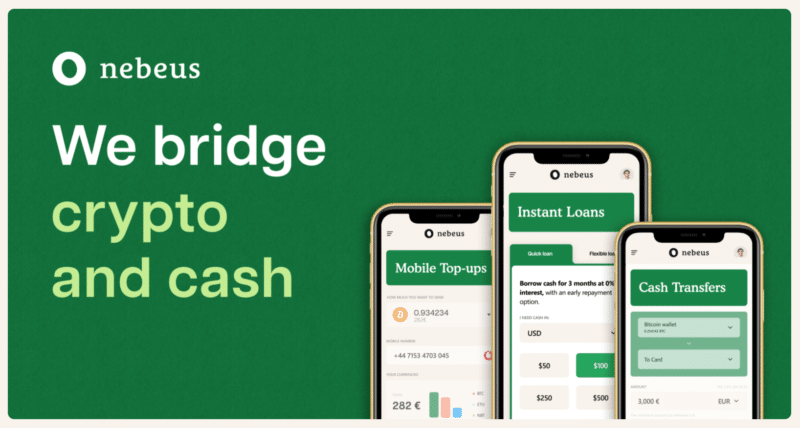
Nebeus is a London-based crypto neobank that offers both a physical and virtual Visa debit card. The card supports Bitcoin, Ethereum, Litecoin, Ripple, and a handful of others, converting to EUR at the point of sale. KYC verification is required, and the physical card is mailed to you once approved.
One useful feature: the card functions as a credit card on the backend, which means it works for bookings and purchases that require pre-authorization — hotels, car rentals, and the like — even though you’re spending your own crypto balance.
The honest downside is that the Nebeus card compares poorly on cashback (0% by default, with 2-3% available only if you hold 50 NBTK tokens) and doesn’t support Apple Pay. The daily spending limit is also capped at €5,000, which is on the lower end. It’s a solid choice for someone who already uses Nebeus for crypto loans or yield accounts and wants a card to match, but harder to recommend as a standalone pick given the competition.
SpectroCoin
SpectroCoin has been offering crypto debit cards to European residents for years and continues to do so in 2026. The card is a Visa card, available only to EEA residents, and supports Bitcoin, Ethereum, Litecoin, XRP, USDT, USDC, and a range of other assets — all settling in EUR.
The fees are straightforward: a €1.15 monthly maintenance fee. The spending limit is generous at €25,000 per day — the highest of any card on this list. For high-volume spenders, that headroom is a genuine differentiator.
SpectroCoin is a simpler, no-frills option with no complex tiering or staking requirements. If you want a card that just works without needing to commit to a platform’s native token, SpectroCoin is worth considering.
What About the Binance Card?
If you used the Binance Card previously — it’s gone for European residents. Binance discontinued its Visa debit card services across the EEA in December 2023, citing regulatory pressure and the end of key issuing partnerships. Your Binance exchange account and balances are unaffected, but the card is no longer an option.
The good news is that Bybit EU has stepped into that gap with a MiCA-compliant card that arguably improves on what Binance offered.
How MiCA Changes the Picture
MiCA is now fully in force across the EU, and it’s reshaping which crypto card providers can legally operate here. Providers that haven’t obtained CASP licensing are being pushed out — which is part of why the Binance Card situation happened and why some smaller card services have quietly disappeared.
The upside is that the cards that remain are operating under a real regulatory framework. That means better consumer protections, clearer fee disclosures, and less of the “launch fast, sort compliance later” energy that characterized earlier years.
When evaluating any crypto card in 2026, it’s worth checking whether the issuer holds MiCA authorization (or is operating under a valid transitional arrangement). Bybit EU is the clearest example of a provider that has embraced MiCA licensing directly.
Which Card Should You Choose?
For most European crypto users in 2026, here’s how I’d break it down:
- Best cashback right now: Bybit Card (up to 10% in BTC, MiCA-compliant, no annual fee)
- Best for spending without selling: Nexo Card (borrow against your crypto, earn yield simultaneously)
- Best for ecosystem depth: Crypto.com Visa Card (wide EEA coverage, Netflix/Spotify perks at higher tiers)
- Best high-spending limit: SpectroCoin (€25,000/day, no token staking required)
- Best if you’re already on Nebeus: Nebeus Card (integrates with their loan and yield products)
Which is your favorite crypto debit card in 2026? Other options worth looking into are Swapin and the Coinbase Card, which has expanded its EEA availability following MiCA authorization in mid-2025.
Related






Do you have an opinion on Plutus? How does it compare to Nebeus?
Wirex is the best as it has no fees when you exchange crypto for fiat, the only downside I see is that it has ATM withdrawal fee, the rest works just great and bank transfers are practically instant. However, now, as I understand, since their payment provider is based in Malta, they require a whole lot papers to proof this and that.
Are you sure about blockfi card? On their website is written is available just for US residents
The BlockFi Rewards Credit Card is for US residents in qualified states (NY is excluded). Must have a BlockFi account to apply. The credit card is not available for business accounts at this time.
They are expanding outside the US soon, but yes at the moment only US.
Hey Jean,
Living in Barcelona as you seem to do. Does Blockfi card reward works as well over here ? As far as I searched, I didn’t find anything on this topic on their website.
Cheers!
Alexandre
I haven’t used it in Barcelona Alexandre but I don’t see any reason why it wouldn’t work.
Hi, thanks for sharing.
Why you did not mention the Monolith Credit Card, see https://monolith.xyz/
I am using it, since a year and I am very happy with the start up from UK and how they established the first decentralized card.
See my interview, here https://medium.com/monolith/in-conversation-bike4peaces-alexandros-talks-using-monolith-as-a-digital-nomad-e6e4d8f43b74
Best to you,
Alexandros