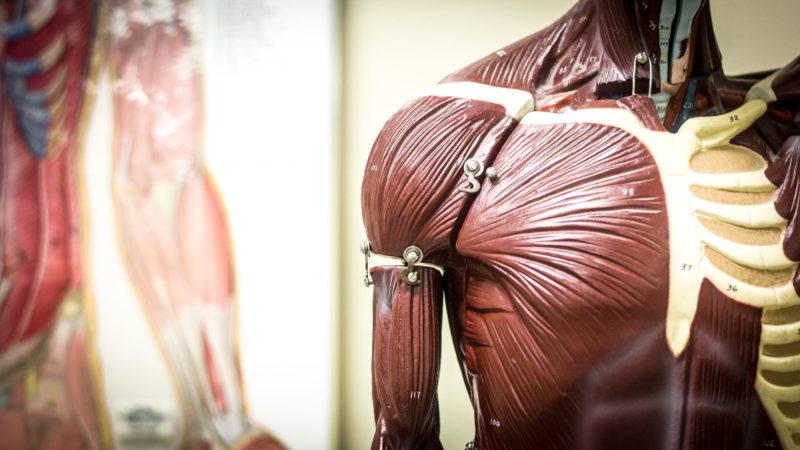
As I continue to immerse myself in padel and strive to improve every year, I’ve taken it upon myself to really learn how the human body works, especially in relation to exercise and sport.
Understanding exercise physiology has changed the way I train. Instead of blindly following workout programs, I can now evaluate whether an exercise makes sense for my goals, understand why certain recovery protocols work, and make informed decisions about my training. Whether you’re an athlete trying to optimize performance or just someone who wants to train smarter, these resources will give you a solid foundation.
Exercise Physiology Textbooks
These are the go-to academic texts in the field. They’re dense, but incredibly comprehensive if you want to truly understand how the body responds to exercise.
- Exercise Physiology: Theory and Application to Fitness and Performance — by Powers and Howley. This is the textbook used in many university exercise science programs. It covers everything from cellular metabolism to cardiovascular responses to training adaptations. Excellent diagrams and chapter summaries make the complex material digestible. I’d recommend this as your first textbook if you want a thorough but readable introduction.
- Exercise Physiology: Nutrition, Energy, and Human Performance — by McArdle, Katch, and Katch. Another heavyweight textbook that puts more emphasis on nutrition and energy systems than the Powers book. Particularly strong on body composition and the metabolic aspects of exercise. A good complement to Powers if you want the full picture.
- Physiology of Sport and Exercise — by Kenney, Wilmore, and Costill. This one takes a more practical, sport-focused approach. Great chapters on training for different sports, environmental considerations (heat, altitude, cold), and age-related changes in exercise capacity. If you’re primarily interested in sports performance rather than clinical exercise physiology, start here.
Sport-Specific Training
- Advanced Strength and Conditioning for Tennis — While specifically about tennis, much of the content applies directly to padel and other racquet sports. Covers movement patterns, injury prevention, periodization, and sport-specific strength exercises. One of the few books that bridges the gap between academic exercise science and real-world racquet sport training.
- Strength Training Anatomy — by Frederic Delavier. Not a textbook in the traditional sense — it’s essentially an atlas of exercises with detailed anatomical illustrations showing exactly which muscles are working during each movement. Invaluable for understanding your own training and for identifying which exercises target specific muscle groups. I reference this one constantly.
Online Courses
If you learn better through video and structured lessons than through reading, these Coursera courses are excellent starting points:
- Science of Exercise — A well-structured course that covers the fundamentals of how exercise affects the body. More accessible than the textbooks and a great entry point if you’re new to the subject.
- Introductory Human Physiology — Broader than just exercise, this covers how the major body systems work. Understanding the cardiovascular, respiratory, and musculoskeletal systems at a fundamental level makes everything else click into place.
Practical Fitness Books
These are less academic but still grounded in solid science. If the textbooks above feel like too much, these are a more approachable way to improve your training knowledge:
- Starting Strength — by Mark Rippetoe. The definitive guide to barbell training. Even if you don’t follow Rippetoe’s specific program, the detailed breakdowns of squat, deadlift, bench press, and overhead press form are essential knowledge for anyone who lifts weights.
- Becoming a Supple Leopard — by Kelly Starrett. Focuses on mobility, movement quality, and fixing common dysfunction patterns. If you sit at a desk all day (like most of us) and then try to perform athletically, this book will help you identify and address your mobility limitations.
- Calisthenics for Beginners — A practical guide to bodyweight training with progressive exercises. Good if you want to build strength without a gym.
- The Practice of Natural Movement — by Erwan Le Corre. A different approach to fitness that focuses on natural, functional movement patterns rather than isolated gym exercises. Thought-provoking and a good counterbalance to traditional training methods.
- How to Build Strong & Lean Bodyweight Muscle — Another solid bodyweight training resource with clear progressions for different skill levels.
Where to Start
If you’re coming to this with no background in exercise science, I’d suggest starting with the Coursera Science of Exercise course and Strength Training Anatomy. The course gives you the foundational knowledge, and the anatomy book makes it tangible.
Once you’re comfortable with the basics, pick one of the three textbooks based on your interest — sport performance (Kenney), general fitness (Powers), or nutrition-focused (McArdle).
Do you have any other resources to recommend? Let me know in the comments section.
Related





Leave a Reply