I’ve been using both Kraken and Coinbase for years to buy and hold crypto from Spain. They’re the two names that come up in every “which exchange should I use?” conversation — and for good reason. Both are fully regulated in Europe under MiCA, both have never lost customer funds to a hack, and both support EUR deposits via SEPA.
But they’re built for different people. Kraken is the exchange I recommend to anyone who’s past the basics — lower fees, deeper markets, 530+ coins, and a VIP experience for larger accounts. Coinbase is the one I point beginners toward — cleaner interface, educational tools, and the comfort of a NASDAQ-listed company with $500+ billion in audited customer assets.
The short version: Kraken wins on fees, coin selection, and advanced trading features. Coinbase wins on simplicity, brand trust, and the beginner experience. If you’re a European investor who plans to take crypto seriously, Kraken is the stronger pick. If you want the smoothest possible onboarding and don’t mind paying a bit more for it, Coinbase is hard to fault.
Quick Comparison: Kraken vs Coinbase
| Feature | Kraken | Coinbase |
|---|---|---|
| Founded | 2011 | 2012 |
| Headquarters | USA (San Francisco) | USA (San Francisco) |
| EU Regulation | MiCA licensed (Central Bank of Ireland) | MiCA licensed (CSSF, Luxembourg) |
| Supported Coins | 530+ | 270+ |
| Trading Pairs | 1,270+ | N/A (fewer than Kraken) |
| Pro Trading Fees | 0.16% maker / 0.26% taker | 0.40% maker / 0.60% taker |
| Simple Buy Fees | Up to 1.5% | 1.5% – 3.99% |
| EUR Deposits (SEPA) | Free (InstantSEPA available) | Free |
| Staking | Yes (ETH, SOL, DOT, ADA + more) | Yes (ETH, SOL, ADA + others) |
| Margin Trading | Yes (up to 10x) | Limited (via futures in select EU countries) |
| Secondary Market / OTC | Yes (OTC desk + dark pool) | No public OTC desk |
| Mobile App | Yes | Yes |
| Publicly Traded | IPO planned (filed confidentially) | Yes (NASDAQ: COIN) |
| Security Record | Never hacked (14 years) | Never hacked (customer funds) |
| Proof of Reserves | Yes (Merkle tree, verified June 2025) | Audited financials (SEC filings) |
Trading Fees
This is where the two platforms diverge most sharply — and where the choice matters most for your returns over time.
Kraken Pro charges 0.16% maker and 0.26% taker at the base tier (under $50,000/month volume). If you place limit orders — which you should — your effective cost per trade is 0.16%. That’s among the lowest in the industry for a fully regulated exchange.
Coinbase Advanced Trade charges 0.40% maker and 0.60% taker at the same tier. That’s roughly 2.5x more expensive than Kraken for identical trades. On a $10,000 purchase, you’d pay $16 on Kraken versus $40 on Coinbase using limit orders. Over a year of regular buying, that gap compounds.
Both platforms also have a “simple buy” interface for quick purchases, and both charge significantly more for it — up to 1.5% on Kraken and up to 3.99% on Coinbase depending on payment method. The rule is the same for both: always use the pro/advanced interface.
Coinbase does offer Coinbase One ($29.99/month), which eliminates trading fees on up to $10,000 in monthly volume. If you’re buying regularly in that range, the subscription can work out cheaper than paying per-trade fees. But for most investors, Kraken’s base fees are simply lower without needing a subscription.
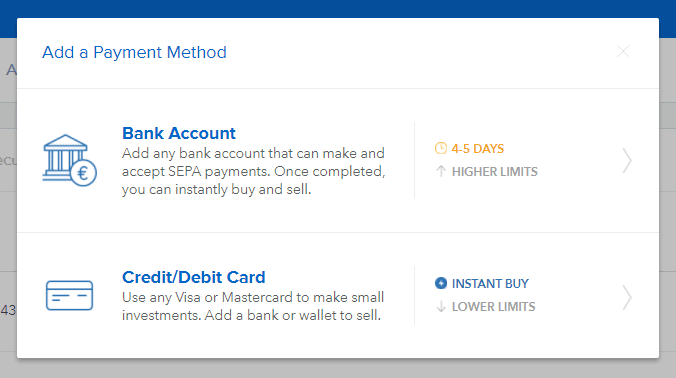
For deposit fees, the playing field is level: both offer free SEPA transfers for EUR. Card deposits are expensive on both — avoid them.
Regulation and Safety in Europe
Both Kraken and Coinbase are now fully MiCA-licensed in the European Union — a distinction that puts them ahead of most competitors.
Kraken obtained its MiCA license from the Central Bank of Ireland in June 2025 and went live across all 30 EEA countries by August 2025. The company also holds an Electronic Money Institution (EMI) license and a MiFID license, both secured in early 2025. For European users, Kraken operates through Payward Europe Solutions Limited as a fully authorized Crypto Asset Service Provider (CASP).
Coinbase secured its MiCA license from Luxembourg’s CSSF in 2024, giving it passporting rights across all 27 EU member states. In March 2026, Coinbase also launched MiFID-regulated crypto futures across 26 European countries.
From a pure regulatory perspective, they’re on equal footing in Europe. Both can legally offer custody, exchange, and trading services under MiCA.
Where they differ is transparency model. Coinbase is publicly traded on NASDAQ (ticker: COIN) and files quarterly financial statements with the SEC. You can read exactly how much the company earns, how much it holds in customer assets ($500+ billion), and what its risk factors are. That’s a level of accountability no private company can match.
Kraken, while not yet public, filed confidentially for an IPO and reported $2.2 billion in 2025 revenue with $531 million in EBITDA. It operates a Proof of Reserves program where users can verify their own balances via Merkle tree attestation. Kraken has never been hacked in its 14-year history — one of the longest clean security records in crypto.
Both platforms are genuinely safe for European investors. Coinbase has the edge on corporate transparency. Kraken has the edge on security track record and Proof of Reserves.
Available Cryptocurrencies
Kraken lists over 530 cryptocurrencies and 1,270+ trading pairs. Coinbase supports over 270 cryptocurrencies. That’s a meaningful difference if you want exposure to mid-cap and smaller altcoins.
For major assets — Bitcoin, Ethereum, Solana, XRP, Cardano, Polkadot — both platforms have you covered. The gap shows up when you’re looking for newer DeFi tokens, Layer-2 projects, or lower-cap assets. Kraken’s selection is nearly twice as large, which gives you more room to explore without needing a second exchange.
Coinbase takes a more selective approach to listings, and being listed on Coinbase is still considered a credibility signal in the industry. That curation has value — you’re less likely to stumble into a dubious token. But if you know what you’re looking for, Kraken gives you more options.
Both platforms support EUR trading pairs for major assets, which matters for European investors who don’t want to convert to USD first.
Staking and Earning
Both exchanges offer on-chain staking. Kraken supports Ethereum, Solana, Polkadot, Cardano, and several other assets with both flexible and bonded options. Coinbase offers staking on Ethereum, Solana, Cardano, and others, with availability depending on your country.
For European users, staking is available on both platforms across most EU countries. Rates vary by asset and are displayed within each platform. Neither exchange charges hidden staking fees — but both take a commission from staking rewards (disclosed within the platform).
Kraken’s staking is straightforward to set up and has been available for years. Coinbase’s staking is integrated cleanly into the main app. In practice, the staking experience is comparable.
Where Kraken pulls ahead is in advanced features for larger accounts: margin trading (up to 10x), an OTC desk, a dark pool for large trades, and a dedicated account manager for VIP clients. If you’re managing significant capital, these features matter. Coinbase’s Advanced Trade covers the basics but doesn’t offer the same depth for sophisticated traders.
User Experience
This is Coinbase’s strongest category. The default interface is clean, intuitive, and designed to make buying crypto feel as simple as buying something on Amazon. The mobile app is excellent. Recurring buys are beautifully implemented — set a schedule and forget about it. Educational content is built into the platform.
Kraken’s interface is more powerful but assumes you know what you’re doing. Kraken Pro is a full trading terminal with charts, order types, and advanced settings. It’s not hard to learn, but it’s not going to hold your hand either.
Both platforms offer a “simple” buy mode and a “pro” mode. Coinbase’s simple mode is more polished. Kraken’s pro mode is more capable. Which matters more depends on where you are in your crypto journey.
One practical advantage of Kraken for EU users: InstantSEPA deposits land in minutes. Coinbase’s standard SEPA deposits typically take up to one business day. Not a major difference, but if you want to buy during a market move, Kraken’s faster deposits give you an edge.
Who Should Choose Which?
Choose Kraken if you:
- Want the lowest possible trading fees on a regulated exchange (0.16% maker)
- Need access to 530+ cryptocurrencies and advanced trading features
- Want margin trading, an OTC desk, or a dedicated account manager
- Prefer InstantSEPA for faster EUR deposits
- Are an experienced or intermediate crypto investor
Choose Coinbase if you:
- Are buying crypto for the first time and want the simplest possible experience
- Value the transparency of a publicly traded company (SEC-audited financials)
- Want a clean recurring buy feature for long-term DCA into Bitcoin or Ethereum
- Prefer a curated coin selection rather than navigating 500+ options
- Want Coinbase One for fee-free trading up to $10,000/month
Use both if: You want Coinbase for its recurring buy automation and the peace of mind of a NASDAQ-listed custodian, while using Kraken for its lower fees and broader selection when you want to make larger trades or explore altcoins. Plenty of serious crypto investors maintain accounts on both.
Verdict
For European investors, Kraken is the stronger exchange. Lower fees, more coins, better advanced trading tools, faster EUR deposits, and the strongest MiCA licensing in the region. It’s the exchange I use most for active trading and staking.
Coinbase earns its place as the safest on-ramp for anyone new to crypto. The interface, the educational tools, and the NASDAQ-listed transparency make it uniquely reassuring for first-time buyers. If you use Advanced Trade instead of the simple interface, the fee gap narrows enough to be tolerable.
But if price and features are what you’re optimizing for — and as a European investor you have full access to both — Kraken wins this matchup.
For a deeper dive, read my full Kraken review and Coinbase review. And if you’re weighing more options, see my guide to the best cryptocurrency trading apps and how to buy Bitcoin in Europe. You might also want to check out the Binance vs Kraken comparison if you’re considering the largest exchange by volume.
Frequently Asked Questions
Is Kraken or Coinbase cheaper for trading?
Kraken is significantly cheaper. At the base tier, Kraken Pro charges 0.16% maker / 0.26% taker, while Coinbase Advanced Trade charges 0.40% maker / 0.60% taker. On a $10,000 trade, that’s the difference between $16 and $40 in fees. Both platforms also have expensive “simple buy” modes — always use the pro interface on either exchange.
Are Kraken and Coinbase regulated in Europe?
Yes. Both hold MiCA licenses — Kraken from the Central Bank of Ireland (covering all 30 EEA countries) and Coinbase from Luxembourg’s CSSF (covering all 27 EU member states). Both can legally operate across Europe as authorized Crypto Asset Service Providers under the EU’s comprehensive crypto regulation.
Which exchange has more cryptocurrencies?
Kraken lists over 530 cryptocurrencies compared to Coinbase’s 270+. For major assets like Bitcoin, Ethereum, and Solana, both are well covered. The difference matters if you want exposure to mid-cap altcoins, DeFi tokens, or newer projects.
Is Coinbase safer than Kraken?
Both are among the safest exchanges available. Coinbase is publicly traded on NASDAQ with SEC-audited financials and holds $500+ billion in customer assets. Kraken has never been hacked in 14 years and offers Proof of Reserves verification. In terms of EU regulation, both hold MiCA licenses. The answer depends on whether you value public financial transparency (Coinbase) or operational security track record (Kraken).
Can I stake crypto on both Kraken and Coinbase?
Yes. Both platforms offer on-chain staking for assets including Ethereum, Solana, and Cardano. Staking is available to European users on both exchanges, though the specific assets and rates may differ. Neither platform charges hidden staking fees, but both take a commission from rewards.
Which is better for a beginner — Kraken or Coinbase?
Coinbase is the better choice for complete beginners. Its default interface is simpler, the mobile app is more intuitive, and features like recurring buys make long-term investing effortless. Kraken is more feature-rich but assumes some familiarity with crypto trading. Once you’re comfortable with the basics, switching to Kraken for lower fees is a natural next step.
Open a Kraken account Open a Coinbase account
Related






Leave a Reply