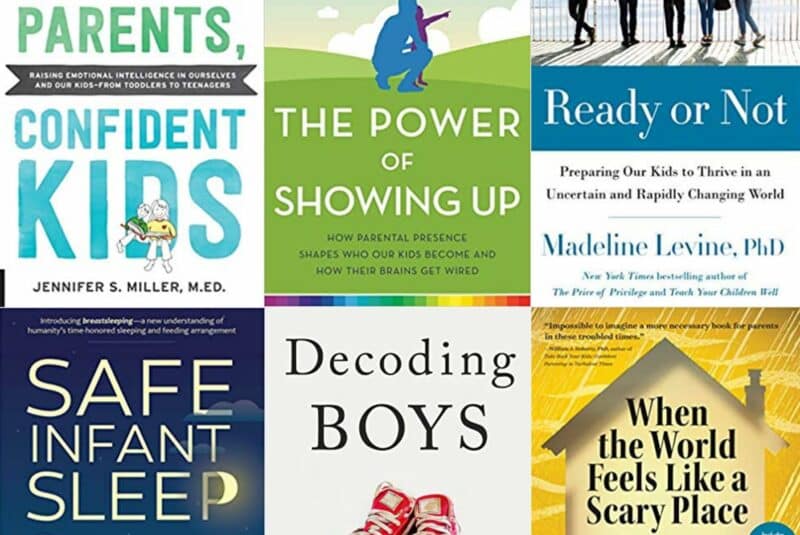
As a parent, one of the topmost priorities in my life is to give my kids a good education and see them grow into happy, fully functional adults. Parenting skills are not something we inherit or are just born with. For some, educating their kids in the same way their parents taught them might be good enough, but times change and what worked 20 or 30 years back is likely not as ideal in today’s environment.
Books have been one of my main tools for becoming a more intentional parent. Not every book will resonate, but reading widely across different approaches helps you develop your own informed style rather than defaulting to instinct alone.
Here are some of the best books I’ve found on parenting, grouped by theme. There are many subtopics, and if your child has particular traits that you identify early on, it pays to read books about those particular challenges, and also seek help when needed.
Emotional Development and Discipline
Raising a Secure Child — Kent Hoffman, Glen Cooper, and Bert Powell’s work on attachment theory translated into practical parenting. The core idea is that children who feel genuinely secure with their parents develop better emotional regulation throughout life. It helped me think more clearly about what my kids actually need from me versus what I assume they need.
No-Drama Discipline — Dan Siegel and Tina Payne Bryson make the case that discipline should be about teaching, not punishing. When a child melts down, their thinking brain has essentially gone offline. Meeting them calmly first, then addressing the behavior, works far better than matching their intensity. A book I come back to regularly.
The Whole-Brain Child — Another Siegel and Bryson collaboration, and probably the most practical of the two. It explains how the developing brain affects behavior and gives you concrete strategies for each situation. Worth reading before your child hits any major transition point.
The 5 Love Languages of Children — Gary Chapman’s adult love language framework applied to kids. The argument is that children receive and express love differently, and if you’re not speaking their language, your efforts may not land the way you intend. Worth reading even if you’re already familiar with the adult version.
How to Talk So Kids Will Listen and Listen So Kids Will Talk — Adele Faber and Elaine Mazlish. One of the most recommended parenting books for good reason. It shifts the focus from getting compliance to building real communication. The techniques feel simple on paper but require real practice to apply consistently.
Parent-Child Communication and Collaboration
Raising Human Beings — Ross Greene challenges the idea that kids are being difficult on purpose. His Collaborative Problem Solving approach treats children as partners in finding solutions to recurring conflicts rather than subjects to be managed. It changed how I approach disagreements with my kids.
The Explosive Child — Also by Ross Greene. This one is more specifically aimed at kids who have intense, unpredictable reactions to frustration. Even if your child doesn’t fit that extreme profile, the framework for understanding inflexibility in children is genuinely useful.
Parenting with Love and Logic — Foster Cline and Jim Fay’s approach centers on letting children experience natural consequences rather than shielding them from every difficulty. The idea is that small failures early on build the resilience to handle bigger challenges later. The balance between protection and allowing struggle is something every parent wrestles with.
Siblings Without Rivalry — Adele Faber and Elaine Mazlish again. If you have more than one child, this is essential reading. It reframes how parents inadvertently set siblings up to compete and gives you tools to step back from the referee role. Practically useful from the moment a second child arrives.
Happiness and Well-being
Raising Happiness — Christine Carter brings a research-based approach to raising kids who are genuinely happy, not just well-behaved. The focus on gratitude, connection, and intrinsic motivation is grounded in positive psychology rather than wishful thinking.
How Children Thrive — Mark Bertin’s book sits at the intersection of mindfulness and executive function. It’s particularly good for parents who want to understand why some children struggle with focus and self-regulation, and what actually helps.
Peaceful Parent, Happy Kids — Laura Markham’s approach is built on the idea that your own emotional regulation as a parent is the foundation for everything else. Before you can help a child manage their emotions, you need to be able to manage your own. Simple in concept, genuinely difficult in practice.
The Danish Way of Parenting — Jessica Joelle Alexander and Iben Sandahl look at why Danish children consistently rank among the happiest in the world and trace it back to specific parenting practices. The focus on play, reframing, and avoiding the overscheduling trap resonated with me.
The Happiest Kids in the World — Rina Mae Acosta and Michele Hutchison look at Dutch parenting culture, which produces similarly happy outcomes. The Dutch approach to giving children genuine freedom and not over-managing their time is worth understanding, even if you can’t adopt it wholesale.
Managing and Understanding Challenging Behaviors
Parenting the Strong-Willed Child — Rex Forehand and Nicholas Long’s practical guide for parents whose children consistently push back against direction. It’s behavioral in approach, which means concrete techniques rather than philosophy. Useful when you need something actionable rather than theoretical.
Lost at School — Another Ross Greene book, this one focused on the school environment. If your child is struggling behaviorally at school and you keep getting called in for meetings, this will help you understand what’s actually happening and how to work productively with teachers rather than against them.
Passing on Life Lessons
A Gift to My Children: A Father’s Lessons for Life and Investing — Jim Rogers wrote this as a direct message to his daughters about how to live well. It covers everything from curiosity and resilience to financial independence. Short, dense with ideas, and written with genuine warmth. A good one to read yourself and eventually pass on.
A Note on How to Use These Books
Reading widely helps, but the real work is in applying what you’ve read consistently. Books can only get you so far. The parent who knows their child best is the one spending real time with them, so being willing to think outside of what any book recommends is also an important skill.
I’ve personally found that having a like-minded peer group of parents is also very helpful, especially when you need support on a particularly tough situation. Schools also play a crucial role, so make sure you make the right choice for your kids.
If you’re building your child’s reading life alongside your own parenting education, my best books for kids list covers the children’s books that actually got used in our house. And if mornings with young kids are your current challenge, the morning routine guide has what worked for us.
Frequently Asked Questions
What is the single most important parenting book to read?
There is no universal answer, but if you can only read one, The Whole-Brain Child by Dan Siegel and Tina Payne Bryson gives you the clearest foundation for understanding how a child’s developing brain affects their behavior. Everything else builds on that understanding.
When should I start reading parenting books?
Before the child arrives if possible, but honestly you’ll absorb more once you have a specific situation in front of you. Reading about toddler tantrums means more when you’re actually in the middle of one. Keep a shortlist of books to return to at each developmental stage rather than trying to read everything at once.
Are parenting books from different countries worth reading?
Yes, and they’re often more useful than books from your own culture precisely because they surface assumptions you didn’t know you were making. The Danish Way of Parenting and The Happiest Kids in the World (Dutch parenting) are both worth reading for this reason.
Related






Leave a Reply