Every Kindle book you buy comes locked with Digital Rights Management (DRM). That means you can only read it through Amazon’s own apps and devices. You can’t convert it to EPUB, you can’t open it in Calibre, and if Amazon ever decides to pull a title or shut down your account, those books are gone.
This guide walks through how to remove DRM from your Kindle books so you can read them on any device, convert them to any format, and back them up properly. You bought these books, so you should be able to use them.
Updated September 2026. Amazon retired the legacy Kindle for PC app on June 30, 2026, and the old method of downgrading to Kindle for PC 1.26 or Kindle for Mac 1.17 no longer works. Even copies that are already installed can’t sign in. This version of the guide covers the routes that still work: the new Microsoft Store Kindle app on Windows, and Kindle e-readers. There’s a separate section for Mac users.
Is This Legal?
This is a gray area that varies by jurisdiction, but the ethical case is straightforward: you’re not pirating anything. You bought the book. You’re removing a technical restriction that prevents you from using something you already paid for. You’re not distributing copies or bypassing protection to avoid paying.
In the US, the DMCA makes circumventing DRM technically illegal even for personal use. In the EU and other regions, personal backup rights are stronger. Know your local laws. This guide is written for people who own the books they’re removing DRM from, not for piracy.
What You’ll Need
- Calibre, the open-source ebook management tool (calibre-ebook.com)
- DeDRM plugin, the fork maintained by Satsuoni on GitHub (github.com/Satsuoni/DeDRM_tools)
- KFX Input plugin for Calibre, installed from inside Calibre
- One of: a Windows PC with TPM 2.0 (any machine that runs Windows 11 has it) and the Microsoft Store Kindle app, or a Kindle e-reader
Step 1: Install Calibre
Download and install Calibre from calibre-ebook.com. It handles your ebook library and does the format conversion once DRM is stripped.
If you already have Calibre installed, update it to the latest version. The current DeDRM and KFX Input plugins are built against recent releases.
Step 2: Download the DeDRM Tools
The DeDRM plugin is the tool that actually strips the DRM during import. It was originally created by Apprentice Alf, then maintained by noDRM. The noDRM version hasn’t had a release since 2023 and can’t handle the DRM on current Kindle books. The fork by Satsuoni is the one that keeps up with Amazon’s changes.
Go to github.com/Satsuoni/DeDRM_tools/releases and download DeDRM_tools.zip from the latest release. The releases are marked as pre-release. That’s normal for this fork.
Extract the archive. Inside you’ll find DeDRM_plugin.zip, which is the Calibre plugin, plus several .exe tools for the Windows route in Step 4.
Step 3: Install the Plugins in Calibre
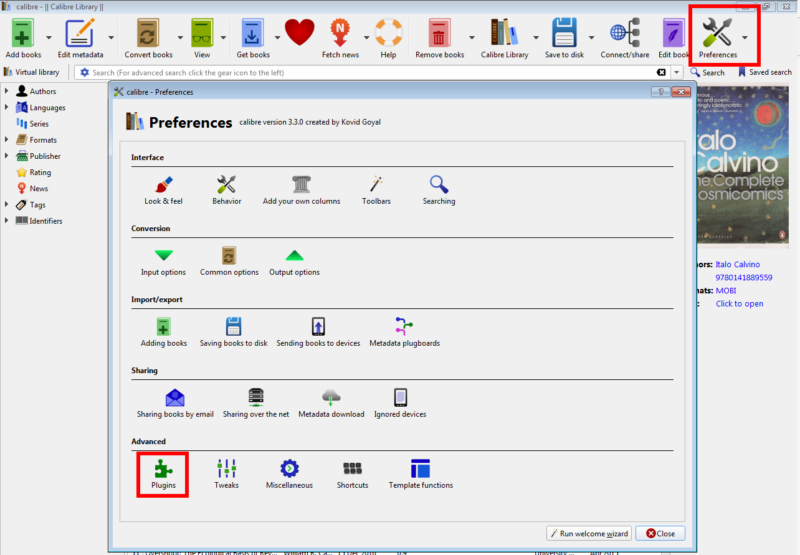
Open Calibre, then go to Preferences → Plugins → Load plugin from file and select DeDRM_plugin.zip. Don’t extract that inner ZIP. Calibre loads it as it is.
If Calibre throws an error like InvalidPlugin: The plugin ... is invalid. It does not contain a top-level __init__.py file, you’ve loaded the outer DeDRM_tools.zip instead of the plugin ZIP inside it.
Next, install KFX Input. In the same Plugins screen, click Get new plugins, search for KFX Input and install it. Current Kindle books use the KFX format, and Calibre can’t read them without this plugin.
Once both plugins are installed, restart Calibre. They won’t be active until you do.
Step 4: Get Your Books Out of Amazon
This is the step that changed. There are two routes that work in 2026, and which one you use depends on what hardware you have.
Route A: Windows with the Microsoft Store Kindle app
This route works for any book in your library, including recent purchases.
- Install the Kindle app from the Microsoft Store and sign in. It needs Windows 10 (version 1809 or later) or Windows 11 on an Intel or AMD processor, and a TPM 2.0 chip, because the app stores its decryption key using the TPM.
- Download the books you want to back up inside the app.
- Check which version of the Kindle app you have, then find the matching archiver in the
DeDRM_tools.zipyou extracted. The file names include the app version they support, for exampleMSIXKFXArchiver_x64_1_25218.exefor Kindle app 1.0.25218. The release notes on GitHub list which app versions each release covers. - Run the archiver. It creates a folder of
.kfx-zipfiles and a keyfile (.k4i). - In Calibre, go to Preferences → Plugins → DeDRM → Customize plugin → Kindle for Mac and PC ebooks, and import that keyfile.
Two warnings. Amazon updates the Kindle app regularly, and each update can break the archiver until a new DeDRM release catches up, so if yours doesn’t match, wait for the next release. And treat the keyfile like a password: it’s derived from your Amazon account, so don’t share or upload it.
Route B: A Kindle e-reader
If you have books on a Kindle e-reader, you can copy them off over USB. Connect the Kindle to your computer and look in its documents folder for .azw, .azw3 and .kfx files.
These books are locked to that specific device, so DeDRM needs its serial number. Find it on the Kindle under Settings → Device Options → Device Info, then in Calibre go to Preferences → Plugins → DeDRM → Customize plugin → eInk Kindle ebooks and add it. This is the step most people miss: without the serial, the import appears to work but the books stay locked.
This route works best for books downloaded to older Kindles. Books downloaded on newer firmware often use DRM the serial number alone can’t open. For those, the release also includes a tool that runs directly on a jailbroken Kindle (kfxdedrmmobi.zip), which people have reported working on Paperwhite, Oasis, Scribe and base Kindle models. Jailbreaking takes some work and carries a small risk of bricking the device, so try it on a Kindle you can live without.
Note that Amazon removed the “Download & Transfer via USB” option from its website in February 2025, so you can no longer download a book for your Kindle from a browser. The books need to already be on the device.
What About Mac?
There’s no free route that works with the Mac Kindle app anymore. The current Kindle for Mac from the Mac App Store keeps its decryption key where the DeDRM plugin can’t reach it, and the old Kindle for Mac versions this guide used to recommend can’t handle Amazon’s current DRM. Some paid tools claim Mac support, but they need you to disable System Integrity Protection, a core macOS security feature.
Mac users have three options:
- If you have a Kindle e-reader, Route B works on a Mac. Calibre and the DeDRM plugin run fine on macOS, and the serial number method is the same.
- If you have access to a Windows PC, run Route A on it with TPM 2.0, and copy the
.kfx-zipfiles and the keyfile to your Mac and do the Calibre import there. On an Intel Mac, a Windows virtual machine with a virtual TPM enabled works. On Apple Silicon Macs, Windows runs in its ARM version, and there’s no documented way to get the Microsoft Store Kindle app working on Windows for ARM yet. - If you’re comfortable on the command line, the DeDRM release includes an experimental script (
kindleFridaDecrypt.py) that decrypts books from the Kindle for Android app running in an Android emulator, using a tool called Frida. It needs root access to the emulator. The instructions are at the top of the script.
Step 5: Import into Calibre
Drag your files into your Calibre library, or use Add books: the .kfx-zip files from Route A, or the .azw, .azw3 and .kfx files from Route B. The DRM is stripped automatically during the import. There’s no separate “remove DRM” step to trigger.
DRM removal only happens on import. If you imported books before setting up the plugin, the keyfile or the serial number, remove them from Calibre and add them again.
To check it worked, look at the format in the book details panel. Route A books should show KFX, not KFX-ZIP. If a book still won’t open or convert, restart Calibre in debug mode (Preferences → Restart in debug mode), import it again, and close Calibre. The log that appears tells you what the plugin tried and where it failed.
Step 6: Convert to Your Preferred Format
Once your book is in Calibre without DRM, you can convert it to any format: EPUB, MOBI, PDF, AZW3, or anything else Calibre supports. Right-click the book in your library, choose Convert books, pick your output format, and hit OK.
EPUB is the most widely compatible format and the best choice for reading on non-Kindle devices (Kobo, Apple Books, any e-reader running standard software).
Calibre saves the converted file in the book’s folder inside your Calibre library, next to a cover.jpg and a metadata.opf. Those two files are Calibre’s own copies of the cover and metadata, so leave them where they are. The EPUB itself is self-contained, and a copy you move somewhere else doesn’t need them.
Why Amazon Keeps Making This Harder
Amazon has been steadily tightening the screws on local book access. It removed the “Download & Transfer via USB” option in February 2025, cut off Kindle Store access for Kindles released in 2012 or earlier on May 20, 2026, and retired the legacy Kindle for PC app on June 30, 2026. Its replacement ties decryption to the computer’s TPM chip. The direction of travel is clear: Amazon wants your library to live in its cloud, not on your device.
That’s exactly why having a local, DRM-free backup of books you’ve paid for makes sense. Kindle accounts get banned for various reasons, titles get pulled from stores, and licensing agreements between publishers and Amazon expire. Any of those events can result in books you paid for disappearing from your library.
This process is worth doing for any book you genuinely want to own, and sooner rather than later. Amazon has closed every earlier route, and the current ones may not last either.
Related









The converted DRM-free .epub books are placed in the same storage location as the original .azw3 documents. In the same folder, there are also cover.jpg, metadata.opf. Are these files used for anything, or is the .epub document self-contained and the rest redundant?
Thanks for posting the fix. Books downloaded to an e-ink Kindle are encrypted with that device’s serial number, so DeDRM needs it, and I’ve added that step to the guide. On your question: the .epub is self-contained. The cover.jpg and metadata.opf files are Calibre’s own copies of the cover and metadata, which it keeps in each book’s folder. Leave them in the Calibre library since Calibre relies on them, but an .epub you copy somewhere else doesn’t need them.
Clearly a RTFM issue.
I found the deDRM plugin readme file, which instructed me to add the Kindle reader S/N to the plugin custom settings. So I did.
After this, the book view and EPUB conversion worked fine.
I followed instructions and added books backed up from my old (now unsupported) Kindle reader. Add books went fine, but the DRM was not removed.
The books could not be viewed in Calibre, or exported to EPUB.
The deDRM plugin in Preferences was found under File Types, is this correct?
I’ve got an older version of kindle installed, however I’m not able to login to an amazon account on it. I saw some stuff on epubor.or that in 2026 the devices were no longer going to have any amazon support. Are you still using 1.26 version for PC?
1.26 stopped working when Amazon retired the legacy Kindle for PC app on June 30, 2026. Even copies already installed can’t sign in. The device news you saw is a separate change: Kindles released in 2012 or earlier lost Kindle Store access on May 20, 2026. On a PC, the current route is the Satsuoni DeDRM fork with the Microsoft Store Kindle app, and the updated guide covers it.
I’m trying to follow these instructions, but when I click on a book in Kindle 1.26, it says I have to update, and won’t download.
Is there any new workaround?
That update prompt was Amazon phasing out the old app. Since June 30, 2026 the legacy Kindle for PC, 1.26 included, can’t sign in at all, so that route is closed. What works now on Windows is the Satsuoni fork of DeDRM together with the Microsoft Store Kindle app and the KFX Input plugin. It’s pre-release and each version targets specific Kindle app builds, so check the release notes list the version you have installed. I’ve updated the guide with the new steps.
Does anyone know of a current way to convert drm restricted Amazon magazine subscription files on a Mac, without the need for a virtual PC installation? Any common universal format such as epub or pdf would be nice. I don’t have a Kindle and don’t want to install some proprietary Kindle app on every device that I’d like to read on.
I find it ridiculous that Amazon offers only Kindle format for digital magazine subscriptions / requires a special Kindle app on every device you want to read on / and worst of all, if you decide to cancel your subscription you can’t even access the magazine issues that you already paid for. The main purpose of buying a guitar magazine is to have access to the guitar tabs when needed. I’d even pay more if they allowed for this. Printed copies take up a lot of space, show up damaged in the mail and aren’t as accessible as digital.
Anyway, I figured I’d mention these gripes in the off-chance someone at Amazon decides to research why people are wanting to remove their stupid drm restrictions in the first place. If anyone has any suggestions for Mac users, please do share. I’d like to make sure there’s a way before I drop money on a subscription I won’t have future access to. Thanks.
I Just tested https://www.ebook-converter.com on mac and it works, the trial version creates a pdf file with marks about buying the complete version of the converter, but it works
I’ve been doing this for years and now it has stopped working.
We need to wait for some updates or use older versions combinations. It works for me with the older versions.
In 2021 – I just went through everything I could find on removing DRM from Amazon books. and even though I have a v10 Kindle, I’m not finding any way to import to Caliber, or remove DRM, that is current and working.
Even “Download and transfer via USB” does not work.
I’m stubborn and will stop buying books on Amazon if I can’t get them into Caliber, convert to epub, load onto whatever device I want, usually my phone because that is what is with me when I get a chance to read.
It is not working anymore