Buying a car in Spain as an expat is more involved than in many other countries. You have to navigate the used car market, understand local depreciation patterns, negotiate with dealers in Spanish, sort out insurance, and figure out what to do if you get into an accident. This guide covers all of it in one place.
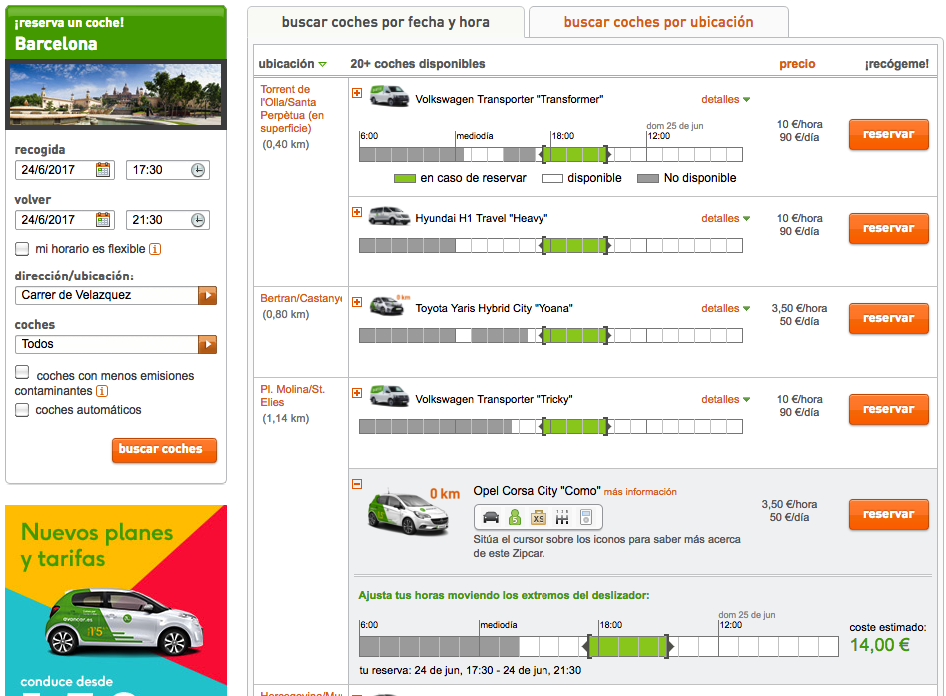
If you’re still weighing whether you need a car at all, check out my article on carsharing and scooter apps in Barcelona first. In the major cities, many people find they don’t need to own one.
New Car vs. Used Car
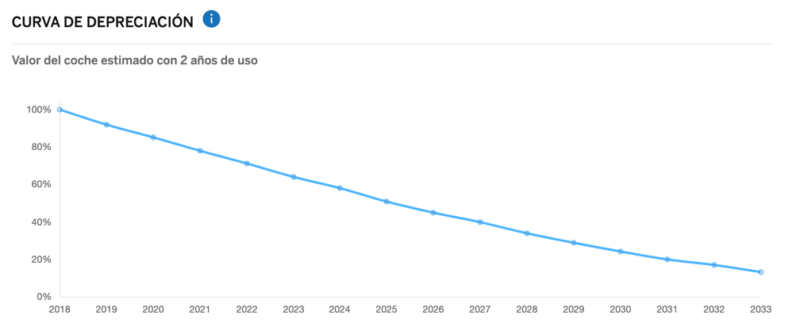
Thinking of buying a new car rather than used? The biggest argument against is depreciation. A new car loses around 17% of its value in the first year alone. From year two to six, it drops about 10% per year. After year nine, it has already lost roughly 84% of its value.
Some cars shed value faster than others. The Volvo S80 drops 32.6% in year one, the Mini Cooper 29.3%. Audi and Mercedes retain value better than Opel or Citroen.
Here’s a depreciation schedule I have for my own car:
In Spain, diesel compact cars used to hold value best. That’s no longer the case. European capitals are rolling out circulation restrictions on diesel vehicles, and the public has largely turned against them. Avoid diesel unless you have a very specific need for it (more on this below).
Should You Even Buy a Car?
In cities like Barcelona, Madrid, and Valencia, owning a car is less common than it used to be. Ubeeqo and similar services make it easy to use a car when you need one without the ongoing costs of ownership. I’ve written a separate article on carsharing services in Barcelona that’s worth reading if you’re not 100% certain you need your own car.
New Standard Car vs. Used Premium Car
One comparison worth thinking through: a new mid-range car versus a lightly used premium car at the same price. For example, a new Seat Ateca versus a used BMW X1 or Audi Q5 with 20,000km on the clock.
Buying new gets you a full warranty, latest technology, lower maintenance costs, and the car exactly configured to your specs. The downside is hard depreciation from day one and no track record on that model year.
A used luxury car comes with lower depreciation from that point on, better build quality and aesthetics, and a known reliability history. The tradeoffs are higher maintenance costs, older technology, and a shorter remaining warranty.
Car Cost Breakdown
Owning a car in Spain has a fixed annual cost even if you park it for a month. Here’s the rough split for moderate to regular use on a new or fairly new car:
- Depreciation – 45%
- Fuel – 28%
- Maintenance and repairs – 13%
- Insurance – 8%
- Tyres – 6%
Guide to Buying a Used Car in Spain
You have several options when buying used, each with different risk and price profiles.
The traditional route is buying from a private seller or independent dealer. It’s the cheapest way, but carries the most risk. Odometer tampering is not unheard of, and sellers are not obligated to disclose hidden issues.
Authorized brand showrooms (for example, an Audi dealer selling certified used cars) are more transparent. They won’t tamper with odometers because the reputational cost is too high. They typically sell ex-rental or management vehicles with a capped mileage, often under 20,000km, and perform a standard refurbishing procedure. Expect to pay 1,000 to 3,000 euro more than buying from a private seller, in exchange for better documentation and peace of mind.
The third option is buying online from platforms like Clicars and Quadis Select. These operate without showrooms, passing the cost savings on to buyers. The process is convenient: browse, reserve, and receive the car without any haggling. Clicars is the market leader in Spain, with a 250-point inspection, high-resolution photos that don’t hide scratches, and a 15-day or 1,000km trial period with a full refund if you’re not satisfied. Quadis Select offers similar terms (10 days / 1,000km). Both also offer a home-collection service if you’re selling.
You can find used car listings on these portals:
Some towns also hold regular used car markets. Barcelona has a yearly used car fair that’s a good way to compare models without committing to anything.
You can calculate the official value of any used car in Spain using Supertasador.
Types of Second-Hand Cars on the Market
- KM 0: These are cars registered by dealerships and sold after a few months. Despite the name, they’ve typically been driven for test drives. They usually still carry the manufacturer’s warranty and offer savings of 17-25% over a brand-new equivalent.
- Ex-rental cars: These must pass the official vehicle inspection (ITV) two years after purchase rather than the standard four years for a new car. Many buyers don’t know this, which can invalidate your insurance in the event of a claim. If the car is under two years old, it needs to pass the ITV before you can register it in your name.
Used cars offered by dealers must include at minimum:
- Price and validity (valid for at least 10 days).
- Owner’s details.
- Brand, model, cc, chassis number and license plate.
- Age, km and last service details.
- ITV status: date and result, plus any additional tests if the car was in an accident or significantly modified.
- Date the seller purchased the vehicle.
- Warranty (legal and commercial). Minimum one year.
- Any outstanding debts or charges.
Keep in mind that many prices you see online assume you’re financing the car. The cash price tends to be 1,000 to 2,000 euro higher.
How Much Can You Save?
Here’s a concrete example. An Audi A3 listed by a dealer at 29,900 euro. The same car configured new on Audi’s website costs around 36,000 euro. That’s a saving of roughly 6,000 euro (17%) on a car with 1,000km on the clock.
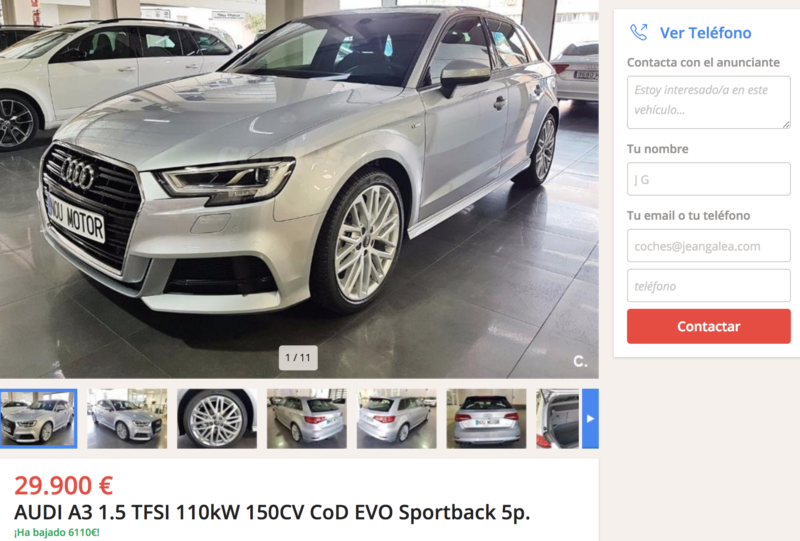
KM0 cars typically save you 17-25% versus new, depending on the mileage and how long the car has sat at the dealership.
One practical constraint: the used market in Spain skews heavily toward diesel and toward standard trim levels. If you want a specific petrol model in a sport or premium trim, you may have to wait months for one to appear, or adapt your expectations.
How to Get the Best Price on a New Car in Spain

If you’ve decided to buy new, negotiating as a foreigner can feel uncomfortable. You’re up against experienced salespeople in a second language. The good news is that you can shift the balance using two tools.
Step 1: Use Carnovo to get competitive quotes. Configure the exact car you want on Carnovo and receive offers from multiple dealers in your area. Dealers typically come in 7-15% below sticker price. These are not their best offers, but they’re a useful floor.
Step 2: Research actual transaction prices on owner forums. Find the Spanish forum for your target make and model (for example, Mazda owners have an active Spanish forum). Members regularly post the prices they paid and what discounts they managed to get. This gives you real-world data, not just the dealer’s opening number.
Once you have a target price, go to the dealer and make your position clear: you want to buy today and you’re ready to leave a deposit, but you know the car has sold for X in the past. Leave a leeway of around 500 euro. The dealer may push back or let you walk out. If the latter happens, leave your contact details. In most cases they’ll call within a few days to accept your price.
The key is going in informed. You’re not guessing. You’re citing actual transaction prices from other buyers.
Paperwork and Taxes
When buying from a dealer, sales tax (IVA) is included in the price.
When buying from a private seller, you’ll pay the Impuesto de Transmisiones Patrimoniales. This tax is calculated on the official value of the car (based on make, model, and age), not the actual sale price. Most regions offer an online calculator. Here’s the one for Catalunya.
When buying from a company, they handle the ownership transfer paperwork. When buying from a private seller, that’s your responsibility. Always draw up a written contract when buying privately, even from someone you know. Keep all documents until you sell or scrap the car.
Driving Permits
EU and EEA driving licenses (Iceland, Liechtenstein, Norway) are valid in Spain for as long as they remain in force. You do not need to convert to a Spanish license just because you’ve been living in Spain for a while, despite what some traffic police claim.
I was stopped once by an officer who insisted I needed a Spanish license after two years of residency. He was wrong. There are specific conditions where conversion is required, but they don’t apply to most expats. See the official conditions here.
If you want to convert voluntarily (for example, to apply for an International Driving Permit from Spain rather than your home country), you’ll need to prepare the required documents and book an appointment with the DGT here.
A note on International Driving Permits: There are websites that sell “IDPs” with plastic cards, digital versions, and multi-year validity. These are scams. A legitimate IDP is issued by a recognized national authority, lasts one year, and is a paper booklet. The fakes may sometimes pass inspection at a rental desk, but they are not real documents and I would not recommend relying on them.
Known scammer sites for reference:
Car Insurance in Spain
Full coverage (todo riesgo) is generally worth it for cars under five years old, especially expensive ones. Newer cars are more likely to be stolen or to sustain damage that you’ll want to repair.
To cut premiums without dropping to third-party only, go for full coverage con franquicia. This means you pay an excess on any claim, and the insurer covers the rest. You can often cut the annual cost by half or more this way.
After four to five years, when the car has lost nearly half its value, it usually makes sense to switch to third-party only.
Insurance companies worth checking:
- RACC
- Mapfre
- Allianz
For cheaper options, AXA and Direct are consistently competitive. I’ve used both.
Use comparison sites to find the best deals: Rastreator, Acierto, or Rankia.
It’s also worth asking your dealer for an insurance quote and comparing it against the above. The Prudenzia app (previously Coverfy) is useful for managing all your policies in one place and getting quotes. You get one dedicated contact person for any policy questions.
Diesel vs. Petrol
The Spanish government promoted diesel for years, then reversed course. Unless you have a genuine need for it, avoid diesel entirely.
Consider diesel only if you’re doing more than 80% highway driving and covering over 20,000-30,000km per year, you regularly tow a boat or caravan, or you carry heavy loads frequently in mountainous terrain. In any other case, petrol is cheaper to buy, quieter, cheaper to service, and less likely to need costly repairs. Diesel vehicles are also facing or already subject to circulation restrictions in most major European cities.
On the upside for diesel buyers: because demand has fallen sharply, you have significantly more negotiating power with dealers than you would for petrol equivalents.
Gas Stations in Spain
Fuel quality varies across petrol station brands, partly due to different additive blends. There are two grades of petrol available: 95 and 98. The 98 is more expensive but generally produces less engine knock and slightly better performance. Some drivers report up to 20km difference in range depending on where they fill up.
My preferred station is Repsol. Use this tool to find the cheapest fuel near you.
Car Care
Avoid automatic car washes with bristle brushes, as they damage the paintwork over time. If you need to use one, look for chamois leather roll washes. In Barcelona, Hanna is a decent option.
For cleaning products, I use Auto Glym for both interior and exterior. It’s a premium-priced brand but worth it. For mechanics and body work in Barcelona, I recommend checking my guide to the best mechanics, spray painters, and detailers in Barcelona.
What to Do If You’re Involved in a Car Accident in Spain
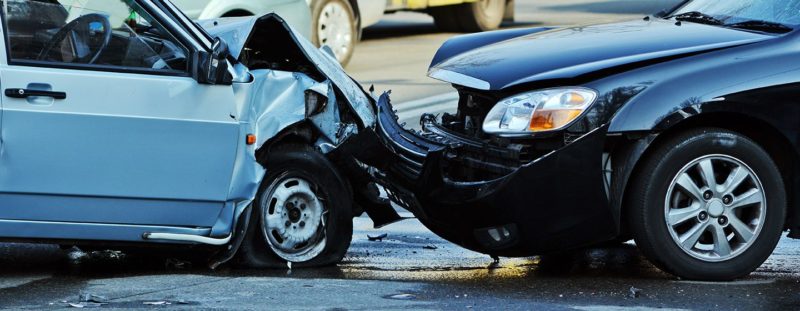
You have the right to indemnification for both material and personal damage.
Material damages cover your car and objects inside it (laptop, phone, etc.) as well as lost income in the case of professional drivers.
Personal damages cover physical injuries to the driver and passengers and any psychological harm resulting from the accident. A medical expert assesses these after the fact.
If there are any injuries, you have the right to choose where you receive free medical treatment, public or private. You can find a full list of eligible centers at hospitalestrafico.es. Under Real Decreto 1507/2008 and Ley 41/2002, the costs of medical attention are borne by the insurers, regardless of whether you have private health insurance or chose a private hospital.
Procedures to Follow
The emergency number is 112.
In Catalunya, there is a free support line for accident victims: SIAVT at 900 100 268. They help with paperwork, rights, and psychological support.
For minor accidents where both parties agree on what happened, fill in the standard accident report form (kept in your car) and have both parties sign it.
If there is serious damage, injuries, or any disagreement about what happened, call the national police or the Guardia Civil. Take down the other driver’s details regardless. Inform your insurance within 7 days.
Keep any damaged objects and original purchase receipts if you’re claiming for items inside the car. You are also entitled to a replacement car while yours is being repaired.
Further Reading
Car Repairs in Barcelona
For repairs in Barcelona, especially paintwork, I can recommend VTC. For a broader list of trusted workshops and detailers, see my Barcelona mechanics guide.
Apps
The ElParking app is useful for saving 50% on ITV bookings, finding electric charging points, and booking airport parking.
If you’re considering alternatives to ownership, my article on car rental and carsharing websites in Spain covers the main options worth knowing.
Related






Hi , is it common for dealers to ask for a €500 reservation fee?
A Kia dealer in Torrevieja is asking for this before they will arrange a vehicle to be moved from another site for me to test drive .. the amount seems excessive and I am concerned that if the car is not suitable I may to get a refund.. is this money at risk or are they required to refund? Thanks
Hi Jean,
Thanks for the write up. How do leases work here? Would I go to a regular car lot and be able to lease from their used cars selection? Or are leases only available for new cars?
-Jeff
Hi Jean.
Maybe you can give me some advice on importing a used car from Spain.
I would like to buy a used Land Rover Defender, probably from a private seller, and drive home to Denmark.
In some countries (fx Germany) it is possible to buy a temporary licence plate with insurance.
Does Spain have a similar system?
I will probably need the plates for 3 days. Valid in Spain, France and Germany, until I reach the Danish border.
Can you give me some advice?
Best wishes
Hi there I’m after a newish car around €20000 I have a place in Benijofar ,do you know of any good car company’s like the one in Madrid ,all so I have a car to part x or would you say sale privately ,if you can help that would be great……thanks Sandy
I have bought a new car from Caetano Movil in Velez Malaga and paid an initial 500 euros deposit. They have asked that I now pay the remainder to allow them to register as per the statement below. Is this normal practice in Spain?
In Spain to register the car we need a sales bill which cannot be created before the 100% of the amount is paid. The reason is once the car has been registered it’s your property so you could have it without paying the rest so we always ask the total amount to be paid before registering it.
In all the cases it is a bank transfer, a safe way to pay, there is no risk in this.
If I do an online transfer from my Spanish Bank account to the garage am I protected in the event that they do not deliver the car?
Here’s a question that may apply for a lot of people. I’m confused; To buy & drive a car in Spain it requires either proof of house ownership, or a contract of living/renting a house here for a year? (Can this be a contract that will be a year when finished vs only after a year has passed).
I don’t believe I was asked for such proof when I bought my car.
They did ask for one when I bought my car last year.
Thanks for confirming Daniel, I must have forgotten about it then.
Hi,
2 years ago, I bought a new car here in Madrid. A Fiat 500x. I just brought it for it’s second year maintenance in a local Fiat recommended garage. They tried to charge me 480Euros for the service. I was really shocked. I’ve had cars for years in ireland (which is expensive) and a service never came even close to that price. They said that it was because it was a second year service and the following year would be cheaper but that seems too high to me.
I’m trying to find out what is the real price here.
Thanks,
Lynda
Some brands have a site where you can check the price, I have a Mazda and I can check how much each service typically costs online for the first 4 years. Excluding that, service costs range between 200 and 500 euro depending on the work that needs to be done, so it’s not necessarily the case that they are trying to rob you. Best way to check is to go to another Fiat garage, it’s an easy task being in Madrid. Let us know how it goes.
Hi Jean,
I have learned quite a lot from your article… Thanks!
I’m moving to Granada from USA (have a 2017 Toyota Cambry here) and have no idea what to buy in Spain. the option of buying online a KMo is appealing because I need a car as soon as I get there, but I need a reliable one and I was thinking about paying for it cash because I will be an expatriate with no credit in Spain, unless financing a car helps me establish credit as it is very important here in the states. Also as an expatriate what do I need in order to buy the car? Thanks
Hi Jean, I have recently been looking at second car sites particularly private sellers and note that compared to the UK prices asking prices are much higher, however, have been looking at autocoche.es and here prices seem comparable here or in some cases cheaper than UK, why are asking prices cheaper here than anywhere other car websites, is this site to good to be true?
I’m not familiar with that site and to my knowledge it’s not one of the top sites for second hand cars in Spain. However it doesn’t mean that it’s not reliable. In general from experience prices for second hand cars in Spain are more expensive than in the UK. It doesn’t help that most of Europe drives on the other site when compared to UK, so I guess the market is smaller for those cars.
Hi Jean,
Thank you very much for this. This is really useful information.
I am currently conducting a research on used car market in Spain and have a few questions on used car market and wondering if you can answer these.
1. Is trade-in process also popular in Spain when buying a new car or used car?
(give your old car to a dealer and get deduction on your new car cost)
2. What kinds of financial plans are popular when buying a car in Spain?
(i.e. 36 month payment plans, lease plans and etc)
3. Who do you think is the main consumer of used car in Spain? and why they buy used car?
(in some of the other market’s, perceptions of used car are very positive and
the used car deals are very common, but wondering how is it in Spain)
I understand that these are very broad question, but it would be very helpful if you can just share your thoughts. Thank you.
Hi Jean, I would like to know what I am not understanding when it comes to the price of classic cars in Spain. when I look on websites such as ooyyo and autocoche.es, I notice that some of the prices are just crazy low when compared to Canada or USA. In particular VW Type 2 (samba) and Landrover Defender 90/Series 1/2/3 etc. Prices are as low as 10% of what these vehicles would sell for on this side of the Atlantic.
I include an example here:
http://www.autocoche.es/malaga/caterham-super-7_idc_104549.html
Thanks,
Stuart
Ontario, Canada
Could it be that it’s because they are European brands and so there are just more of them here? Also, I might be wrong on this but it seems to me that Spanish people have a much more utilitarian view on cars and there might therefore be lower demand for classic cars compare to the USA and Canada.
Really interesting information about car buying in Spain, which I find very daunting. Second hand cars here are much more expensive than the UK and trying to find a decent low mileage at a reasonable price here is very difficult. Your website have clarified quite a lot of issues but not why Spain has a very expensive second hand car market.
Can you tell me what KMo stands for!!
Glad it helped Ralph. KM0 is a bit of a misnomer since it seems to mean a car with 0 KM but that has already been registered. So you’re supposed to get a discount since the car has been registered say 3 or 4 months before you buy it. That means it will have a shorter guarantee and it will probably have been used as a showroom car.
Over the years the definition of KM0 has widened and I’ve seen cars with 7000Km described as KM0 which is just plain ridiculous. In such cases what they mean is that they registered a car and used it as a demo car for test drives and also for one of their managers to drive around, and they are now selling it to make way for other cars.
Others have also mentioned that in the UK second-hand cars are cheaper. I’m not sure why that is the case but there’s definitely the fact that it’s harder to sell those cars outside the UK given that most other countries are RHD. There’s also the issue with salt put on the roads which can cause rusty undercarriages. I’ve seen a lot of cars with this problem in Malta where UK cars are very popular as second-hand purchases.
I would recommend a site like Clicars or Webycar for getting a second-hand car because it does away with the negotiating stage which can be daunting if you don’t speak fluent Spanish and are not used to haggling.
I gave up looking in Spain and just bought a lhd car in UK and drove it over. The whole thing with registering it in Spain seems to be a bit if a bluff too… I drive around with my UK insurance, logbook and receipt for tax in the car and this seems to satisfy the various types of Spanish police. As long as you don’t tell them you’re staying forever they accept it but I live in Madrid and spend most of my time on motorways so they take no notice of me really.
I bought a car in UK worth around £7000 that would have cost around €10000 in Spain and about €3000 to register in Spain plus the aggro of dealing with Spanish authorities.
Hi jean/Jill, good to know that I’m thinking about and considering the right issues before I buy.
Definitely sticking with the petrol option, I prefer driving petrol as long as they have a big enough engine or at the least are not underpowered as so many modern cars are (small engines and lots of heavy on board safety equipment).
I’ve had to return to the UK unexpectedly for a week, not good news but whilst I’ve been here I’ve discovered a previously unconsidered option… and that is to buy a used left hand drive car in the UK and drive or ship it out to Spain. I’ve already discovered that there are a few considerations to this but nothing unsurmountable.
1. Got to make sure you don’t buy a Spanish car that is now in the UK… I looked at a BMW x5 that on the face of things was a really good option. Low mileage (70k miles), lots of extra’s, very good condition, bodywork was great for the age (2002) and it was available for only £3500. I asked the owner if there were any outstanding fines, tax or other payments from its previous life in Spain and was told that there were road tax payments missing for 5 years that totalled £800, the way Spanish law works, I would have been liable for these as soon as I registered the car in Spain. So in total I was looking at about £4300 for the car to buy it (still cheaper than buying the same car in Spain). I am nervous however about the fact that the owner didn’t declare this to me until I asked so I don’t know what else could be levied agains the car in Spain so I’m staying away from cars that have previously been in Spain.
2. I’m now looking at some options of cars that were made for the EU market (so they should have no problem passing the Spanish homologation tests) but have NOT previously been Spanish registered. There will still be hoops to jump through and fees to pay for importing etc but this is still going to come in under the price of buying in Spain… and it avoids the potential pitfalls of buying from a Spanish dealer… which I’m told are sometimes less scrupulous than UK dealers
Minefield
Hi Gareth
When we read up on the option of buying a LHD car in the Uk, it looked like you have to pay import duty 10% as well as vat 21%.
It was just so complicated, we decided to bite the bullet and buy in Spain.
We also decided to opt for a dealer, to avoid risk … legal systems are difficult enough to navigate in your own language, but if something goes wrong and your faced with the Spanish legal system, then that’s blood curdling!
So, just this morning, we bought a 2yr old Opel Mokka, with all the bells and whistles, from an Opel dealer, for €14k cash – would have been €11,500 if we had a trade in and finance.
They didn’t seem interested in any deals – take it or leave it! So, we took it!
Just need to get our Padron sorted before we pick it up …. and that’s a whole other set of complications !!
Good luck with your endeavour!
Hi Jean
I just arrived in Spain 2 weeks ago, in Colmenar Viejo just north of Madrid. I’m currently still enjoying the free rental car my company provided but that has to go back in 2 weeks so I’ve spent a lot of time looking at the different car buying options… Your article has been by far the most useful.
I had been pretty certain about buying used but can’t get my head around the prices of used cars compared to the UK. They’re so expensive in Spain.
Definitely don’t want a diesel as I hear they are likely to be banned in Madrid soon.
Need something with a high profile tyre as my wifes visionary repertoire doesn’t stretch to recognising curbs… So I’m thinking a used SUV of some description.
I’m also committed to a couple of years in Spain but don’t really know beyond that so I don’t really want to be tied down to a finance contract that’s going to be difficult to get out of… Although I will need to buy on finance.
Do you have any recommendations?
Thanks
Welcome to Spain Gareth! I’m also planning on buying an SUV so I can offer some tips there. My favorite car in the segment is the Mazda CX-5, with a petrol 2.5l engine. Check out Autogefuehl’s review of that car on YouTube.
This year’s latest version should arrive in Spain in September, it’s the 2.5l 4×2 model (before it was only available in 4×4 and was therefore quite a bit more expensive). I agree with you that diesel is not a good option going forward, especially if you want to have the option to resell the car in case you need to leave Spain at some point.
I wasn’t aware that used cars in the UK were very much cheaper, although they are very popular in Malta since it’s also RHD there. I still think the KM0 cars are excellent value if you can find what you want. Unfortunately most KM0 deals at the moment involved diesel engines, as all the showrooms are struggling to get rid of their stock. In the future I expect to see more petrol KM0 cars of all types become available.
The Mazda CX-5 is the best SUV in my opinion if you value driving experience and a premium-ish interior without spending more for the truly premium brands like Audi and BMW. If you’re after something more basic then the Nissan Qashqai is one of the best selling models in Spain. I’ve also had the Kia Sportage for a few months, but the petrol engine on that one is too weak really. Otherwise it’s a decent SUV with lots of space and an affordable price tag. With regard to finance you might want to look into Mazda’s flexcar system.
Hi Jean and Gareth (hope he’s picking this up too!)
I’ve been driving the 2 wheel drive Mazda CX-5 in the UK for the past couple of years .. and was so sorry to see it go yesterday, as we sold it, ready to move to Spain.
It really is a super car. Very easy to drive .. I didn’t curb it once, in all my miles of driving! In fact there was nothing at all that I didn’t like about it.
We would love to buy one in Spain, but new are about 5k over our budget, and nearly new / second hand seem to be few and far between.
Interested in your comment about Diesel. I know there’s movement to move away from diesel, but I didn’t know it was as advanced as that. Worth noting.
I’ll be looking into the Mazda deal you mentioned.
Many thanks
Thanks for that glowing review of the CX-5 Jill, I’m even more eager to get one now. I almost bought this one specifically. The price is great and it only had 20km on the clock. Just the colour I was looking for and the extras I wanted. I had already arranged for handing over the deposit on a Monday but then spent the weekend reading about the Diesel issues here and got dissuaded. Even now I’m tempted to just buy it, but diesel engines are really going through a bad patch in the Spanish media, which makes it next to impossible to sell in a few years if we need to move or just want to upgrade to another car.
We too, are in a dilemma on this one!
We know we should be going to gasoline, but we both like the way a diesel drives!
Good luck!
Great article, it really helps as me and wifey are going to move to Spain next year. And a car is definitely on the first to-do list (we bought a house outside the city). We are thinking about a electric car, trying to do our part, but I only found limited info online for charging stations. Any chance you know any website for such info?
You’re welcome Daniel, where did you end up buying a house? I’m not convinced that electric cars are really that helpful in their current incarnation, and there doesn’t seem to be many charging points as you said. I would suggest a hybrid car that recharges without needing to be attached to a charging station. Have a look at the Hyundai Ioniq, I’ve used it a number of times and I like it a lot.
Cheers Jean. We bought a house near Mataro. I think I should leave the electric car idea for a few more years and go with a traditional one or PHEV . I think my wife would prefer the Mini Countryman PHEV over the Ioniq, she’s more interested in look than being functional.
Nice, it seems like a lot of people are buying houses near Mataro lately, especially Asians moving here. Congratulations on the purchase and move, the Mini is a lovely car too 🙂
Thank you Jean. We didn’t see many Asian during our housing viewing trip tho, we are literally the only ones. The house is love at first sight and we are really excited about the move(After living in a shoe box all my life).
You’re welcome Daniel. Hope your move goes in the best of ways!
Interesting article Jean. We’re looking for a mid-price newish SUV, such as an Opel Mokka x. It looks like all the displayed prices are assuming finance. Most of them don’t even tell you a price for cash. How much could we expect to haggle for cash on, say a car showing a finance price of €16,500?
Hi Jill,
Yes they like to promote their financing option, however I prefer the cash option if possible, as you pay more in the long run if you choose finance.
I would expect to pay €18,000 cash for a new car if the finance price is €16,500. If it’s available on Carnovo do check there as it’s the best way to get the real price for new cars. They also give you both the cash and finance prices.
Hi Jean, hope you’re well. I am moving to Spain, and I wish to get a car for myself, and looks like this article is going to help me. Thanks.
Hope it helps, I highly recommend you take a look at KM0 cars if you are looking for new car models.
Nice article! I’m wondering… Is the medium and heavy sized commercial vehicle trading industry in Spain also changing into an online trading industry? Or is this kind of industry a more traditional industry? How do you see this changing?
Hi Jean, honestly I don’t know anything about that industry, in fact it’s the first time I’m made aware of it. Would love to know more about it if that’s your background.