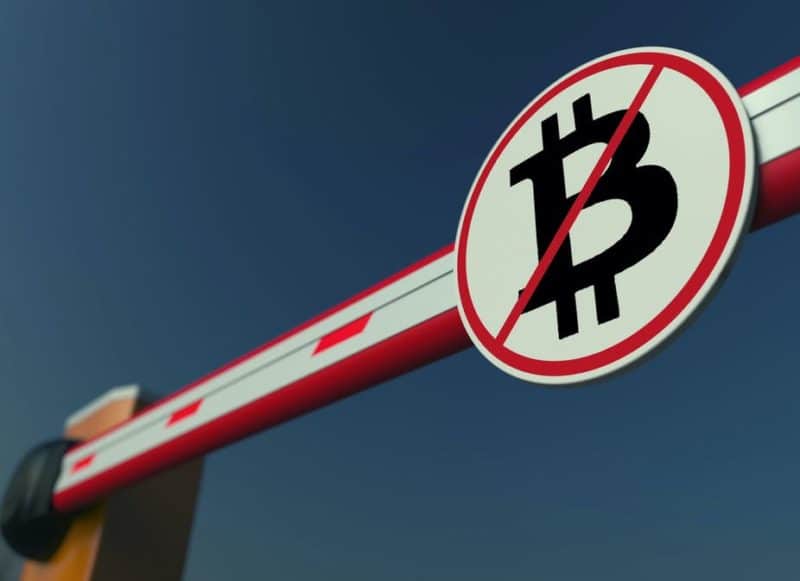
One of the oldest concerns about Bitcoin is whether governments will eventually ban it. It’s a fair question — Bitcoin exists explicitly outside the control of central banks and treasuries, and any state that values monetary sovereignty should, in theory, have an incentive to shut it down.
I first wrote about this back in 2020. Five years on, we have a lot more evidence to work with. Governments have tried to ban Bitcoin. We can look at what happened, and draw much clearer conclusions than we could then.
The short version: outright bans are harder than they look, they don’t do what governments hope, and the direction of travel in 2026 is decisively the opposite way — toward regulation, legitimization, and in a handful of cases, active accumulation by states themselves.
What would it actually take to ban Bitcoin?
Before looking at what governments have tried, it’s worth being clear about what “banning Bitcoin” would even mean. There are three separate things a state can restrict:
- Mining — preventing the computational work that secures the network from happening within its borders.
- Exchanges and on/off-ramps — stopping regulated businesses from letting citizens convert fiat to Bitcoin and back.
- Possession and peer-to-peer use — making it illegal for individuals to hold or transact in Bitcoin at all.
The first two are practical. The third is close to impossible. Bitcoin is software; a private key is 256 bits of information that can be memorized, written on paper, or stored on any digital device. You cannot confiscate what you cannot find, and you cannot detect peer-to-peer transactions that don’t touch a regulated intermediary. States can make possession illegal, but enforcement against retail users becomes a game of whack-a-mole that rewards the most determined holders and punishes only the careless.
This asymmetry matters because it means any ban is really a ban on the visible, convenient, above-board part of the ecosystem. It doesn’t kill Bitcoin. It just pushes the network underground in the banning jurisdiction and, in most cases, to some other jurisdiction entirely.
China: the biggest real-world test
In September 2021, China’s central bank declared all cryptocurrency transactions illegal and ordered a nationwide crackdown on mining. At the time, China hosted roughly two-thirds of the world’s Bitcoin hashrate. It was the largest state-level intervention against Bitcoin that has ever been attempted.
The result is instructive.
Bitcoin’s hashrate did drop sharply — by about 50% in the weeks following the ban. Within six months, it had fully recovered and then exceeded its pre-ban levels. Mining simply relocated, primarily to the United States (especially Texas, which has cheap stranded energy and a permissive regulatory environment), with smaller shares going to Kazakhstan, Russia, and elsewhere.
The Bitcoin price fell briefly and then resumed its cycle. Chinese users did not stop using Bitcoin — they moved to offshore exchanges, peer-to-peer platforms, and OTC desks in Hong Kong. The Chinese government has not, as far as anyone can tell, successfully removed Bitcoin from its economy. It has simply made it less visible.
If the largest ban attempt in history by one of the most capable surveillance states on Earth only managed to relocate the network and push its own citizens into less regulated corners of the market, that tells us something important: banning Bitcoin is not really within the unilateral power of any single government, no matter how determined.
Other attempts: India, Nigeria, Turkey
Several other countries have tried forms of restriction short of full bans.
India introduced a punitive tax regime in April 2022 — 30% on all crypto gains with no offsetting of losses, plus a 1% TDS on every transaction. This isn’t a ban in name but it’s close to one in practical effect for active traders. Indian crypto exchange volumes collapsed. Users migrated to offshore platforms, exactly as they did in China. The policy is in place, revenue is minimal, and the industry has adapted around it.
Nigeria banned banks from facilitating crypto transactions in February 2021, then reversed course in late 2023 as the government realized the ban was unenforceable and its citizens were using P2P platforms anyway. Nigeria has been consistently one of the highest per-capita crypto-adoption countries in the world throughout.
Turkey banned the use of crypto for payments in April 2021 but has not restricted holding or trading. Adoption in Turkey has grown through the lira crisis, with citizens using Bitcoin as an inflation hedge.
The common pattern: restrictions that depend on regulated intermediaries are partially effective. Restrictions that try to reach into peer-to-peer activity aren’t. And in each case, the economic conditions that drive demand for Bitcoin — weak currencies, capital controls, inflation — are precisely the conditions the restrictions are trying to paper over. Bans don’t make the underlying problem go away; they just make the workaround a little more inconvenient.
The counter-trend: Bitcoin as legitimate, or even strategic, asset
While a handful of states have been pushing against Bitcoin, the broader trend since 2020 has moved strongly the other way. A few of the most consequential shifts:
El Salvador adopted Bitcoin as legal tender in September 2021 — the first nation-state to do so. The rollout had real problems (most Salvadorans still prefer dollars, the Chivo wallet launch was messy), and under IMF pressure the government rolled back the “legal tender” status in early 2025. But El Salvador has continued accumulating Bitcoin for its treasury, and the symbolic ceiling on what a state can do with Bitcoin was permanently broken.
The US approved spot Bitcoin ETFs in January 2024. Eleven products launched simultaneously, led by BlackRock’s IBIT, which became the fastest ETF in history to reach $50 billion in assets under management. For the first time, ordinary US investors could get Bitcoin exposure in a regulated, tax-advantaged wrapper through any brokerage account. This wasn’t a regulatory concession — it was a judicial one, forced by the DC Circuit’s decision in Grayscale v. SEC — but the result is the same: Bitcoin is now a mainstream US investment product.
The EU’s MiCA regulation took full effect in December 2024. MiCA is a comprehensive crypto framework covering stablecoins, exchanges, custodians, and asset issuers across 27 member states. It’s heavy regulation, not a ban — it legitimizes the industry by giving it clear rules, while imposing significant compliance costs on operators.
The United States established a Strategic Bitcoin Reserve in March 2025, via executive order from the Trump administration. The reserve is initially funded by Bitcoin already seized in criminal cases (around 200,000 BTC), but the order explicitly authorizes further acquisition through budget-neutral strategies. A handful of US states (Texas, others under consideration) have moved to establish their own Bitcoin reserves.
Russia legalized Bitcoin mining at the federal level in late 2024, primarily as a way to monetize stranded energy and partially circumvent sanctions.
Taken together, the picture in 2026 is unambiguous: the trend line is toward integration, not prohibition. Governments that tried bans found them unenforceable and costly. Governments that moved toward regulation found it workable. And a growing number of states are now actively accumulating Bitcoin themselves.
Why a coordinated global ban is extremely unlikely
The only scenario in which Bitcoin could be genuinely suppressed is a coordinated ban across all major economies simultaneously. That would require the US, China, the EU, India, and Russia to agree on something — which they have conspicuously failed to do on almost any other issue.
More fundamentally, it’s now in the direct interest of several of these states not to ban Bitcoin:
- The US has institutional holdings in its own strategic reserve and through regulated ETFs with hundreds of billions in AUM.
- Russia uses Bitcoin mining as a way to monetize energy and work around sanctions.
- El Salvador and a handful of smaller nations have treasury exposure.
- The EU has built a compliance industry around MiCA that would be politically expensive to dismantle.
Banning Bitcoin in 2026 means destroying tens of billions of dollars of domestic value and handing a strategic advantage to competitors who refuse to go along. It’s the policy equivalent of unilateral disarmament.
What governments can still do
None of the above means governments are powerless. They retain significant tools, and I’d expect all of them to be used more aggressively in the coming years:
- Tax enforcement. On-chain analytics have become sophisticated enough that tax authorities in most developed countries can identify large holders and compel disclosure. Spain is a good example — crypto gains are now fully reportable on IRPF, and the Modelo 721 (foreign crypto assets) was introduced in 2024.
- KYC/AML pressure on exchanges. The regulated on-ramps are where most users interact with Bitcoin, and this is where compliance requirements have teeth.
- Self-custody restrictions. The EU’s proposed travel rule extensions and periodic US proposals to restrict unhosted wallets are live risks. None have passed in a meaningfully restrictive form yet, but the pressure is persistent.
- Targeted sanctions on mixers and privacy tools. Tornado Cash sanctions in 2022, Samourai Wallet prosecution in 2024 — these don’t ban Bitcoin, but they do make it harder to use it privately.
The pattern across all of these is the same: governments are building frameworks to observe and tax Bitcoin, not to prohibit it. That’s a meaningful distinction. Observation and taxation are what states do to things they consider legitimate.
My take
In 2020 I wrote that a global ban seemed unlikely but wasn’t impossible. In 2026 I’d go further: the window in which a coordinated ban was even conceivable has closed. Too many major states now have direct exposure, either through holdings, mining, or regulated investment products. Too many have tried unilateral bans and watched them fail.
The real risks to Bitcoin holders in the coming years are not bans. They are:
- Aggressive taxation (already happening).
- Restrictions on self-custody and privacy tools (possible, contested, not yet decisive).
- Regulatory capture — Bitcoin becoming so integrated with compliant financial infrastructure that its censorship-resistant properties atrophy in practice, even if they remain intact in theory.
The last one is the one I think about most. It’s also the least dramatic, which is why it gets the least attention. You don’t defeat Bitcoin by banning it. You defeat it by making the regulated version so convenient that almost nobody uses the non-regulated one. Whether that counts as a win or a loss depends on what you think Bitcoin was for in the first place.
If you’re holding Bitcoin as an investment, the regulatory environment in 2026 is the most favorable it has ever been. If you’re holding it as an instrument of financial sovereignty, the fight is just moving to subtler terrain. Either way, “governments will ban it” is no longer the scenario worth worrying about.
Further reading
- Can Governments Stop Bitcoin? — a thoughtful pre-ETF analysis that holds up well.
- Legality of Bitcoin by country or territory — continuously updated reference.
Related


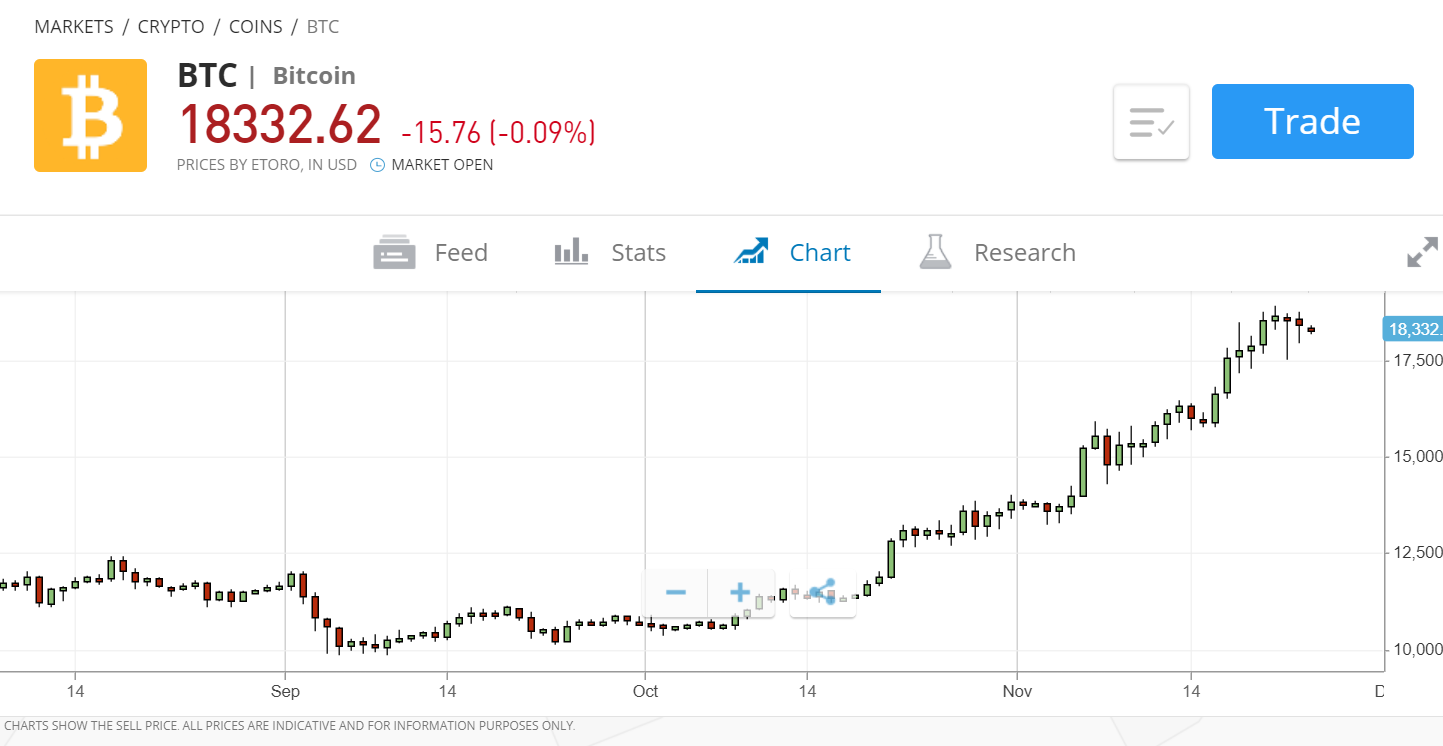




Governments may not be able to control any of the crypto currencies but they can regulate the exchanges and by identifying everyone who buys through an exchange, and as the blockchain is public, every transaction is traceable.
People have to live somewhere, and where they live they are subject to rules and regulations. Although governments wouldn’t be able to prevent people using crypto currency to trade globally they could tax individuals on each of their transactions and capital gains.
Whereas most of the financial institutions are keen to call crypto investments as “gambling”, tax revenue institutions consider them investments, simply because if they were gambling it would be tax free and as “investments” they are often subject to capital gains. How may people currently declare their gains, but the tax revenue could find out.
As computers get more powerful and cheaper, should there be other variations of bitcoin? Someone who has deep knowledge please explain to me, why not? If there are other versions, what is there to stop a thousand versions of bitcoins? Then wouldn’t that flood the supply?
Read about “network effects”, that would be one major reason. It’s the same reason why we don’t have a thousand facebooks. By the way, there have already been several attempts of cloning and making “better versions” of Bitcoin. None have caught traction. See Bitcoin Cash, Bitcoin Gold, Bitcoin SV, Litecoin etc.
Hi Jean,
Thank you very much for sharing this information. I do not think the government will ban bitcoin in the future, it will have disastrous consequences. However, I have read this article recently: ECB’s Lagarde says central banks holding Bitcoin is ‘out of the question’. It could be that if there is an autocratic government in power, cryptocurrencies might be banned.
Anyway, bitcoin was initially invented as a way of exchange not to overspeculate with it as it is happening currently.
You’re welcome Mari Carmen. Ultimately, governments are powerless against Bitcoin. If some do decide to ban it, they will look ridiculous and backward (see India at the moment). Moreover, people who want to use Bitcoin will find easy solutions to use it anyway. For example, when China banned exchanges, they just moved offshores, and Chinese people bought as much Bitcoin as before or more. Banning Bitcoin results in harming your citizens and your economy. Lagarde’s comments have little weight at the moment, it’s not the first time people in power have issued such statements only to eat their words a few years later. In any case, we don’t need central banks to hold Bitcoin for it to succeed. In the unlikely event that all countries in the world agree on banning Bitcoin (it would be the first time in history that all countries agreed unanimously on something) then the only probable effect will be on the price, and not on the network itself. Bitcoin as a network is resilient enough to work even if all governments ban it, and even if they somehow manage to stop Bitcoin transactions from happening over the internet (Blockstream has put satellites in Spain to transmit the Bitcoin blockchain back to earth).
I would think twice about making assumptions about the creator’s full intentions for Bitcoin. Unless it was a god-like figure or group of people, it would have been next to impossible to predict how that original creation would develop and spread in the way it has done. And it’s only a decade in, we have no idea how Bitcoin will be used in 50 years’ time. The current speculative phase actually serves an essential part of the Bitcoin marketing machine. Without the speculation, there would be much less adoption. In the future, volatility and speculation will lessen and Bitcoin’s purpose will morph into something else, probably as a stable store of value similar to gold.
Bitcoin will be ban from the us!.
Short Bitcoin if you’re so sure.