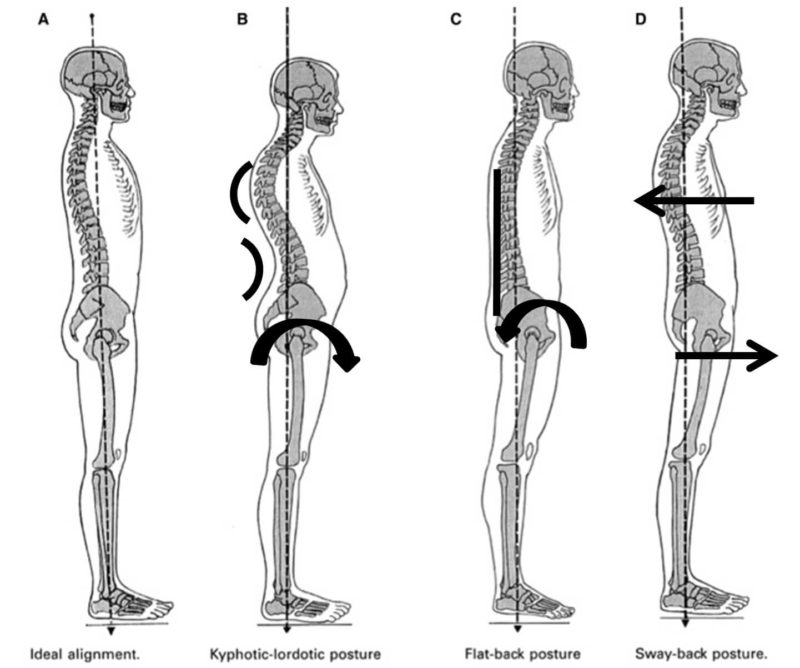
Bad posture isn’t a moral failing. It’s what happens when you spend eight or more hours a day at a desk, then sit on a couch in the evening. Your body adapts to whatever position you put it in most often, and modern life positions you poorly.
The good news: posture is largely correctable. It takes consistent effort, but the fix isn’t complicated. This post covers the mechanics of why desk workers develop bad posture, the exercises that actually work, and the ergonomic basics worth getting right.
Why Desk Workers Get Bad Posture
The core problem for most desk workers is something called upper cross syndrome. Your chest muscles (pectorals) become tight and shortened from holding your arms forward. Your upper back muscles (rhomboids, mid-traps, deep neck flexors) become long and weak from being stretched all day. The result is rounded shoulders and a head that drifts forward of the spine.
Forward head posture is particularly damaging. For every inch your head moves forward from neutral, it effectively adds around 10 pounds of load on the cervical spine. A 2-inch forward drift means your neck is dealing with the equivalent of a 30-pound head instead of a 10-pound one. That stress accumulates.
The problem compounds because tight chest muscles actively inhibit the back muscles from firing correctly. You can’t simply “sit up straight” your way out of this. The muscles pulling you into poor posture are winning, and the muscles meant to hold you upright have lost the neural connection through disuse. You need to address both sides.
The Exercises That Actually Help
These aren’t random stretches. Each one targets a specific part of the imbalance.
Chest Stretches
Stand in a doorway with your arm bent at 90 degrees, forearm against the door frame. Lean your chest through gently until you feel a stretch across the front of your shoulder and chest. Hold for 30-60 seconds each side. Do this before you try any strengthening work on your back, because tight pecs will limit the range of motion in every exercise that follows.
A harder variation: lie on a foam roller placed vertically along your spine. Let your arms fall out to the sides with elbows bent. Gravity does the work. This is one of the best passive stretches you can do, and it pairs well with foam rolling work for myofascial release.
Chin Tucks
This directly addresses forward head posture. Sit or stand tall. Without tilting your head, draw your chin straight back, as if making a double chin. Hold for 3-5 seconds, repeat 10-15 times. It feels awkward the first few times because your deep neck flexors are weak and unaccustomed to this position. They strengthen quickly with regular practice.
Thoracic Extensions
Place a foam roller horizontally across your mid-back (not your lower back). Support your head with your hands, and gently extend over the roller, letting your upper back arch over it. Inch the roller up towards your shoulders, pausing wherever it feels tight. This mobilises the thoracic spine, which becomes stiff and fixed in flexion in desk workers. A stiff thoracic spine forces your neck and lower back to compensate.
Wall Angels
Stand with your back flat against a wall, feet about 6 inches out. Press your lower back, upper back, and the back of your head against the wall. Raise your arms to a “goalpost” position with elbows and wrists touching the wall. Slide your arms up overhead, keeping everything in contact with the wall, then back down. If you can’t keep your elbows or wrists on the wall, that’s your benchmark. Work on it daily.
Wall angels reveal exactly how restricted your shoulder mobility is, and consistent practice improves it faster than most people expect.
Face Pulls
These target the rear deltoids and external rotators, the muscles that pull your shoulders back and down into proper position. Use a cable machine or resistance band at eye height. Pull the handles towards your face, flaring your elbows out wide and finishing with your hands beside your ears. The rear delts and rotator cuff are chronically underdeveloped in anyone who does pressing movements without balancing them. Building balanced muscle means these often-neglected muscles need direct work.
Dead Hangs
Find a pull-up bar and simply hang from it with your full bodyweight for 20-60 seconds at a time. This decompresses the spine, opens up the shoulder girdle, and builds grip strength as a side effect. Many people with tight upper traps find that dead hangs provide immediate relief. Start with whatever duration you can manage and build from there.
Foam Rolling the Right Spots
Most people foam roll their legs. For posture correction, your priority spots are the thoracic spine and the chest.
For the thoracic spine, use the roller horizontally as described above. Spend 1-2 minutes working from the base of your shoulder blades up to the base of your neck. For the chest, you can lie face down with the roller angled under your pec (not directly on your shoulder joint) and let your bodyweight apply pressure. It’s uncomfortable, which usually means you need it.
A lacrosse ball works better than a foam roller for the chest area and for targeting specific knots. Myofascial release techniques aren’t a replacement for strengthening work, but they reduce the tension that limits your range of motion during exercises.
Getting Your Ergonomic Setup Right
Exercise fixes the underlying muscular imbalance. Ergonomics stops you from recreating the problem every day.
Monitor height is the most important variable. The top of your screen should be at or slightly below eye level. If you’re looking down at a laptop all day, you’re holding your head in a forward-flexed position for hours. A laptop stand with a separate keyboard costs less than a physio session and pays for itself immediately.
Chair height matters too. Your feet should be flat on the floor, thighs roughly parallel to the ground. If your hips are higher than your knees, you’ll tend to slump. If your knees are higher than your hips, your lower back can’t maintain its natural curve.
A standing desk is worth considering if you spend long hours at a computer. The key word is “alternating.” Standing all day is not better than sitting all day. Switching between the two every 30-60 minutes keeps your body moving through different positions rather than locking into one.
Your sleep setup matters more than most people realise. Sleeping on your stomach, for example, forces your head to one side for hours and contributes to neck and shoulder tension. If you want to support your recovery properly, sleep quality and position is worth addressing alongside your desk setup. Your bedroom environment plays a bigger role in physical recovery than most gym-focused advice acknowledges.
Sport Helps, But It’s Not the Whole Story
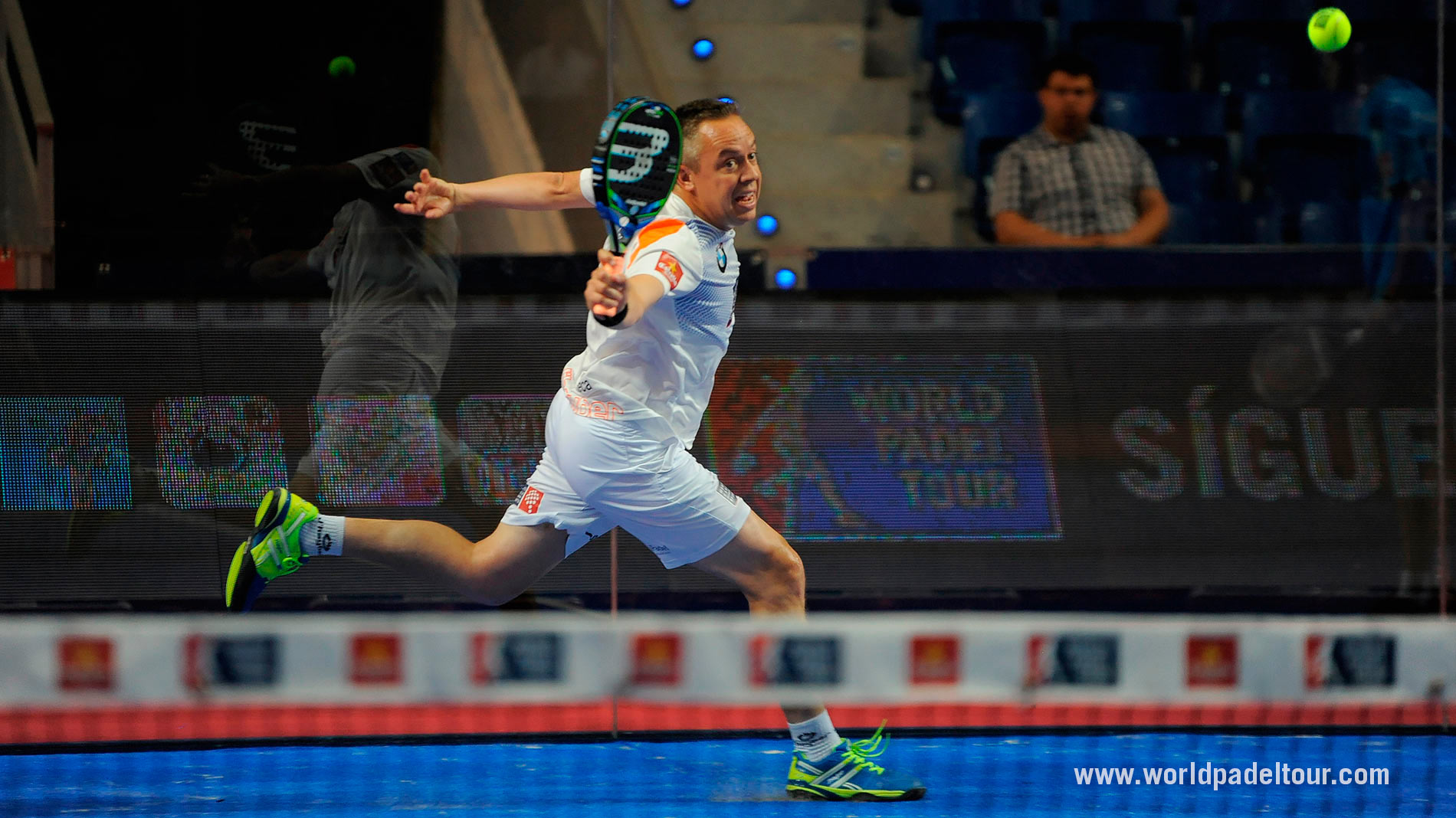
Staying active is genuinely good for posture. Movement keeps muscles from shortening, improves body awareness, and gives you a reason to stand tall. Playing padel regularly means you’re not sedentary, and the rotational demands of the sport build some degree of core and upper body strength.
But racket sports can introduce their own asymmetries. Your dominant shoulder tends to be more developed and internally rotated than the other. Your non-dominant side may be significantly weaker. If you’re already dealing with rounded shoulders, repetitive overhead hitting can reinforce rather than reverse the problem.
This is worth keeping in mind if you play racket sports frequently: some targeted work on the non-dominant side and on external rotation will help counterbalance the sport-specific patterns. The face pulls and wall angels mentioned above are a good start. If you have ankle instability from court sports, that problem and postural issues often share the same root cause of poor body mechanics, so it’s worth addressing both; ankle stability work often improves overall movement quality.
The Alexander Technique
Most of the above is self-directed. The Alexander Technique takes a different approach. It’s a method taught by a trained teacher in one-to-one sessions, focused on relearning the relationship between your head, neck, and spine.
The central idea is that most people use unnecessary muscular effort to hold themselves upright, and that effort is often counterproductive. Alexander Technique teachers help you notice habitual tension patterns and find a more efficient way to organise your body. It’s been studied in the context of chronic back pain and has reasonable evidence behind it for that application.
I haven’t tried it myself. My own approach has been purely gym-based work combined with conscious attention to how I hold myself throughout the day. That combination has worked well for me. But the Alexander Technique is worth looking into if you’ve been consistent with the exercises and still feel stuck, or if you want a more guided approach to body awareness.
Further Reading
Overcoming Poor Posture by Steven Low is the most practical book on this topic I’ve come across. Low is a gymnastics coach and former gymnast with a background in neuroscience. The book goes deeper into the anatomy of postural dysfunction than most general fitness resources, and the exercise progressions are well structured. It’s written for people who want to understand the problem, not just follow a list.
The research on forward head posture and spinal load is well established in the physiotherapy literature if you want to go further into the evidence.
FAQ
How long does it take to fix bad posture?
That depends on how long you’ve had the problem and how consistent you are. Most people notice some improvement in shoulder mobility and tension within 2-4 weeks of daily work. Genuinely correcting the muscular imbalances takes 3-6 months of consistent effort. Posture is a habit, so maintenance is ongoing rather than a one-time fix.
Can you fix bad posture without exercise?
Ergonomic changes help, but they mostly reduce the rate at which you’re reinforcing poor posture. They don’t reverse the muscular imbalances that already exist. You need the exercises, and you need to be conscious about how you hold yourself throughout the day. The combination of gym work and deliberate awareness of your body position is what actually moves the needle.
Is bad posture causing my back pain?
Possibly, but not necessarily. The relationship between posture and pain is more complicated than it looks. Some people with visibly poor posture have no pain; others with apparently good posture have chronic back issues. That said, forward head posture and rounded shoulders do create conditions that increase stress on the cervical and thoracic spine. Getting it right is worth doing regardless of whether it’s the direct cause of your pain.
Should I use a posture corrector brace?
Braces create a passive support that your muscles can lean into. If anything, prolonged use weakens the muscles that should be doing the work. They’re not a solution. The exercises are.
Does sleeping position affect posture?
Yes. Sleeping on your stomach is the worst option for neck and upper back. Side sleeping is generally fine with a pillow that keeps your head neutral. Back sleeping is good if you can tolerate it. The hours you spend asleep represent a significant part of your day, so poor sleeping position can undermine the work you’re doing during waking hours.
Related






Leave a Reply