
Jean Galea

Health, Wealth, Relationships, Wisdom

  • Start Here
  • Guides
    • Beginner?s Guide to Investing
    • Cryptocurrencies
    • Stocks
    • P2P Lending
    • Real Estate
    • Forex
    • CFD Trading
    • Start and Monetize a Blog
  • My Story
  • Blog
    • Cryptoassets
    • P2P Lending
    • Real estate
  • Consultancy
    • Consult with Jean
    • Consult a Lawyer on Taxation and Corporate Setups
  • Podcast
  • Search

LenderMarket Review 2026 – Promising Changes in v2

Last updated: January 17, 2026Leave a Comment

lendermarketUpdate: December 2025 – LenderMarket has launched version 2.0 and appears to be recovering from its major issues. However, given the platform’s history, I remain cautious about recommending it.
I’ll be completely honest with you. LenderMarket is on my list of worst P2P platforms in Europe, and there’s a good reason for that. The platform has had serious issues with delayed loans, non-fulfillment of buyback guarantees, and blocking withdrawals through pending payments.

That said, with the launch of LenderMarket 2.0 in April 2024, some investors are reporting improvements. So let me give you the full picture.

The Troubled History You Need to Know

Before I get into the current state of the platform, you need to understand what happened.

Between 2022 and 2024, LenderMarket was essentially broken. Investors had their funds locked in “pending payments” for months, sometimes years. I’m talking about people waiting 5+ years to get their money back through tiny monthly payments.

The core problem was with Creditstar, LenderMarket’s main loan originator. When Creditstar faced liquidity issues, it affected virtually all investments on the platform. Loans were being extended up to 180 days (6 extensions of 30 days each), making the maximum delay 240 days total.

Some investors called it a Ponzi scheme. While the platform continued offering cashback bonuses to attract new money, existing investors couldn’t withdraw their funds.
This is why I included LenderMarket in my worst platforms list. When an investment platform blocks withdrawals and delays returns for years, that’s a major red flag.

LenderMarket 2.0: A Fresh Start?

In April 2024, LenderMarket launched version 2.0. This wasn’t just a cosmetic update – they rebuilt the entire infrastructure.

The strategy seems to be separating the old problems (version 1.0) from the new platform (version 2.0). Version 1.0 still exists with all the old pending payments, while version 2.0 operates as a clean slate.

Early signs are promising. Investors on version 2.0 haven’t reported the same issues that plagued the original platform. Cash flows are working properly, and withdrawals seem to be processing normally.

As of July 2025, several users have reported finally receiving funds that were stuck in pending payments for years. This suggests the platform is making genuine efforts to resolve past issues.

Current Investment Offering

Returns: 15.58% average annual return
Fees: 0% commission (one of their genuine advantages)
Minimum: €10 investment
Auto-Invest: Available and well-designed
Buyback Guarantee: Yes, but remember their track record

The platform works with three main loan originators:

  • Rapicredit (Colombia) – 18% returns, 10% skin in the game, focuses on microlending
  • CrediFiel (Mexico) – 12% returns, consumer loans with financial inclusion focus
  • Dineo (Spain) – 12% returns, online and offline consumer loans with physical presence

The Auto-Invest feature is actually quite good. It automatically diversifies across originators and regions based on your preferences. However, auto-invested loans have a minimum term of 360 days when reinvesting pending payments, which limits flexibility.

The Risks You’re Taking

Let me be clear about what you’re signing up for:

  1. Platform Risk: Despite improvements, LenderMarket has a history of major operational failures. Version 2.0 might be better, but it’s only been running for about a year.
  2. Creditstar Dependency: The platform is still heavily dependent on Creditstar’s financial health. If Creditstar faces problems again, it could affect all your investments.
  3. No Deposit Insurance: Your money isn’t protected like it would be in a bank account.
  4. Limited Transparency: The platform doesn’t provide detailed insights into loan performance or risk management processes.
  5. Regulatory Uncertainty: They’ve had issues obtaining proper regulatory licenses, which delayed platform operations.

My Personal Take

I haven’t invested in LenderMarket, and I won’t be changing that stance anytime soon.

Yes, version 2.0 shows promise. Yes, they offer attractive returns with zero fees. But their track record speaks volumes about risk management and investor protection.

When a platform locks up investor funds for years and then launches a “new” version while the old problems persist, that raises serious questions about management competence and priorities.
I much prefer platforms like Mintos, where I’ve consistently achieved 11.42% returns without the drama and uncertainty that comes with LenderMarket.

Who Might Consider LenderMarket

If you’re determined to try LenderMarket despite these warnings, here’s who it might suit:

  • Experienced P2P investors who understand platform risks
  • Investors willing to limit exposure to 2-3% of total portfolio
  • People attracted to high returns who can afford potential losses
  • Investors with 3+ year time horizons

Who Should Definitely Avoid It

  • First-time P2P investors
  • Anyone needing guaranteed safety or liquidity
  • Investors who can’t afford to lose their entire investment
  • People uncomfortable with platforms that have troubled histories

The Bottom Line

LenderMarket 2.0 might eventually prove that the platform has learned from its mistakes. The zero fees and high returns are genuinely attractive.

But I’ve seen too many investors get burned by platforms with similar track records. When you’re choosing where to put your money, past behavior is often the best predictor of future performance.

If you want exposure to P2P lending, I’d suggest starting with more established platforms like Mintos or Twino. Once you’re comfortable with P2P investing and have built a diversified portfolio, then you might consider allocating a small portion to higher-risk platforms like LenderMarket.

Remember, in P2P lending, the goal isn’t just to chase the highest returns. It’s to build a sustainable portfolio that generates steady income without keeping you awake at night wondering if your money is safe.
Filed under: Money, P2P Lending

How to Withdraw Money from PayPal Without Losing on Currency Conversion (2025 Guide)

Last updated: September 21, 20253 Comments


PayPal logo
PayPal is one of the most widely used payment processors in the world, especially for freelancers, e-commerce businesses, and creators. But when it comes to withdrawing money—particularly in USD from European PayPal accounts—things get complicated quickly. PayPal’s default behavior is to convert your balance into your local currency (usually EUR) before withdrawing, and their exchange rates are notoriously unfavorable.
In this updated guide, I’ll show you the most efficient ways to withdraw your funds while minimizing or avoiding unnecessary fees and bad conversion rates.

🔄 2025 PayPal Withdrawal Update

  • ✅ USD withdrawals to Visa cards (e.g., Wise, Revolut) are now more widely supported
  • ✅ Limits of $2,000–$3,000 per transaction depending on account and card
  • ✅ Flat $2.50 fee, no PayPal FX — your bank converts
  • ❌ Still no USD bank withdrawals to EU-based USD accounts (unless PayPal treats them as US)

💸 Updated PayPal Withdrawal Comparison (2025)

Method Currency Received FX Rate Fee Limit
Visa debit card (Wise) USD Bank conversion $2.50 $3,000/tx
Visa debit card (Revolut) USD Bank conversion $2.50 $2,500/tx
Bank account (EUR) EUR PayPal FX (poor) Free High

Withdrawing to a Debit or Credit Card

This is currently the best way to keep your funds in USD when withdrawing from a European PayPal account. If your Visa card supports USD (like those from Wise or Revolut), PayPal can send the funds directly without converting them to EUR. Your bank will then handle the currency conversion, often at a better rate than PayPal’s.

There is a flat $2.50 fee per withdrawal. While the traditional limit was $2,500, recent data shows that some users are able to withdraw up to $10,000 per transaction depending on the card and PayPal account history.

In my experience, for Revolut you need to set the withdrawal amount to $1,999 as a maximum. Anything beyond that and PayPal will throw an error. However, you can make two $1,999 withdrawals per day, bringing the total withdrawal to Revolut per day maximum to around $4k.

Withdrawing to a Local EUR Bank Account

This option allows for high-limit or even unlimited withdrawals, but comes with a big drawback: PayPal will automatically convert USD to EUR using their internal exchange rate, which includes a hidden margin of around 3–4%. This can result in hundreds or thousands of euros lost on large transfers.

What About USD Bank Accounts in Europe?

Even if your bank provides a USD account, PayPal will often still convert to EUR before sending, unless the account is registered as a U.S. bank (such as through Payoneer or Wise US routing). I’ve been able to add a USD-denominated account manually to my PayPal business profile, but this is an exception, not the rule.

My Recommended Approach

Given all the above, my personal strategy in 2025 is:

  • ✅ For amounts up to $3,000: use Wise or Revolut USD Visa for instant transfer in USD
  • ✅ For larger amounts: use my BoV Visa (Maltese bank) card, receive USD, let BoV handle the FX
  • ❌ Avoid PayPal’s bank withdrawals unless I’m okay with their FX hit

If your setup supports it, this combination gives you fast access to funds, better control over exchange rates, and avoids the massive hidden fees that plague most non-US PayPal users.

Let me know in the comments if you’ve tested another setup or found a better route — I’m always looking to update this article with verified options.

Filed under: Banking, Money

Bondster Review 2026 – Why I No Longer Recommend Investing

Last updated: January 17, 2026Leave a Comment

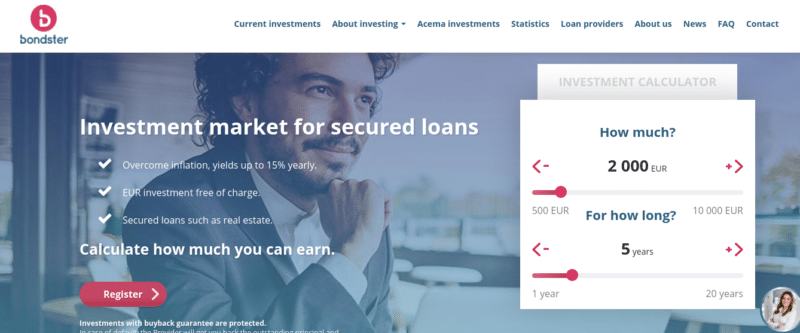
Bondster review 2020Bondster was once a promising addition to the European P2P lending space. When I first came across the platform, it offered what looked like solid returns, backed by buyback guarantees and a growing selection of loan originators. However, in recent years—especially into 2025—things have taken a sharp turn for the worse. After monitoring the platform, reading investor feedback, and reviewing my own experience, I can no longer recommend Bondster as a viable P2P investment option.

Red Flags That Can’t Be Ignored

Over time, what started as minor concerns grew into recurring problems. Transparency is minimal. The platform still fails to clearly communicate loan originator performance, recovery expectations, or how it handles defaults. Too often, you’re left guessing what’s really going on with your money.

What’s even more worrying is how many loan originators have defaulted on their buyback obligations—and how little Bondster has done to protect its investors. The buyback guarantee sounds reassuring in theory, but in practice, it’s often meaningless. I’ve seen more than half of some users’ portfolios go into the “60+ days late” category, with no clear resolution path.

Investor Sentiment Has Collapsed

A quick glance at recent Trustpilot reviews tells you everything you need to know. Investors are complaining about blocked funds, multi-year delays in recovery, and poor communication. The most recent reviews in mid-2025 are damning—users are not just dissatisfied; they feel deceived.

Even the most loyal supporters of Bondster are throwing in the towel. It’s no longer just about risk—it’s about trust, and that trust has eroded beyond repair.

The Bigger Problem: Misaligned Incentives

Bondster’s main priority appears to be onboarding new loan originators rather than safeguarding the interests of its existing investors. This raises questions about their long-term strategy and who they’re really working for. In my view, they’re not doing enough due diligence on originators or enforcing buyback agreements when things go south.

Add to that the lack of meaningful regulatory oversight and it becomes clear—Bondster is playing a dangerous game with investor capital. It’s privately owned, opaque in its operations, and has failed to adapt or improve in the face of repeated problems.

Looking Ahead

There was a time when I believed Bondster might evolve into a strong player in the European P2P market. That time has passed. In 2025, there are simply better options out there—platforms with stronger governance, better transparency, and actual enforcement of investor protections.

If you’re still on Bondster, I’d suggest reviewing your portfolio and starting the process of unwinding your position. And if you’re new to P2P lending, this is a reminder to look past the headline returns and focus on platform integrity and long-term reliability.

As always, do your own research, diversify smartly, and don’t fall for the promise of “guaranteed returns” without understanding who’s standing behind them—and whether they can actually pay.

Filed under: Money, P2P Lending

Crowdestor Review 2025 – A Cautionary Tale in P2P Investing

Published: August 03, 2025Leave a Comment

crowdestor review

When I first came across Crowdestor, I was intrigued. The European P2P platform had that slick, high-return, high-risk appeal—offering access to business loans, real estate, and startup financing, often with double-digit returns. It felt like the edgy cousin of Mintos or Bondora. But fast forward to today, and Crowdestor has become a textbook example of what can go wrong when aggressive marketing meets weak underwriting and zero accountability.

The Pitch vs. The Reality

Crowdestor sold a dream: investing in Baltic startups, restaurants, and real estate developments with the promise of 15–20% annual returns. The projects looked polished, the platform UI was clean, and the team seemed ambitious. But in hindsight, most of that turned out to be marketing fluff. The actual risk analysis was shallow at best. There was little transparency around borrower vetting, and in many cases, it seems loans were given to ideas rather than businesses with proven track records.

Default City

As of 2025, the number of non-performing loans on Crowdestor is staggering. It’s hard to get reliable figures because they don’t exactly lead with transparency, but if you’ve been following the platform—or worse, invested in it—you’ll know what I’m talking about. Delayed projects, vanished borrowers, and defaulted repayments have become the norm.

Some investors have portfolios where over 80% of loans are late or in recovery. That’s not a bump in the road—that’s a platform-wide failure of underwriting and follow-through. And let’s not even talk about the “Recovery Fund” they hyped up back in the day—it ended up being more of a PR gimmick than a real safety net.

The Communication Problem

Crowdestor’s investor updates are sporadic, vague, and often just an attempt to buy more time. You’ll get phrases like “we’re in negotiations,” “borrower communication ongoing,” or “legal steps under review.” It’s the same cycle: delay, deflect, disappear.

To make matters worse, they’ve pivoted to new ventures—launching crypto experiments and trying to push new products—while the original investors are left holding the bag. That tells me everything I need to know about their priorities.

My Experience

I tested the waters on Crowdestor early on, as I usually do with emerging platforms. Thankfully, I never committed more than I could afford to lose, because that’s exactly what happened. The platform became a graveyard of broken projects and empty promises. The ROI? Negative, both financially and in terms of time wasted trying to follow up on dozens of dead-end updates.

Lesson Learned

Crowdestor is a cautionary tale—one that highlights just how quickly things can unravel when flashy returns aren’t backed by solid fundamentals. In the end, it’s not about the platform’s pitch or branding—it’s about governance, accountability, and whether they actually care about their investors.

If you’re still on Crowdestor hoping for a turnaround, I genuinely hope you see some recovery. But I’ve moved on. There are better places to put your capital—places where risk is real, but at least the rules of the game are clear and enforced.

As always, don’t chase yield blindly. Look for transparency, skin in the game, and a track record that actually means something.

Filed under: Money, P2P Lending

Why I’m Switching from Weekly to Monthly Options (And You Should Too)

Published: July 29, 2025Leave a Comment

optionsOver the past few years, I’ve used options as a way to generate consistent income from stocks I own or follow closely. Like many traders, I gravitated toward weekly options. They’re fast, frequent, and seemingly efficient. Whether I was writing covered calls on MicroStrategy or selling cash-secured puts on Alphabet, the weekly premiums felt like a reliable source of cash flow.

But recently, I made a strategic shift: I’m moving away from weekly options and focusing on monthly full-term options instead. After diving deeper into the mechanics of option pricing, execution, and market structure, I’ve realized that monthlies offer superior performance in most real-world trading scenarios.

Here’s what changed my mind, and why you might want to reconsider your own approach if you’re still using weeklies as your default.

Weekly Options: What I Was Doing

My earlier approach centered around short-term trades. I’d sell weekly calls or puts to collect premium, targeting short-term moves in names like MicroStrategy (MSTR), Tesla, or Alphabet. The appeal was obvious:

  • Faster income cycles
  • High annualized returns (on paper)
  • Tactical flexibility

But in practice, I noticed several recurring issues:

  • Wider bid/ask spreads on anything beyond the front-week
  • Low open interest and less competitive pricing
  • Higher gamma risk near expiry
  • Constant need to monitor, manage, and roll positions

These frictions slowly eroded returns and added more stress than necessary.

Enter the Monthly, Full-Term Option

So what is a full-term monthly option? It’s the option that expires on the third Friday of each month. These were the original standardized options listed by the Options Clearing Corporation (OCC) when listed options began trading in the 1970s.

Weekly options, on the other hand, were introduced much later (2005 by CBOE) to meet demand for more flexibility and short-term trading instruments. While they serve a purpose, they were essentially bolted on to the original system.

And it shows.

The Structural Advantage of Monthly Options

  1. More Premium in Real Terms
    Monthly options consistently offer more time value per trade. Yes, weeklies may look more “efficient” per day on paper, but in practice, monthlies return more net premium due to better execution and tighter spreads.
  2. Superior Liquidity and Tighter Spreads
    Market makers prioritize monthly expiries. The bid/ask spreads are narrower, meaning you lose less on the buy and sell side.
  3. Better Open Interest and Volume
    Full-term options attract more traders. More liquidity = better fills and less slippage.
  4. Simpler Management and Rolling
    Weekly positions expire quickly, requiring more active management. Monthly options give you breathing room to manage positions deliberately.
  5. Lower Gamma Risk
    As weekly options approach expiration, price sensitivity (gamma) spikes. With monthlies, that curve is smoother.

If You’re Holding for a Month Anyway, Use the Monthly

This was a big insight for me: I realized that even though I was trading weekly options, I was often holding them for 2–4 weeks before rolling or closing. So why not start with the monthly to begin with?

Instead of targeting an August 30th expiry (a weekly), I now look at the August 16th full-term option. Or even better, go out to September 20th, sell the call, and manage or roll it earlier if needed.

You’re not locked in. You’re just operating on more favorable terms.

Why Weeklies Can Look Tempting: Volatility Magnifies the Premium

One of the big reasons I leaned into weekly options — especially with names like MicroStrategy (MSTR) — was the sheer volatility. When a stock regularly moves 5–10% in a week, the premiums on short-dated options get inflated fast. That meant:

  • Juicy implied volatility (IV) priced into the premiums
  • The ability to quickly collect income, sometimes multiple times in a month
  • An opportunity to sell rich options even when far out-of-the-money

And it worked — for a while. MSTR’s wild swings made weeklies feel like an income machine. But as I looked deeper, I realized that those rich premiums came at a cost:

  • Assignments became more frequent and harder to control
  • Bid/ask spreads on later-dated weeklies were sloppy
  • Managing positions every few days started to feel like a job

It became clear that even in high-IV environments, the structural advantages of monthly options often win out, especially when you’re trading size or managing a portfolio systematically.

Are High IV Weeklies Really That Much Better?

It’s true that weekly options often show higher implied volatility per day than monthlies. On paper, that makes them look more profitable. But here’s the reality:

Issue Why It Hurts Weeklies
Wider bid/ask spreads Slippage reduces your actual collected premium
Thin open interest Poor fills or difficulty closing positions
Gamma spikes Rapid, unpredictable price moves near expiry
More frequent management More trades = more fees + more stress
Assignment risk Especially with short-dated ITM options

So while weeklies may look more profitable in high-volatility stocks, monthlies often deliver more net premium with less friction, especially when scaled.

Who Weekly Options Are Still Good For

Despite all the advantages of monthly options, there are still specific situations—and traders—for whom weeklies make sense.

  • Earnings Plays & Volatility Events: Traders who want to sell options around earnings or Fed announcements often prefer weeklies for their precision. The ability to target a specific date lets you isolate risk to that event window.
  • Short-Term Directional Bets: If you’re speculating on a 1–3 day move in a stock, weeklies give you the cheapest and most gamma-sensitive exposure.
  • Scalpers and Day Traders: Those managing trades by the hour or day often favor weeklies for their fast-moving nature. They’re nimble tools in the hands of professionals.
  • High IV Environments: In stocks with elevated implied volatility (like MSTR), weeklies may offer juicy premiums that justify the risks—if managed closely.
  • Exit Tactics: If a monthly covered call is expiring in-the-money, you may prefer to let the shares get called away and switch to puts rather than roll at a poor price. This can be a cleaner transition than forcing a roll for little premium or upside.

In short, weeklies are best for traders who are both tactically aggressive and highly active. They require more time, tighter discipline, and the ability to move quickly. They’re not inherently bad—but they’re often used inefficiently by traders who would be better off with the stability and performance of full-term options.

Final Thoughts

Weekly options are great for tactical plays, earnings speculation, or quick gamma scalps. But for consistent income, clean execution, and strategic control, monthly full-term options are superior.

This isn’t just theory. It’s a shift I’ve made in my own trading, and it’s already improved both my performance and my peace of mind.

If you’re looking for less friction, better fills, and stronger long-term returns, consider making the switch.

Monthly might not sound exciting—but it works.

Filed under: Money, Stock market

  • « Previous Page
  • 1
  • …
  • 4
  • 5
  • 6
  • 7
  • 8
  • …
  • 95
  • Next Page »

Latest Padel Match

Jean Galea

Investor | Dad | Global Citizen | Athlete

Follow @jeangalea

  • My Padel Experience
  • Affiliate Disclaimer
  • Cookies
  • Contact

Copyright © 2006 - 2026 · Hosted at Kinsta · Built on the Genesis Framework