Once you buy Bitcoin, Ethereum, or any other cryptoasset, you’re not done. The hard part is what comes next — deciding how to custody your crypto.
If you own a significant amount, the biggest problem you need to solve is keeping it secure. Self-custody is ideal for some, but others want third-party solutions that offload the responsibility, even if that introduces its own set of risks.
The web is full of horror stories: people who got their crypto stolen, or simply lost the information needed to access their holdings. The challenge of custody remains one of the biggest barriers to mainstream Bitcoin adoption.
The good news is that the options have matured considerably since 2020. There are now more hardware wallet choices, more robust collaborative custody services, institutional custodians with real regulatory standing, and for those who don’t want to deal with any of it — spot Bitcoin ETFs.
Self-Custody Products
In an ideal world, everyone would self-custody their Bitcoin. It is the most censorship-resistant and secure approach, provided you know what you’re doing and can handle the responsibility.
The hardware wallet market has expanded significantly. Here are the leading options as of 2026:
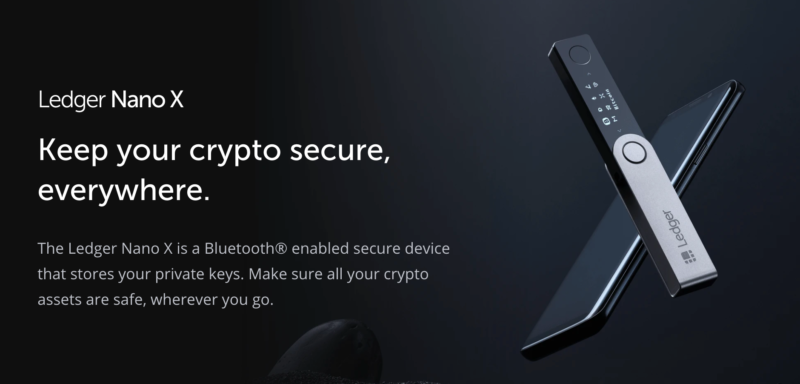
- Ledger — Stax ($399), Flex ($249), Nano X ($99), Nano S Plus ($59)
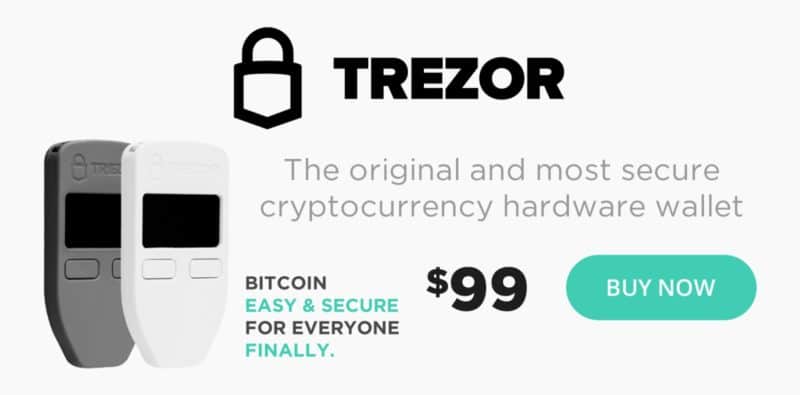
- Trezor — Safe 5 ($129), Safe 3 ($59)
- Coldcard — Mk5 and Q (Bitcoin-only)
- Blockstream Jade — Jade Classic ($79.99), Jade Plus ($149.99)
- Foundation Passport — Core ($199), Prime ($349)
Ledger and Trezor remain the most accessible options for first-time self-custodians. Both have expanded their lineups substantially. Ledger now offers the touchscreen Stax and Flex alongside the classic Nano range. Trezor’s Safe 5 brings a color touchscreen with haptic feedback and a Secure Element chip — a meaningful upgrade over the older Model T.
Coldcard has also moved on. The current models are the Mk5 and the Q — the Q being a full-keyboard device with a built-in QR code scanner and dual MicroSD slots, aimed at power users who want full air-gapped workflows. It remains Bitcoin-only and is unmatched for those who prioritize maximum security over convenience.
Blockstream Jade has matured into a solid option. The Jade Plus ($149.99) features a metal body, a larger IPS display, and air-gapped operation via QR codes. Fully open-source, it’s a compelling choice for those in the Bitcoin-only camp who find Coldcard too technical.
Foundation Passport is another open-source, air-gapped, Bitcoin-only device worth knowing about. The Passport Core ($199) runs on open hardware and open firmware, and uses a camera-based QR workflow rather than USB. It has earned a strong reputation among technically minded Bitcoiners.
When you use any of these hardware wallets, you should ideally connect it to your own full Bitcoin node for maximum privacy. Running your own node means you’re not leaking your balance and transaction history to a third-party server. The number of reachable Bitcoin nodes has grown significantly — as of early 2026, Bitnodes shows over 19,000 reachable nodes, up from around 11,000 a few years ago.
One note on node privacy: having your IP address associated with a node signals that you’re a Bitcoin holder. Use Tor to mask your IP if this concerns you.
Setting Up Self-Custody with Ledger and a Seedplate
Self-custody is the best way to keep your Bitcoin secure, provided you take the time to plan it properly. The idea is simple: you become your own bank. No third party can freeze, confiscate, or lose your funds.
This aligns directly with Bitcoin’s principle of self-sovereignty.
What you will need:
The hardware wallet handles cold storage — your private keys live on a device that is never connected to the internet. The Ledger Nano X or a Trezor handles that part well.
The second item is just as important: secure backup for your 24-word seed phrase. This seed is everything. If someone gets your wallet device but not your seed, they can’t access your crypto. If they get your seed, the device is irrelevant — they can sweep your funds without it.
Paper backup is the default that most wallets ship with. It works, but it has real failure modes. Paper burns, floods, and gets accidentally discarded.

Here’s a scenario that illustrates the problem:
I had my seeds written in a paper notebook that I put in my safe which was 4.5 feet off the ground. During Hurricane Harvey we got 6.5 feet of water. I had $1 million of [cryptocurrency], now I have nothing.
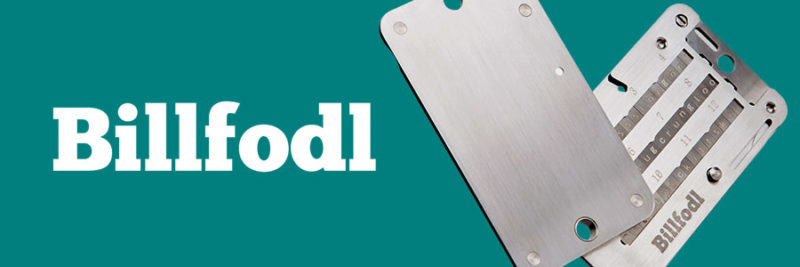
The Billfodl is a stainless steel device with laser-engraved tiles for storing your seed backup. The reasons to use it over paper:
- Fireproof – Forged to withstand more than double the average house fire temperature
- Waterproof – Marine-grade 316 stainless steel means it will never rust
- Shockproof – Protected against electrical surges up to 1 million volts
- Offline – Seeds and keys remain completely offline at all times
- Durable – Unlike paper, you won’t accidentally throw it away or have it degrade over time
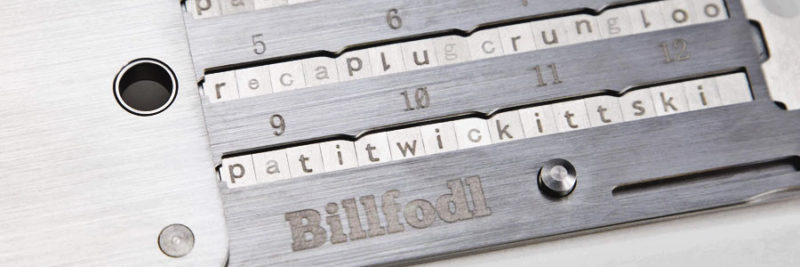
The Multishard setup ($235) is the one I recommend. It gives you three stainless steel units, each storing 16 of your 24 seed words, with each word backed up across two units. Recovering your wallet requires any two of the three units — no single device holds the full secret.
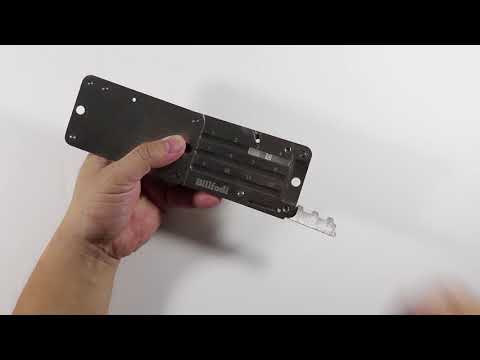
Anyone holding a significant amount of crypto on a paper seed should seriously consider switching to this setup.
How to Set Up a Billfodl
The process is straightforward, but set aside enough time to do it carefully and double-check everything. This five-part video tutorial covers the full setup:


More Advanced Options
For those who want to go further than a hardware wallet, Yeti Cold is a script by JW Weatherman that installs Bitcoin Core and walks you through setting up a deep cold storage solution using offline computers. It requires more technical knowledge but offers a different security model if you’re interested in exploring beyond hardware wallets.
Here’s an interesting thread that challenges the conventional wisdom around hardware wallets:
Would love to hear responses from supporters of HWWshttps://t.co/5GZsU3Cbmw@aantonop @lopp @matt_odell @StepanSnigirev @_JustinMoon_ @mflaxman
— Robert Spigler 🔑 (@RobertSpigler) December 30, 2020
Bitcoin ETFs: Custody Without the Complexity
One significant development since the original version of this article is the approval of spot Bitcoin ETFs in the United States in January 2024. Products from BlackRock (IBIT), Fidelity (FBTC), and others now hold billions of dollars in Bitcoin on behalf of investors.
For those who want Bitcoin exposure without managing private keys, a spot ETF through a traditional brokerage account is now a practical option. The custody is handled by regulated institutions, the assets are held in cold storage, and it fits neatly into existing investment accounts including IRAs.
The tradeoff is real: you do not hold the keys, and the ETF structure means you’re exposed to counterparty risk, fees, and the possibility that access could be restricted. The “not your keys, not your crypto” principle still applies here.
That said, for investors whose primary concern is price exposure rather than censorship resistance, ETFs are a legitimate and far simpler route. It’s also worth knowing that most Bitcoin ETF custodians use institutional-grade cold storage infrastructure — typically the same custodians covered later in this article.
Collaborative Custody
Collaborative custody sits between full self-custody and handing your keys to a third party. Under this model, your funds are secured using multiple signatures (multisig), and the service provider holds one of those keys — but cannot move your funds unilaterally.
The two main providers are:
Both have grown and matured considerably. Casa has rebranded slightly and expanded its plans. Their Standard tier runs $21/month (or $250/year) and their Premium tier is $175/month. They now include inheritance planning across all plans, which is a meaningful practical addition — one of the under-discussed risks of self-custody is what happens to your Bitcoin if you’re incapacitated or die.
Unchained has also expanded well beyond simple multisig vaults. They now offer a trading desk for direct purchases into your vault, Bitcoin-backed loans, Bitcoin IRAs, and estate planning services. The company manages over $10 billion in Bitcoin across thousands of clients. They’ve also rebranded from “Unchained Capital” to simply “Unchained.”
The core model remains the same: you hold the majority of keys, these companies hold one, and no transaction can be initiated without your participation. It is genuinely not custody in the traditional sense — they cannot take your Bitcoin.
My general view on the two: Casa suits those who want a cleaner, more guided experience with good mobile app support. Unchained suits those who want a broader financial services relationship around their Bitcoin and don’t mind a more hands-on setup process.
The main drawbacks haven’t changed much. Casa’s app remains closed-source, so you can’t independently audit what it does. Both services require you to use their infrastructure to coordinate transactions, which means some visibility into your holdings. And Casa’s monthly fee adds up over a long holding period — though the inheritance planning alone arguably justifies it for larger holders.
For those who want the security model of multisig without any third-party involvement, Caravan (maintained by Unchained) remains a solid open-source multisig coordination tool.
A hardware wallet used alone is a single point of failure. Using hardware wallets as part of a multisig setup significantly improves resilience — this is true whether you use a collaborative custody service or build your own setup.
Custodians
When using a custodian, you are handing over your private keys entirely. In exchange, they provide institutional-grade security, insurance, compliance infrastructure, and ongoing operational management.
Some of the most established custodians currently:
The institutional landscape has strengthened considerably. BitGo received OCC approval to convert to a federally chartered national trust bank, went public, and now reports over $104 billion in assets on its platform. Fidelity Digital Assets operates as a national trust bank. These are no longer fringe operations — they are regulated financial institutions with real accountability.
That said, custodians still primarily serve institutional clients with large holdings. For most retail investors, these options are either inaccessible or unnecessary.
Custody risk hasn’t gone away either. The FTX collapse in late 2022 — while technically an exchange rather than a pure custodian — was a stark reminder of what happens when you trust a third party that isn’t properly segregating client assets. The risks to understand when using any custodian:
- Hacking risk — Custodians are high-value targets. Physical infiltration and social engineering are often more dangerous than software attacks, since most funds are in cold storage.
- Transparency risk — Without real-time third-party audits, you can’t verify the custodian holds full reserves. Commingled funds create insolvency exposure.
- Account compromise — If your login is compromised, an attacker can initiate unauthorized transfers. Use strong 2FA and secure your credentials properly.
- Censorship and freezing — Like any financial institution, custodians can freeze accounts under government instruction or their own policies. This is a real and documented risk.
The principle holds: not your keys, not your crypto.
For publicly traded companies and certain regulated private entities, using a custodian is often the only practical route. Audit requirements and fiduciary obligations make direct self-custody impractical. Just as companies don’t keep treasury cash in a safe, they rely on regulated financial institutions — and the same logic applies to Bitcoin treasury holdings.
On the institutional self-custody side, Ledger Vault has been rebranded as Ledger Enterprise. It is not a custodian — it’s a platform that enables institutions to self-custody while managing governance, compliance, multi-signature workflows, and audit trails. It’s been running since 2019 with no reported hacks or asset losses. YouHodler uses Ledger Enterprise for their custody infrastructure.
How to Claim Capital Loss If You Lose Your Crypto Private Keys
If you lose access to your cryptocurrency, you may be eligible to claim a capital loss. To make that claim, you will need to provide evidence including:
- When you acquired and lost the private key
- The wallet address that the private key relates to
- The cost you incurred to acquire the lost or stolen cryptocurrency
- The amount of cryptocurrency in the wallet at the time of loss
- That the wallet was controlled by you (for example, transactions linked to your identity)
- That you are in possession of the hardware which stores the wallet
- Transactions to the wallet from a digital currency exchange for which you hold a verified account or that is linked to your identity
Conclusion
The custody landscape has matured significantly since 2020. Better hardware, stronger collaborative custody services, and more credible institutional options mean there’s a genuinely good solution for every type of holder.
Physical Persons
For a Bitcoin-only holder who wants maximum security and is technically comfortable, Coldcard Mk5 or Q is the benchmark. For those holding multiple assets or wanting a more user-friendly experience, Ledger or Trezor remain the most accessible and well-supported options.
The most practical setup for most holders remains:
Together, the hardware wallet and metal seed backup give you a setup that is fire-resistant, water-resistant, durable, and recoverable even if you lose one component. The Billfodl single runs $99, the Multishard is $235 — the Multishard is worth it for anyone holding a meaningful amount.
If self-custody feels like too much responsibility, Casa or Unchained are the best collaborative custody options. You retain control, but the burden is shared.
For pure price exposure with no custody complexity, spot Bitcoin ETFs from BlackRock or Fidelity through a standard brokerage account are now a viable route — understanding the tradeoff that you’re relying entirely on the issuer.
If you want to earn a return on your crypto, you’re going to have to give up your keys to a lending platform like YouHodler. Or you can stake assets like Ethereum via an exchange like Coinbase. Either way, you’re accepting counterparty risk in exchange for yield — go in with that understanding.
Companies
For corporate treasury purposes, BitGo is the established choice. For companies building crypto products that need to hold client funds, Ledger Enterprise is worth a close look — it provides the compliance infrastructure and audit trail that institutional holders need while keeping actual custody in-house.
Further Reading
- 10x Bitcoin Security Guide
- Econoalchemist — detailed hardware wallet and security guides
- Keep It Simple Bitcoin — practical custody guides
- Bitcoin Backup Overview
- Smart Custody project
- List of hardware wallet hacks to date
- Security — hardware wallets vs offline laptops
Videos





What are your thoughts on Bitcoin and crypto custody? Let me know in the comments section.
Related






Leave a Reply