Contents

With the growing trend of digital nomadism and location-independent work, more high-net-worth individuals, freelancers, and company owners are realizing they have the luxury of choosing where to be tax resident and where to base their company.
I’ve personally taken a strong interest in this topic. I spent several years as a digital nomad before adapting to family life with kids, slowing down my travels, and settling in Europe. I’m Maltese, I’ve lived and worked in Malta, and I’ve been through the process of evaluating most of these jurisdictions firsthand.
I am not a qualified tax consultant. Everything below is based on my own research and many conversations with lawyers and accountants. Always consult several good tax advisors before making any moves. Tax structuring and personal residency are not topics to approach casually, and any solution needs to account for your current and likely future circumstances — family, career changes, fluctuations in net worth, personal priorities.
If you’re looking for consultancy on European tax structuring, head straight to my consultancy page, or read on for the full picture.
The State of Play in 2026
This article has been substantially updated for 2026. A lot has changed since I first wrote it, and some of what I previously recommended no longer applies in the same way.
The biggest change: Portugal’s Non-Habitual Resident (NHR) program — which I used to call the best option for most people when combined with a Malta company — effectively died on 31 December 2023. What replaced it, the IFICI regime, is a far narrower program aimed specifically at scientists, tech workers, and startup founders. If you’re a passive investor, crypto holder, or general entrepreneur drawing dividends from a foreign company, you are locked out of the new regime.
The other big shift: Pillar Two, the OECD’s global minimum tax framework, is reshaping the low-tax landscape. Cyprus raised its corporate rate to 15% in 2026. Gibraltar raised its rate to 15% in 2024. Malta introduced an optional 15% regime in 2025 (though the traditional 5% system is still in place). The direction of travel is clear.
None of this means the game is over. It means the best structures have changed, and the options that survive are the ones worth knowing about in detail.
The Case for Being Based in Europe
I love the diversity and culture of Europe, and while I’ve traveled all over the world, I keep coming back to this continent as my base. I believe it still offers the best combination of quality of life and tax planning flexibility — if you know how to use it.
The EU’s fundamental freedoms mean no member state can blacklist another EU country. This gives entrepreneurs real security: you can structure across multiple EU jurisdictions without the constant threat of your own country declaring your setup illegal. Within the EU, tax rates vary enormously — from Malta’s effective 5% corporate rate to France’s 25% — and that variation creates legitimate opportunities.
Some countries run active incentive programs specifically designed to attract high-net-worth individuals and entrepreneurs. These programs change, sometimes dramatically, as this article demonstrates. But the underlying principle — that you can legally choose where to pay tax — is not going anywhere.
Look beyond the rate when evaluating jurisdictions. Opening a company and banking in Ireland is dramatically easier than doing so in Bulgaria, regardless of what the tax code says. Language, culture, legal infrastructure, and your own lifestyle preferences all matter, especially for residency decisions.
The Best Option in 2026: Malta Company + Cyprus Non-Dom Residency
For most entrepreneurs who want genuine tax efficiency combined with a livable European lifestyle, the combination I recommend in 2026 is a Malta trading company with personal residency in Cyprus under the non-dom regime.
This has replaced the Malta + Portugal setup I previously recommended, for reasons I’ll explain in the Portugal section below.
Here’s the structure at a high level:
- Corporate: Malta trading company + Malta holding company. Effective corporate tax rate: 5% via the 6/7 refund system.
- Personal: Cyprus tax residency under non-dom status. Tax on dividends received from the Malta company: 0% Special Defence Contribution (SDC).
- Combined effective rate: approximately 5% on active trading income before distribution.
Cyprus’s non-dom regime has been around for years, but it’s become significantly more attractive in 2026 following a comprehensive tax reform that preserved and extended the non-dom benefits while the rest of the landscape narrowed. I’ll go into the full details in the Cyprus section below.
Get advice on Malta + Cyprus setup
Setting Up a Company in Malta (5% Effective Tax)

I’ve written a separate article on Malta’s 5% effective corporate tax rate and another on moving to Malta if that’s also an option you’re considering. Read those for the technical detail of how the system works.
For this article, I want to focus on the practical realities — including the honest warnings that will save you from nasty surprises.
How the 5% Rate Actually Works
Malta uses a full imputation system. Here’s the mechanics:
- The Maltese trading company pays 35% corporate tax on profits.
- When dividends are distributed to shareholders, the shareholders are entitled to claim a refund of 6/7ths of the Malta tax paid. That brings the effective rate down to 5%.
- For passive income (royalties, interest), it’s a 5/7 refund — effective rate of approximately 10%.
- For income from qualifying participating holdings, a full refund applies — effective 0%.
The refund mechanism is well-established in EU law and has survived decades of scrutiny. As of 2026, the traditional imputation system is still in place and has not been abolished.
What’s New: The 15% FITWI Option
In September 2025, Malta introduced an alternative: the Final Income Tax Without Imputation (FITWI) regime, which allows companies to pay a flat 15% with no shareholder refund. This was created primarily to address Pillar Two compliance optics for large multinational groups caught by the EUR 750 million threshold.
For owner-managed businesses and entrepreneurs, FITWI is almost certainly not the right choice. The 5% refund system remains far more efficient for typical structures. FITWI exists alongside the traditional system — it’s optional, not mandatory.
Malta has also deferred implementing Pillar Two rules until 2029, using the small-country deferral option. This means Malta is not under immediate pressure to eliminate the 5% refund system.
My Honest Warnings About Malta (Still Relevant in 2026)
If you’ve read other articles on my site, you know I don’t hold back on my opinions, even when they cut against my own interests. So here’s what you need to know about Malta before you get excited about 5% corporate tax.
I’m skeptical about Malta’s general trajectory. That’s why I left the country years ago.
The corruption and nepotism that Malta is known for contributed directly to it being placed on the FATF grey list in June 2021. The good news: Malta was removed from the grey list on 17 June 2022 after demonstrating significant progress in anti-money laundering reforms. But the underlying cultural issues that led to the grey list in the first place have not disappeared. The grey list episode was embarrassing and caused real pain for legitimate businesses operating there.
Banking in Malta remains a genuine headache. Bank of Valletta (BoV), the country’s dominant bank, is financially healthy — it posted EUR 148.2 million in pre-tax profits in the first half of 2024, up 40.9% year-on-year. The punitive high-balance fees they introduced during the negative interest rate era were withdrawn in August 2022. But BoV remains bureaucratic, slow, and poorly suited to serving non-resident companies. Onboarding is cumbersome, processes are opaque, and governance concerns have resurfaced — there’s been recent controversy about BoV board member ties to Malita Investments amid a social housing scandal. The bank continues to attract poor customer reviews.
In practice, most Malta-registered companies use Revolut Business or Wise Business as their primary banking while maintaining a BoV account for compliance purposes. That’s workable, but it’s an added layer of complexity.
The one-man-band incorporation mills that proliferated during Malta’s boom years are still out there. Avoid them. You want a long-established, multi-service law firm or accountancy practice — not a boilerplate incorporation service that will take your setup fee and vanish when you have a problem. More on substance requirements in the Place of Effective Management section below.
Despite all of this, Malta remains a very viable corporate jurisdiction for those who go in with their eyes open, choose their advisors carefully, and build genuine substance into their structure.
Personal Residency in Cyprus (Non-Dom)

Cyprus has quietly become one of the most compelling residency options in Europe for entrepreneurs, and the December 2025 tax reform made it even more attractive for non-doms specifically.
How the Non-Dom Regime Works
A person who is a tax resident of Cyprus but not domiciled in Cyprus is exempt from the Special Defence Contribution (SDC) on:
- Dividends: 0% SDC (domiciled residents now pay 5% SDC from 2026)
- Interest: 0% SDC (domiciled residents pay 17% SDC)
- Rental income from abroad: 0% SDC
As a non-dom Cyprus resident receiving dividends from your Malta company, you pay zero Cypriot tax on those dividends. The corporate-level tax has already been paid in Malta at an effective 5% rate. That’s the full combined burden — approximately 5% on active trading income.
The 60-Day Rule
Cyprus offers one of the most flexible residency rules in Europe. You qualify as a Cyprus tax resident by spending just 60 days per year in Cyprus, provided:
- You do not spend 183 or more days in any other single country in that tax year
- You are not tax resident in any other country
- You have a home in Cyprus (owned or rented)
- You are employed or operate a business in Cyprus or from Cyprus
This is significantly more flexible than the 183-day rule most countries use. It’s particularly useful for entrepreneurs who split time across multiple countries.
Duration: 17 Years, Extendable to 27
The non-dom SDC exemption lasts 17 years from the date you first become a Cyprus tax resident. This is already a generous window.
The December 2025 reform added a new extension mechanism: after the initial 17 years, you can extend non-dom benefits for two consecutive 5-year periods by paying a lump sum of EUR 250,000 per period. This gives potential total coverage of 27 years — long enough to cover most planning horizons.
Corporate Tax: 15% from 2026
The 2026 reform raised Cyprus corporate tax from 12.5% to 15%, in line with the Pillar Two minimum. This is a meaningful change for Cyprus-registered companies, but if you’re pairing Cyprus residency with a Malta company (not a Cyprus company), this doesn’t directly affect your corporate tax position. The relevant benefit — the 0% SDC on dividends received by the non-dom shareholder — was preserved and strengthened.
Cyprus vs Portugal: Why the Switch
For years I recommended Portugal’s NHR as the personal residency to pair with a Malta company. The appeal was clear: 0% tax on dividends received from foreign companies, for 10 years, with the ability to spend some of your time elsewhere.
That play is effectively dead for new applicants. Portugal’s NHR ended on 31 December 2023. What replaced it — the IFICI regime — is so narrow that the vast majority of entrepreneurs no longer qualify. Passive investors, dividend recipients, and crypto holders are explicitly excluded. If you’re drawing dividends from a Malta company, IFICI does not help you.
Cyprus now offers what Portugal used to: a clean exemption on foreign dividends for non-dom residents, with reasonable minimum stay requirements and a long duration. It wins on almost every metric that matters for this structure.
Get tax advice on Cyprus non-dom setup
Portugal: NHR Is Gone, IFICI Is Not a Replacement for Most Entrepreneurs

I want to give Portugal proper treatment here because it still comes up constantly, and a lot of advice circulating online hasn’t caught up with what actually changed.
What Happened to the Original NHR
Portugal’s Non-Habitual Resident regime, launched in 2009, ran for 14 years and was genuinely one of the best personal tax regimes in Europe. It offered a 20% flat rate on qualifying Portuguese income and broad exemptions on foreign income for 10 years. Anyone who was accepted into the old NHR before 31 December 2023 continues to benefit for their full 10-year period.
The program was killed by mounting EU pressure and domestic political criticism over inequality. Foreign retirees and entrepreneurs were paying far less tax than Portuguese citizens. Portugal eventually gave in.
What IFICI (NHR 2.0) Actually Covers
The replacement regime, officially called Incentivo Fiscal a Investigacao Cientifica e Inovacao (IFICI), came into effect on 1 January 2025. Here’s what it offers and who qualifies:
- Rate: 20% flat on eligible Portuguese-sourced employment or self-employment income
- Foreign income: Exempt from Portuguese tax (except pensions)
- Duration: 10 years
To qualify, you must tick every one of these boxes:
- Not been a Portuguese tax resident in the previous 5 years
- Never used the old NHR
- Fall into one of the qualifying categories: university professors, scientific researchers, employees of companies with 50%+ export revenue in qualifying sectors, founders or employees of certified startups, or certain highly qualified professionals in science, technology, healthcare, or green energy
- Hold a university degree (EQF Level 6 or higher)
- Spend 183+ days per year in Portugal, or maintain a permanent home there
The critical point: passive dividend income from a foreign company does not qualify. This regime is for people actively contributing to Portugal’s innovation economy. If your income comes from dividends paid by a Malta holding company, IFICI does nothing for you. You would be taxed at standard Portuguese rates on that income.
Crypto in Portugal
One area where Portugal remains genuinely attractive is long-term crypto holding. Gains on crypto held for more than 365 days remain tax-free. Short-term gains (under 365 days) are taxed at a flat 28%, as is staking and lending income. Since 2024, all crypto transactions must be reported in the annual tax return, even if the gains are exempt.
For long-term holders, Portugal is still one of the better European jurisdictions. But the old blanket NHR exemption that covered everything is gone.
Is Portugal Worth Considering?
If you genuinely work in tech, run an eligible startup, or work in scientific research, IFICI is still a meaningful benefit — 20% flat on Portuguese income and foreign income exempt for 10 years. The quality of life in Lisbon and Porto is excellent, and the startup ecosystem is vibrant.
But for the typical reader of this article — an entrepreneur drawing dividends from a foreign corporate structure — Portugal is no longer the obvious answer. Cyprus is the cleaner choice.
Read my full guide on Portugal’s NHR and its replacement for more detail.
Alternative 1: Residing in and Running a Company from Andorra

Andorra has always been a compelling option for people who love mountains, a high standard of living, and genuinely want to live there. The tax rates remain excellent.
Current Tax Rates
- Personal income tax: 0% on income up to EUR 24,000 / 5% on EUR 24,001-40,000 / 10% maximum above EUR 40,000
- Corporate tax: 10% general rate (special reductions can bring this lower)
- No wealth tax, no inheritance tax, no gift tax
- Crypto: taxed at standard personal income tax rates — maximum 10%
These rates are unchanged and still outstanding by European standards.
Major Change: Investment Thresholds Doubled
Here’s the significant update. The Omnibus 2 Law (Law 2/2026), published and in force from 13 February 2026, substantially raised the investment requirements for passive (non-lucrative) residency:
- Minimum investment in Andorran assets: EUR 600,000 increased to EUR 1,000,000
- Minimum real estate investment per dwelling: EUR 400,000 increased to EUR 800,000
- Non-refundable deposit (main applicant): EUR 50,000 (unchanged)
- Non-refundable deposit (per dependent): EUR 10,000 increased to EUR 12,000
- Annual income minimum: 300% of Andorran minimum wage (~EUR 39,000/year), plus 100% per dependent
- Minimum physical presence: 90 days per year for permit maintenance; 183 days for fiscal residency
This materially changes the calculus for digital nomads and younger entrepreneurs who might have considered Andorra a reachable option. EUR 1 million in Andorran assets is a serious commitment. Andorra is now firmly positioned as an option for established, high-net-worth entrepreneurs rather than a low-cost path to tax efficiency.
I’ve visited Andorra several times. It’s a beautiful place to live — clean, safe, excellent skiing, a genuinely high standard of living. But the tradeoffs are real: colder climate, relative isolation, nearest airports (Barcelona and Toulouse) are roughly a two-hour drive. If you like mountains and can meet the investment threshold, it’s a legitimate option. If you’re looking for a lower-barrier residency, look elsewhere.
Alternative 2: Opening a Company in Estonia

Estonia has a genuinely unique corporate tax system: companies pay 0% tax on retained and reinvested profits, and only pay corporate income tax (CIT) when they distribute dividends. This is not the same as 0% corporate tax. Estonia wants you to grow your company and reinvest — you just pay the bill when you take money out.
Current Rates
- Retained profits: 0% CIT
- Distributed profits: 22% CIT (applied as 22/78 on the net distribution)
The rate increased from 20% to 22% at the start of 2025. A planned further increase to 24% was cancelled by the Estonian Parliament in December 2025. A temporary 2% defense tax that had been proposed was also abolished. The reduced 14% rate for regular dividend payments — which existed for companies with established dividend track records — was eliminated in 2025, along with the associated 7% withholding tax on those distributions.
So the rate went up, one attractive feature was removed, and then a further increase was stopped. The system is still unique in Europe, but it’s no longer as sharp as it was a few years ago.
E-Residency: Still Active, Still Misunderstood
Estonia’s e-Residency program has registered over 100,000 e-residents from 170+ countries. It remains fully functional. But the key warning I’ve given before is still the most important thing to understand: e-Residency is a digital business identity, not a tax residency or a physical residency.
If you live in Spain and manage an Estonian company from Barcelona, Spain may well argue that your Estonian company is effectively managed in Spain and therefore subject to Spanish corporate tax. The Estonian company is real, the EU legal structure is real — but if the substance isn’t there, you have a place of effective management problem. I discuss this in detail in the section below.
For freelancers and small businesses that genuinely operate from Estonia or who are comfortable with the substance requirements, Xolo remains the most practical service to get set up quickly.
Estonian business setup with Xolo
Alternative 3: Italy HNWI Flat Tax

Italy’s HNWI flat tax regime allows individuals who move to Italy and become tax resident there to pay a single annual lump sum covering all their foreign-sourced income, regardless of how much that income is.
The Price Has Tripled Since 2017
Italy has raised this flat tax twice in rapid succession:
- 2017-2023 (original): EUR 100,000 per year; EUR 25,000 per family member
- 2024: EUR 200,000 per year; EUR 25,000 per family member
- 2026 (from 30 December 2025): EUR 300,000 per year; EUR 50,000 per family member
Those who validly enrolled before the new rules came into force continue paying the rate that applied when they moved. The increases only apply to new applicants.
Who This Makes Sense For
At EUR 300,000 per year, the math is stark. Italy’s standard progressive personal income tax tops out at 43%. To break even versus the flat tax, you would need foreign income of roughly EUR 700,000 per year. The regime makes obvious economic sense only once your foreign income is well above that level — think EUR 2 million or more per year where the savings are truly significant.
For ultra-high-net-worth individuals with substantial foreign investment income, Italy remains a rational choice. The lifestyle is hard to beat, and you get complete exemption from Italian inheritance tax on foreign assets, no wealth tax on foreign assets, and no obligation to declare foreign assets.
Italy is clearly testing the upper limit of what wealthy migrants will pay. Two significant increases in two years suggest strong demand. Further increases are possible.
Eligibility
- Must not have been an Italian tax resident for at least 9 of the previous 10 tax years
- Must establish Italian tax residence (183+ days per year, or primary center of vital interests in Italy)
- No minimum investment requirement (unlike Greece)
- Available to Italian nationals who meet the residency requirements
One anti-avoidance note: selling a significant holding in a foreign company within the first five years of Italian residency triggers ordinary Italian capital gains tax, not the flat tax exemption.
Alternative 4: Greece

Greece runs two separate flat tax regimes for inbound high-net-worth individuals.
HNWI Flat Tax (Article 5A)
- Annual flat tax: EUR 100,000 covering all foreign-sourced income
- Additional family members: EUR 20,000 per person per year
- Duration: 15 years
- Investment requirement: EUR 500,000+ in Greek real estate, business shares, or financial products (within 3 years of application)
- Prior non-residence: Must not have been a Greek tax resident for 7 of the last 8 years
Greece’s flat tax costs less than Italy’s (EUR 100k vs EUR 300k) and covers more years (15 vs 15 — same, actually), but requires an investment whereas Italy does not.
Retiree Flat Tax (Article 5B)
- Flat rate: 7% on all foreign pension income
- Duration: 15 years
- No investment requirement
- Must move from a country that has a double tax treaty with Greece
- Prior non-residence: Must not have been Greek tax resident for 5 of the last 6 years
For retirees with significant foreign pension income, the 7% flat rate is very competitive.
Golden Visa: Now Significantly More Expensive
Law 5100/2024 (March 2024) restructured Greece’s Golden Visa program. The EUR 250,000 threshold that made Greece famous is now limited to Zone C — commercial-to-residential conversions and heritage building restorations. For mainstream real estate:
- Athens/Piraeus, Greater Thessaloniki, Mykonos, Santorini, islands over 3,100 population: EUR 800,000 minimum
- Other areas: EUR 400,000 minimum
The Golden Visa grants residency but not automatic tax residency — you still need to spend 183 days per year for fiscal residency. There are also significant processing backlogs.
Greece is a nice place to live and the regime has appeal, particularly for retirees. The financial infrastructure has improved but still has room to grow.
Alternative 5: Residing in Gibraltar
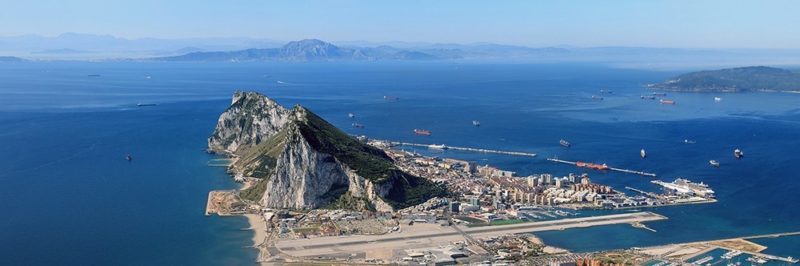
Gibraltar’s tax situation has changed materially since I last updated this article.
Corporate Tax Now 15%
Gibraltar raised its corporate tax rate from 12.5% to 15% on 1 July 2024, aligning with the OECD Pillar Two minimum. The rate is stable for now — no further changes have been announced for 2025-2026.
What remains in place:
- No capital gains tax
- No inheritance tax
- No wealth tax
- Territorial tax basis — only income accrued in or derived from Gibraltar is taxed
A note on VAT: Gibraltar has no traditional VAT, but as part of post-Brexit arrangements, a new transaction tax on goods is being phased in. This doesn’t fundamentally change the picture for most corporate structures, but it’s worth monitoring.
Post-Brexit Practical Reality
Gibraltar left the EU with the UK on 31 January 2020. The most significant consequence for financial services businesses is the loss of EU passporting. If your Gibraltar company needs to serve EU clients under a financial services licence, you now need separate EU licensing — which typically means setting up an entity inside the EU as well.
The relationship between Gibraltar and Spain remains diplomatically complex. I wouldn’t mix Spanish personal tax residency with a Gibraltar corporate structure.
For the sectors where Gibraltar has traditionally been strong — online gambling, financial services, crypto-related businesses — it remains a functional jurisdiction but at a higher cost than a few years ago.
Alternative 6: Residing in Sark
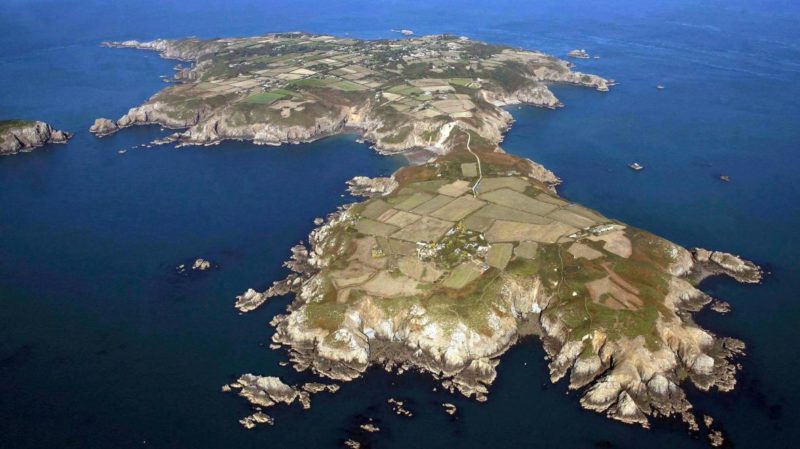
Sark is a small island in the English Channel, off the coast of Normandy. It has no direct taxation — no income tax, no capital gains tax, no inheritance tax. For those who genuinely want to escape taxation entirely and are willing to live in a remote, very quiet environment, it is technically viable.
In practice, most people who move to Sark don’t stay beyond two or three years. The island is charming, with no cars and a tight-knit community, but the isolation becomes real. It’s a long way from the conveniences of city life, there are limited employment or business opportunities locally, and the psychological cost of feeling cut off from normal life is something most people underestimate when looking at the tax benefits on paper.
My honest view: Sark is living in exile in exchange for zero taxation. Some people find that acceptable for a few years. For most people building a life and a business, the tradeoff isn’t worth it. I’ve included it here for completeness, but it wouldn’t be on my shortlist.
Other Alternatives Worth Knowing About
Monaco — Effective zero personal tax, but costs are staggering and you really do need to be there. It’s not for most people.
Dubai and the UAE — For many years Dubai was synonymous with zero-tax entrepreneurship. That’s no longer the full picture. The UAE introduced a 9% corporate tax in June 2023 on income above AED 375,000 (~EUR 95,000). Free Zone companies can maintain a 0% rate but only with genuine substance — real office, real employees, real operating costs — and mandatory audited accounts from 2025. The headline 0% personal income tax remains, and that’s genuinely attractive for individuals. But the era of registering a mailbox company in a Dubai free zone and paying nothing is over, and compliance requirements are increasing every year. A domestic minimum top-up tax at 15% for large MNEs was introduced in 2025.
On a personal note: I’ve always found Dubai too artificial for my taste, and the geopolitical instability in the wider region adds a dimension of risk that I don’t think shows up enough in the guides promoting it as an option. Cost of living is high, schooling costs are very high, and there’s no social safety net — your visa is tied to your business activity. For some people this setup is exactly right. For me, it’s not.
Ireland — 15% corporate tax for large groups, 12.5% for standard trading companies below the threshold. Easier to operate in than Malta from a banking and regulatory standpoint, but professional fees are significantly higher and the effective rate isn’t as good as Malta’s 5% for owner-managed structures.
Bulgaria — 10% flat corporate and personal income tax. Functions as a legitimate EU jurisdiction. Works for some people, particularly those comfortable with a lower-infrastructure environment and Eastern European business culture.
Spain and the Beckham Law — Worth discussing properly since I live in Barcelona and this is directly relevant to a lot of readers.
The Beckham Law (Regimen de Impatriados) was significantly improved by Spain’s Startup Law (Law 28/2022), which came into effect in 2023. Key changes:
- Prior non-residence requirement reduced from 10 years to 5 years
- Digital nomads now qualify (confirmed by subsequent jurisprudence)
- Entrepreneurs with innovative activity (certified by ENISA) qualify
- Directors of entities qualify (provided ownership is below 25%)
Under the Beckham Law, you pay a flat 24% on Spanish-sourced employment or professional income up to EUR 600,000 per year. Income above EUR 600,000 is taxed at 45%. Foreign income — dividends, capital gains, rental income from abroad — is completely exempt. You’re also exempt from wealth tax on non-Spanish assets.
Duration is 6 years: the year you become tax resident plus five following years. There is no extension to 12 years — that was discussed but not enacted.
For someone moving to Spain to work for a Spanish employer or as a qualifying entrepreneur, 24% flat is reasonable. Spain’s quality of life is exceptional, particularly in cities like Barcelona. The limitation is the 6-year clock — at the end, you face full Spanish progressive rates (up to 47%), which are punishing. Many people restructure or leave when the period expires.
Read my guide to Spanish taxation and see also my notes on Modelo 720 if you’re coming to Spain.
A Word on Pillar Two and the Global Minimum Tax
The OECD’s Pillar Two framework — setting a 15% global minimum effective tax rate for large multinational enterprise groups — is reshaping the low-tax landscape. But most readers of this article don’t need to worry about it directly.
Pillar Two applies to groups with consolidated annual revenues of EUR 750 million or more (in at least 2 of the last 4 fiscal years). Solo entrepreneurs, owner-managed holding structures, small companies, and family businesses are entirely outside the scope.
The indirect effect is more significant. The political pressure Pillar Two creates has already pushed Cyprus to raise its corporate rate to 15%, pushed Gibraltar to 15%, and prompted Malta to introduce an optional 15% route. The direction is clear: the era of 10-12% corporate tax within Europe is ending, at least for those countries wanting to maintain political legitimacy. Malta’s traditional 5% system for owner-managed businesses survives because it sits below the EUR 750 million threshold — but the trend is unmistakable.
If your revenue puts you anywhere near the Pillar Two threshold, this conversation becomes very different and you need specialized advice from a large international advisory firm.
The Non-Optimized Alternative
I’ve focused this article on tax optimization, but we should also talk about optimizing for what actually matters in life.
I don’t recommend focusing only on tax when choosing where to live and work. The place of residence is particularly important — it needs to be somewhere you genuinely want to be. In my case, I live in Barcelona because I love it, and I optimize my tax structure within that constraint. That’s a perfectly rational approach, even if it means accepting higher personal taxes than I might pay in Cyprus.
Even in a high-tax country, you can go far with sensible planning. Keep most of your company’s profits in a tax-efficient jurisdiction. Pay yourself a reasonable salary or dividend amount from there. This approach has limits when you need to make large personal purchases — a house, for example — because a big dividend withdrawal triggers the full tax in your country of residence.
The solution many people use: temporarily move to a more tax-friendly country for a year or two, make the large withdrawal with minimal tax, then return. Cyprus and Portugal (under the old NHR) were classic destinations for this approach. Cyprus remains viable for this purpose. It’s legal, but you need to structure the move properly with clean cut-off points in your residency record. Talk to a good tax lawyer before doing this.
For mortgages and loans, most banks will not lend to you against income from a company in a different country. If you want to buy property where you live, you either need to bring the money over personally (paying tax) or explore other options such as pledging investments as collateral. Crypto-backed lending platforms have made this more accessible for significant holders of digital assets.
Tax Planning vs Tax Evasion

Tax planning is the lawful process of structuring your affairs to minimize tax within the options available to you under the law. It is legal, legitimate, and practiced by individuals and companies at every level.
See also: Is it possible for digital nomads to pay no tax?
Tax evasion is concealing income or misrepresenting your situation to avoid tax you legally owe. It is illegal, and neither I nor any reputable tax advisor would suggest it.
The structures described in this article are tax planning. They involve choosing where to incorporate, where to live, and how to structure income flows in ways that are fully transparent and compliant with the law. You declare everything. You follow the rules. You just follow the rules that happen to result in a lower tax bill.
Anyone who suggests you can simply not declare something, hide money offshore, or ignore reporting requirements is describing tax evasion, not planning. The two are completely different things, and conflating them is either ignorant or dishonest.
Place of Effective Management
This is one of the most important concepts in international tax planning and the one most commonly underestimated or ignored by people rushing to set up foreign companies.
You cannot simply open a company wherever the tax rate is lowest and operate from there while living in a different country. The country where you actually live may attempt to treat your foreign company as tax resident in its own territory if the company’s effective management and control is exercised from there.
Opening a company abroad has certain caveats. One important concept is the “place of effective management.” I wrote about this topic in my article about digital nomad taxation, as this is the biggest concern for digital nomads or expats when opening companies abroad.
What Constitutes Effective Management
The criteria used in most OECD-based double tax treaties include:
- Where board meetings of directors are held — and whether those directors actually exercise control
- Where senior day-to-day management is carried out
- Where the company’s headquarters are located
- Where the company’s accounting records are kept
How to Add Substance
- The company’s income and expenditure passes through a bank account in the jurisdiction
- The company employs one or more individuals in that jurisdiction, potentially including a local resident director. EU law generally requires social security to be paid where the worker works, which helps establish genuine local presence.
- The company rents premises and has real expenditure in that jurisdiction — phone bills, internet, accountancy costs
I want to be direct about the reality here. The vast majority of small companies registering in Malta or Cyprus do so purely for tax reasons. Sometimes the tax advantage is the hook and real operational reasons develop later. For smaller owner-managed businesses, the economics of building genuine local substance are often unattractive.
In practice, the risk of enforcement depends heavily on your profile. Tax authorities have limited budgets and focus on cases where the potential revenue recovery justifies the cost of investigation. High-profile individuals, large sums, and obvious discrepancies between declared residency and actual life draw attention. Low-profile, well-structured, well-documented setups with genuine substance — even modest substance — are not typically the priority.
That said, I would not build a structure around the assumption that you won’t be investigated. Build it to withstand scrutiny. Appoint directors who actually do things, not just nominees. Have board meetings in the jurisdiction. Keep proper records. Work with advisors who have a long track record and real relationships in the jurisdiction.
The famous cases — Messi, Ronaldo, and others — are instructive not because they were large-scale conspiracies, but because the underlying structures were often aggressive and poorly documented. Even in genuinely ambiguous situations, tax authorities have leverage: the threat of a court case and reputational damage can force a settlement even when the case against you is weak. That’s a risk worth taking seriously.
Extra Tip: Opening a Company in the United States
For some businesses, a US company has real advantages beyond just tax. People I know have used Firstbase to get set up in the US (LLC and C-Corp structures, Delaware and Wyoming, with Mercury banking).
The original advantage I mentioned years ago — using a US company to access Stripe before your home country was supported — matters less now that Stripe has expanded to most European jurisdictions, including Malta. But US companies still offer real benefits: easier access to US financial services, investment platforms, and e-commerce infrastructure that remains US-centric, as well as a certain credibility in some markets.
You can use the code GALEA5 for a discount on Firstbase services.
Set up a US company with Firstbase (code: GALEA5)
Stripe Atlas is also worth mentioning — Stripe built it to help foreign founders incorporate in the US. It serves a similar purpose to Firstbase for simpler structures.
Whatever service you use, consult a US international tax specialist before implementing any US company structure. There can be meaningful compliance costs and obligations that aren’t obvious at first glance, including FBAR reporting for US entity owners with foreign bank accounts, and the treatment of distributions from US LLCs to foreign owners.
Get help with U.S. company formation
Flag Theory
If you’re interested in tax optimization, personal freedom, and sovereignty, you should read about flag theory.
Flag Theory is the idea of diversifying your life across jurisdictions to increase freedom, protect privacy, and grow wealth. The classic “Five Flags” cover residency, citizenship, banking, assets, and business. You deliberately choose the best jurisdiction for each function rather than letting geography and inertia decide for you.
I learned about flag theory during my years as a digital nomad and it has influenced my thinking ever since. As I wrote in my thoughts on nationality, I believe we’re moving toward a future where individuals actively choose where to live and do business, rather than simply being born somewhere and staying there out of habit.
Many countries are run inefficiently and impose ever-increasing burdens on citizens to compensate for political failures. The modern workforce — especially entrepreneurs — has more mobility than most people realize, and not using that mobility is leaving real money and freedom on the table.
If you want to go deeper on flag theory, these resources are worth your time:
- Flag Theory
- Nomad Capitalist
- Tax Free Today
- Freedom Surfer
- Offshore Living Letter
- Escape Artist
- No More Tax
- Offshore Citizen
The forum Offshorecorptalk.com is also worth a look for practical discussions.
A word of caution: all of these resources are naturally biased toward flag theory as a solution. It’s an important framework, but you don’t need to pursue it to extremes. Here’s what I think are the highest-leverage moves:
- Separate your business from yourself — create a company
- Register that company in a tax-friendly jurisdiction, separate from where you live
- Live in a country that offers genuine quality of life: good climate, culture, connectivity, reasonable taxation
- Hold bank accounts outside your country of residency
- Hold a meaningful allocation of non-fiat assets, including Bitcoin and other diversified stores of value
- Invest across jurisdictions, not just in your home country
Banking: Revolut Is Now a Real Bank
A section I’ve had in previous versions of this article distinguished between “digital banks” like Revolut and Wise, and “real” banks. That distinction needs updating.
Revolut obtained a specialized banking licence in Lithuania in December 2018. In December 2021, the ECB upgraded this to a full banking licence for Revolut Bank UAB. This is not an e-money licence — it is a proper EU banking licence, with passporting rights across the European Economic Area.
What this means practically: deposits held with Revolut Bank UAB are covered by the Lithuanian Deposit Insurance Scheme — the same EUR 100,000 per depositor protection you get at any EU bank. If you’re using Revolut in the EU, you are a depositor at a licensed bank, not an e-money account holder.
For EU-based entrepreneurs, Revolut Business accounts now offer genuine deposit protection. That said, many gestorias and tax advisors still recommend maintaining a local traditional bank account for certain compliance purposes — for example, Spanish tax authorities often prefer to debit from a Spanish bank account.
Wise remains an e-money institution in the EU (with local banking licences in some markets). It’s excellent for multi-currency accounts and international transfers, but the deposit protection picture is different from Revolut. Check the terms for your specific jurisdiction.
Both remain indispensable tools for internationally structured businesses. Just understand what each actually is.
Jurisdiction Comparison Table 2026
| Jurisdiction | Corporate Tax | Personal Tax on Dividends | Key Benefit | Main Catch |
|---|---|---|---|---|
| Malta | 5% effective (6/7 refund) | Depends on residency | Lowest effective EU corporate rate | Banking headaches, substance required |
| Cyprus (non-dom) | 15% (from 2026) | 0% SDC on dividends | Non-dom exemption preserved; 60-day rule; 17-27 yr duration | 60-day rule requires careful management |
| Portugal (IFICI) | 21% standard | Standard rates | 20% flat on qualifying income; foreign income exempt | Extremely narrow eligibility; passive investors excluded |
| Andorra | 10% | 0% on dividends from Andorran entities to residents | Max 10% on everything; no inheritance tax | EUR 1M investment required for passive residency |
| Estonia | 0% retained / 22% distributed | Depends on residency | No tax on reinvested profits | Place of management risk; 22% on distributions |
| Italy (HNWI) | 24% standard | Covered by flat tax | EUR 300k covers all foreign income | EUR 300k/year; only viable at very high income levels |
| Greece (HNWI) | 22% standard | Covered by flat tax | EUR 100k covers all foreign income; 7% for retirees | EUR 500k investment required |
| Gibraltar | 15% | No CGT on dividends | No CGT, no VAT (for now) | Post-Brexit: no EU passporting; tiny market |
| Spain (Beckham) | 25% standard | Foreign dividends exempt | 24% flat; foreign income exempt; wealth tax relief | Only 6 years; then full Spanish rates apply |
| Dubai/UAE | 9% (0% free zones with substance) | 0% personal income tax | Zero personal income tax; free zone options | 9% CT new; substance requirements real; high cost of living; geopolitical risk |
Conclusions
The landscape looks different in 2026 than it did even two years ago. Portugal’s NHR is gone for new applicants. Gibraltar and Cyprus raised their corporate rates. Malta introduced a 15% option while keeping the 5% system. Andorra doubled its investment threshold.
But the fundamentals haven’t changed: European entrepreneurs with internationally structured businesses can still achieve meaningful tax efficiency through legitimate, legal means. The best structures just look a bit different now.
For most working entrepreneurs, my recommended starting point remains a Malta company combined with Cyprus non-dom residency — a combination that gives you effective 5% on corporate profits and 0% SDC on dividends, with a 60-day minimum stay requirement and a 17-year (extendable to 27) non-dom window.
If you want to live in Spain, the Beckham Law gives you six useful years. If you’re genuinely working in tech or running a qualifying startup, IFICI in Portugal is still worth considering. If you have significant net worth and love Italy, EUR 300,000 per year buys you a blanket exemption on all foreign income. And if mountains and a quieter life appeal to you and you have EUR 1 million to invest, Andorra remains exceptional.
None of these structures work without proper legal and tax advice, genuine substance, and ongoing compliance. The people who get into trouble are the ones who treat this as a set-and-forget exercise.
If you want to explore any of these options in detail or connect with trusted advisors in Malta, Cyprus, Portugal, or Spain, get in touch.
Book a tax structuring consultation
Further Reading
- Malta’s 5% corporate tax rate explained
- Moving to Malta for tax purposes
- Portugal NHR and its replacement (IFICI)
- Is it possible for digital nomads to pay no tax?
- Guide to Spanish taxation
- Modelo 720: Spain’s overseas asset declaration
- Should freelancers set up in Estonia?
- My thoughts on nationality
- Insights on Holding Company Structures in Europe
- Tax Foundation
Note: This is a summary of my research and discussions with tax consultants. It is not tax advice. Tax laws change frequently and your individual circumstances will affect which options are relevant to you. If you would like to set up a consultation with a professional, please get in touch.
Related







Great
Hey, I wrote my comment earlier, but it seems not published because of a link inside of it, I write it again now without link:
Hey Jean, thanks a lot for your articles, I’m following your blog for a while and it’s really useful. I have a question from you and like to know your input. My accountant in Italy hold a webinar with this title: Pay 0% tax legally for 100% Digital Shops.
So, he introduced a way that is possible Italian (not sure about others), pay 0% tax. But those freelancers who work 100% online and digitally. It was a 250 slide pages presentation.
In summary, he didn’t mention any particular countries (of course needs to pay him to tell us) but his way was this:
1- Completely become separate from Italian tax system by going outside of Italy for more than half of the year, I assume this is because to not be a tax resident of Italy anymore
And signup in this site as you are an Italian that lives abroad:
Anagrafe Italiani residenti all’estero (A.I.R.E.)
2- Get new residency in country X
3- Register company in country Y
He said X and Y could be same or different, based on your situation. And he excluded the blacklist countries. But he said characteristics of these countries. I translated these from Italian so maybe some don’t make sense but here you are:
Here are the 5 characteristics the perfect jurisdiction for the offshore company should have:
1- no corporate income tax
2- no value added tax
3- streamlined and secure bureaucratic system
4- privacy and protection of the confidentiality of the director and shareholders
5- unlimited sharing of profits
Here are the 5 characteristics the perfect jurisdiction for your residence should have:
1- no obligation to stay (so you can choose where to stay freely)
2- no personal tax
3- fast system to obtain residency
4- state modern and efficient and well connected with the rest of the world
5- transparent process with no hidden fees or traps
So, what do you think about this?
Thanks a lot for your time : )
Thank Jean – great article. I’ve moved to Malta and am looking to setup a 2-tier structure, with an overseas holding. There seems some risk around having a UK holding in terms of whether incoming dividends are taxed- the detailed HMRC rules say if dividends are a tax deductible expense at the Malta subsidiary, they will be taxed in the UK. The Malta tax rebate (6/7th is rebated) looks and smells like a tax deduction even though its “technically” a rebate so I feel there is a bit of risk here.
Do you have any thoughts on a Delaware LLC as the holding entity. As I understand it this is cheap to set up and operate and has no tax on incoming dividends, no tax on profits if its not operating in Delware and no tax on distributions. Seems like the perfect “offshore holding” location- but without the stigma of the BVI of caymans. Thoughts appreciated.
Hi Jean,
This post is BY FAR the best resource available on the internet, to be introduced to an effective tax strategy, while simultaneously providing the on ground realities (which is missing from everyone who is trying to sell you a service, so about 99.99% of articles out there 🙂 ) For this, I want to thank you deeply – a truly commendable effort.
We have recently immigrated to Portugal a few months back, with a clear view to set up the exact Live-In-Portugal-Tax-In-Malta setup that you have described. I have a very small online business, and I am looking for someone genuine to help us with incorporation and other services for Malta. Is there someone you can recommend? I intend to also fly to Malta in 2 weeks, to meet with some service providers and start the incorporation process.
I am also looking for a solid, cost effective consultant for personal taxation and NHR help here in Portugal – in case you have a recommendation for that?
Thank you again for this comprehensive article, it was incredibly helpful!
-R
Thank you, glad you found this helpful! As I mention in the article, I am happy to connect any reader with the lawyers I regularly consult with. Just get in touch.
Hi Jean, would you recommend creating a company in Madeira (IBCM)? It seems like a good solution for business owners moving to Portugal under the NHR (5%
Corporate Income Tax applicable to all income earned
outside of Portugal). So I am surprised not to see it mentioned on your page, can you please let me know your thoughts? Thanks in advance, Nico
Yes, Madeira is a very interesting option as well. I have written a separate guide about the NHR programme and included my thoughts on Madeira there. I would always recommend you consult a competent lawyer before you go forward with this setup though, as it’s on the more exotic side.
Hi Jean
I am considering moving to Asia, would it be possible to compare best Asian countries to live in?
Singapore
Thailand
Japan
Vietnam
That would be a fun comparison Lawrence, but they are really different so the article wouldn’t really do them justice.
Here’s my take though. I would choose Singapore if I want a clean and professional setting with lots of networking opportunities, stable politics and a favorable and well-recognized tax regime.
I would spend a few months a year in Japan; it’s an amazing country and probably my favorite place to visit, but also very particular, and as a foreigner I don’t think I could ever fully integrate into Japanese culture. I would, however, immensely enjoy immersing myself into it for a few months every year.
Thailand is a great place to spend the winter months for Europeans and Americans. Lots of things to do and can be a life-changing experience. However, it is not a developed place that is comparable to Western cities and countries. Again, I can’t see myself staying there long-term, but I’ve wintered there on multiple occasions and the stays were memorable and life-changing for me, especially from a personal growth perspective.
I didn’t really vibe with Vietnam that much. I would like to visit again, and the food was definitely spectacular.
Hi Jean,
thanks a lot for this really detailed article, and for your blog, I spent 3 years in Malta and left in 2017 for pretty much the reasons you explained in another blog post…
I read that under the NHR, individuals are taxed at a flat rate of 20%, which can be lowered to 15% for specific professions, such as software developer, artist, etc.
Would it be correct to assume that a software developer working as a freelancer could invoice international clients simply by using a Portugal tax number – no company setup required – and basically pay 15% flat?
And if a company is needed, why not simply create an LLC in Delaware and pay the salaries as dividends, as it’s not taxed in the US, it would still be taxed in Portugal, I guess at 21% – Portugal’s corporate tax rate?
In the case of a small/medium business – say 200k annual turnover – creating a setup such as the Maltese trading & holding companies, and adding substance by paying for an office, hiring 2 employees would probably cost around 60k a year – so it’s a 30% cost. I guess it’s only interesting if the company makes at least 400k profit yearly.
I am happy to pay 15-20% taxes to live in / support a country that I like, I am just trying to find a simple setup.
Thanks in advance, I am looking forward to your feedback.
Hi Nico, I think you also have to consider pension costs in Portugal (that I think you are forced to pay that is around 10%).
I’m in the same boat as you (software working for US and researching Portugal now) if you want to get in touch to share information about this my email is [email protected]
Thanks for the informative article.
I’m from Malta and trying to set up a startup. The product is a game and therefore income would be through royalties from a publisher or payments from stores. The current situation with the banks and grey listing of Malta is making it extremely difficult to accept USD as they are being blocked as soon as they directed to a Maltese bank account. I was looking for options to set up the company abroad, somewhere like in Ireland. So it’s not really for tax optimization but to actually do business smoothly.
I’m still trying to improve my financial education, so I apologize if this is a trivial question:
I know that Ireland’s CT is lower than Malta. However I’m not sure how one could take advantage of that lower CT. AFAIK when getting dividends from the company it would also be taxed by Malta, thus loosing the lower CT advantage of Ireland. I think I am missing some important part of the puzzle. Would be great if you could shed some light on my confusion.
Yes, corporate and personal tax are really two different things, and you must think of both when considering the right setup.
In your case, if it were possible to do so, moving to Portugal and establishing personal residence there on the NHR programme would be the ideal move, since you’d be able to combine the Irish low corporate tax with the 0% tax on dividends in Portugal under the NHR.
I am an Italian citizenship residing in Bulgaria for trading activities. By several years, personally I deal also with some virtual brokers on investments for buying and selling stock shares, just few savings. With the increase of my gains I have decided moving my resident status in Cyprus or Malta (both more convenient for this purpose)…unfortunately is very difficult to know someone really with deep experience on which is the right place to incorporate, because these 2 countries do not offer a good standing for these operations. 1) Cyprus is a zero taxes country for trading in stock shares – problem: Banks in Cyprus charge a lot of money on accounts and only few of them works seriously…is not true that they recovered by the financial crisis of the 2013, they are still bandits instead opening their doors to many criminals from Russia. 2) Malta, many troubles for operating outside the country…they change rules many times and nothing is clear for who want a stability future…..problem: Malta remittance basis fight with personal residence in the same island……….Let me know your solution, please not a copy and paste of a lot of millions website in which all repeats the same words words and words…..thanks
Hi Jean!
Very nice post, thank you!
Why do you prefer considering the Holding company in Malta vs Cyprus (0% dividens taxation)?
Thanks
Both are good options for holding companies, I prefer Malta’s reputation (despite the grey listing) and geographical position in Europe as well as the more international vibe there. Also, the setup I describe leads to effective taxation of 5% in Malta with a holding and trading company there, whereas in Cyprus it is 12.5%. Malta does not withhold any tax on dividends either.
Hey Jean, thanks a ton for this article!
I’m a bit confused though, to me being a digital nomad means being location independent and moving to new countries throughout the year. I usually never stay in a single country for more than 2 months and most of these setups seem to rely on staying in a country full time (or at least for over half a year). Am I missunderstanding something?
Hey Jesco, I recommend reading my article about taxation for digital nomads.
Hi Jean
Thank you for your article using a Malta Company and Portugal for residence.
Would Portugal not consider the Malta Company as a Portuguese Company given the fact the Management and control are from Malta?
Yes, unless you have a management structure and team in Malta that would be a possibility.
Hi Jean
I live and run one person consultancy business in the UK. I do it 95% from my home office with occasional business trips/meetings elsewhere. I have been thinking for a while about moving somewhere south where the weather is better and taxes are lower. Portugal would certainly be an option but would it be feasible to have “management structure and team in Malta” for a one man company while living in Portugal? If not then combination of 20% tax and significant social security contributions is not as attractive.
“As of 2021, I believe the best tax setup for most working individuals and families to be comprised of Malta for the corporate setup and Portugal for personal residence.”
1. Do you have any advice for Maltese residents/domiciles please? Does the above hold if you were to move to Portugal?
2. You mention one strategy being to have a company in a low corporate tax jurisdiction and then paying yourself a salary/dividends in your resident jurisdiction (or waiting until you move to a more favourable jurisdiction before you pay yourself real money). Any advice for Maltese residents/domiciles please?
Hi Karl, that setup would not work for Maltese residents or domiciles, but there are other good setups for that case. Contact me privately and I can put you in touch with an international tax lawyer.
Thank you for the overview. I am doing research myself so I know how ward and time consuming it must have been.
My case is that i started investing in stock markets few years ago and it is going pretty good. I am from SK where if I sell after one year of owning the stocks it is tax-free and I pay nothing else(few other countries are the same and I think CZ has 3y period instead of 1). If I would sell sooner it would get taxed at standard 21% and as it would be considered taxable income and I would have to pay healthcare and maybe social security which would bring it up to crazy 50%.
This works for me right now when I am a passive investor and I am building my wealth slowly, but I see two issues: a) I want to move elsewhere for better weather and b) sometimes I would like to sell before the year of ownership passes(I am losing good opportunities on the market) and be a bit more proactive investor.
The problem with moving elsewhere is that if I would spend more than half a year in another country, maybe rent or buy a house, it would become my tax residence and I would lose this advantage of zero tax after one year ownership. Obviously I would not go to a worse jurisdiction than I am right now. Sure, I could travel every few months to avoid the 183 day period but I would prefer to have a choice of travel instead of being forced to travel. Plus you lose the feeling of being actually in your own home.
When you add my second point, I would become full tax payer even at home which would get very expensive.
So I wonder if you have a setup in mind that could work for my use case?
I have some ideas but I don’t want to be spamming this comment section.
Cheerio.
Hi Jean,
We are a UK based company and we plan to start small scale operations in the following 10 European countries (Ireland, Belgium, France, Germany, Switzerland, Italy, Spain, Denmark, Norway and Sweden.) I was wondering what would be the most efficient holding and branch structure from taxation perspective.
We were leaning towards Ireland as the main holding company and branch in each of the rest, also since we will have physical office and 1-2 team members in each of the countries we might fall under permanent establishment and hence might have to report local tax returns in each country as well.
Would love to know your thoughts if we should explore any alternate structure ?
Thanks in advance.
Regards
Priyaj
Hello Priyaj,
In my opinion, the most efficient structure for your case will be:
1. a holding company registered in Cyprus (developed and flexible legislation, tax-free incoming and outgoing dividends, solid network of local service providers)
2. an operational company in Ireland (12,5% corporate tax, compensated by a great selection of professional staff to be hired locally). If you incline towards Eastern Europe, I would recommend looking at Hungary (9% CT) and Bulgaria (10% CT).
Best regards,
Anton
This looks like a solid setup Anton, but why not use Malta at least for the operational company part?
Hi Jean,
Have you heard about Canary Islands’ ZEC zone? If so, what is your opinion about that option?
Cheers
Yes, I have, that’s ideal if you actually want to relocate there. It’s not a bad place but I don’t like the idea of moving somewhere purely for tax purposes. That would be the same problem with places like Sark as well.
Amazing article! Thanks a lot.
Have you ever looked at the Isle of Man? Their corporate tax is 0%. Would a company holding in IoM + residence in Portugal work better than the Malta + Portugal scheme?
Yes, they have a 0% corporate tax rate, but I would qualify it as one of the more exotic options that’s not really worth the trouble in most cases. It’s very well known as being purely a tax haven, and moreover is not in the European Union. I wouldn’t bother with countries that have either little economic and banking stability or are outside the EU. So in my view Malta remains far superior.
Very interesting and informative description.
Could you also cover the CEO taxation? Is there minimum CEO salary levels? can the scenarios be ranked based on non resident CEO taxation?
Hi, thanks for the informative blog post.
I am a Maltese resident and domiciled here and was thinking of moving to portugal both to explore the place and also to get a tax advantage. I will be working remotely (with a maltese company) and registered as a self emplpyed in portugal. Will I be able to benefit from the NHR 0% tax of portugal (after 183 days) and not having to pay any taxes to Malta or will I still need to pay some taxes here even though I ll be a tax resident in portugal?
You will be liable for tax in Portugal and not in Malta as you will be tax resident where you spend most of the year. Whether you get a 0% tax rate depends on how you structure your contract and how your job is classified in Portugal. I can put you in touch with a Portuguese lawyer to give you definite answers, just get in touch.
He Jean Galea,
I am looking to obtain an NHR in Portugal, I already have an existing company structure, but the mother is located in Liechtenstein which is on the blacklist in Portugal. So I am looking for two things a lawyer in Portugal to do my NHR application, I have already been in contact with one, but he is simply too slow. The other thing is wether I can use a Maltese company as a holding company to place my current holdings in. I will have an evaluation on my currents holdings and place them in the Maltese company, these assets should then be concidered as a loan from me personally and I would be able to take this value out as a passive income. Would this be possible in your perspective?
Contact me using the form provided and I can connect you to the right people.
What if your income is purely online content & digital products based, how do you determine if business in done in Malta or Portugal?
And what if you hire a sales person in Malta, as a “director” to manage & make b2b sales for the company?
My question is for online service businesses with no real office space or physical products, servicing global clients, how do you determine “where businesse is done”?
In that case the authorities would look at where the company is registered, where it has its bank accounts, where its employees are based from, where it holds its shareholders meetings, where the directors are based and what nationalities they hold, etc.
Hi Jean,
I spent months investigating the matter to take the best possibile decision.
I’ve been in Malta, and even if I like the place, I don’t think it worth spending more than 6 months a year and paying the crazy rents over there.
Setting up the company it seems also a bit complicated, costly and so on. Surely the 5% tax rate it’s attractive, but the cost of the holding setup and the need to wait for the reimboursments is not. Also if you need to build substance to move elsewhere, probably there are better solution.
I found that Romania it could be a good option.
With only 3% of corporate tax (which can be reduced to 1% if you hire someone) up to 1M € and only 5% tax on dividends, and one of the lowests salaries in the whole UE, it seems the ideal place to reduce your tax burdens and create the substance you need to relocate elsewhere tax free later if you want to.
In this case you have pretty many options to go for and you are free to choose where to go between many countries, without the need to change your company structure:
– Portugal (tax free)
– Malta (tax free)
– Dubai (tax free)
– Gibraltar (tax free)
– Greece (low tax)
– Cyprus (low tax)
What do you think about this?
I mean i find this solution cheaper and at the same time more flexible and solid, despite going all in with Cyprus, Malta or other options.
Looking forward to hear your opinion!
Thanks
Paolo
In my opinion, Romania is not a first-tier country so I would avoid building a business there. Malta is not ideal for small businesses, but smaller businesses should probably be focusing on growth rather than tax optimisation anyway.
I would therefore stand by my choice of Malta for a corporate setup and Portugal for living. Out of all the countries you mentioned, I would only live in Portugal, because I think it’s a great country where you can actually enjoy living. The only reason I see for moving to places like Gibraltar or Dubai is to pay less tax, and I would never make a move just as a pure tax play, as my lifestyle is more important than tax optimisation.
Hi Jean, my compliment for your great website .
I try to explain my requirement: Ltd Company in UK in need to buy and sell used industrial equipments from UK to abroad.
The seller will apply VAT on goods but if I recharge it on the selling price it becomes too expensive for my buyer and my net income will be insignificant.
Is there a solution, another way , to act as a third party where to get the net income with low tax ? Is it possible with an Estonian E-company ? Thanks
Hello! Thanks for such piece.
What do you think of Italian born, residing in portugal under NHR meanwhile operating an Estonian company (I already have it in place with another cofounder)? Then I take out salary as board member (no dividends to have 0%)
Seems legit to me as long as the company is managed in Estonia and has local directors etc.
Hi Jean,
Thanks for the nice explanation. What i was wondering about the Maltese holding: if as a company owner you live in Malta instead of for example Portugal do you not pay tax on the dividend paid by the holding on top of the 5% by the company? Or does this only work for non-residents? Best regards.
This only works for non-residents Patrick.
Hi Jean,
I have been further researching this as I am surprised that you would pay 35% tax and not 5% tax if you reside in Malta as foreigner with your company. It would take away all incentive of moving to Malta. I found this: https://zugimpex.com/malta-tax.html that seems to say that the beneficial owner of the Maltese company can be resident as long as he is ‘non domiciled’, i.e. a foreigner. It’s a complicated matter though, you seem to find different things in different places. best regards. Patrick
I think Malta wants to either incentivize top-level employees to move to Malta with their high net worth programs, or else companies to open a branch in Malta and get the favorable tax conditions that I mention.
You can have a non-domiciled person residing in Malta but the dividends need to be paid to a company not resident in Malta and the dividends would then not be remitted to Malta. That is the general rule, unless there is some edge case I don’t know about.
I think Malta wants to either incentivize top-level employees to move to Malta with their high net worth programs, or else companies to open a branch in Malta and get the favorable tax conditions that I mention.
You can have a non-domiciled person residing in Malta but the dividends need to be paid to a company not resident in Malta and the dividends would then not be remitted to Malta. That is the general rule, unless there is some edge case I don’t know about.
How is Croatia? Is it only 12% dividend tax? Quite central in Europe and beautiful country. How does that compare with e.g Bulgaria?
I agree that it is a beautiful country with an amazing coast. I haven’t looked into the tax situation there so far, so I can’t really help. Let us know if you find something interesting.
Hello, thank you for this article.
Why don’t you talk about Cyprus?
With non-domiciled residence, you are not taxed on dividends, and the tax on society remains one of the lowest in Europe.
In addition, you can stay only 60 days a year to be a resident, if you do not live more than 183 days in another country.
One of the best solutions to stay in Europe I think.
I agree Vincent and I have friends on that regime in Cyprus. It’s definitely worth a mention. I don’t find it that attractive personally as I prefer living in a bigger country with more activity and opportunities, but it’s definitely a great option too, and unlike Portugal there are no time limits on this beneficial set up.
Thank you so much for this well-written and structure article, one of the best I’ve read on the topic of EU company structures / tax residency!
Andorra makes so much sense if you want to live in Spain in the long-term but not bear their horrible tax and residency system. You accumulate capital in your company there and only pay taxes in Spain on the income you pay yourself to sustain your living, is that correct? Won’t the Spanish tax authority give you some trouble for doing that?
As an EU citizen, do you know if the requirement of the €50k + €10K deposit apply? It’s a pain to get so much cash tied to a non-interest bearing deposit.
With the freedom of movement for EU citizen, I’d think this requirement only to non-EU citizens? Any thoughts here? In that case, you only need to rent and have an insurance there? It’s definitely a no-brainer if you have generational wealth (vs Spain awful inheritance tax) and want to spend 2-3 months a year there.
Thanks again!
Alan
Keep in mind that Andorra neither belongs to the EU nor is in the Schengen Area.
While I know of many cases of people who use Andorra as their official tax residence while actually living/working in Spain, I would advise against this setup as it is one of the most obvious and easy ones for Spain to crack down on.
Hi Jean,
Many thanks for your excellent explanation.
I have a doubt because of some articles I read lately about the Portugese government changing the NHR scheme, and tax worldwide income of all of their residents, starting this year 2020 (except for those luchy people who were already granted the NHR approval before)…
Do you know if it’s only for people with a pension, or if it will include anyone (therefore, non-retired shareholders) ? Worst case scenario, what country would you recommend as an alternative, for the same kind of setup, please ?
Thank you.
Kind regards,
Nick
Hi Nick,
You’re welcome. I am checking this with some lawyers and will edit the article accordingly once I have a definite reply.
Hi Jean
Thanks for the excellent explanation. This structure got a whole lot clearer to me now.
I have a few questions left, which I hoped you could answer.
– Can a company in Malta just consist out of one single person, or would this be considered a one-person business / sole trader and thus not make use of this structure?
– Related to this question: If I would be the only shareholder of my company (since I’m in fact a sole trader), can I still get dividends where I only pay 5% of company profit?
Thank you!
Kind regards
Sam
You’re welcome Sam.
Companies in Malta that benefit from the tax refund (effective 5% tax rate) need to have resident directors, but they can have one foreign and non-resident shareholder, as is your case.
The problem I see in your case is that you have no real business activity in Malta, so while Malta might not have a problem with you opening a company there, your country of residence might have a closer look and decide to tax the activity of your company since it will deem that all management and operations are in fact being conducted there and not in Malta.
You might have heard from other people or from the news that there are many companies shifting their registrations to Malta purely to benefit from the better taxation rates, however, I wouldn’t recommend such a setup unless you have real directors and operations in Malta.
The ideal setup for a company in Malta is to have a non-active shareholder or shareholders who are resident abroad, while the company has directors in Malta, with an office and employees working from there and, more importantly, taking the important decisions of the company.
Thank you for giving a tax comparison. Very helpful information.
Welcome Tori.
Hi Jean
Is that really how it works? the Portuguese NHR scheme send you to the tax treaty between Malta and Portugal, which tbh with you, I find hard to understand
” In the opposite scenario, where dividends are paid by a Maltese company to a Portuguese beneficial owner, Malta tax on the dividends may not exceed that chargeable on the profits out of which the dividends are paid.”
I can’t make sense of the above…
My understanding is that tax would only be charged on company profits in Malta. There is no withholding tax on dividends in Malta either. Incoming dividends in Portugal should not be taxed within the first ten years under this scheme.
Hi Jean, if I am self-employed (or even if I set up a company) in Portugal, you are saying under NHR scheme, I won’t be paying taxes on revenue generated abroad? When I talk about the professional activities included, do you think selling on online platforms such as Ebay UK or Amazon UK won’t count? Thanks.
That depends on how you have your business set up David. Contact me and I’ll put you in touch with a Portuguese tax lawyer to get more clarity.