On the surface, PeerBerry and Robocash look like they belong in the same category. Both are unregulated European P2P platforms offering consumer loans with buyback guarantees and similar returns. Both launched in 2017. Both are backed by a parent lending group rather than hosting independent third-party originators. If you only need the PeerBerry side, my PeerBerry review covers it in depth.
But dig into the details, and these two platforms are in very different situations. I’ve invested on both, and my assessment has changed significantly over the past year. PeerBerry is backed by Aventus Group — a lending group that reports being profitable and supplies 24 of its 36 loan originators. Robocash is backed by UnaFinancial — a group whose financial health has deteriorated to the point where I’ve removed the platform from my recommended list.
The short version: PeerBerry is the clear choice between these two. The extra ~1% return you might get on Robocash does not come close to compensating for the additional risk. If you’re comparing unregulated P2P platforms, the quality of the entity behind your loans matters more than the interest rate — and PeerBerry’s Aventus Group is in a fundamentally stronger position than Robocash’s UnaFinancial.
Quick Comparison: PeerBerry vs Robocash
| Feature | PeerBerry | Robocash |
|---|---|---|
| Founded | 2017 | 2017 |
| Country | Croatia (office in Vilnius) | Croatia |
| Regulation | Not licensed | Not regulated (no ECSP) |
| Avg. Returns | ~11% (up to 12% with loyalty bonus) | 8-13% (historical avg ~9.93%) |
| Buyback Guarantee | Yes (60 days) | Yes (30 days) |
| Secondary Market | Yes (since January 2026, no fees) | Yes (no fees, no discounts) |
| Auto-Invest | Yes | Yes (fully automated) |
| Min. Investment | EUR 10 | EUR 10 |
| Total Funded | EUR 3.55 billion+ | EUR 1.3 billion+ |
| Registered Investors | 123,000+ | 42,000+ |
| Loan Originators | 36 (24 from Aventus Group) | UnaFinancial subsidiaries only |
| Countries | 17 | 5 (Philippines, Kazakhstan, Sri Lanka, Singapore, Spain) |
| Fees | None | None |
| Loyalty Program | Yes (+0.5% to +1%) | Yes (tiered bonuses) |
| Parent Company Health | Aventus Group: profitable (company-reported) | UnaFinancial: serious financial concerns |
Returns: Is the Extra 1% Worth It?
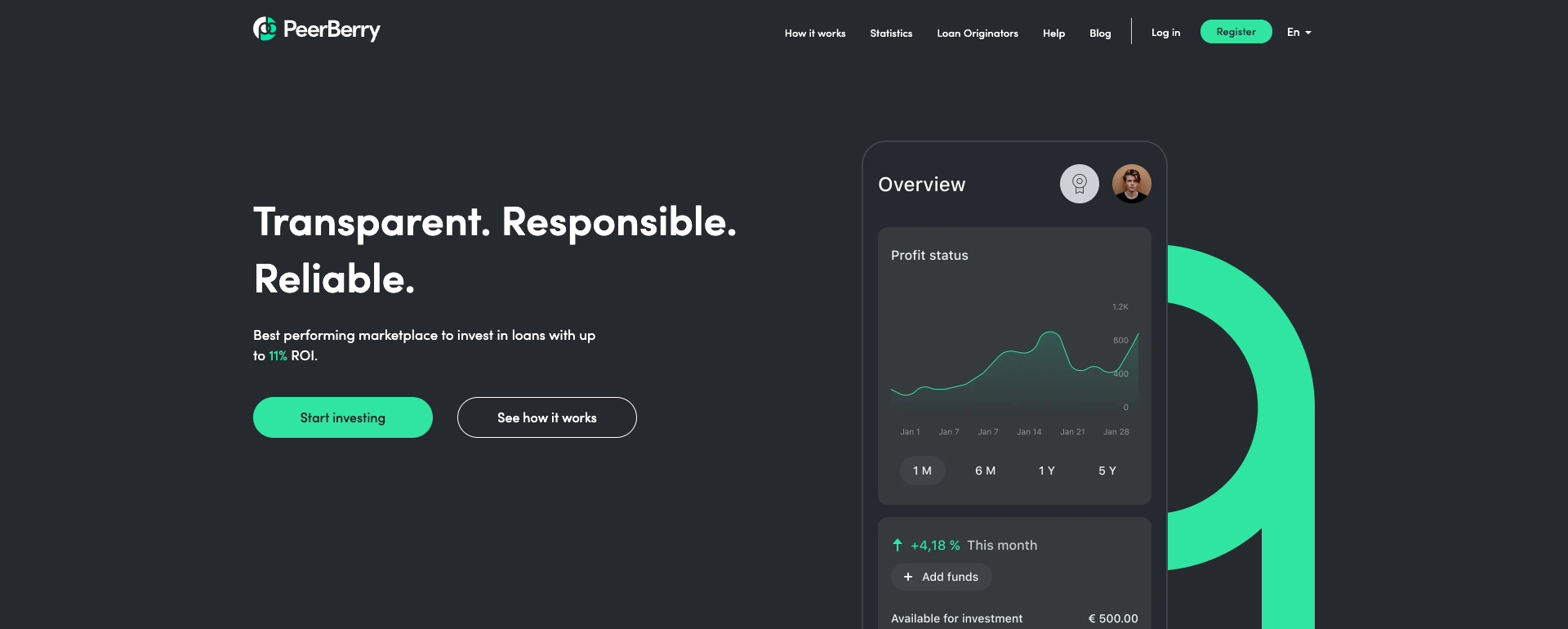
PeerBerry delivers around 11% annual returns on its base rates. Add the loyalty program, and committed investors can reach 12%: Silver (+0.5% at EUR 10,000+), Gold (+0.75% at EUR 25,000+), and Platinum (+1% at EUR 40,000+). These returns have been consistent since the platform launched in 2017, with few disruptions even during COVID and the geopolitical turbulence of 2022.
Robocash advertises 8-13%, with a historical average of ~9.93% according to its own statistics. With loyalty bonuses, larger investors can push toward the higher end of that range. On paper, Robocash might edge ahead by roughly 1% for some portfolio configurations.
Here’s the question: does that extra 1% justify the additional risk?
Let’s do the math. On a EUR 20,000 portfolio, 1% is EUR 200 per year. On EUR 50,000, it’s EUR 500. Those are real numbers, but they’re only meaningful if you actually get them. A platform failure that wipes out even 10% of your principal costs you EUR 2,000-5,000 — equivalent to years of that extra return.
PeerBerry’s returns have been boring in the best possible way. Consistent, predictable, and paid without drama. Robocash’s returns look slightly higher, but they come attached to a parent company whose financial trajectory is heading in the wrong direction. For me, the extra 1% is not adequate compensation for the difference in underlying risk.
The Safety Question: Parent Company Financial Health
This is the make-or-break comparison, and it’s not close.
Neither platform is formally regulated under MiFID II or ECSP. That means the safety of your investment depends primarily on the financial health of the lending groups behind each platform. Both offer buyback guarantees, but those guarantees are only as solid as the companies backing them.
PeerBerry’s backing: Aventus Group and Gofingo. Aventus Group supplies 24 of PeerBerry’s 36 loan originators and is a profitable company. According to figures published on PeerBerry’s blog, Aventus reported EUR 95.7 million in net profit for 2025 and EUR 225.7 million in equity. Gofingo is also profitable. PeerBerry has signed an additional guarantee agreement with Aventus Group and Gofingo, providing extra protection beyond the standard buyback guarantee. The platform has operated since 2017 without major incidents.
Robocash’s backing: UnaFinancial Group. This is where things get concerning. UnaFinancial’s financial position has deteriorated significantly. Their debt-to-equity ratio surged to 25:1 — meaning the company has EUR 25 in debt for every EUR 1 of equity. They lost over half their equity. Their Philippines lending license was suspended. And perhaps most troubling, the CFO confirmed that no real group guarantee exists, despite marketing materials suggesting otherwise.
Let me be direct: when the parent company behind a P2P platform has a 25:1 debt-to-equity ratio and has lost over half its equity, the buyback guarantee printed on the website becomes a theoretical promise rather than a practical protection. Aventus Group’s balance sheet can back its promises. UnaFinancial’s increasingly cannot.
This isn’t speculation — these are facts from published financial reports and direct statements from UnaFinancial’s own CFO.
Buyback Guarantee Comparison
Both platforms offer buyback guarantees, but the terms and reliability differ meaningfully.
PeerBerry’s buyback triggers at 60 days of default. When a borrower is more than 60 days late, the loan originator repurchases the loan — principal plus accrued interest. Aventus Group and Gofingo have honored this obligation consistently since 2017. The additional guarantee agreement provides an extra layer of security beyond the standard buyback.
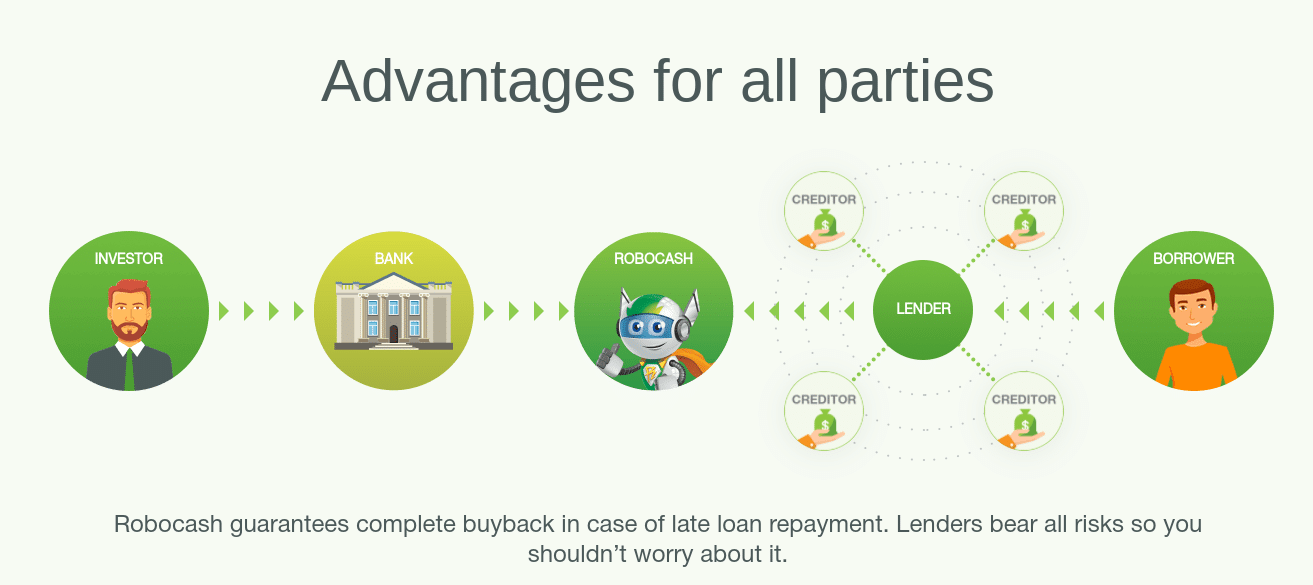
Robocash’s buyback triggers at 30 days. On paper, this is better — you get your money back twice as fast when a borrower defaults. The guarantee has been honored without exception through the platform’s history.
But the trigger period matters less than the guarantor’s ability to pay. PeerBerry’s buyback is backed by Aventus Group, which has the financial capacity (EUR 225.7 million in reported equity, consistent profitability) to cover its obligations. Robocash’s buyback is backed by UnaFinancial subsidiaries — entities within a group that has lost over half its equity and has a 25:1 debt-to-equity ratio.
A 30-day buyback sounds faster. But a buyback guarantee from a financially healthy company is infinitely more valuable than a faster buyback from a financially stressed one. PeerBerry’s 60-day guarantee is the stronger protection in practice.
Diversification and Loan Types
Both platforms have concentration risk, but PeerBerry manages it better.
PeerBerry has 36 loan originators across 17 countries, offering short-term consumer loans (mostly 30-day maturities), long-term loans, real estate loans, and leasing products. The concentration is real, since Aventus Group supplies 24 of the 36 originators, but other groups such as Gofingo Group and SIB Group provide loans too. All originators publish financial statements, and the majority have been audited.
Robocash has one originator group (UnaFinancial) operating across 5 countries (Philippines, Kazakhstan, Sri Lanka, Singapore, Spain). All loans are consumer loans — short-term and long-term. There is zero originator diversification. If UnaFinancial fails, every loan on the platform is affected simultaneously.
PeerBerry’s loans come from 17 countries across Europe, Africa, Asia, the Americas and Australia. Robocash leans heavily toward Asian markets (Philippines, Kazakhstan, Sri Lanka, Singapore), with Spain as the only European market.
Neither platform offers the kind of diversification you’d get on Mintos (60+ originators, 33+ countries). But PeerBerry’s multi-group structure is meaningfully better than Robocash’s single-group dependency on UnaFinancial.
Features and Usability
Both platforms are simple to use, and that’s part of their appeal. Neither requires deep expertise or constant management.
PeerBerry’s interface is clean and straightforward. Auto-invest is easy to configure, loan information is clearly presented, and the platform generates daily and weekly summaries plus tax statements. The website is available in English, German, and Spanish. Since January 2026 it also has a fee-free secondary market, where you can sell whole investments at their remaining value or at a discount of up to 50%.
Robocash takes simplicity a step further with full automation. You set your portfolio criteria and the algorithm handles everything — there’s no manual loan picking at all. The interface is clean and modern. Robocash also has a secondary market with zero fees and liquidity typically within 24 hours. However, it doesn’t allow discounted selling, which limits your exit options under stressed conditions.
The feature comparison is close on paper: both have fee-free secondary markets, Robocash adds fully automated investing, and returns are similar. But features matter less than the platform’s financial foundation. A beautifully designed interface with zero-fee liquidity doesn’t help if the entity behind your loans can’t meet its obligations.
Customer support is a PeerBerry advantage. Their team responds quickly via online chat and email. Robocash quotes up to 72 hours for email responses, with support hours limited to 7 AM – 3 PM UTC.
Fees and Loyalty Programs
Both platforms charge zero fees. No investment fees, no management fees, no withdrawal fees. On Robocash, even the secondary market is fee-free. This is one area where both platforms differentiate themselves from Mintos, which has introduced a 0.29% annual fee on Custom Loan Portfolios.
Both also offer loyalty programs that reward larger investments with bonus returns. PeerBerry’s tiers are clearly defined: Silver (+0.5% at EUR 10,000+), Gold (+0.75% at EUR 25,000+), and Platinum (+1% at EUR 40,000+). You need to be a member for 90+ days to qualify. Robocash also offers tiered loyalty bonuses based on portfolio size.
PeerBerry’s loyalty program is the more attractive one for investors planning to commit a meaningful amount. The +1% on a EUR 40,000+ portfolio is EUR 400+ per year in additional returns, paid permanently as long as you maintain the tier. That’s a tangible, compounding benefit.
Who Should Choose Which?
Choose PeerBerry if you:
- Want a platform backed by lending groups that report being profitable (Aventus + Gofingo)
- Value consistent, predictable returns (~11-12%) over maximum yield
- Plan to invest EUR 10,000+ and want the loyalty program return boost
- Prefer short-term loans (mostly 30-day maturities) for fast capital recycling
- Want zero fees and a simple, hands-off investment experience
- Are building a real P2P allocation and need to trust the entity behind your loans
Consider Robocash only if you:
- Prefer a 30-day buyback trigger over PeerBerry’s 60 days
- Prefer full automation with zero manual loan selection
- Are comfortable with UnaFinancial’s current financial situation after reviewing the details
- Are making a small speculative allocation (EUR 500-1,000) as part of a larger, diversified strategy
My recommendation: PeerBerry is the better choice. The Aventus Group backing, consistent track record, loyalty program, and financial stability give it a clear advantage. The ~1% extra return you might get on Robocash is not adequate compensation for the increased risk from UnaFinancial’s deteriorating financial position. For investors who want a regulated alternative to both platforms, Mintos should be on your radar.
Verdict
This is a straightforward call. PeerBerry is the stronger platform in every dimension that matters for long-term investing: parent company financial health, track record, investor base size, and total funding volume.
Both platforms are unregulated, which means the financial strength of the entity behind your loans is the most important factor. Aventus Group reports being profitable; UnaFinancial’s debt-to-equity ratio is 25:1 and the company has lost over half its equity. That difference alone settles this comparison.
I’ve stopped recommending Robocash and removed it from my best platforms list. PeerBerry isn’t perfect — the Aventus concentration (24 of 36 originators) is a real structural risk, and the lack of formal regulation means less investor protection than you’d get on Mintos. But within the category of unregulated P2P platforms, PeerBerry is one of the strongest options available.
For full details on each platform, read my PeerBerry review and Robocash review. For a broader overview of the market, see my guide to the best European P2P lending platforms and the P2P lending guide. If you’re also considering Mintos, my Mintos vs Robocash comparison covers the regulatory angle in more depth.
Frequently Asked Questions
Is PeerBerry safer than Robocash?
Yes. While neither platform is formally regulated under MiFID II or ECSP, PeerBerry is backed by Aventus Group — a profitable group that reported EUR 225.7 million in equity for 2025. Robocash is backed by UnaFinancial, whose financial health has deteriorated significantly: a 25:1 debt-to-equity ratio, loss of over half its equity, and a suspended Philippines lending license. PeerBerry’s underlying financial foundation is substantially stronger.
Why does Robocash offer slightly higher returns than PeerBerry?
Robocash’s slightly higher advertised returns (~12% vs PeerBerry’s ~11%) reflect its riskier profile and the need to attract investor capital. In investing, higher returns typically come with higher risk. PeerBerry’s loyalty program can close this gap: at the Platinum tier (EUR 40,000+), PeerBerry effectively pays 12%, matching Robocash. The extra return on Robocash does not adequately compensate for the additional risk from UnaFinancial’s financial situation.
Does PeerBerry have a secondary market?
Yes. PeerBerry launched a fee-free secondary market in January 2026, where you can sell whole investments at their remaining value or at a discount of up to 50%. Robocash also has a fee-free secondary market with quick liquidity, but it doesn’t allow discounted selling.
What happened with Robocash’s parent company UnaFinancial?
UnaFinancial’s financial position has deteriorated significantly. Their debt-to-equity ratio surged to 25:1, the company lost over half its equity, and their Philippines lending license was suspended. The CFO confirmed that no real group guarantee exists despite marketing materials suggesting otherwise. As a result, Robocash has been removed from the recommended P2P platforms list on jeangalea.com.
Which platform has a better loyalty program?
PeerBerry’s loyalty program is more clearly structured: Silver (+0.5% at EUR 10,000+), Gold (+0.75% at EUR 25,000+), and Platinum (+1% at EUR 40,000+). Both platforms offer tiered bonuses for larger investors. PeerBerry’s program is a meaningful financial incentive — the +1% at Platinum on a EUR 40,000+ portfolio adds EUR 400+ per year in additional returns.
Should I use both platforms or just one?
Given the current concerns about UnaFinancial, PeerBerry is the better single choice between these two. For broader platform diversification, pair PeerBerry with a regulated platform like Mintos rather than adding Robocash. If you do allocate to Robocash, keep it small and treat it as a speculative position, not a core holding.
Open a PeerBerry account Open a Robocash account
Related





Leave a Reply