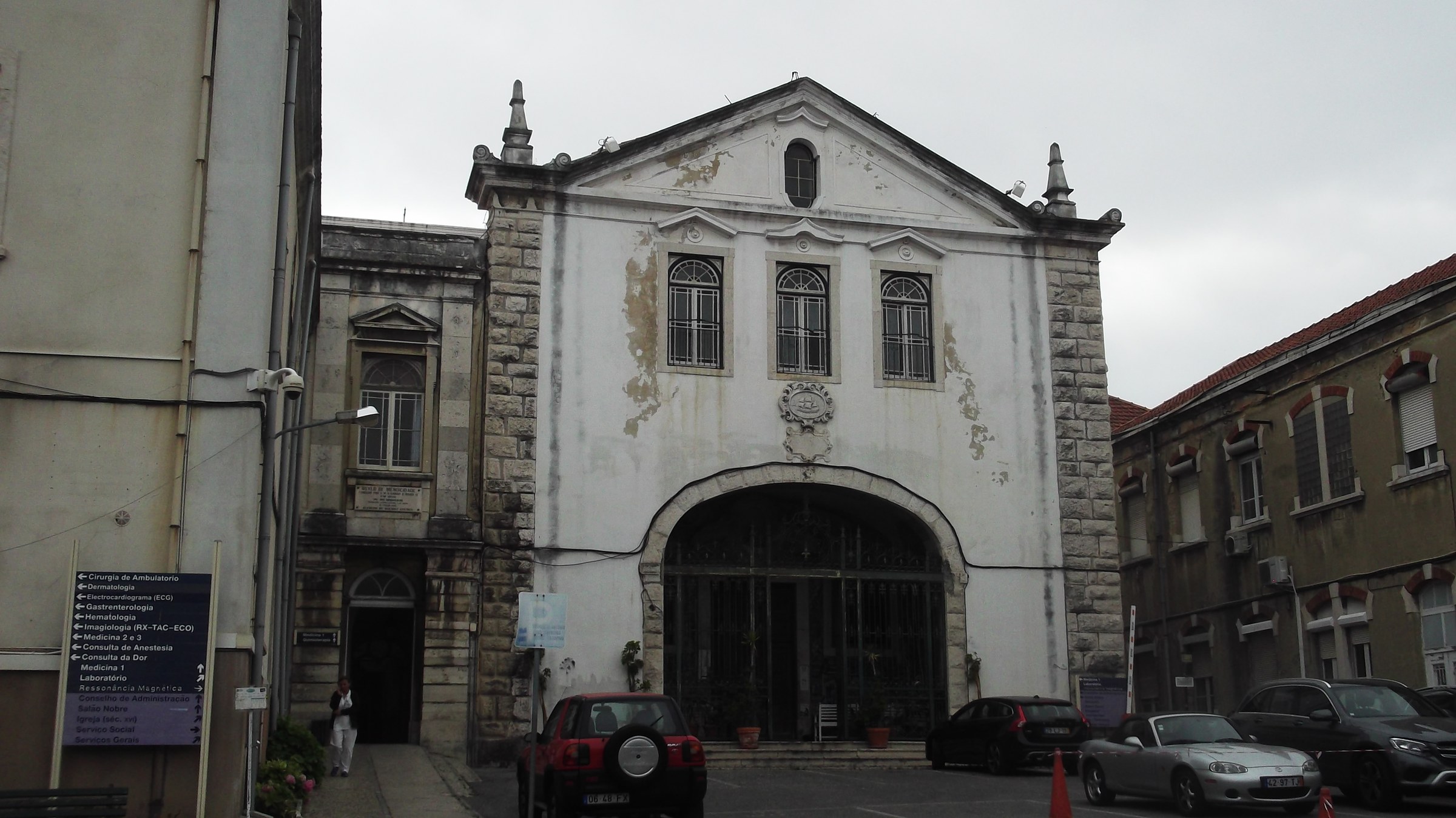
Hospital de Santo António dos Capuchos, Lisbon. Photo by RickMorais, CC BY-SA 4.0.
Portugal’s Serviço Nacional de Saúde is residence-based, not contribution-based. You don’t buy into it and you don’t accrue entitlement through years of paying in. If you live here legally, you can register, and since 2022 almost everything it does is free at the point of use.
That makes it the floor under whatever private cover you hold, which matters more than most new arrivals realize, because private policies here stop at exactly the point where costs become serious.
Who Can Register
The government’s own guidance is short: “Qualquer pessoa estrangeira com residência legal em Portugal pode obter o número de utente.” Any foreign person with legal residence in Portugal can get a patient number.
For an EU citizen, legal residence comes from the Treaty. You hold it by being an EU national who has moved here, and no authority grants or withholds it. That distinction matters later, because the paperwork the health service asks for was written around non-EU residence permits.
The Documents
The official guide for migrants lists four things that must sit on your record:
- Documento de identificação. Your passport. EU citizens don’t need anything further.
- Número de Identificação Fiscal, the Portuguese NIF. One per person, including each child.
- Morada completa em Portugal. Your full Portuguese address.
- Autorização de residência com validade. A valid residence document.
Take passports and NIFs for everyone you’re registering, plus proof of the address. A utility bill in your own name at the address is the usual thing, and a rental contract supports it. An atestado de residência from your junta de freguesia is the stronger version, issued on the spot for a couple of euros, and it’s the document Portuguese administration reaches for when it wants proof you live somewhere rather than proof a bill arrives there.
Children register on the same documents, with their own passports and NIFs.
The Fourth Item Is Where EU Citizens Get Stuck
The residence document requirement was drafted for non-EU nationals, who hold an autorização de residência issued by AIMA. EU citizens don’t get one of those. The equivalent is the Certificado de Registo de Cidadão da União Europeia, the CRUE, issued by your câmara municipal after three months of residence.
So depending on the unit you walk into, you may be asked for a CRUE where a non-EU resident would show a residence card. Some units accept an atestado or a utility bill, since your legal residence doesn’t depend on the certificate and never did. Others follow the list literally.
Worth knowing before you go, because it’s the difference between one visit and two. Take the address documents you have, and if they ask for a CRUE you’ll know precisely what to get rather than guessing.
Getting the Número de Utente
You get it at your local health centre, the centro de saúde or UCSP for your area. It’s free, and it’s assigned at your first visit rather than applied for in advance.
Ask to be assigned a médico de família in the same visit rather than treating it as a separate errand. Family doctor assignment is the rationed part of the system and the queue is real, so being on the list from day one is worth the extra two minutes at the counter.
Having a Number Isn’t the Same as Being Covered
The número de utente identifies you in the system. It does not by itself mean the SNS pays for your care. Coverage follows from having all four items above complete on the record.
People arrive, get a number on their passport alone, assume they’re covered, and discover otherwise at the worst moment. If your record is missing the address or the residence document, close that gap before you need it rather than after.
What You Pay
Very little, and the figure most people carry in their head is out of date.
Taxas moderadoras, the small user charges, were abolished across the SNS from 1 June 2022 under Decreto-Lei 37/2022. Health centre consultations, scheduled hospital consultations, prescribed exams, surgery and hospital stays carry no charge.
The one survival is emergency care you attend without an SNS referral, where the visit doesn’t result in admission. Call SNS 24 on 808 24 24 24 first and you’re referred, which removes the charge and usually gets you to the right place anyway. Exemptions also remain for pregnant women, children under 12, people with 60% or more certified incapacity, and blood donors.
Medication
Prescriptions are subsidized rather than free, on four tiers set under Decreto-Lei 48-A/2010. The State pays 95% in escalão A, 69% in B, 37% in C and 15% in D, against the retail price. Pensioners under the income threshold get an extra 5% on A and an extra 15% on B, C and D.
Above that sit the regimes excecionais, which apply 100% funding to medication dispensed by hospital pharmacies to patients who aren’t admitted. That’s the mechanism under which oncology medication is provided free in SNS hospitals, including on an outpatient basis. It’s also the single strongest argument for registering, because high-cost drugs are precisely what private policies exclude or cap.
Where It’s Weak
Waiting times for non-urgent specialist consultations and elective surgery are the well-known problem, and they’re the reason many residents carry private cover alongside. Family doctor assignment can take a while depending on where you live.
Dental is barely covered. The cheque-dentista scheme reaches specific groups, among them pregnant women, children, and older people on certain benefits. Outside those groups you pay privately.
None of that argues against registering. It argues for treating the SNS as your protection against catastrophic cost and private cover as your route to speed, which is how most people here end up arranging it.
If You’re Insured in Another EU Country
Two documents come up and they do different jobs.
The S1 portable document transfers healthcare entitlement from the member state that insures you to the one where you live, at that state’s cost. It applies if you’re an employee or pensioner still covered by another country’s social security. You present it at the Centro Distrital de Segurança Social for your area, and the health centre then assigns your number on that basis.
The European Health Insurance Card, the CESD in Portuguese, is for temporary stays abroad, not for residence. Once you’re registered with the SNS and with Portuguese Social Security you can obtain one for travel. Arriving as a resident and relying on the card you brought with you is a common mistake and it won’t hold.
After You’re Registered
Set up the SNS 24 portal and app, which is where appointments, prescriptions and records live. It authenticates with Chave Móvel Digital, so activating that at an Espaço Cidadão is worth doing first. Passport and NIF is all the CMD needs, and it’s free.
808 24 24 24 is the SNS 24 line, option 5 for appointments, and it’s also the referral route that keeps emergency visits free.
The Short Version
Register early rather than treating it as admin you’ll get to. Take passports, NIFs and proof of address for everyone, ask for a médico de família at the counter, and check that all four items are actually on your record rather than assuming the number did it. The cost of being registered is one morning. The cost of not being registered shows up when something expensive happens, which is also when you discover what your private policy doesn’t do.
I’ve been based in Cascais since 2026. If you’re setting up here more broadly, the utilities and household side is written up separately, and the piece on the gaps in Portuguese private health insurance explains why the public system matters even if you’re buying cover. For the tax and residency mechanics, see Portugal’s low-tax regime.
Related






Leave a Reply