Jean Galea

Health, Wealth, Relationships, Wisdom

  • Start Here
  • Guides
    • Beginner?s Guide to Investing
    • Cryptocurrencies
    • Stocks
    • P2P Lending
    • Real Estate
    • Forex
    • CFD Trading
    • Start and Monetize a Blog
  • My Story
  • Blog
    • Cryptoassets
    • P2P Lending
    • Real estate
  • Consultancy
    • Consult with Jean
    • Consult a Lawyer on Taxation and Corporate Setups
    • AI Consultancy for Business
  • Podcast
  • Search

How Many Times to Bounce the Ball Before a Padel Serve

Last updated: September 18, 20191 Comment

Bouncing the ball before serving in padel serves to focus the serving player on his next shot and point, and there is no rule saying how many times the ball can be bounced. The only rule that is related is that about time wasting, however, I’ve never seen a player being given a warning due to bouncing the ball too many times.

It is true that some players have a habit of exaggerating things and trying to throw the opposing players off their psychological game by bouncing the ball many times, but if you play against such players it’s best to just grin and bear it; in the end, they are unlikely to be sanctioned.

The average seems to be between 3 and 5 times.

I think 3-4 times is the sweet spot for me. Here are the serve preparations from two of my favorite players: Maxi Sanchez and Mapi Sanchez:

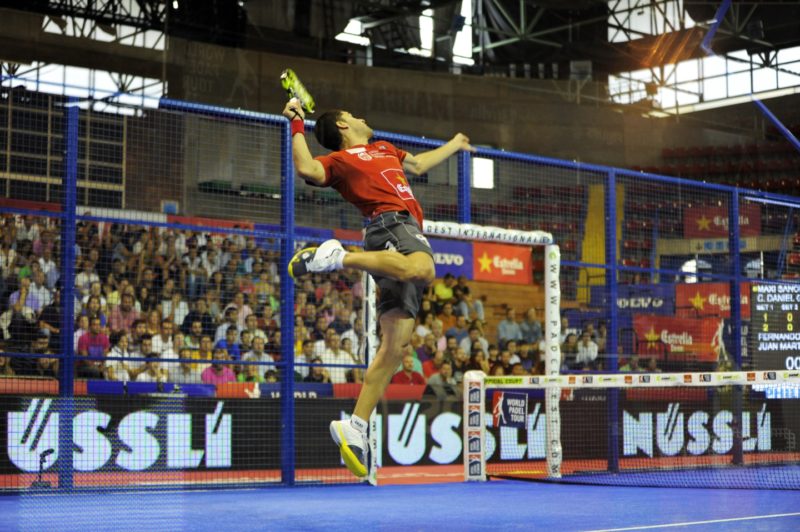
The serves above are what I would consider fair and clean serves. While we’re on about the topic of serving in padel, make sure you serve without breaking the positioning rules and ball height (waist-high maximum).

Again, you will find players on the World Padel Tour circuit who don’t follow the ball height rule that closely (Bela and Lima are very frequently accused of breaking the rules on this one), however, I’ve never seen them sanctioned.

Here are some screenshots of serves that in my opinion are faults, but they are never sanctioned:

Above the ball is at the height of his hand, almost chest high.

Again, the ball is clearly higher than the waist right before impact.

And this is what happens when a player complains about the rivals’ illegal serves (he gets a warning):

YouTube video

At the end of the day, there is little regard for the rules in padel as of 2019. It’s something that I hope changes in the coming years, because I’ve also experienced this on the court myself. It’s hard not to get thrown off your game when your opponent is consciously breaking the rules just because there is nobody to sanction him.

If this happens, I would suggest breaking the rules yourself if it gives you an advantage. It’s sad to have to give such advice, but this is the way things stand today. In the future, I hope things will get more professional and rule breakers will be punished.
Filed under: Padel

The Importance of Proper Mobility in Padel

Last updated: September 05, 2023Leave a Comment

As part of my journey to becoming a top padel player, I recently went for a mobility evaluation session at the sports department of Fisiogestion in Barcelona. This was the first time I was doing something of this sort, although I’ve had osteopaths check out my body for specific issues I had in the past.

This time around, I went without having any niggling injuries or current pain points. I only mentioned that I’ve been feeling an abnormal sense of fatigue in my quads ever since I started playing padel, and that I also had a twitching tendon behind my right knee, which has been like that for as long as I can remember.

I was then examined by an osteopath as well as the therapist at the sports center, and they couldn’t really identify the reason for the twitching of the tendon, although the therapist mentioned that she felt that I had a case of baker’s cyst that might be causing the tendon to pass over the cyst and twitch. I would probably have to do an MRI to get more information on that or visit some other specialized doctors.

Going back to the fatigue in the quads though, when I was asked to do a squat, it turned out that the way I go down is incorrect. I tend to lean forward too much and double up while going down, placing all the weight of the task on my quads and lumbar region, and almost none of it on my glutes.

The therapist mentioned that the glutes are luckily some of the best muscles in which to see quick improvements, so it’s a case of re-educating my body to start using those glute muscles in the movements I do in daily life or padel. She emphasized that I need to be doing isolation exercises for the glutes and obliques (another area I’m weak in). Once the glutes can be properly activated and have some serious strength built, the body can be re-trained (they have special machines to help with this) to perform movements in a different and correct way.

I am now actively working on my core and glutes with my personal trainer in our sessions during the week, and on off-days, I like to use this set of resistance band glute exercises at home.

Another great set of exercises for glutes can be found on Bret Contreras’ (The Glute Guy) website.

All the above is just to say that it is crucial that you learn how to move correctly and address any mobility issues that you might have. This will not only help you play better and recover faster (you have no overstressed areas in your body) but will also help ward off injuries.

You can find lots of videos about mobility on YouTube, and you can also subscribe to programs such as GMB which aim to provide full-body mobility, but for me it’s been a great learning experience to visit a specialized sports center and have my padel-specific movements analysed. I will in fact continue to have regular sessions at this center to fix my glute-quad balance and I’m really looking forward to faster recovery between matches, because now that I’m training and playing almost daily, my quads have become my greatest impediment to performing at my best.

Filed under: Padel

My (Ideal) Padel Weekly Routine

Last updated: February 09, 20213 Comments

Here’s what I try to achieve week after week as I strive to become a level 5 padel player.

Technical Training

  • 3x with a padel coach on court (I rotate between 3/4 coaches)
  • 4 hours reading padel books or watching video tutorials
  • 3 hours watching pro padel matches

Physical Training

  • 3x strength training with PT (30 min per session, plus 30 min on my own after)
  • 1x yoga (for flexibility and all-around strength)
  • 2x agility sessions (30 min each using skipping rope, cones and agility ladder)
  • 4x stretching sessions at home

Mental Training

  • 1x psychologist
  • 4 hours of reading sports psychology books

Competition and Matches

  • 2x friendly matches
  • 1x competition (once or twice a month)

Recovery and Growth Aids

  • 1x deep tissue massage
  • 2x sauna sessions for 20 minutes each (here’s why)
  • 4x EMS sessions at home / Theragun daily

All of the above is of course accompanied by a healthy and varied diet. I love food and different cuisines so rather than stick to a very specific diet I just make sure that whatever cuisine I try the dishes are healthy and in line with my overall goals.

I use the Apple watch to track my hours of sleep, and I try to reach 7.5 hours to 8 hours on average daily in order for my muscles to be able to recover and grow.

While I love watching the men’s pro matches, it’s important to say that for amateur players it’s actually more beneficial to watch the women’s matches, as their style of playing is much closer to that of amateur players. This is not to say that women’s padel is not of a high level, it’s just that their style is not as frenetic and focused on bursts of speed and power and incredible shots. It’s a much plainer tactical game with a lot of emphasis on lobs and carefully places shots aimed to displace the opposing pair and then define the point.

I’ll come back to this post to expand on some points, but for now, I just want to put it out there for feedback and for its potential usefulness to other serious amateur padel players.

Filed under: Padel

How to Improve Reaction Time in Padel

Last updated: January 06, 2020Leave a Comment

Here are a few videos of exercises you can try to improve your reaction times in padel. This is a crucial aspect of your game so it is important that you train it.

While important, keep in mind that there are more important things, such as better general physical preparation, technical skills, and tactical awareness.

If you’re already a top player, however, and are looking to gain that little sliver of advantage over your opponents, improving your reaction time might bring some advantage.

If you’re not a top player, then your time will be better spent elsewhere. It’s also worth differentiating between reaction time and shot anticipation. If you can read your opponent and you are aware of the possible shots he might come up with, then you will naturally react and position yourself quicker than those with an untrained eye, even if they have better reaction times.

YouTube video
YouTube video
YouTube video

Filed under: Padel

Using TENS and EMS Devices for Padel Recovery

Last updated: March 15, 2022Leave a Comment

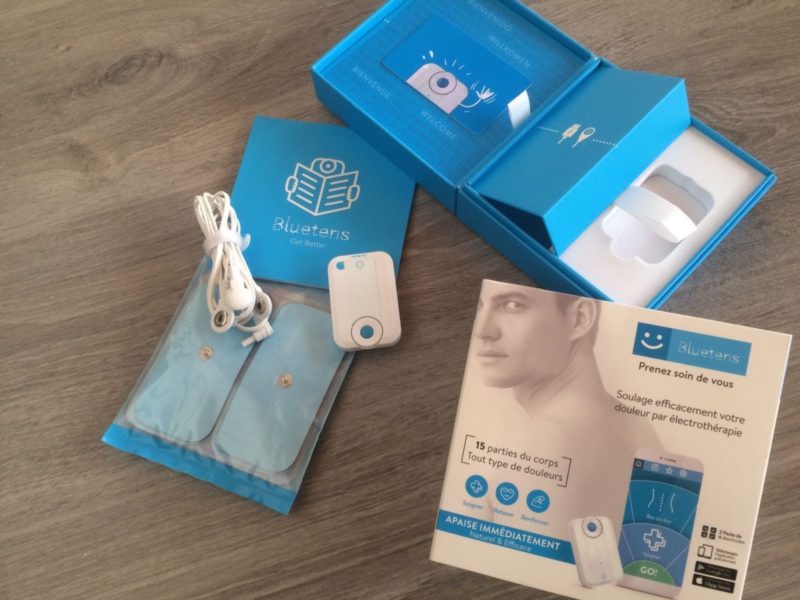
I recently invested in a TENS/EMS machine, mostly to aid in my recovery between padel and physical training sessions.

I’ve used such machines during physiotherapy sessions before, but until recently I assumed that they belong in the physio room and that as an athlete I couldn’t get one to use in the comfort of my own home. Turns out it need not be that expensive, nor is it complex to use.

First, let’s talk about how these devices work.

Electrical muscle stimulation is exactly what it sounds like: using an electrical current to stimulate your muscles. This can be done because your muscles naturally contract in response to electrical signals sent by your brain, and TENS/EMS machines replicate these impulses, causing muscles to contract on command.

TENS is the most universally known modality of electrical stimulation. Used widely for pain relief, TENS sends a series of electrical pulses across the skin and along nerve strands. These electrical pulses “distract” the brain from the pain signal, according to the Gate Control Theory. The Gate Control Theory of Pain says that non-painful stimulus or input closes the “gates” to the Central Nervous System, preventing it from feeling any pain. TENS also stimulates an endorphin release, which likewise mitigates pain.

[Read more…]

Filed under: Padel

  • « Previous Page
  • 1
  • …
  • 69
  • 70
  • 71
  • 72
  • 73
  • …
  • 90
  • Next Page »

Latest Padel Match

Jean Galea

Investor | Dad | Global Citizen | Athlete

Follow @jeangalea

  • My Padel Experience
  • Affiliate Disclaimer
  • Cookies
  • Contact

Copyright © 2006 - 2026 · Hosted at Kinsta · Built on the Genesis Framework