Jean Galea

Health, Wealth, Relationships, Wisdom

  • Start Here
  • Guides
    • Beginner?s Guide to Investing
    • Cryptocurrencies
    • Stocks
    • P2P Lending
    • Real Estate
    • Forex
    • CFD Trading
    • Start and Monetize a Blog
  • My Story
  • Blog
    • Cryptoassets
    • P2P Lending
    • Real estate
  • Consultancy
    • Consult with Jean
    • Consult a Lawyer on Taxation and Corporate Setups
  • Podcast
  • Search

Should You Buy North or South Facing Property in Spain?

Last updated: March 22, 20201 Comment

A common question in the property scene is whether one should buy a south or north facing property.

South facing provides the best conditions for sunlight, considering factors like the difference between morning and afternoon sun. Suitable lighting and direct sunlight impact directly in a very significant way many things from mood to electricity costs. A south-facing apartment tends to be warmer in winter, and breezy and not as hot in summer.

You should also think about how you are going to use the house? Are you a night owl or an early riser?…..sunset or sunrise? How will you use it at different times of the year? Now that so many kids go to daycare and most parents work, many prefer a West-facing house or apartment because you get the sun and light in the evening when you are home from work.

However, when buying a property as an investment, it might be worth thinking twice about automatically going for a south-facing property. A study in Japan found that North-facing property is actually a better deal if you plan to resell that property.

On average, north-facing units tend to increase in value after purchasing from the developer, while South-facing units tend to depreciate.

This is an interesting point to consider when you are looking to purchase a new apartment from a developer.

Data on over 196,000 apartment sales from 2006 to 2010 was collected by Attractors Lab. The price of north-facing units on the second-hand market increased by an average of 11.4% from their original price when new.

The price of south-facing units, however, decreased by an average of 5.4% from new.

Some of the reasons for the change in prices are:

  • Developers price south-facing units higher, and north-facing units lower.
  • In the second-hand market, units of various types and directions appear randomly for sale.
  • Purchasers will prefer a north-facing unit with a wider frontage and good views over a south-facing unit with narrow frontage and less impressive views.
  • Many people prefer an open view that is not blocked by other buildings and are less concerned about all-day sunlight if they are both working full-time and return home late in the evening.

I’ve lived in both south and north facing apartments in Barcelona, and found advantages and disadvantages in both; I personally don’t have a firm favorite if I have to choose between the two.

Do you prefer south or north facing properties? Why?
Filed under: Money, Real estate

How to Determine Your Chronotype and Plan Accordingly

Last updated: September 15, 2022Leave a Comment

I learned about chronotypes from sports sleep coach Nick Littlehales. While I’ve never had much trouble sleeping, I have struggled on and off with going to sleep and waking up at the right times.

Your chronotype describes your sleeping characteristic – whether you’re a morning person or an evening person. Chronotypes are genetic traits and are usually easy to spot.

Do you like staying up and going to bed late? Do you need and alarm to get you up for work in the morning? Do you often skip breakfast? Do you sleep in on your days off? Then it’s likely that you’re a PMer.

AMers wake naturally, enjoy their breakfast and love the mornings. They tend not to need an alarm to wake them, they’re less likely to feel fatigued during the day and they go to bed reasonably early.

There is a third category of chronotype – the inbetweener. Many of us genuinely are in-between, but almost all of the population live their lives as inbetweeners, regardless of their real chronotype.

To find out your chronotype and optimize your schedule around it, you can take the Chronotype quiz.

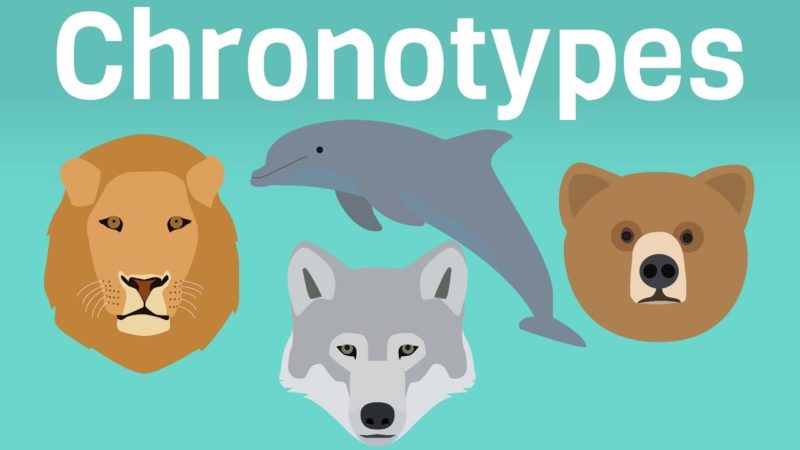
My Chronotype Quiz Results

My result was Lion and it certainly corresponds to my observed energy levels. Over the years I’ve figured out that my best wake-up time is between 6 and 7 am. In practice, most days it’s closer to 8 am, since life in Spain is geared towards late evening and nighttime activities, meaning I go to sleep later.

I’ve also given myself the liberty to sleep as much as my body requires, and it invariably falls between 7.5-8 hours. Afternoon power naps or siestas help me a ton to give me a fresh boost of energy for the evening time, and they do not affect my nighttime sleep at all. I’m not that sensitive to caffeine intake either, so I make use of coffee during the day quite liberally.

I try to sleep between 11 and midnight, anything later and I’m into my red zone and it will affect the following day negatively.

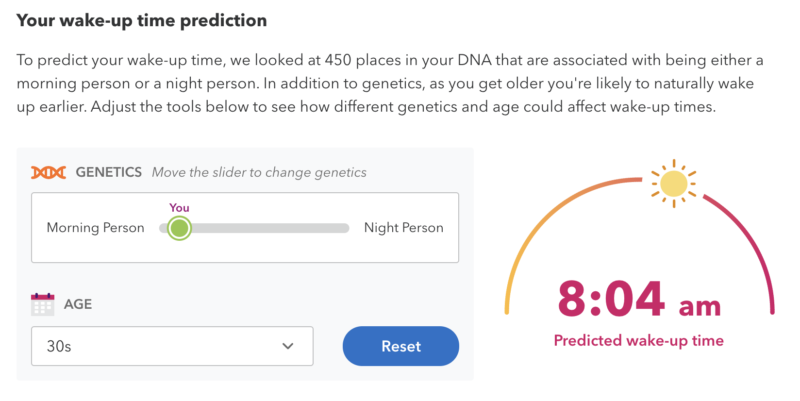
23andme Wake-Up Time Trait

Another supporting piece of evidence for me was the Wake-Up Time trait from my 23andme report, which again shows that I’m very strongly a morning person.

To compensate for less than 8 hours of sleep on certain days I’ll take a (coffee-fueled) power nap in the afternoon.

Why is it important to know your chronotype?

If we were left to our own devices, to get up and go to sleep whenever we wanted, to wake naturally and start work at a time of our own choosing, it wouldn’t matter hugely. But, strangely enough, working cultures have yet to develop with this in mind. Whether you’re an AMer or PMer, you still have to get to work for 9 a.m., you still have to be at training in the morning if you’re a football player, and in this instance, it’s the PMers that suffer because they are effectively trying to operate in a different time zone to their internal body clock. This is known as ‘social jet lag’.

Because they naturally get up earlier, AMers tend to get tired sooner and go to bed earlier too. This means that, when morning comes around, they will have enjoyed plenty of restorative deep sleep and so will be in a lighter sleep state as they approach their wake time. They often won’t even need an alarm.

PMers, on the other hand, will push on later at night, meaning that when morning comes, the alarm often needs to rouse them from an earlier part of sleep (only for the snooze button to be hit repeatedly), and they will spend the rest of the morning playing catch-up. A PMer is likely to lean on caffeine to do this.

Managing your chronotype

For a PMer, daylight on a morning is vital if you want to set your body clock to play catch up with the AMers. Get a dawn-wake simulator, which recreates a sunrise in your bedroom to wake you up, from a reputable brand such as Lumie or Phillips; open the curtains, go outside.

The bad news for PMers is that you should cut out the lie-ins at the weekend too. If you spend all week adjusting your body clock to the demands of your job, then let it all go at the weekend, your clock will drift back towards its natural, slower state, and you’ll be starting over come Monday.

Offices and workplaces should take this more seriously. Instead of having desk hierarchies where the more senior people get the window seats, allocate them to the PMers struggling through their morning and the AMers for their afternoon. Investing in daylight lamps will help both the AMers and PMers conquer their respective difficult parts of the day and increase their productivity, especially in winter, when there is less light.

It’s not all bad news for PMers. They have a natural advantage not only when it comes to enjoying nightlife, but also when working shifts. An AMer nurse working night shifts in a hospital would equally be in need of daylight lamps to play catch-up with their PMer colleagues. The most important thing for either chronotype to find is some harmony with their environment.

For example, an AMer might live with his partner, a PMer, and they both have to leave for work at 8.30 a.m. He gets up and 6.30 and she gets up at 8, but, of course, every time he gets up on a morning, he disturbs his partner. She goes back to sleep, and imagines it’s doing her good, but in reality she’s flitting between wakefulness and sleep.

But what about a compromise that could be made? They both get up at 7 instead, which is a big shift for her, but the AMer makes the breakfast and gives the PMer the space to sit in daylight, to reset her body clock and wake up naturally. It will take a bit of adjusting to, but all of a sudden the couple are working more in harmony. When the evening comes around, it is the PMer’s turn to do her bit, maybe cooking the dinner or doing the washing-up later, when the AMer is tired.

If you’re an AMer, you know you’re at your best in the morning, so you can plan your day to take advantage of this. Let’s say your job involves managing your company’s social-media accounts, some bookkeeping and a lot of communication, but also some of the more mundane realities of office life such as taking the mail to the post office and filing. Presuming you have a bit of freedom in the order in which you do things, you could manipulate your schedule so that you compose all your tweets and press releases in the morning, everything that requires you to be at your most alert, then spend your afternoon taking the post out and doing filing.

Often there isn’t this kind of freedom in our daily work, and sometimes a job to write a press release or something similarly requiring of thought will land on your desk in the afternoon and it has to be done right at that moment. But where we’re able to, instead of spending what feels like forever on getting something done in the afternoon, wondering why it’s taking so long,  just stop and have a think about it. If you’re struggling with it now, come back to it in the morning, when you’re fresher and more alert. It’s the same philosophy with PMers.

Chronotype: 7 Steps to Sleep Smarter

  1. Know your chronotype, and establish those of close friends and family.
  2. Manipulate your day so you can be at your nest when it matters most.
  3. Use caffeine as a strategic performance enhancer, not out of habit – and no more than 400mg per day.
  4. PMers – don’t lie in at weekends if you want to beat social jet lag.
  5. Fit meeting rooms, offices and desks with daylight lamps to improves alertness, productivity and mood at work.
  6. Know when to step up and when to take a back seat based on you chronotype.
  7. Learn to work in harmony with your partner if your chronotypes differ.

What’s your chronotype? Has it helped you achieve better performance?

Further Resources

  • When is your best time to drink coffee?

Filed under: Thoughts & Experiences

Navigating Through Life’s Scams, Quackery, Fake Science and Outright Bullshit

Last updated: April 03, 20242 Comments

One thing I’ve realized during the past 5 years or so is the mind-boggling amount of crap information that’s passed around as absolute truth. Of course, the arrival of the internet only hugely magnified this problem, so we live in an age where it can be extremely difficult to know what’s true and what’s not.

It seems like everyone around is trying to manipulate our thinking, taking advantage of human biases and weaknesses in logic to convince us to believe what they are trying to sell. Politicians do it, companies do it, religious organizations do it, etc etc.

In this post, I’ll list a number of great resources that have helped me in this journey to really understand how things work and cut through the crap. I’ll keep updating this list over the years.

Health & Medicine

  • Science-Based Medicine – Discusses popular health-related topics like vaccines, homeopathy etc.
  • PainScience.com – All about pain and associated treatments. Learn what works and what doesn’t.
  • Examine.com – Research about supplements and nutrition
  • FoundMyFitness – More exotic topics well examined
  • Athlean-X – Favorite site for building muscle

Science & Philosophy

  • LessWrong – Deep resource into philosophical arguments, rationality and logic.
  • Skeptic.com – Many topics covered and also a great podcast (Science Salon)
  • Skeptoid.com
  • Skeptical Science
  • Skeptical Enquirer
  • Neurologica
  • Center for Enquiry
  • Snopes.com
  • Rationalwiki
  • Sloww
  • Raptitude.com

I also recommend the Science Salon podcast hosted by Michael Schermer.

Economics & Politics

  • Behavioral Scientist – Discusses many current topics from a behavioral science perspective.
  • The Library of Economics & Liberty
  • American Institute for Economic Research
  • Mises Institute
  • Libertarianism.org

[Read more…]

Filed under: Thoughts & Experiences

Avoiding Smartphone and Social Media addiction

Last updated: October 22, 2024Leave a Comment

Smartphone usage and social media have become very detrimental to our attention spans and the ability to engage in deep work. We are constantly tempted to pick up our phones to get our next dopamine hit by checking Instagram or Facebook likes, or engaging in pointless chatter on apps such as Whatsapp.

The effects of social media and smartphones were the subject of the documentary The Social Dilemma. I have no doubt about the effects of social media and devices. I have got enough of a digital marketing education background as well as practical experience to understand how these mechanisms work in influencing us. I have also recognised that I am not immune to these effects, even though I know exactly how they are pushing me to do what I don’t really want to do.

These days, I keep off any social network. That’s the only thing that works for me. Yes, there are costs for doing so, but those can be mitigated by maintaining a healthy network of close friends who are also well-informed about the world. All important news eventually gets to you unless you live a completely isolated lifestyle. For the kind of news that is related to investments, where there is a strong argument for alpha being available on social media, I have found that being in a curated group of top players in your field of investment actually gives you better results and better conversations. So that is what I am doing now instead. This is also part of my experiment with building online communities.


In 2019 I ran a little experiment that I described below:

It’s been a while since I abandoned Facebook, and even longer since I stopped reading newspapers and online news sites. Over the past year, however, I’ve noticed that my phone had become a really serious distraction for me.

On several occasions, I have asked my wife to put away the phone so we could have a more engaging conversation, and she’s done the same to me, probably even more frequently. Since having our first child, it seems that we can’t take the phone out of our hands, and somehow it seems justified. We want to immortalize the memories of every little thing he does and then share it with our family on Whatsapp. Things recently got to a head and I decided I need to take serious action about this.

The thing is, our modern-day smartphones keep us addicted in a similar way to slot machines (see video below). We’re fighting a lost battle if we think it’s just a question of having more discipline.

YouTube video

Here’s how I solved this problem.

I love my iPhone 6S Plus (an older model of the iPhone that still works perfectly) and I use it a lot when I’m out and about with my bicycle or car and listen to podcasts or music while also using maps to get to my destination. I also use Calm for meditation and Spotify for music. So getting rid of the smartphone was out of the question. I needed to find a better solution than that.

What I did was resurrect an older Nexus 5 which runs Android OS, which I have since become quite unfamiliar with, plus it’s a slower phone that is moderately annoying to use.

I then moved all the apps that I qualify as addictive onto this older phone:

  • Whatsapp (the biggest culprit)
  • Instagram
  • Facebook
  • Wallapop
  • Facebook Messenger

I then informed my family that I would still remain accessible via another messaging app, where they could contact me when needed. I work at home so communication with my wife is not an issue, we’re always within meters of each other in our apartment. I check the family group on Whatsapp once a day and that’s enough for catching up with any events of the day and commenting when needed. For more in-depth conversations I have a Skype call with them.

I also set up Freedom.to on all my devices and made sure that social media and other distracting websites are blocked during the majority of the day, so even if I wanted to I would not be able to access them. Again, the idea is not to rely on my weak self-discipline, but to put in hard blocks that will eventually remove that trigger to check updates from my brain.

So far so good, I’ve noticed a huge improvement in productivity and mental well-being after having gone through this process and tested it for a few weeks.

The one remaining issue for me comes from an old friend who I thought would be quite benign: email. With the other stuff out of the way, my email still remained a constantly open window on my computer and something I check frequently on my phone. But while I was on retreat earlier this month and trying to keep off the internet, it immediately became apparent to me how dependent my mood and task list was on email. I kept getting triggered by my brain to check email, and even felt the dread of receiving an email from a problematic person, knowing that if I opened my mail and found his email with the imagined content, it would really ruin my day. I then realized that I actually check the email app on my phone several times and even have the habit of hitting refresh in Gmail even though the app itself refreshes every few minutes itself. That’s how bad my addiction to email is.

That is, therefore, my next target: to become less reliant on email. I plan to check email around twice a day and also make sure that I don’t take immediate action on email requests unless it takes 2 minutes or less. I plan to allocate half an hour in the morning and another half an hour in the evening or afternoon for email. I’ll report on that later after concluding my experimentation.

Related books about this topic

  • Deep Work by Cal Newport
  • Digital Minimalism by Cal Newport
  • Essentialism by Greg McKeown

All great books, but Digital Minimalism really hit the nail on the head and spurred me to try the two phones idea. There are also other ideas that are worth exploring, such as putting your phone in greyscale mode.

Useful Apps

  • Screen Time
  • Freedom

Let me know what’s your experience with smartphone and social media usage, have you felt addicted and how have you dealt with it?

Filed under: Thoughts & Experiences

Expat Guide to Spanish Taxation – Welcome to Europe’s Tax Hell

Last updated: December 22, 20238 Comments

One of the most common mistakes expats make is that of not researching the tax situation of their new country before they move there. This can lead to some very bad news further down the road.

Let’s have a look at Spain, which has a lot of taxes that people coming from other countries might not be familiar with. For example, having previously lived in Malta, many of the Spanish taxes were simply new to me and have no equivalent in Malta. There is no property tax, exit tax, or wealth tax there, just to mention a few examples.

Spain certainly seems to reward those who feed on the government funds / tax-payers rather than encouraging people to set up businesses, invest, or save.

It’s important to understand this unfortunate fact before you move to Spain. I am definitely not a fan of the Spanish tax system, work culture and politics, but there are also lifestyle benefits of living in Spain that you will have to weigh up.

Spain – Europe’s Tax Hell

Unfortunately, while Spain remains an amazing country with friendly people and all the ingredients to sustain an incredible lifestyle, it has been plagued by bad politics for several years now, and that has paved the way for the decline of this country.

It’s also quite sad that this downwards spiral in Spanish politics and taxes has been pretty evident for many years. For example, this analyst had correctly predicted pretty much everything that would occur in the coming years, back in 2015:

Esto escribí en 2015. No iba muy desencaminado. Lamentablemente.
"24M: Quo vadis España?" https://t.co/IcCCHSf4yi
Extracto: pic.twitter.com/FCxPCGI5zl

— macroymercados (@macroymercados) July 6, 2020

Spain has a complex tax system where taxes are levied by the central, regional, and local governments. Stamp duties, transfer, wealth, and inheritance taxes are administrated and regulated by 19 regional governments. Regional governments can also approve additional taxes and set the regional income tax brackets and rates, representing 50 percent of the overall income tax, while the other 50 percent is set by the central government.

Madrid is by far the best region tax-wise, while Catalonia sits on the opposite side of the spectrum. Madrid is indeed the only region that does not levy wealth tax on its citizens. The central government of Spain is trying to “harmonize wealth taxes among regions”, which in effect means preventing Madrid from applying a 100% discount on wealth taxes due, as it currently does.

The truth is that wealth taxes never worked. When a region sets a higher wealth tax, taxpayers move out of that region. It’s as simple as that. Others will set up structures to avoid the wealth tax. At the end of the day, even if wealth taxes worked, they would collect little revenue. At the same time, they disincentivize entrepreneurship, harming innovation and impacting long-term growth. With so many countries having abandoned the wealth tax, regions in Spain should repeal the tax instead of asking for Madrid to harmonize its wealth tax with the rest of the regions.

The same is true for inheritance and gift taxes. They only raise 0.58 percent of Spain’s total revenue while they harm entrepreneurial activity, savings, and employment. Additionally, in some cases, they have proven to be confiscatory taxes. Regional statutory tax rates can reach levels as high as 81.6 percent, depending not only on the level of the amount inherited but also on the level of pre-inheritance wealth of the inheritor and familial closeness to the inheritor. A recent study revealed that inheritances can in fact reduce wealth inequality as transfers are proportionately larger (relative to their pre-inheritance wealth) for households lower in the wealth distribution.

With that background in place, it’s time to get practical and look at the various questions and doubts foreigners have when dealing with the Spanish taxation system.

A Guide to Spanish Taxation

Let’s start with the basics, shall we? One of the first things to note is that taxation in Spain affects not only residents but also non-residents. The most classic example of taxation of non-residents is that on income from rental properties that one owns in Spain. Another point of confusion is how to determine whether you’re actually a resident or not for tax purposes.

Click here to get in touch with my tax advisors

Am I a tax resident in Spain?

In general terms, tax liability in Spain is determined by the concept of permanent residence, whereas citizenship is irrelevant. An individual is considered a permanent resident in Spain in any of the following circumstances:

  • You have spent more than 183 days in Spain within a single calendar year regardless of whether you are formally registered.
  • Your primary professional activities are conducted in Spain – essentially if you are self or otherwise employed in Spain.
  • Your main interests (eg your spouse or children who are still dependent on you) live in Spain.

Note that if the spouse and underage children reside permanently in Spain, your residence is presumed unless sufficient proof is provided to the contrary.

These criteria of residency apply for personal income tax, wealth tax, inheritance tax and gift tax although for inheritance and gift tax some exceptions may apply.

What is the tax year-end?

31 December. Unless the taxpayer dies on a day other than 31 December.

What do you need in order to submit the return?

You will need to obtain a digital certificate by filling in the form found here and going to the nearest office to verify your identity. Once you’re verified you will receive the digital certificate via email and you will then need to install it in your browser so that you can access the Hacienda website and fill in your tax forms.

If you are enlisting help from a tax consultant or accountant (as I recommend you do if it’s your first time doing these statements), he will be able to submit all forms on your behalf. You will only need to provide him with information about your income and assets as well as a copy of your NIE. He might also ask you some further questions to ascertain whether you can make use of certain tax deductions.

When are tax returns due? That is, what is the tax return due date?

The due date for filing the tax return and making a payment for tax residents and individuals taxed under the special expatriate regime is normally from 6 April to 30 June of each year for the income obtained in the previous year.

Specific filing deadlines apply to non-residents and, as a general rule, non-residents must report income and pay taxes on a quarterly basis (First 20 days of April, July, October and January for that income the accrual date of which is the previous quarter). Non-Resident returns related to deemed-income from the holding of real estate must be submitted until 31 December of the following year.

There is no possibility of claiming for filing extensions, hence, if the tax return is not filed on time, penalties will be imposed. These penalties will vary depending on whether the tax return is filed after the deadline on a voluntary basis or whether it is as a result of a tax inspection.

Let’s now have a look at some forms and Spanish taxation schemes which can trip up  expats.

Modelo 100

This is known as the declaracion de la renta, and is the most common tax form. Most people need to fill in this form on a yearly basis. You will automatically get a draft version from Hacienda, called borrador, which you then need to check and add details to if necessary. Once you’re sure everything is correct you can send it off. You will have to pay the tax from your bank account, or provide your bank account details so they can pay you back in case you had paid extra tax during the year, most likely due to any retenciones that local companies processed on your behalf.

If you are married and make a joint declaration, you have an allowance of €3,400. You will only pay tax for any earnings above €5,500 during the fiscal year. As a general rule, the option for joint filing is a good one for those couples where one of the spouses doesn’t receive any remuneration (or receives a very low one that doesn’t go above the €3,500 joint declaration allowance).

You can use Taxdown.eu to prepare your tax declaration, or if you need assistance in English I can connect you with my tax advisor who speaks English.

Modelo 720

Tax resident individuals are obliged to report (720 Form) the following assets and rights located outside of Spain to the Tax Authorities:

  • Accounts in which the individual is the titleholder, or in which he is representative, authorized person or beneficiary, or in which he has disposal powers.
  • Securities, rights, insurance and life or temporary annuities.
  • Real estate or rights on real estate.

There will be no reporting obligation for those assets or rights which value (considered in aggregate for each group of assets listed above) is lower than €50,000. The deadline for filing the 720 Form is from 1 January to 31 March of the year following that for which the information must be reported.

For more information about this read my post about the modelo 720 form in Spain.

ETE Form

This is a form that residents need to use to inform the Bank of Spain of the economic transactions and of the balances of financial instruments held abroad, which at the end of the year exceed the value of 1 million euros.

The ETE form needs to be submitted by any natural or legal person (public or private) resident in Spain, other than the payment service providers (credit institutions and payment institutions), registered in the official records of the Bank of Spain, whose amount of the financial balances (initials) and final) and the total amount of transactions made (collections and payments) in the period exceeds one million euros.

Modelo D6

Another bank of Spain form. Its purpose is to report marketable securities deposited abroad even if the issuers are Spanish, for both fixed income and variable income securities, provided that they are regarded as marketable securities, and holdings in collective investment undertakings (investment funds, SICAVs etc.). The deadline is January 31st for the positions of the preceding year. There is no minimum exempt threshold.

The D-6 must be filed when an operation (investment or settlement) takes place in which any of the following circumstances are applicable:

  1. The resident’s interest in share capital before or after the operation reaches 10%.
  2. The resident investor belongs to its governing body.
  3. The amount of the transaction exceeds €1,502,530.26.

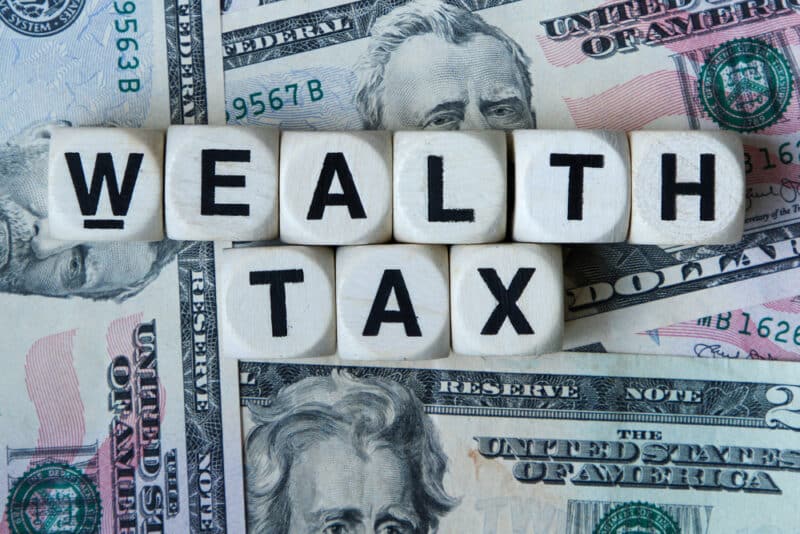
Wealth Tax

wealth tax spain

Spain has a wealth tax (impuesto sobre patrimonio) that non-residents should consider when buying real estate in Spain. Wealth tax is imposed on non-residents’ assets located in Spain. The tax rate ranges from 0.2%, when the value of the assets held is less than €167,129, to 2.5%, when the value of the assets exceeds €10,695,966. However, there is a tax-free allowance of €700,000.

The autonomous regions can modify for their own territories the applicable tax rates and the tax-free allowance, and can introduce tax reliefs, which means that the effective tax rates vary substantially between autonomous regions. Autonomous region’s legislation can be applicable if the taxpayer is resident in the EU or EEA.

Most notably, Madrid does not apply wealth tax to its residents. Therefore, for high-net-worth individuals it is used to be more attractive from a tax point of view to reside in Madrid than in other autonomous regions such as Catalunya.

However, in 2023, a new wealth tax was introduced by Spanish politicians. They say it’s a temporary tax, but we all know what a lie that is, considering the previous wealth tax system was also supposed to be temporary when introduced in 2008, and it exists to this day.

This is just another pig-headed populist move to appease the ignorant masses who believe that robbing Peter to pay Paul is a sustainable and good way to achieve prosperity.

What will happen is that more and more entrepreneurs and high net worth people will move to other countries, perhaps neighboring Portugal which treats them much better. Others will just implement structures that eliminate their wealth tax liability. Wealth taxes have been abolished the world over, precisely because they are unjust and don’t even achieve their purported aims of helping grow the government coffers during tough times.

Net wealth will be taxed from 3.7 million, throughout all Spanish regions (including Madrid and Andalusia which had previously discounted all wealth tax for their residents), the rates are tiered and go up to 3.5%. The valuation rules are the same as those of the current Wealth Tax, with the possibility to apply the family business exemption and the Income Tax/Wealth Tax limits of 20/60. Both rules are a relief for many. For those under Beckham regime, the tax calculation remains similarly unchanged (based on Spanish assets only). Otherwise the wealth tax is based on worldwide assets unless the double taxation treaty in place between the two countries implies any exceptions.

For tax residents in Catalunya, it will only impact those with assets above 10 million euro, as that will trigger the 3.5% rate versus the 2.75% applied in Catalunya. This is due to the current wealth tax implemented by autonomous regions being fully deductible in the new state wealth tax.

A change in government whereby the socialists are no longer in charge is the only real possibility of removing the wealth tax once and for all and put an end to this stupidity.

Property Taxes

Property taxes are also an important issue for expats in Spain. Spanish VAT (IVA), document fees and sales transfer taxes (similar to UK and Maltese stamp duty) are payable. Rates vary according to what type of property is purchased, the value, and the region the property is located in.

Transfer tax of 6% is payable when there is a property purchase, while a yearly local tax is levied on real estate (up to 1.3%), which applies on the cadastral value and varies depending on the municipality levying the tax, the category of real estate, and other circumstances.

Capital Gains Tax

Capital Gains Tax (CGT) is payable on the sale or transfer of qualifying assets. Rates are in line with savings income tax rules. Liability depends on which asset sales qualify and which don’t. Exemptions are available according to each individual’s personal circumstances. Rates are on a scale between 19% and 23%, irrespective of the region where you live.

Inheritance Tax

Unlike many other countries, Spain levies an inheritance tax even on related parties to the deceased. I would suggest you check out this link for more information.

Gift Tax

In Spain, you need to pay tax on any donations you receive while being a resident of this country. Certain regions have much lower taxation, for example, Andalucia.

Exit Tax

On 1 January 2015, Spain introduced an exit tax. Individuals that have been permanent residents for at least ten years during the previous 15 years and cease to be residents are taxed on any unrealised capital gain derived from shares or interests in any type of entity.

Taxation is only imposed when either:

  • The total value held in those assets exceeds €4 million. The individual holds a stake of at least 25% in an entity and its value exceeds €1 million. In this case, only the gains considered to derive from this stake are taxed.

The unrealised gains will be taxed at the standard rates of 19%, 21% and 23%.

If the change of residence is temporary and some requirements are met, the tax due can be deferred for five years if the proper guarantee is submitted (preferably a bank guarantee or a pledge over the securities). If the deferral of the tax due is not requested, when acquiring Spanish residence again, the individual is entitled to claim the refund of the tax due.

If the taxpayer moves to another EU/EEA country the gain will only need to be declared and taxed if the shares are sold within the next 10 years or they move outside the EU/EEA.

To benefit from the EU or EEA deferral regime, an individual must communicate his new address (and subsequent changes of domicile) to the Spanish Tax Administration using the appropriate form.

So Brexit could be an issue for those affected, in which case seek advice on how to hold your investments so that exit tax will not apply.

Leaving Spain – Modelo 030

When you take up fiscal residence in another country, having previously been resident in Spain, you need to inform the Spanish tax authority about the change. It is always best to obtain a tax residency from your new country of residence just to be on the safe side if Hacienda questions you.

The form to fill in is Modelo 030. Here are some more tips on things you need to do before you leave.

Do You Need to Register as Self-Employed When You Move to Spain?

self employed in spain

If you decide to move to Spain, one of the first things you will need to do is to regularise your position as a worker or retired person.

If you’ll be employed by a Spanish company, you have no problems. They will do everything for you.

If you want to start offering your own services, such as teaching yoga or teaching English, or even buying and selling goods and services online, you will most likely need to become a self-employed person (autonomo in Spanish).

Another option is to open a company, however this is more complicated and only makes sense if you earn more than €60,000 per year. If that is the case, then you should look into this option as you will also end up paying less tax that way.

There are two other cases that I’d like to mention.

If you are a professional stock trader or operate in the markets in any way as your main activity, you don’t need to register as a self-employed person. You will simply declare your profits and losses in your annual tax return and pay the corresponding tax (currently ranging between 19 and 23%). Many people have doubts about whether they need to register as self-employed persons if they are doing such activity, but the reality is that you don’t have to, unless you are also managing other people’s money and not just your own.

Another common case is that of entrepreneurs and investors moving to Spain in search of living a better life. Typically they would own one or more companies and have been working for several years building these companies back in their home countries. They then decide that they would like to slow down and put in a management team to run the business while they move with their families to Spain to enjoy the Spanish quality of life.

You will find many Scandinavians, Russians, Germans and British entrepreneurs and investors in this situation living along the Spanish coasts from Barcelona all the way down to Marbella.

This is an interesting situation vis-a-vis the Spanish tax system and many have doubts about it.

The simple answer is the following:

If you’re a company owner and you decided to retire and not work at all while in Spain, then you don’t need to register as a self-employed person. You will simply declare any dividends or income from sales of your assets every year and that’s it.

On the other hand, if you still provide some consultancy services to your management team from time to time, or receive remuneration from other parties (typically hour-based consultancy or speaking at conferences), then you would need to register as a self-employed person and issue invoices to your company and third parties that way. Every year, you will now declare the dividends you receive from your company plus the income you generated through being self-employed.

Note that these two categories of income are taxed in different ways. General income is taxed on a scale that goes up to 52% in some autonomous regions like Catalunya, while the savings tax rate under which dividends would fall under is capped at 23%. You can read more about the Spanish tax system here.

Social Security – Public Healthcare and Pensions

Spain has quite a decent public health system, and to be able to make use of that you will need to be paying social security contributions. The same applies if you want to receive a state pension in your sixties (if that will still exist). So in practice what most entrepreneurs and investors do if they want to get access to these two state services is to register as self-employed and charge their own companies abroad a consultancy fee every month.

Disclaimer: I’m not a legal expert or tax advisor and the above should not be taken as legal advice. Contact me if you want me to help you find a tax lawyer or accountant to help you with any of the setups I described above and I’ll be glad to put you in touch with the people I trust.

Note that this is just a summary of my research on the topic and my discussions with various tax consultants. It should not be taken as tax advice. When in doubt, you should always consult a trusted tax consultant to help you fill out this submission. 

Click here to get in touch with my tax advisors

Filed under: Expat life

  • « Previous Page
  • 1
  • …
  • 62
  • 63
  • 64
  • 65
  • 66
  • …
  • 95
  • Next Page »

Latest Padel Match

Jean Galea

Investor | Dad | Global Citizen | Athlete

Follow @jeangalea

  • My Padel Experience
  • Affiliate Disclaimer
  • Cookies
  • Contact

Copyright © 2006 - 2026 · Hosted at Kinsta · Built on the Genesis Framework