Jean Galea

Health, Wealth, Relationships, Wisdom

  • Start Here
  • Guides
    • Beginner?s Guide to Investing
    • Cryptocurrencies
    • Stocks
    • P2P Lending
    • Real Estate
    • Forex
    • CFD Trading
    • Start and Monetize a Blog
  • My Story
  • Blog
    • Cryptoassets
    • P2P Lending
    • Real estate
  • Consultancy
    • Consult with Jean
    • Consult a Lawyer on Taxation and Corporate Setups
  • Podcast
  • Search

On Peak Performance

Last updated: April 05, 20243 Comments

This year I’ve been really challenging myself to improve at something specific: padel. This involved lots of training, practice matches and competition. Throughout this journey, I have, perhaps inevitably, become very interested in peak performance and how to achieve it.

We usually associate peak performance with top athletes, musicians or even successful business people. The first question is whether these successful people have completely different genetic makeups than the rest of the population. In short, are they uniquely gifted? Are they so different from the rest of us that we stand no chance?

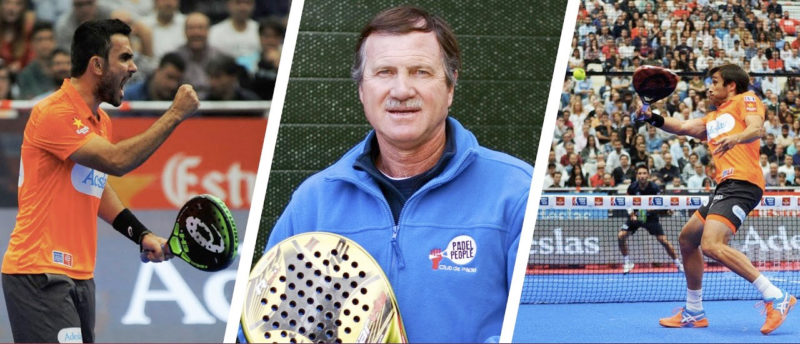
As I dug into literature and observed the best athletes in padel as well as speaking to various top coaches, the surprising discovery is that in most cases, it’s not a case of superior genetics that leads to peak performance. Hence, we can all reach a state of peak performance.

Here are some of the most important realizations I’ve made this year.

The people who do extraordinary things have figured out ways to be very progressive about improvement and structure their life around getting better. No matter what the field, the most effective approaches to improving performance all follow a single set of general principles that can be termed “deliberate practice”.

Psychology is a key element in achieving success in any discipline. I had mostly been focusing on the physical, tactical and technical aspects of improving my padel game, before I realized that the way I think was perhaps a bigger factor in determining whether I win or lose any given game. Apart from being aware of the mind’s importance and training it, you need to get the right guidance from sports psychologists who can identify your blocks and point you in the right direction.

To achieve peak performance in sport you need to achieve a state of flow. Those who practice mindfulness have an increased attention and concentration, enhanced performance in hostile contexts, respond better to stress, have better parenting skills, improved sleep, enhanced mood, decrease in fatigue, and so on. These effects are all proven through various studies. The practice of mindfulness can help in achieving the laser focus needed for peak performance. The minimum effective dose is around 8 minutes a day and an optimal dose is 20 minutes a day. I’ve dabbled in meditation at various stages of my life, but I can’t say I’ve done it that rigorously on a daily basis. I’ll definitely be adding this as one of my goals for 2018.

I’ve also learned that success in any discipline is not something you can achieve alone. You need a team behind you. That might be the support of your spouse, friends and family at amateur levels, and involve a whole team (technical, physical, tactical coaches and psychologist, physio) for the elite athletes.

It is very important to write down your guiding principles or philosophy for life. What are you doing? This is a question you need to answer alone and be very clear about. This will be your guiding principle every day and will give you the right framework to be able to make short-term objectives and be able to evaluate your progress.

You also need to set aside time (15-20 minutes a day) to visualize and experience yourself performing at the highest level. You also need to split the visualization exercise in this way: 85% kicking ass and 15% of the time being in compromised positions and figuring out how to get out of that. That will help you overcome bad situations where your competitor has an upper edge in competition and you have to dig yourself out of a hole.

In padel, I’ve seen clearly that we kind of have two inner selves. One, the “I,” seems to give instructions; the other, “myself,” seems to perform the action. Then “I” returns with an evaluation of the action. For clarity let’s call the “teller” Self 1 and the “doer” Self 2. Within each player, the kind of relationship that exists between Self 1 and Self 2 is the prime factor in determining one’s ability to translate his knowledge of technique into effective action. In other words, the key to better tennis – or better anything – lies in improving the relationship between the conscious teller, Self 1, and the unconscious, automatic doer, Self 2.

Another important element that we tend to overlook is proper recovery after training or competition. It’s very important to get your sleep patterns right, have the right nutrition and top that off with a proper psychological state of mind.

These are the best resources I’ve found and totally recommend if you’re interested in learning about peak performance:

  • Peak: Secrets from the New Science of Expertise
  • Peak Performance: Elevate Your Game, Avoid Burnout, and Thrive with the New Science of Success
  • The Inner Game of Tennis
  • The Sports Gene
  • Finding Mastery podcast
  • Elite man podcast – Interview with Dr Michael Gervais
  • Tennis psychology podcast
  • Ultimate guide to deliberate practice

What is clear from my experience in life so far, is that we have incredible resources inside of us and it’s just a matter of accessing those resources in order to achieve the best version of ourselves. Practicing this is a life’s work and is one of the most important reasons why I wake up enthusiastic about life every morning.

Hope that helps you achieve peak performance in whatever you want to focus on. If you have any experiences or resources to share, please leave a comment below.
Filed under: Health & Fitness, Padel

Padel Courts in Malta

Last updated: December 27, 201912 Comments

Padel and tennis players frequently ask me if there are any padel courts in Malta.

Good news! There are two different clubs/courts that are open now with more opening soon.

I have created a site for all padel players in Malta, you can subscribe there to be put in Whatsapp groups and join matches of your level.

Join Malta Padel Club

Unfortunately, the sport has not yet been introduced in Malta, although I hope this will be rectified in the near future.

If anyone reading this is interested in launching padel in Malta and wants to partner up, I’d be happy to cooperate in the initiative. I think Malta could be a great location for padel and it would be pretty straightforward to bring over some tournaments like International Padel. Moreover, I think the local population will take on to the sport very quickly, also helped by the fact that there are many Spanish people in Malta, most of whom are already familiar with the sport and have played it before.

So once again, if anyone is interested in bringing this sport to Malta, get in touch.

Filed under: Padel

How to Play Padel in the Rain

Last updated: October 15, 2018Leave a Comment

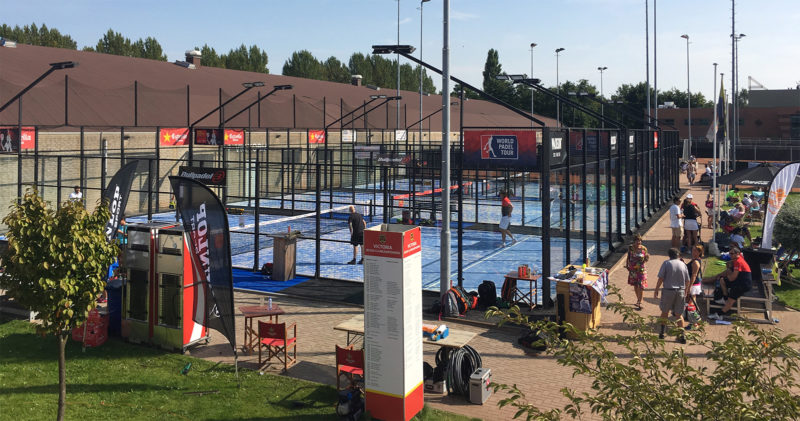
As winter approaches, we will have to deal with rain and wet padel courts. It is usually possible to continue playing under light rain conditions, but if a court is soaked then it is better to stop playing or not start in the first place.

Let’s consider a few factors that change drastically when playing in wet weather, and how you can deal with them.

Let’s start with your preparation for the match. Make sure you wear warm clothes, preferably water proof ones. Wearing a cap will prevent rain from coming into your eyes and thus enhance your visibility. If it’s cold apart from rainy, make sure your warmup is longer than usual. Please also ensure you are wearing shoes that have excellent grip, as the surface will be more slippery than under dry conditions and the chances of slips and injury are thus greater.

The ball becomes heavier and loses its bounce when it gets wet. This is the first thing you will have to keep in mind. Given these conditions, it will be much harder to smash the ball and take it out of the court, which in Spanish is called sacarla x3 and sacarla por 4. The same applies for returning the ball to your side of the court after a smash (traerla a tu lado).

With the ball and racket being wet, there will be no grip when you hit the ball. You therefore have to forget about using topspin or underspin/backspin/slice. Use plain shots to make sure you get maximum power transfer and give the ball as much direction as possible under these low grip conditions.

Next, we will have serious problems with the ball bouncing off the walls. Since the walls are also wet, we again have a no grip issue. This will cause the ball to bounce in unnatural ways. Usually a medium to low powered shot will just fall off a wall in a dramatic way, leaving you expecting a ball that never gets anywhere near your racket. The solution to this is to flex your knees even more and prepare your racket lower to be able to catch balls even after irregular rebounds.

If the opponent hits the ball very strongly, you might get a rebound off the wall that is even faster than what you’re used to under dry conditions, and therefore it’s another thing to keep in mind. Using the walls under wet conditions is very tricky, so it might be a better idea to try to avoid walls altogether and play a kind of mini-tennis.

With the walls providing us with little support and lots of menace, it is better to avoid defensive play and always try to stay in the attacking position, close to the net. Try to volley firmly and deep into the opponent’s side to force them into playing off the walls. As we have seen, the walls are very unpredictable and so you will have a much higher chance of the opponent making mistakes. The same applies when serving. Under these conditions, it’s best to serve less balls towards the T and to the feet, and more of them into the corner where the opponent will be forced to play off the wall’s rebound. It will be very hard to return such serves. If you are able to apply some underspin, serving with low power towards the T can also be hard to return as the ball will bounce very low, making it very hard to return.

How about shots where we hit the wall on our side to return ball? This move is called contrapared in Spanish and is quite common in padel. When the walls are wet and the balls that heavy, you need to hit the ball in a softer and more controlled way. If you hit a backwall shot as you normally do in dry conditions the effect will be incredibly exaggerated, so nice and gentle is the way to go.

The so called globo is one of the best shots to use on rainy courts. Remember that it is really essential to position ourselves in the attacking position, since defending on wet courts is a loser’s game. Globos can help us gain the attacking position from our rivals, who will be forced to drop back into defensive positions.

For those of you who can understand Spanish, here’s a good video that explains how to play padel on wet courts:

YouTube video

Of course, if you can avoid playing in wet padel courts, do so even if it means paying a bit extra for indoor courts or covered ones. You will enjoy your games much more in dry conditions. If it rained before you start the match but the sky is now clear, it’s a good idea to dry off the walls so at least you’ll have an off-wall bounce that is similar to dry conditions (the ball will still be wet and affect the bounce). If you can’t avoid playing in wet conditions, then use the above tips to your advantage and gain an edge over your opponents.

Do you regularly play in rainy weather? Do you have any other tips to share? 

Filed under: Padel

How to Save and Re-Pressurize Padel Balls

Last updated: September 11, 20228 Comments

First off, let me start by saying that while I mention padel balls specifically in this post, it applies equally to tennis balls. So with that in mind, off we go.

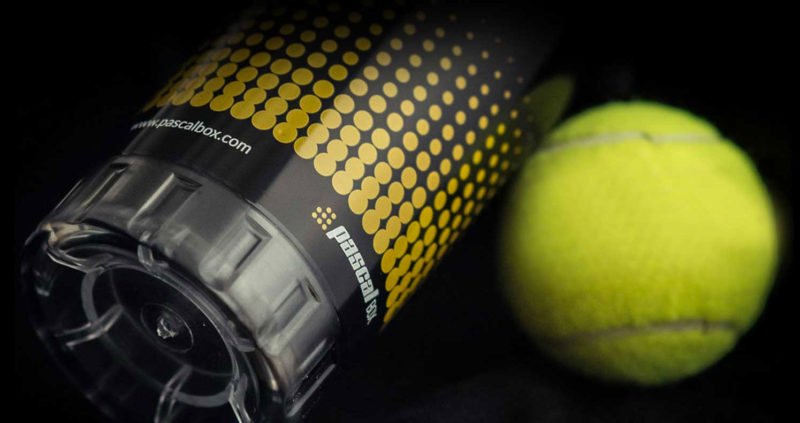
One of the biggest costs of playing padel, after the cost of renting courts, is that of buying padel balls. Padel balls start losing their bounce as soon as they are taken out of their pressurized container, and during the match, as they are hit around they lose even more bounce. The result is that after two or three matches you will notice a clear difference in the bounce, indicating that it is time to open a new tube and throw away the old balls.

Obviously, that can get expensive pretty quickly, especially if you play a lot of matches every week. Also, during the second and third match, you will already be playing with non-standard balls as they would have already lost some of the bounce. This will affect your game as you will lack the constancy of a regular bounce. So we have the problem of cost and the problem of lack of consistency between one match and another. Keep in mind that throwing away so many padel balls isn’t so good for the environment either. Clearly, this is a significant problem that all padel players would love to find a solution for.

The good news is that I have finally found a great solution that is allowing me to keep using the same balls for up to twenty matches at a time. I can now keep my balls at the official pressure and enjoy the same bounce during every match. I eventually have to replace the balls not because they no longer bounce, but because the felt is so worn out.

[Read more…]

Filed under: Padel

How to Choose a Padel Racket

Last updated: June 27, 202314 Comments

So you’re enjoying your new favorite sport of padel (paddle) and you want to buy the ideal racket for your style of play and level? This post will explain all the factors that go into this decision.

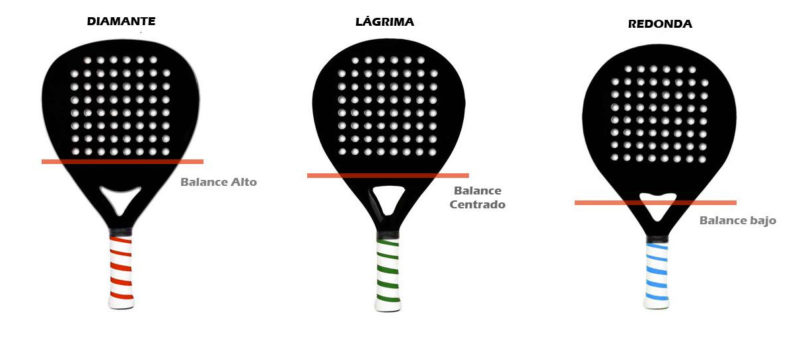
There are three racket head shapes that we need to consider:

  • Round
  • Diamond
  • Tear drop
  • Oversize

Round Padel Rackets

Round rackets are ideal for beginners. They have a medium/low weight balance which makes them handle very comfortably. They also tend to have an amplified sweet spot, and are thus quite forgiving if you don’t hit the ball with exactly the center of the racket (which you should nonetheless always aim to do).

They are rackets that are also ideal for defensive players whose major strength is ball placement. They provide excellent control, and their major downside is lack of power for smashes.

Tear Drop Padel Rackets

These are the most popular type of rackets as they are ideal for intermediate players. They provide a great mix of power and control and can thus help you hit excellent shots with a large variety of effects.

They are very versatile rackets that adapt to all styles of play, climatic conditions and match situations. It is a mix between diamond and round and has a weight distribution that is very even and shifted towards the center of the racket, which gives it the feeling of being very balanced and adaptable to different situations.

Diamond Padel Rackets

These are the favored shape of many professional players. They have a top balance, which means that most of the weight is distributed away from the grip and towards the top part of the racket. This gives the racket lots of power but on the other hand makes it much harder to control. The sweet spot of the racket is also minimal. Hence this type of racket is only recommended to those who have really mastered all the repertoire of padel shots and can consistently hit the ball with significant power and always with the very center of the racket. It is ideal for attack-minded players, especially those playing on the left side.

If you are switching to a diamond-shaped padel racket from another type of racket, it is best to go for a racket that weighs a bit less than what you are used to, in order to compensate for the fact that the balance on these rackets is skewed towards the top.

Oversized Padel Rackets

The oversized mould is used to create a racket with a larger surface area. The increased size can enhance the power and provide a larger sweet spot, which could be beneficial for beginners or those with less accuracy. However, the larger size also means the racket will be heavier, which could impact maneuverability.

Racket Grip

Padel rackets come with varying grip lengths and thickness. You can also add more overgrips if you want to make the grip bigger. It’s important to change the overgrip regularly because as your hands sweat your grip will quickly deteriorate and you’ll end up having lots of racket movement when you hit the ball, especially if you don’t hit the ball with the sweet spot of the racket’s head.

Racket Weight

Racket weight is very subjective, you will need to try several rackets and see which weight you like best. If you’re a bigger and stronger player, as a general rule you will want to go for a heavier racket.

The general guidelines are the following:

GenderBody WeightRacket Weight
MaleBelow 70 kg360-370 grams
Male70-80 kg370-380 grams
MaleAbove 80 kg380-390 grams
FemaleBelow 60 kg340-360 grams
Female60-70 kg360-370 grams
FemaleAbove 70 kg370-380 grams

For a junior player you can use a weight between 240g and 280g.

How the weight is distributed is also very important, and can totally change the maneuverability and balance between control and power. The best way to judge maneuverability is to try out a racket and see which style fits you best. From my experience, it’s easiest to judge how agile a racket is up close to the net doing volleys. The more agile rackets will give you a feeling of speed when preparing for a volley, while the less agile ones will feel a bit more cumbersome.

Racket Frame

Padel racket frames are usually made out of fibreglass or carbon. Fiberglass is cheaper to produce and you will find it used on the lower-end models. Kevlar is also used on some high end rackets together with carbon.

The thickness of the racket is usually between 36 and 38m, with the latter being the maximum thickness allowed under today’s regulations.

Core Material

Soft foam (Polyethylene) will help you feel every shot and you won’t need lots of power to hit speedy shots. Since you have slightly more time in contact with the ball, you can apply effects easier. The downside is that since the foam is very springy you will have less power in smashes.

On a racket’s packaging or marketing materials, you might find “salida de bola” or “ball output” mentioned. This refers to the springiness of the material. If you have a racket with high “salida de bola” it means that the ball will bounce off the racket very actively. This is ideal for beginners and perhaps older players as they don’t have a lot of strength and arm/body technique to move the ball around with control and speed, so it makes it easier for them to bounce the ball of the racket and get it to the other side, especially from a devensive position further back in the court.

EVA rubber is hard and less flexible. It is more difficult to play with especially in winter when the balls are heavier. However in high speed matches rackets with EVA cores are ideal. There are players who play with hard foam in summer and soft foam in winter. EVA cores are more durable than Polyethylene ones.

Lately, some manufacturers have developed a third type of core (Polyethylene) which combines both EVA and FOAM. This hybrid, is a soft rubber with much longer durability made of a core FOAM surrounded by an exterior EVA rubber.

It can be hard to distinguish what foam is used in a racket just by looking at it, but the sound they make on impact is significantly different.

Attacking vs Defensive Rackets

One of the most important factors to consider when buying a racket is whether you are an attacking or defensive player. Usually attacking players play on the left and the defensive ones play on the right. As a player focused on attacking play, you will fare better with an aggressive racket that emphasizes power over control. The reverse applies if you are a defensive player.

Racket Balance

The balance of a padel racket is an important characteristic that affects its behavior in play. It refers to the distribution of weight in the racket, which can be towards the head (top-heavy), towards the handle (bottom-heavy), or evenly distributed (neutral). Here’s how you can find out the balance of a padel racket:

Method 1: The Ruler Method

  1. Get a flat ruler long enough to support the entire length of your racket. Ensure it has a groove in the middle or is slim enough for the racket to rest on its edge.
  2. Lay the ruler on a flat surface and carefully balance the padel racket on it, placing the handle on one end and the head on the other. Ensure the edge of the racket is resting on the ruler.
  3. Slowly slide the racket along the ruler until you find the point at which it balances perfectly without leaning towards the head or the handle. This balance point is also known as the fulcrum.
  4. The position of this point along the length of the racket can indicate the balance. If it’s closer to the head, the racket is top-heavy and is more suited for power shots. If it’s closer to the handle, the racket is bottom-heavy and offers better control. If it’s in the middle, the racket has a neutral balance and offers a balanced mix of control and power.

Method 2: The Swing Test

  1. Hold the racket by the handle using your usual grip.
  2. Swing the racket as if you were playing a forehand shot, paying close attention to how it feels.
  3. If it feels like the head of the racket is pulling your swing forward, then the racket is top-heavy. If the head seems to lag behind, then it’s bottom-heavy. If it feels balanced throughout the swing, the racket has a neutral balance.

The three ranges are the following:

  • High – more than 27cm
  • Medium – between 26 and 27cm
  • Low – lower than 26cm

Price

Price is not the main factor when choosing the best padel racket. You should always find a shop that allows you to try several rackets without any pressure before you take a decision. Try as many variations (shape, brand, foam type) as possible so that you find the one that most fits your liking. Even the sound of the racket when hitting the ball can be an important factor when choosing a racket.

Remember to test several rackets before making a buying decision, it’s the best way to find the perfect fit for you.

If you have any questions leave a comment below.

Filed under: Padel

  • « Previous Page
  • 1
  • …
  • 8
  • 9
  • 10
  • 11
  • 12
  • Next Page »

Latest Padel Match

Jean Galea

Investor | Dad | Global Citizen | Athlete

Follow @jeangalea

  • My Padel Experience
  • Affiliate Disclaimer
  • Cookies
  • Contact

Copyright © 2006 - 2026 · Hosted at Kinsta · Built on the Genesis Framework