Jean Galea

Health, Wealth, Relationships, Wisdom

  • Start Here
  • Guides
    • Beginner’s Guide to Investing
    • Cryptocurrencies
    • Stocks
    • P2P Lending
    • Real Estate
  • Blog
  • My Story
  • Community
  • AI Consultancy
  • Search

Differences Between the US and Europe for Credit Scores, Credit Card Rewards etc

Last updated: November 17, 20222 Comments

For many years I struggled to understand the lingo used in movies and books that came from the US with regard to money and finance. Here are a few terms that you are most likely to encounter that have no real parallel here in Europe.

If you need me to explain anything else just leave a comment and I’ll do my best.

Credit Score

In the US, having a good credit score or credit rating is of utmost importance. The credit score was invented by a private company called FICO (Fair, Isaac and Company). It was founded by an engineer and a mathematician working at Stanford in the 1950s in order to counter the credit crisis of those times. The aim was to quantify how reliable a person asking for a loan really was. It is now used in the US, Canada and Mexico.

There is no such parallel system in most countries in Europe. When you ask for a loan from the bank in Europe, they will ask for the typical papers such as whether you own any property, your monthly payslips, etc. and then make a decision based on that documentation.

Credit score is used also in the UK (UK is considered to be a follower of the US), in fact in the UK it is better if you pay with a credit card and pay the debt on time rather than having savings and paying cash; if you do the latter, you’ll never get a mortgage. There are many websites where you can get a credit score test, for example Experian.

Many other European countries that are not in the EU have credit scoring systems including Norway and Denmark. It is not the same as the US one (neither the UK one is) but the concept is very similar.

[Read more…]

Filed under: Banking, Money

Wise Account Review 2026

Last updated: March 11, 202634 Comments

Wise Review

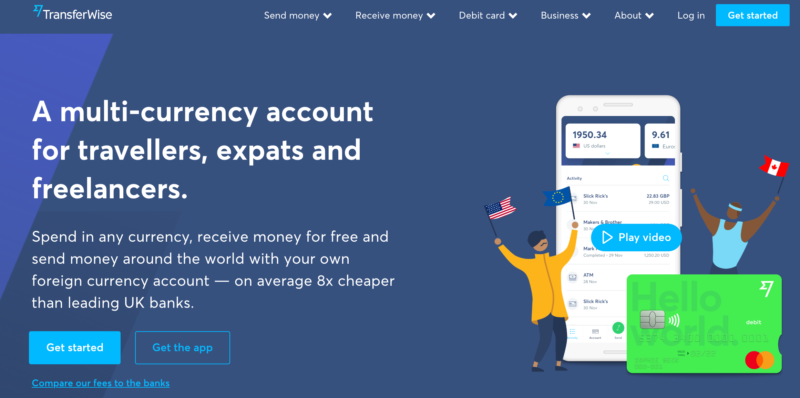
I’ve had a Wise account for years, and it sits in my financial setup for one specific reason: nobody else does international money transfers as cleanly or as cheaply.

I use Revolut as my primary everyday account and N26 as my European banking backbone — if you’re still deciding between those two, my N26 vs Revolut comparison covers how they stack up today. Wise does something different. It’s the account I reach for when I need to move money across currencies, receive a payment from a client in the US, or hold funds in a currency that isn’t euros. It doesn’t try to replace your bank — and that’s exactly why it’s worth having.

This review covers everything you need to know about the Wise Account in 2026: what it actually does, where it genuinely excels, and where its limits are. No fluff — just honest experience from someone who’s been using it alongside the major neobanks for years.

Open a Wise Account

What Is Wise?

Wise was founded in 2010 in London by two Estonians — Kristo Käärmann and Taavet Hinrikus — who were frustrated by the hidden fees banks charged on international transfers. The core insight was simple: instead of moving money across borders, use local bank accounts in each country to settle transfers domestically. It’s cheaper, faster, and more transparent.

The company operated as TransferWise for its first decade before rebranding to Wise in 2021. That same year it completed a direct listing on the London Stock Exchange — one of the largest tech listings in UK history at the time. Being publicly listed matters: it means audited financials, regulatory scrutiny, and a level of accountability that private fintechs don’t have.

Today Wise serves over 16 million customers and processes more than £100 billion in cross-border payments every year. It’s not a startup experiment anymore. It’s an established, scaled business with a clear and focused product.

The Wise Account

What used to be called the “borderless account” is now simply the Wise Account. The rebrand reflects a product that has matured and expanded well beyond just sending money abroad.

Multi-Currency Balances

You can hold balances in over 40 currencies simultaneously. Switch between them instantly at the mid-market rate when you need to. For anyone who earns in one currency and spends in another — or who deals with clients across multiple countries — this alone is genuinely useful.

Local Bank Account Details

This is the feature that sets Wise apart from almost everything else. You get real local bank account details in over 10 currencies: a US account number and routing number for ACH and wire, a European IBAN, a UK sort code and account number, and details for AUD, NZD, SGD, CAD, HUF, TRY, RON, and more.

The practical implication of this is huge. If you’re based in Spain like me and have a US client, you can send them your US bank details. They pay you as a local US transfer — no international wire, no fees on their end, no delays. The money arrives in your USD balance on Wise, and you convert it to euros whenever the rate suits you. For a broader look at account options available to people in Spain, I’ve also written about the best commission-free banks in Spain.

Getting local bank account details in a country where you’re not a resident used to be difficult or impossible. Wise has solved this, and it’s a genuine edge over most banks and even many fintechs.

The Wise Debit Card

The Wise Visa debit card lets you spend in any currency at the mid-market rate. When you pay in a currency you’re holding, it draws from that balance directly. When you pay in a currency you’re not holding, Wise converts at the mid-market rate and charges a small, clearly displayed fee — typically 0.35–2% depending on the currency pair.

Apple Pay and Google Pay are both supported. You get instant push notifications on every transaction. ATM withdrawals are free up to £200 per month (or equivalent), after which a small fee applies.

I wouldn’t use the Wise card as my daily driver — Revolut’s fee-free spending in most currencies is more convenient for everyday use. But for specific situations, particularly when spending in a currency I’m already holding on Wise, it’s the right tool.

International Transfers — Still the Core Strength

Everything else Wise does is built around this. International money transfers are where it genuinely leads the market, and that hasn’t changed in the years I’ve been using it.

How the Fee Structure Works

Wise charges a small, transparent fee shown upfront before you confirm the transfer. There is no exchange rate markup — you get the mid-market rate, full stop. The fee varies by currency pair but is consistently among the lowest available anywhere.

Compare this to a traditional bank, which typically charges a flat transfer fee plus a 2–4% exchange rate spread that never appears on your statement as a fee. Wise’s approach is the opposite: one honest number, shown clearly, before you commit. I’ve written a broader guide on saving money on currency conversions if you want to compare tools and approaches side by side.

How the Transfer Actually Works

Wise avoids SWIFT wherever possible. Instead of sending money across borders, it uses local bank accounts on both ends. You pay into Wise’s local account in your country. Wise pays out from its local account in the recipient’s country. The net result is the same — your recipient gets the money — but it’s faster and cheaper because no correspondent banks are involved.

For major currency pairs like EUR/USD or GBP/EUR, transfers typically arrive same-day or next business day. More exotic pairs take longer, but Wise is transparent about estimated arrival times before you send.

N26 Integration

Worth noting: N26 uses Wise’s infrastructure for its international transfers. If you already use N26, you’re indirectly using Wise every time you send money abroad. But going direct through Wise gives you more control, more currency options, and access to the full multi-currency account.

Open a Wise Account

Interest on Balances (Wise Assets)

Wise now offers interest on GBP, USD, and EUR balances — something that was noticeably absent for years and made holding large amounts on the platform less attractive.

It works by investing your idle balance in government-backed money market funds. The rates are competitive and vary with market conditions. You can opt in and out, and the interest accrues daily.

One important caveat: this is not a savings account. Your funds are invested, not held as cash. Government money market funds are about as low-risk as investments get, but they are not covered by any deposit guarantee scheme. The value can — theoretically — fall. In practice the risk is minimal, but you should understand what you’re opting into. This is materially different from a savings account at a licensed bank.

Wise Business

Wise has built a solid business product that extends the core functionality for companies and freelancers. A Wise Business account gives you everything in the personal account plus batch payments for payroll, team expense cards, API access via the Wise Platform for integrating transfers into your own software, and accounting integrations with Xero and QuickBooks.

For businesses paying international contractors or employees, this is one of the more practical and affordable setups available. You’re not paying per-SWIFT-transfer fees, and your contractors receive funds in their local currency without the friction of international wires.

Fees and Pricing

There is no monthly fee for a standard Wise Account. You pay only for what you use:

  • Transfers: Small percentage fee + fixed fee, shown upfront, no exchange rate markup
  • Card spending in a held currency: No fee
  • Card spending in a non-held currency: Mid-market rate + typically 0.35–2% conversion fee
  • ATM withdrawals: Free up to £200/month equivalent, then ~1.75% + £0.50 per withdrawal
  • Receiving money: Free for most currencies; small fee for wire transfers to your USD account
  • Opening local account details: A one-time fee applies for certain currencies (e.g., USD account details)

The overall principle is consistent: you know exactly what you’re paying before you do anything. There are no surprise charges buried in exchange rates.

Regulation and Safety

Wise is authorized and regulated by the Financial Conduct Authority (FCA) in the UK as an Electronic Money Institution. It holds additional licenses in the US, EU, Singapore, Australia, and other jurisdictions.

Here’s what that means in plain terms: Wise is not a bank. It does not hold a banking license in most of the countries where it operates. That has practical consequences.

Your money is safeguarded, not insured. Wise is required by its regulators to hold customer funds in ring-fenced accounts, separate from its own operating funds, at major established banks. If Wise went under, your funds would be protected from creditors and returned to you. This is meaningfully safe, and it’s a legal requirement.

But it is not the same as deposit insurance. If you hold money in an account at N26 (German banking license) or Revolut’s EU entity (Lithuanian banking license), your deposits are covered up to €100,000 by the relevant government guarantee scheme. With Wise, there is no equivalent insurance backstop. Safeguarding is robust, but it relies on the ring-fencing working as intended rather than a government guarantee.

For most people, in practice, this distinction doesn’t matter day-to-day. But it’s worth understanding, especially if you’re holding large amounts. I keep working balances on Wise, not savings.

One update worth flagging: Wise now reports under CRS (Common Reporting Standard) and FATCA. Older articles may suggest otherwise — that information is outdated. Your Wise account is reported to tax authorities in the same way as any other financial account.

What Wise Does Well

  • International transfers: The best combination of low fees, mid-market rates, and speed available anywhere
  • Local bank details as a non-resident: A genuinely rare and valuable feature — get a US account number without being in the US, a UK account without being in the UK
  • Transparent pricing: One fee, shown upfront, no markup on the exchange rate
  • Multi-currency flexibility: Hold 40+ currencies, switch between them, spend from them directly
  • Web app: Unlike Revolut, Wise has a full-featured desktop browser interface — useful for businesses and anyone who prefers managing finances on a computer
  • Publicly listed company: Audited financials, regulated, accountable in a way private fintechs aren’t
  • PayPal alternative: If you receive payments from clients who use PayPal and dislike the fees, Wise is a strong alternative — I’ve written about PayPal vs Wise in detail

Where Wise Falls Short

  • Not a full bank: No banking license, no deposit insurance — fine for most uses, but not where I’d park savings
  • No crypto or investing: Wise doesn’t do stocks, crypto, or any investment products beyond the money market interest feature
  • Interest is not deposit-protected: The Wise Assets feature is useful, but understand it’s an investment product, not a savings account
  • Limited budgeting tools: Compared to Revolut’s analytics or N26’s spaces, Wise is basic here
  • No travel perks: No lounge access, no travel insurance, no premium card benefits
  • Customer support: Fine for straightforward issues, but complex problems can take time to resolve
  • ATM limits are modest: The £200/month free threshold is limiting if you rely on cash
  • No junior accounts: Nothing equivalent to Revolut Junior for families

Who Should Use Wise

Wise is not trying to be your only account, and it works best when you don’t try to force it into that role. The people who get the most from it are:

  • Freelancers and remote workers who receive payments from clients in different countries and currencies
  • Anyone sending money internationally on a regular basis — whether to family, employees, or service providers
  • Digital nomads and expats who need to operate in multiple currencies simultaneously
  • Businesses paying international contractors or managing multi-currency cash flows
  • People who want a PayPal alternative for receiving international payments without the fee bite

It works exceptionally well as a complement to Revolut or N26 — not as a replacement for either. My setup: N26 for Spanish banking requirements and direct debits, Revolut for everyday spending and travel, Wise for receiving international payments and sending money abroad.

Conclusion

Wise does one category of financial product better than anyone else: international money transfers and multi-currency accounts. The mid-market exchange rate, the transparent fee structure, and the ability to hold real local bank account details in 10+ currencies as a non-resident are features that genuinely solve problems that banks and most fintechs haven’t addressed.

It’s not a full bank replacement. There’s no deposit insurance, no investment platform, no budgeting features worth mentioning. If you need those things, Revolut and N26 cover them better — you can find my overview of the broader landscape in my guide to the best online bank accounts in Europe. But if you send money internationally, work with clients across currencies, or need a US or UK account without living there, Wise is the clearest answer I’ve found.

I’ve been using it for years. It’s earned its place in the setup.

Open a Wise Account

Filed under: Banking, Money

Revolut Review 2026 – An Essential Digital Banking Solution

Last updated: March 10, 20264 Comments

Revolut Review

I’ve been using Revolut as my primary bank account for about nine years. Not as a backup card for holidays. Not as a secondary account for foreign currency. As the account where my salary lands and where I run my day-to-day financial life.

That’s not a position I arrived at quickly — in the early days, the advice was always “Revolut is great for travel, but keep your real bank account.” That advice no longer holds. At least not for anyone living in Europe. Revolut has crossed the line from clever travel fintech to genuine full-service bank, and the gap between it and traditional banks keeps widening in Revolut’s favor.

This review covers everything you need to know in 2026: what Revolut actually offers, how the plans break down, where it genuinely excels, and where it still falls short. No fluff, no sponsored enthusiasm — just nine years of daily use distilled into one honest assessment.

Sign up to Revolut

What Is Revolut?

Revolut was founded in London in 2015 by Nikolay Storonsky and Vlad Yatsenko. The original product was simple: a prepaid card that let you spend abroad at the real exchange rate, without bank fees. That was genuinely revolutionary at the time, when international spending fees were standard and opaque.

Ten years later, Revolut has more than 70 million customers across 48+ countries including the US, UK, the entire EU, Australia, and Japan. Revenue hit $4 billion in 2024, up 72% year-on-year. It is now one of the most valuable private companies in Europe, with a valuation that has surpassed most mid-sized traditional banks.

The product has expanded far beyond the original travel card. Today Revolut offers current accounts, savings vaults, stock and ETF trading, crypto, travel insurance, eSIMs, junior accounts, a robo-advisor, salary advance, and more. It’s become a financial super-app in the truest sense.

Licensing and Regulation

One of the most common questions about Revolut used to be: “But is my money safe?” In the EU, the answer is now clear-cut. Revolut Bank UAB holds a full banking license in Lithuania, regulated by the Bank of Lithuania and the European Central Bank. Deposits are protected up to €100,000 under the Lithuanian Deposit Guarantee Scheme — the same protection level you get with any other EU bank. For anyone banking from Spain, France, Germany, or elsewhere in Europe, this is solid ground.

The UK picture is more complicated. Revolut was granted a UK banking license in restricted “mobilization” form in July 2024, but as of early 2026 it has not yet received full authorization. Regulators have raised concerns about whether Revolut’s risk management frameworks can keep pace with the company’s rapid international expansion. The process has stretched beyond 14 months — unusually long — and remains ongoing. Revolut is still regulated by the FCA in the UK, but UK customers do not yet benefit from FSCS deposit protection in the same way EU customers benefit from the Lithuanian scheme. If you’re in the UK, this is worth knowing.

Plans and Pricing

Revolut operates on a tiered subscription model. All prices below are in EUR for European accounts.

  • Standard — Free. More capable than it sounds. You get a full IBAN, the Revolut card, currency exchange at interbank rates up to fair usage limits, €200/month in fee-free ATM withdrawals, instant notifications, budgeting tools, and savings vaults. For light users or anyone just wanting to try it, this tier alone is better than most traditional bank accounts.
  • Plus — €3.99/month. Adds priority customer support, purchase protection, and higher limits on a handful of features. A modest upgrade for regular users.
  • Premium — €7.99/month. Where Revolut starts to feel like a premium product. You get higher ATM limits, travel medical insurance, LoungeKey airport lounge access, and better rates on currency exchange. If you travel more than three or four times a year, this plan will often pay for itself on a single trip.
  • Metal — €13.99/month. Everything in Premium, plus a metal card, higher cashback via RevPoints, device insurance, and better savings rates. The plan for people who use Revolut heavily across spending, travel, and investing.
  • Ultra — €45/month. The full-featured top tier: unlimited fee-free exchange, the highest ATM limits, comprehensive travel insurance, airport transfers, concierge service, and exclusive lounge access. This makes financial sense only for frequent travelers or those who can offset the cost through heavy Revolut use.

The free tier is worth emphasizing because competitors often gate-keep basic functionality behind a paid plan. Revolut doesn’t. Standard gives you a genuinely functional everyday account at no cost.

Currency Exchange and Travel

This is still what Revolut does better than almost anyone. When you spend in a foreign currency, Revolut converts at the interbank rate — the real mid-market rate you see on Google, with no markup added. Across 150+ currencies for spending and 30+ for exchange, that represents significant savings compared to any traditional bank.

The one caveat: on weekends, Revolut adds a small markup of approximately 1% on major currency pairs. Currency markets are closed over the weekend, so Revolut is absorbing rate risk. It’s not a deal-breaker, but if you’re making a large exchange, doing it on a weekday will always get you the better rate.

ATM withdrawals follow a similar logic: free up to your plan’s monthly limit (€200 on Standard, higher on paid plans), then a small fee per transaction beyond that. For most people, the free allowance is sufficient.

Travel eSIMs

One of the more underrated Revolut features is the ability to buy travel eSIMs directly in the app. You select a destination, choose a data package, and activate it before you board. It eliminates the scramble to find a local SIM or pay roaming charges. Coverage and pricing vary by destination, but having it integrated into the same app you’re using to manage spending is genuinely convenient.

Travel Insurance and Lounge Access

Premium and Metal plans include travel medical insurance, which covers emergency medical treatment, trip cancellations, and delayed baggage. The coverage is underwritten by a regulated insurer and the policy details are accessible in the app. It’s not a replacement for dedicated annual travel insurance if you travel frequently with high-value gear, but for most trips it holds up well.

LoungeKey access on Premium and above gives you access to a network of airport lounges worldwide. The number of free visits depends on your plan. Combined with the travel insurance, Premium at €7.99/month becomes a reasonable travel companion for anyone taking several flights a year.

Everyday Banking Features

Beyond travel, Revolut has built a solid set of day-to-day banking tools.

Instant Notifications and Spending Analytics

Every transaction triggers an instant push notification. This sounds basic, but the implementation is excellent — you see the merchant name, amount, currency, and a spending category the moment the payment clears. Over time, those categories feed into a spending breakdown that shows exactly where your money goes each month. No logging in to check a statement three days later. You know what you spent, where, and when, in real time.

Budgets and Vaults

You can set monthly spending limits by category — dining, transport, entertainment — and Revolut will alert you as you approach them. It’s not the deepest budgeting tool available, but it requires zero setup effort and works passively.

Vaults are Revolut’s savings pockets. You create a Vault, name it, and set a target. You can fund it manually, set up automatic round-ups on card spending, or schedule recurring transfers. Interest rates on Savings Vaults are competitive and have improved considerably in the current higher-rate environment. Group Vaults let multiple people contribute to a shared goal — useful for saving toward a group trip or shared expense. Vaults are available across plans throughout Europe, not restricted to premium tiers.

Bill Splitting and Recurring Payments

Split bills with other Revolut users directly in the app — you can request or send money instantly to any Revolut contact. Recurring payments and standing orders work as you’d expect from any full bank account. Direct debit support is in place for EU accounts, so you can set up utility bills, subscriptions, and gym memberships just as you would with a traditional bank.

RevPoints

Revolut’s cashback program awards points on card spending, which can be redeemed with airline partners and retail brands. The value per point varies, but it adds a layer of return on everyday spending that a standard bank account doesn’t offer.

Salary Advance

Eligible users can access a portion of their salary before payday. It’s a practical feature for anyone who has used Revolut as their primary payroll account — effectively a short-term cash flow tool without needing to take out a loan.

Investing and Crypto

Revolut has built a surprisingly capable investing suite directly inside the app.

Stocks and ETFs

You can buy fractional shares and ETFs from within the Revolut app. The selection covers major US and European markets. Commissions depend on your plan — Standard users get a limited number of free trades per month, while higher tiers get more. It’s not a replacement for a dedicated brokerage if you’re an active trader, but for buy-and-hold investing it works cleanly and removes the friction of maintaining a separate platform.

Robo-Advisor

Revolut’s robo-advisor builds and manages a diversified portfolio on your behalf based on your risk tolerance. You set the parameters, make regular contributions, and the system handles allocation and rebalancing. Again, not for sophisticated investors who want granular control, but perfectly suited to anyone who wants passive, automated investment growth without opening a separate account.

Crypto

Revolut now supports 200+ cryptocurrencies. You can buy, hold, and sell directly in the app. This is not a custody arrangement where Revolut holds tokens on your behalf in an unprotected pool — the crypto holdings are separate from your protected bank balance, which is standard across the industry and worth understanding before you invest. Spreads are reasonable for casual crypto exposure, though dedicated exchanges will offer tighter pricing for larger trades.

Revolut Junior

Revolut Junior allows parents to set up accounts for children aged 6 to 17. It’s available across Europe and doesn’t require a premium parent plan, though higher tiers get additional features.

The child gets their own Revolut card and a simplified version of the app. Parents see all transactions in real time, can set spending limits by category, freeze the card remotely, and configure where the card can and cannot be used. You can also set up savings goals and allowance transfers on a schedule.

I’ve found it genuinely useful as a parent. It removes the need to hand over cash and gives children a real introduction to managing money — budgets, goals, spending awareness — without any of the risk of an unsupervised adult account. The visibility it gives parents is reassuring rather than intrusive.

Security

Security is one area where Revolut has consistently been ahead of traditional banks.

  • Biometric authentication — Face ID and fingerprint unlock on every app open and for sensitive operations.
  • Instant card freeze/unfreeze — Lost your card? Freeze it in seconds from the app. It takes about as long as opening the app and tapping twice.
  • Granular card controls — You can individually enable or disable contactless payments, online transactions, ATM withdrawals, and magstripe usage. If you primarily tap to pay and never use magstripe, you can turn magstripe off entirely.
  • Single-use virtual cards — For online shopping, you can generate a disposable virtual card number. After one transaction, the number becomes useless. This makes it impossible for a compromised retailer to reuse your card details.
  • Real-time transaction notifications — Every payment appears on your phone within seconds. Any unauthorized transaction becomes immediately visible.
  • Location-based security — Optionally, Revolut can flag or block transactions in locations inconsistent with your phone’s location.
  • Two-factor authentication — Required for account access and major account changes.

The combination of instant notifications, granular controls, and disposable virtual cards gives you more security tools than any traditional bank I’ve used. Fraud response is faster too — disputing a transaction happens in the app rather than through a phone queue.

What Revolut Gets Wrong

A genuinely useful review needs to flag the real frustrations, not just the wins.

No Desktop or Browser Access

This is my single biggest complaint after nine years of use. Revolut is entirely app-only. There is no web interface, no browser login, no way to access your account from a laptop or desktop computer.

That sounds fine until you need to do something slightly involved: copy an IBAN to set up a bank transfer from another institution, review three months of transactions in detail, download a bank statement for a rental application, or set up a dozen recurring payments. On a phone screen, these tasks are frustrating. On a browser with a proper keyboard and a readable transaction history, they’d take minutes.

Revolut has been “working on” web access for years. In 2026, it still hasn’t shipped in any meaningful form for personal accounts. For a product that positions itself as a full banking replacement, this is a real gap and one that competitors like N26 (see my N26 review) have addressed. If you regularly need to manage your finances from a computer, this will bother you.

Customer Support

Revolut’s support has improved significantly from its early days, when getting a human response could take days. In-app live chat is now the primary channel, and response times have come down. That said, support quality remains inconsistent. Some queries get resolved fast by a knowledgeable agent; others bounce between templated responses without getting anywhere.

For routine issues — lost card, transaction dispute, account query — support is generally fine. For anything complex or account-level, be prepared to follow up. Higher-tier plans do get priority support, which is worth factoring into your plan choice if you use Revolut heavily.

Account Freezes

Revolut’s automated risk systems can freeze accounts or block transactions without warning. This is a reality for many neobanks that rely on algorithmic fraud detection, and Revolut is not unusual here. But because Revolut is often someone’s primary account, a freeze hits harder. The resolution process requires submitting documentation through the app and waiting for compliance review — a process that can take days and is opaque while it’s happening.

In nine years, I haven’t experienced a freeze myself, but it’s a known issue. Keep some funds accessible elsewhere if Revolut is your sole account, at least until you have an established transaction history.

UK Banking License Delays

As covered in the regulation section, Revolut has had a restricted UK banking license since July 2024 but has not yet completed the full mobilization process. UK-based users should be aware that FSCS deposit protection is not yet in place for Revolut’s UK banking entity. The company’s co-founder has acknowledged that prioritizing growth over regulatory compliance in the early years was a mistake — credit for the honesty, but it doesn’t speed up the process.

Weekend FX Markup

The approximately 1% weekend markup on currency exchange is small but worth knowing. For everyday card spending abroad, it’s barely noticeable. For a deliberate large exchange — say, converting €5,000 before a trip — doing it on a Thursday instead of a Saturday saves you €50. Check the day before you convert significant sums.

A Note on Controversies

In 2018, Revolut went through a difficult period: allegations of a high-pressure working culture, staff treatment concerns, and questions about anti-money-laundering controls made headlines. The company was also subject to press scrutiny over the background of CEO Nikolay Storonsky’s father, given his previous work for Gazprom.

It’s worth being honest about this history, but also honest about where things stand in 2026. The company has matured significantly with scale. Headcount has grown from a startup to thousands of employees, governance frameworks have been substantially strengthened (the UK licensing process itself has driven much of this), and no regulatory action relating to the Russia/Gazprom coverage has materialized. The main ongoing regulatory story is the UK banking license delay — which is a compliance and risk management question, not an ethics question.

No financial product with 70 million users operates without friction and headlines. The relevant question is whether the current product and the current company warrant your trust. Based on nine years of use across multiple countries and thousands of transactions, my answer is yes.

Revolut vs. Alternatives

The two names that come up most often alongside Revolut are N26 and Wise. Here’s a quick orientation:

  • N26 does offer web/browser access, which is a meaningful advantage if desktop banking matters to you. The feature breadth is narrower, and it lacks Revolut’s investing, crypto, and travel extras. See the full N26 vs Revolut comparison for a detailed breakdown.
  • Wise is excellent for international transfers and holding multiple currency balances. It’s not a full bank account in the same sense — it shines specifically for cross-border payments rather than everyday banking.

For someone who wants a single account that handles everyday spending, travel, savings, and investing, Revolut’s feature breadth is unmatched among neobanks.

Final Verdict

I use Revolut as my primary bank account. I have done for years. That position has gone from “experimental” to “default” to “genuinely wouldn’t go back.”

The old caveat — that Revolut works well for travel but shouldn’t replace your main bank — no longer applies for EU residents. With a full banking license, €100,000 deposit protection, a proper IBAN, competitive savings rates, and a feature set that outclasses most traditional banks, there’s no meaningful reason to treat it as a secondary account.

The lack of desktop access is a real and persistent frustration. Customer support is uneven. And if you’re in the UK, the deposit protection situation is worth monitoring. These are genuine issues, not minor quibbles.

But for anyone in Europe — and increasingly elsewhere — Revolut is where I’d start. Sign up on the free plan, use it alongside your existing account for a month, and see whether you end up reaching for it first. Most people do.

Sign up to Revolut

Also worth exploring: Revolut Business, which brings the same approach to business accounts with multi-currency support, team expense cards, and accounting integrations.

Filed under: Banking, Money

N26 Review: Mobile Banking at the Click of a Button

Last updated: March 10, 20265 Comments

N26 Review

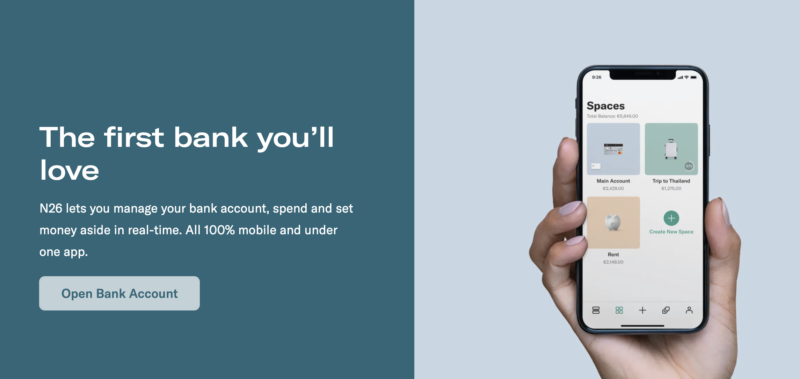
I’ve had an N26 account for several years. It sits alongside Revolut in my financial setup — not as a replacement, but as a complement. If you’re considering N26, that context matters: I’m not going to tell you it’s the only account you’ll ever need. But I am going to tell you why it earns its place in my wallet.

The short version: N26 is a well-regulated, clean, focused European bank. It won’t dazzle you with crypto trading or stock portfolios. What it will give you is a genuinely usable banking experience, a German banking license that carries real regulatory weight, and something Revolut still doesn’t offer — a full desktop interface you can use from any browser.

Sign up to N26

What Is N26?

N26 was founded in 2013 in Berlin by Valentin Stalf and Maximilian Tayenthal. It launched as one of Europe’s first mobile-first banks and has grown to around 8 million customers. It holds a full German banking license, regulated by BaFin — Germany’s Federal Financial Supervisory Authority — which is one of the more rigorous regulatory bodies in Europe.

That licensing detail matters more than it might seem. Your deposits with N26 are protected up to €100,000 under the German Deposit Guarantee Scheme. This puts N26 in a different regulatory category from some of its fintech competitors, and it’s one of the reasons I’m comfortable keeping real money there.

It’s worth noting that N26 exited both the UK and US markets in 2022, choosing to concentrate on its European core. The service is currently available in: Austria, Belgium, Denmark, Estonia, Finland, France, Germany, Greece, Ireland, Italy, Latvia, Liechtenstein, Lithuania, Luxembourg, Netherlands, Poland, Portugal, Slovakia, Slovenia, Spain, and Sweden. If you’re in Europe, you’re likely covered.

Plans and Pricing

N26 offers four tiers. The free plan is genuinely functional — not a stripped-down teaser designed to push you to paid.

Standard — Free

No monthly fee. You get an N26 Mastercard, a German IBAN (plus local IBANs in certain markets like Spain), Apple Pay and Google Pay, real-time transaction notifications, and basic Spaces for saving goals. ATM withdrawals are limited to a few free per month depending on your country, typically 3–5. For light use or as a secondary account, this is perfectly workable.

Smart — €4.90/month

Adds up to 10 Spaces sub-accounts, Shared Spaces for splitting expenses with others, and customer support via in-app chat. A sensible middle tier if you want more savings organization without jumping to the full travel bundle.

You — €9.90/month

Adds travel and purchase protection insurance, more ATM withdrawals, and partner perks. Aimed at frequent travelers who want basic coverage baked into their banking.

Metal — €16.90/month

The premium tier. You get a metal Mastercard, more comprehensive travel insurance (including medical, flight delay, and car rental), higher ATM limits, and priority customer support. Comparable to Revolut Premium or Ultra in positioning, though the feature set is more focused.

Key Features

Desktop and Web Access

This is N26’s single biggest practical advantage over Revolut, and I want to give it the emphasis it deserves.

You can log into N26 from any browser, on any computer, and do everything: view your balance and transaction history, manage Spaces, transfer money, check statements, update your settings. It works like a real bank’s online portal — because it is one.

If you work from a laptop and want to check your finances without picking up your phone, N26 handles this well. It sounds like a small thing until it isn’t — I use it regularly when reconciling expenses or making transfers from my desk.

Spaces

Spaces are sub-accounts you can create within N26 to ring-fence money for specific goals — a holiday fund, an emergency buffer, a tax reserve. The free plan gives you a couple; paid plans go up to 10. They’re simple and well-executed. You can set targets, move money between them, and see your progress at a glance.

Shared Spaces (available on Smart and above) let you create a shared sub-account with another N26 user — useful for splitting rent, joint trips, or shared expenses without a joint current account.

Savings Accounts

N26 offers savings accounts with competitive interest rates depending on your plan and country. These are held within N26 itself, not via a third party, which keeps things simple. The rates aren’t the highest available, but the convenience of having savings and spending in one place is worth something.

International Transfers via Wise

For international transfers, N26 integrates directly with Wise (formerly TransferWise). You can send money abroad from within the app, using Wise’s transparent fee structure and competitive exchange rates. This is a better international transfer experience than most traditional banks offer by a significant margin. The fees are shown clearly upfront, and the mid-market rate is used where possible.

Spending Analytics and Transaction Categorization

Every transaction is automatically categorized — food, transport, entertainment, and so on. Monthly spending breakdowns give you a reasonable picture of where your money goes. It’s not as granular or customizable as some dedicated budgeting apps, but for built-in analytics it’s more useful than most banks provide.

Card Controls

You can freeze and unfreeze your Mastercard instantly from the app. You can also toggle individual transaction types on or off — contactless payments, online purchases, ATM withdrawals — which is useful if you want to lock down your card while traveling or in a period of low use.

Local IBANs

In Spain and a number of other markets, N26 provides a local IBAN, not just a German one. This matters practically: some Spanish employers, landlords, and direct debit billers won’t accept foreign IBANs (a persistent frustration with fintech banks historically). A local IBAN removes that friction entirely, which makes N26 more viable as a genuine primary or secondary account in everyday Spanish life.

Apple Pay and Google Pay

Both are supported across all plans. Setup takes a few minutes and works reliably. Standard for any modern bank at this point, but worth confirming if contactless payments matter to you.

Security and Regulation

N26 takes a layered approach to security that covers the main bases:

  • Biometric authentication — Face ID and fingerprint login
  • PIN protection for sensitive actions
  • Instant card freeze/unfreeze from the app
  • Real-time push notifications for every transaction
  • Granular card controls (toggle contactless, online, ATM independently)
  • 3D Secure for online payments

The regulatory story is the strongest part. N26 holds a full German banking license and is regulated by BaFin — the same authority that oversees Deutsche Bank and Commerzbank. Your deposits up to €100,000 are protected under the German Deposit Guarantee Scheme.

Compare this to Revolut, which holds a Lithuanian banking license. Lithuania’s regulatory framework is legitimate, but Germany’s BaFin is widely regarded as one of the more stringent financial regulators in Europe. If regulatory confidence is a deciding factor for you, N26 has a meaningful edge.

What N26 Does Well

The desktop interface is genuinely useful

I keep coming back to this because it’s the thing that keeps N26 in my setup. Being able to manage your account from a browser without jumping through hoops is a real advantage. It sounds basic. It shouldn’t be a differentiator in 2026. But it still is.

Clean, focused banking

N26 doesn’t try to be a super-app. It doesn’t want to sell you crypto, book your flights, or give you a robo-advisor. It wants to be a good bank. For a lot of people, that clarity of purpose makes it easier to use and easier to trust. There’s less noise.

BaFin regulation and deposit protection

Already covered above, but it bears repeating. If you’re keeping meaningful savings with a neobank, the regulatory framework matters. N26’s German banking license is a genuine differentiator, not a marketing claim.

Wise integration for international transfers

Having competitive international transfers built directly into the app, powered by Wise, is a practical win for anyone who sends money abroad regularly. The transparency of fees and rates is far ahead of traditional banks.

Local IBANs

For residents of Spain (and other supported markets), a local IBAN removes the compatibility headaches that have plagued other neobanks. You can use N26 for salary deposits and direct debits without needing a backup account at a traditional bank.

Where N26 Falls Short

The feature gap versus Revolut is real

If you want crypto trading, stock investments, eSIMs, travel booking, a robo-advisor, or a junior account for your kids — N26 doesn’t have any of that. Revolut has built a financial super-app over the past few years, and N26 hasn’t tried to keep pace. That’s a deliberate choice, but it means N26 isn’t the right primary account for users who want those capabilities.

Exchange rates aren’t interbank

N26 uses Mastercard’s exchange rates for currency conversion — good, transparent rates, but not the mid-market interbank rate that Revolut offers. For heavy multi-currency spending or international travel, this is a real cost difference worth factoring in.

European-only

N26 withdrew from the UK and US in 2022. If you’re outside Europe, it’s not an option. Within its supported markets the service is solid, but the retreat from major English-speaking markets is a signal about the company’s scale ambitions.

Customer support has limits

Support is not 24/7, and on the free plan your access to live chat is limited. This is an area where N26 has improved over time but still lags behind what you’d expect from a bank handling serious account issues at any hour. For routine use it’s rarely a problem, but if something goes wrong on a Sunday evening, you may be waiting.

Smaller scale

With around 8 million customers, N26 is a fraction of Revolut’s 70 million-plus user base. Scale affects product velocity, partner integrations, and long-term stability. N26 is a profitable, well-regulated bank — it’s not going anywhere — but this is worth acknowledging honestly.

No junior accounts

If you have kids and want to manage family finances in one place, N26 doesn’t offer junior accounts. Revolut’s under-18 product handles this well. It’s a gap that matters for families.

Who Should Choose N26

N26 is the right choice — or a worthy addition to your setup — if any of these describe you:

  • You want a European neobank with serious regulatory backing (BaFin, full German banking license, €100k deposit protection)
  • You need desktop/browser access to your account as part of your regular workflow
  • You live in Spain or another N26 market and want a local IBAN for salary and direct debits
  • You want clean, focused banking without the complexity of a super-app
  • You send money internationally and want Wise integration built in
  • You want a simple secondary account to keep separate from your main spending

N26 is probably not the right primary account if you want a single app for investing, crypto, travel tools, and family accounts. For that use case, Revolut is the stronger choice.

Conclusion

I’ve used N26 for several years and I’m not planning to close the account. It earns its place in my setup not by competing with Revolut on features, but by doing something different and doing it well.

The desktop access is the practical hook for me. Being able to log in from a browser and manage the account properly — without the mobile-only friction that still plagues some fintechs — is a genuine quality-of-life improvement. Paired with the strongest regulatory story in the neobank space and a clean interface that doesn’t overwhelm, N26 is a bank I trust and use regularly.

It won’t replace Revolut for day-to-day spending and travel. But as a secondary account with real banking infrastructure behind it, it’s a smart addition — particularly if you’re based in Europe and care about where your deposits actually sit.

The free plan is worth trying with no commitment. If you find yourself using it regularly, the Smart tier at €4.90/month is a reasonable upgrade. The Metal card is best reserved for frequent travelers who’ll actually use the insurance benefits.

Sign up to N26

If you’re comparing N26 and Revolut side by side, I’ve put together a detailed breakdown: N26 vs Revolut.

Filed under: Banking, Money

How to Open a Maltese Personal Bank Account

Last updated: March 11, 2026Leave a Comment

One of the first steps in establishing a life in Malta is opening a bank account. In this article, I’ll walk through the current process, which banks are actually worth considering, and what your real alternatives are if the local banks give you the runaround. Spoiler: that happens more than it should.

Unfortunately, banks in Malta have become excessively stringent in recent years, and many people — especially expats — are finding it difficult or outright impossible to open an account with a local bank. The good news is that the alternatives have gotten genuinely good.

The State of Banking in Malta Right Now

Banking in Malta has always been a source of frustration for expats, and that hasn’t changed. The local banks are slow, bureaucratic, and increasingly paranoid about compliance. That said, the fintech alternatives have gotten genuinely good — which helps offset the pain.

There’s also one major development you need to know about: HSBC Malta is being sold. In December 2025, HSBC Continental Europe signed a definitive agreement to sell its 70.03% stake in HSBC Bank Malta to CrediaBank (a Greek bank, formerly Attica Bank) for €200 million. The deal is pending regulatory approval from the MFSA, the ECB, and the Bank of Greece, with completion expected late 2026 or early 2027. APS Bank was an early bidder but withdrew in April 2025.

For existing HSBC Malta customers, the bank has committed to business continuity for now. But no one really knows what a Greek bank’s stewardship of Malta’s second-largest institution will look like in practice.

Choosing the Right Bank

The main banks operating in Malta are:

  • Bank of Valletta (BOV) — the largest, still state-linked
  • HSBC Malta — being acquired by CrediaBank, pending regulatory approval
  • APS Bank — growing, with a fully online account option
  • Lombard Bank — smaller, more boutique
  • BNF Bank (formerly Banif Bank) — another mid-tier option

Each bank has its own account options, fee structure, and — critically — its own risk appetite when deciding who they’ll actually let in the door.

Required Documentation

Across the board, you’ll need to bring:

  • A valid passport or national ID card (for EU/EEA nationals)
  • Proof of address (utility bill or rental agreement)
  • A reference letter from your current bank or recent bank statements
  • Proof of income or employment (payslip, employment contract, or pension statement)
  • Tax Identification Number (TIN) or Social Security Number if applicable

Some banks will ask for more. Always call ahead and confirm the exact list before showing up, because turning up without one document can mean rescheduling an appointment weeks out.

Opening an Account in Person

Most banks in Malta still require you to open an account in person at a branch. Book an appointment — walk-ins are usually a waste of your time. During the appointment, expect questions about the purpose of the account, where your money comes from, and your expected transaction activity. This is standard AML/KYC procedure, not a personal interrogation — but it does catch people off guard.

Opening an Account Remotely

APS Bank now offers a fully online account (the APS Online Account) for €1/month, denominated in EUR. This is the most accessible route if you want a Maltese bank account without the branch ordeal. Their standard current account (€2/month, includes a debit card) can also be started online before completing formalities in-branch.

For other banks, remote opening is generally limited to people who already have an existing relationship with the institution.

Bank Account Features and Fees

Maltese banks offer the basics — online banking, debit cards, ATM access — but don’t expect a slick modern experience. Be especially attentive to:

  • Monthly maintenance fees (BOV charges €60/year if your residential address is outside Malta)
  • Transaction fees, especially for international transfers
  • ATM fees outside their own network
  • Currency conversion rates, which are typically worse than fintech alternatives

BOV vs HSBC Malta

For years these two were the only real options. Here’s how they stack up based on personal experience with both.

Internet Banking

HSBC has historically offered a cleaner interface and an easier way to reach bank staff when something goes wrong. BOV revamped their internet banking system a few years back and somehow made it worse — and I say that as someone who sent messages through their old portal that never received a reply.

HSBC’s platform remains the more polished of the two — though what happens after the CrediaBank acquisition completes remains to be seen.

Branches

HSBC wins here. Staff tend to be professional, offices are modern, and the process feels efficient when you follow their procedure correctly. BOV branches vary significantly in quality — some are fine, some are a queuing nightmare.

Getting Things Done

HSBC has historically had a reputation for being stricter on requirements than BOV. That said, once you meet their requirements, things actually get done. BOV’s bureaucracy can grind on indefinitely.

Crypto-Friendliness

Neither bank plays well with crypto. BOV blocks outgoing transfers to crypto exchanges, and incoming transfers from exchanges can trigger reviews and blocks. HSBC operates the same way. If crypto transfers are a priority, scroll down to the Agribank section.

ATMs

HSBC ATMs are generally easier to use and better located. No contest here.

Fees

BOV charges €60/year if your registered address is outside Malta — a fee that tends to come as a surprise. HSBC’s fee structure has historically been more transparent at the personal account level.

Which Bank Should You Use?

After holding accounts with both BOV and HSBC for over 20 years, I eventually shut down my BOV account. The internet banking was genuinely painful to use, and every year brought some new hidden charge or unexplained issue I had to chase down. HSBC was always more professional — so I stayed with them.

With the CrediaBank acquisition pending, if you’re opening fresh, APS Bank is worth a serious look as a more stable alternative with online account opening.

My honest recommendation: if you live in Malta, hold at least two accounts — one local and one fintech. The local one gives you direct debit capability and local credibility; the fintech one gives you everything else.

The Fintech Alternative: Revolut and Wise

Revolut has been available in Malta for over a decade, and Wise for nearly as long. Both offer proper EU IBANs, multi-currency accounts, and a user experience that makes the local banks look like they’re stuck in the 1990s.

Wise edges ahead on exchange rates — genuinely important if you work in the UK and convert between GBP and EUR regularly. Revolut wins on everyday features: real-time spending notifications, budgeting tools, and the sheer convenience of having everything in one app.

Both platforms offer features that Maltese banks will likely take years to match: real-time spending notifications, built-in budgeting, instant international transfers, and the ability to link your phone for contactless payments.

For day-to-day banking, especially for expats, this is the practical choice for many people.

Open a Revolut account | Wise account

What About Crypto Transfers?

The big banks won’t touch it — don’t waste your time trying.

Agribank remains the standout option in Malta for individuals who need to transfer to and from crypto exchanges. It’s a smaller agricultural and commercial bank, but it’s consistently been the go-to for anyone in the crypto space who needs a Maltese bank account that actually works.

Paytah has positioned itself as a crypto-friendly payment provider, but it has had a troubled history in the press and I wouldn’t build anything critical around it.

If crypto transfers are a core requirement — either as an individual or as a business — Agribank is your best bet among local Maltese banks. Pair it with Wise or Revolut for everything else.

Filed under: Banking, Money

  • « Previous Page
  • 1
  • 2
  • 3
  • 4
  • Next Page »

Latest Padel Match

Jean Galea

Investor | Dad | Global Citizen | Athlete

Follow @jeangalea

  • My Padel Experience
  • Affiliate Disclaimer
  • Cookies
  • Contact

Copyright © 2006 - 2026 · Hosted at Kinsta · Built on the Genesis Framework