
Jean Galea

Health, Wealth, Relationships, Wisdom

  • Start Here
  • Guides
    • Beginner’s Guide to Investing
    • Cryptocurrencies
    • Stocks
    • P2P Lending
    • Real Estate
  • Blog
  • My Story
  • Community
  • AI Consultancy
  • Search

Why You Shouldn’t Ask For Financial Advice Online

Last updated: October 23, 2020Leave a Comment

In a recent post, I told you about the fact that I don’t attach much importance to income and net worth reports from financial bloggers and entrepreneurs who choose to share them with the whole world.

I simply don’t think they are relevant or useful to me. On the contrary, I might also risk being swayed into doing something rash with my money if I did follow these reports closely. It is human nature to want to do what others are doing, especially if it sounds like they’re getting everything right, while we, as readers, are losing out on some important opportunity.

A topic that is closely related is that of asking for financial advice online.

Since business and investing are two of my biggest passions and I write about those topics quite a lot on this blog, I also get a lot of requests for financial advice.

I wanted to put this post out there so that I can refer these people to it when they email me.

While I commend people for taking an interest in their financial situation and for the humility and courage to reach out for help to someone who they deem to be more knowledgeable or experienced, it is simply not a good idea for either of the two parties.

Let’s call the two parties as follows:

  1. Aspiring investor
    Typically a young person who wants to grow his wealth and possibly aim for financial independence; or someone nearing retirement with a lump sum to invest.
  2. Experienced investor
    Typically a finance blogger, startup founder, venture capitalist, etc.

The first important thing to consider is that every single person is different in his capabilities, interests, family situation, etc. We all live incredibly complex lives intertwined with those of our family and people close to us, as well as our jobs or businesses, not to mention the countries and economies we live in.

The best way for an aspiring investor to not lose money and make long-term profits is to educate himself as much as possible. This can be done in various ways, including reading blogs of experienced investors, reading educational books, going to conferences, and myriad other ways.

I stress that it is of paramount importance that you read as much as possible, and adopt a skeptical attitude. When you feel that you know enough to make your first investments, start small and give the investments some time to see if you were right in the first place, or whether you have further learning to do.

An ethical seasoned investor will never dish out financial advice. They know that it is not responsible to tell anyone where to invest their money without spending hours studying their financial situation. That is a full-time job, one that is performed by a financial advisor.

If you want to invest your money and you don’t want to spend a ton of time learning about investing, the second-best thing would be to go to a good financial advisor and let him guide you. You wouldn’t ask for health advice online if you are sick (I hope), so do yourself a favor and pay someone to help you with your financial matters if you think that you need this help. It is far better to invest some money to get a professional’s advice than to invest irresponsibly and lose your money later.

I hope that this post helps explain why I don’t give financial advice. All I can do is write about my experiences and opinions, and the best thing you can do is to read those articles as part of your overall journey in educating yourself about personal finance, taking small steps and thinking twice before taking action.

This is a long journey and the most important thing in investing, as Warren Buffet says, is not to lose money. If you manage to avoid losing money, you’ll already be ahead of most people, so don’t feel pressured by what you read or what people say. More importantly, do not let this push you into making speedy decisions to avoid the so-called fear of missing out (FOMO).

To wrap things up, I feel privileged and honored when people email me to share their financial situation or investing experiences, however, please understand that it would not be in your best interest if I were to give you advice on your financial matters.

As always, your views are very much welcome.

What to do instead

If you want to learn how to invest and manage your money in a better way, I suggest doing the following:

  • Read as many books on the topic as you can.
  • Network with other investors and find masterminds of like minded people.
  • Get coached and mentored by an experienced investor. My friend Shlomo Freund offers such a service, so check that out.

Filed under: Money

Why I Don’t Cook at Home Anymore

Last updated: November 12, 20214 Comments

Before we had children, we used to cook at home a lot and also eat out very frequently. We lived in Barcelona, where you can find lots of great options for lunch since most restaurants have a menu del dia, which means a set menu for a fixed price that is usually excellent value for money.

Given that we both worked from home, it was a nice break from work to go out and have a nice lunch somewhere before getting back to work.

However, once we had children, our free time was much more constrained and we preferred to outsource our diets to the experts and thus eat healthier and better.

In 2020, the COVID crisis accelerated the trend of healthy food meal plan deliveries in Barcelona.

Basically, many kitchens opened up, and they cook dishes and concentrate on selling them via delivery apps or by customers picking up their orders at the kitchen. This minimizes the costs of having tables and staff serving those tables, not to mention not being troubled by the COVID restrictions.

As a customer, I love the idea. It’s a trend that has been picking up steam in the United States as well. What we’re seeing is essentially the nascent era of cooking as a service. In much the same way as we have outsourced a lot of our daily chores to specialized services, cooking seems to be the next chore that is going to be outsourced in developed nations.

I think cooking will, by 2040, be a niche activity like e.g. gardening or sewing, not something which one would reasonably expect from substantially every household.

It's getting squeezed by a combination of long-running social changes, cultural norms, and…

— Patrick McKenzie (@patio11) May 5, 2019

Cooking has traditionally been the role of the woman, and it takes up quite a lot of time to shop for the ingredients, cook and then clean up after. If you have a family with a few kids, it takes even more time. If you calculate it, it could easily take 4-5 hours a day once you factor in everything. Since more women are heading back to the workplace, it makes sense for them to outsource this chore.

In my opinion, leaving the cooking to a specialized chef will also most likely result in you eating a healthier and more varied diet. A kitchen with a good chef will be churning out many different dishes, while if you cook at home you will most likely eventually stick to a small variety of tried and tested dishes. Unfortunately, we are also living in a period in history where food has become very processed, and good raw materials are not easy to come by. A chef who buys raw material in bulk has the expertise of being able to distinguish between poor and great quality fish, poultry etc, and he can even buy it at a cheaper price due to his contacts and the amounts he is buying.

Even without calculating the monetary value of time spent on cooking, food is easily the biggest monthly expense for my family after rental payments. Since switching to purchasing most of our food from one of the kitchens, our costs have remained equal, but we have gained a lot of extra time and eat way better since we have a professional chef with years of experience cooking for us.

Here are some reasons for giving up cooking your own food:

  • Gaining extra time
  • Spending more time with your partner and kids
  • Letting the pros do the work
  • Better control your portions
  • Protecting yourself from injuries (burns, cuts etc)
  • Less cleaning up
  • No grocery shopping

Another benefit for me specifically as I pursue athletic excellence for the various sports I practice is that I can have my dietician coordinate with my fitness coach and chef to make sure I am getting exactly the right fuel for my workouts and upcoming tournaments. If I had to do this myself I would definitely get it wrong and it would be too time-consuming.

Cooking at home on occasion is of course still a nice idea, especially when it involves all family members and serves as a relationship-building activity. It’s also great to go out for a nice meal at a restaurant every once in a while.

Filed under: Health & Fitness

Where Can Businesses Invest Their Retained Earnings?

Last updated: August 07, 20253 Comments

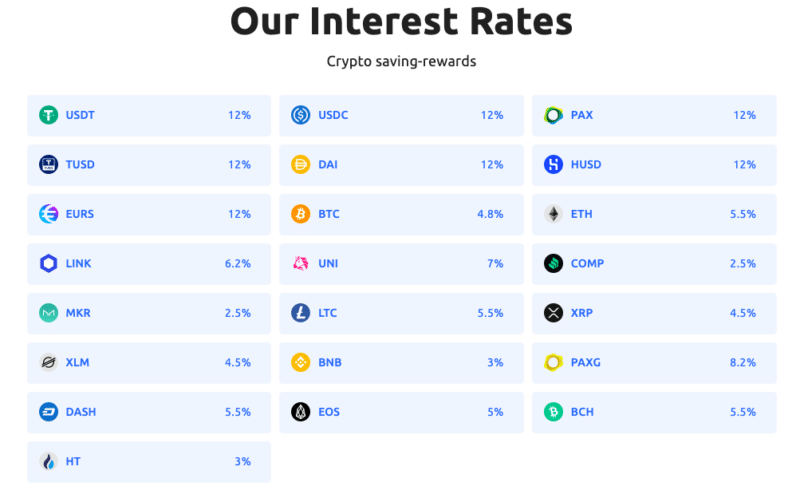
youhodler rates

YouHodler Savings Account Rates

As an owner of a successful business, you will sooner or later amass a good amount of retained earnings in your business.

Retained earnings are what remains of the net profit after all dividends to shareholders have been issued. These retained earnings are usually kept in the business to re-invest into new products or expansion. However, even after those are taken care of, there might still be considerable funds sitting idle in bank accounts, and that’s almost never good, as inflation will eat away at the real value of those funds.

The key to maintaining the real value of those retained earnings, is, of course, to find stable low-risk investments with high liquidity.

Here are my top places to invest retained earnings:

YouHodler – This is a platform where you can lend money to borrowers who put up their crypto as collateral, while you earn a yearly return of up to 9%. You can withdraw the money at any time, giving you full liquidity.

If you are ready to take higher risks, you could invest some of your company’s retained earnings into pure P2P lending platforms. I would suggest using systems like Mintos autoinvest or Bondora’s Go and Grow to maintain a high degree of liquidity.

Real estate investments can also provide relatively safe places to park a company’s money, however, they can be more illiquid, especially if the platforms don’t have a great secondary market.

Tax Benefits of Investing Through the Company

Investing your company profits rather than withdrawing money as salary or dividends can offer significant tax benefits. This strategy allows you to take advantage of lower corporate tax rates in certain jurisdictions and defer personal taxation on investment returns.

In many countries, corporate tax rates are lower than personal income tax rates. For example, Malta has an effective corporate tax rate of just 5% in certain cases after tax refunds, making it an attractive destination for businesses looking to minimize their tax burden. By reinvesting profits within the company and compounding returns, you can leverage these tax advantages to maximize your overall wealth.

By keeping the profits within the company and investing them, you can defer taxes on the returns generated by those investments. This strategy enables you to compound your returns more effectively, as the deferred tax liability can be reinvested for further growth. When you eventually decide to withdraw profits as dividends, the taxes due on those dividends will often be lower than the taxes that would have been levied on a larger salary or regular dividends.

What are your thoughts on this? Do you have any other ideas on investing company retained earnings?

Filed under: Money

How to Register a Spanish .es Website Domain – A Complete Guide

Last updated: March 13, 2026Leave a Comment

buy es domain

If you’re launching a business in Spain or targeting a Spanish audience, registering a .es domain should be high on your to-do list. Here’s everything you need to know about why, how, and where to register one.

Why Register a .es Domain?

The main advantage is SEO. Google and other search engines give preference to country-code top-level domains (ccTLDs) in geolocated searches. With all other things being equal, if a user searches from Spain, Google will give more prominence to mydomain.es than to mydomain.com.

Beyond SEO, a .es domain signals to Spanish users that your business is local and relevant to them. This builds trust, especially for service-based businesses where customers want to know you operate in their country.

That said, if you plan to expand beyond Spain or target an international audience, a .com domain is still the better primary choice. Many businesses register both — using .com as the main domain and .es as a redirect or for a Spanish-language version of the site.

Requirements for Registering a .es Domain

Unlike .com domains which anyone can register, .es domains have some requirements:

  • Individuals: You need to provide an identification number — your DNI (for Spanish citizens), NIE (for foreign residents), or passport number (for non-residents).
  • Companies: You’ll need the company’s VAT number (CIF/NIF) in addition to the personal identification of the admin contact.
  • Admin Contact: The administrative contact for a .es domain must be a natural person (individual). It cannot be a company name. The registrant, technical, and billing contacts can be either individuals or companies.

This means that non-residents can register .es domains — you just need a valid passport number. You don’t need to be physically present in Spain or have a Spanish address, though some registrars may require a Spanish contact address.

Where to Register

You can technically register through dominios.es, the official Spanish domain registry (run by Red.es, a government entity). However, I wouldn’t recommend it — the interface isn’t user-friendly and the management tools are basic compared to what commercial registrars offer.

Instead, I’d recommend any of these registrars:

  • Namecheap — My top recommendation. Clean interface, reasonable prices (typically around 9-12 Euro per year), and good DNS management tools. They also include WhoisGuard privacy protection for free.
  • Cloudflare Registrar — Sells domains at cost with no markup, making it one of the cheapest options. If you already use Cloudflare for DNS or CDN (which I’d recommend for any website), it makes sense to consolidate your domain here too.
  • SiteGround — A solid option if you’re already hosting with them. Keeps everything in one place.
  • GoDaddy — The largest registrar by market share. Not my first choice due to aggressive upselling, but they work fine if you already have domains there.
  • Google Domains (now Squarespace Domains) — Google transferred its domain business to Squarespace in 2023. Still a clean, no-nonsense option with transparent pricing.

How to Register Step by Step

The process is straightforward regardless of which registrar you choose:

  1. Search for availability — Enter your desired domain name on the registrar’s website. If it’s taken, most registrars will suggest alternatives.
  2. Provide your identification — During checkout, you’ll need to enter your DNI, NIE, or passport number. For companies, you’ll also need the CIF/NIF.
  3. Set your DNS — Point the domain to your hosting provider’s nameservers. Your host will provide these (they look like ns1.example.com and ns2.example.com).
  4. Complete payment — Most registrars accept credit cards and PayPal. The domain is usually active within minutes to a few hours.

Costs

The cost of a .es domain is typically between 8 and 15 Euro per year depending on the registrar. This is comparable to .com pricing. Domains renew annually — make sure auto-renewal is enabled so you don’t accidentally lose your domain.

Some registrars offer a discount on the first year but charge more on renewal. Check the renewal price before committing, not just the initial registration price.

.es vs .com — Which Should You Choose?

Here’s a quick comparison to help you decide:

  • Choose .es if: Your business targets exclusively Spanish customers, you want to rank well in Spanish Google searches, or you want to complement an existing .com domain.
  • Choose .com if: You target an international audience, you want maximum flexibility for future expansion, or your primary language is English.
  • Register both if: You’re serious about protecting your brand in Spain and don’t want competitors or domain squatters to register the .es version of your domain.

Tips

  • Enable WHOIS privacy — Not all registrars offer this for .es domains (it depends on Red.es policies), but if available, enable it to keep your personal information out of public WHOIS records.
  • Set up auto-renewal — Domain expirations can be catastrophic for a business. Always enable auto-renewal and keep your payment method up to date.
  • Use a professional email — Once you have your .es domain, set up a matching email address (e.g., [email protected]). It adds credibility and is easy to configure with Google Workspace or any email provider.

Buy a .es domain

Filed under: General

Worst P2P Platforms in Europe – Platforms That I DON’T Trust

Last updated: March 13, 202636 Comments

I’ve written about what I consider to be the best P2P lending platforms for investing, however after the many platform failures since 2019, people have been reaching out to me to ask about which platforms they should not trust.

I think it’s a good idea to list which platforms I actively avoid so you can do your research about them and potentially avoid them as well.

Platforms that were in the original list and eventually went bust are marked with a strikethrough.

  • Kviku – Failed loan originator. Stopped paying investors after sanctions and geopolitical issues made operations unviable. Buyback guarantees proved completely worthless. Years of broken promises and zero communication with investors. Avoid.
  • Bondster – Once a promising Czech-focused platform that severely deteriorated. Minimal transparency, defaulted on buyback obligations, and blocked investor funds. Trustpilot reviews are damning. No longer recommended under any circumstances.
  • Housers – Spanish real estate platform with non-existent customer support and empty promises. Many loans delayed or defaulted. No due diligence performed on projects. Currently being investigated by the police in Spain. Avoid.
  • Maclear – Swiss P2P platform targeting SME loans. Rated 1.0/10 by P2PEmpire. No audited financial statements published (their 2023 audit by Grant Thornton remains unaudited, 2024 audit still pending). Uses bots and PR agencies to flood online communities with fake positive reviews. Based in Switzerland likely to avoid EU ECSP regulation. Claims zero defaults, which is unrealistic for SME lending. The company lost CHF 118,379 in 2023 (unaudited). Avoid.
  • Reinvest24 – Estonian real estate platform with 100% of loans now in recovery. Possible fraud. No new investments available and no meaningful communication with investors. Avoid.
  • Bulkestate – Latvian real estate crowdfunding platform with 100% of loans in recovery. No new loans being listed. Effectively dead. Avoid.
  • Crowdestor – Between 67-80% of all loans are in default. Little due diligence done on projects, leadership does not inspire much confidence. Effectively dead.
  • Ventus Energy – Estonian-registered renewable energy platform founded by Janis Timma, the same person behind Crowdestor. No financial regulation whatsoever — no ECSP license, no lending license. The holding company has EUR 4,166 in capital and zero employees yet manages EUR 78M+ from ~5,000 retail investors. Independent investigators found doctored valuation PDFs (CEO pasted “Ventus Energy” over “Crowdestor” references), inflated asset purchases from the founder’s own portfolio (Powerhouse Dambis acquired for EUR 6.36M despite earning EUR 88K/year — estimated 2-3x fair value markup), and undisclosed equity stakes given to seven P2P bloggers who then published positive reviews without disclosure. Timma is currently being sued over a guarantee tied to a bankrupt energy company (SIA Olaines Energija). Rated 1.0/10 by P2PEmpire. Avoid.
  • EstateGuru – 62% of loans in recovery with EUR 133M in defaults. Rated Grade E. Incompetent management that let the loan book deteriorate to an alarming degree.
  • Max Crowdfund – Dutch real estate crowdfunding platform that stopped accepting new investments in November 2023 after the AFM rejected its ECSP license application. Near-bankrupt by March 2024 (EUR 37,000 liquidity against EUR 121,000+ in debts). Attempted restart via Kazpar GmbH stalled. Trustpilot rating: 1.5/5. Avoid entirely.
  • Lendermarket – Years of delayed loans, unfulfilled buyback obligations, and blocked withdrawals nearly killed this platform. A v2 relaunch in 2025 under new management is attempting recovery, but the trust deficit is enormous. Proceed with extreme caution if at all.
  • Rendity – Austrian/German real estate crowdfunding platform that permanently shut down in February 2026 after reporting a EUR 1M loss in 2024. The German subsidiary was liquidated as part of a systemic collapse in German and Austrian real estate crowdfunding. An investor group is pursuing legal claims. Avoid.
  • Limedot – Irish-incorporated P2P lending platform with Vietnamese loan originators. Shut down in February 2024 after less than two years of operation. Investors were repaid, but the platform failed due to financial and regulatory hurdles.
  • Brickstarter – Spanish vacation rental investment platform. Still operating but not regulated (no ECSP license), zero transparency on volumes or defaults, rated 0.8/10 by P2PEmpire. After 8+ years, only EUR 2M total funded. Avoid.
  • Profitus – Lithuanian real estate crowdfunding. ECSP licensed but company equity turned negative (EUR -122K), losses growing (EUR 562K in 2024), 18% default rate on BBB-rated loans. Community ranking collapsed from 2nd to 17th place. Too risky despite legitimate product. Avoid.
  • CrowdEstate – Bad project selection.
  • Fast Invest – funded by an ICO and too much focus on the founder’s story, which I don’t find believable anyway.
  • Wisefund – sparse information about the projects they are funding.
  • TFG Crowd – Sparse info about the managing team as well as being based out of coworking spaces. Not a serious financial platform.
  • Iban Wallet – Very shady details uncovered about the company. Stay away unless they come clean.
  • Dena Invest – all the indications of a “me-too” scheme with owners having no relevant experience.
  • Grupeer – people have provided evidence of scam practices by this platform, active lawsuits are underway and interest payments have been frozen.
  • Boldyield – not convinced about their way of measuring LTV, and I’ve had negative experiences with a similar platform in the past (Lendy).
  • Monethera – shady buyback guarantee.
  • Kuetzal – seems to be a scam.
  • Envestio – featured several dubious projects in the past, although things seem to be improving lately.
  • Agrikaab – ridiculous and obvious scam.

Do you agree with my choices? Let me know if there are other platforms you actively avoid investing in and why.

The P2P Platform Graveyard

Several P2P lending companies have gone bust over the past years. Here’s a list of them:

  • Rendity (2026)
  • Reinvest24 (2025)
  • Crowdestor (2025)
  • Max Crowdfund (2023)
  • CrowdEstate (2024)
  • BulkEstate (2024)
  • Limedot (2024)
  • FastInvest (2023)
  • Viventor (2023)
  • IbanWallet (2023)
  • Wisefund (2022)
  • TFGCrowd (2022)
  • Dena Invest (2020)
  • Grupeer (2020)
  • Boldyield (2020)
  • Monethera (2020)
  • Envestio (2020)
  • Agrikaab (2020)
  • Kuetzal (2019)
  • FundingSecure (2019)
  • Lendy (2019)
  • Collateral UK (2018)

What’s your prediction for the next one to join the list?

So far I’ve lost money on Lendy. It was one of the first platforms I invested in, and since I didn’t know much about lending at the time, I luckily had the good sense to only invest a relatively small amount into the platform. It is now in administration and there is hope for some recovery of the debts, but I will lose part of my investment there. The owners of this platform sent millions of GBP to their accounts in the Marshall Islands and drove the company bankrupt. It’s one of the first big scams in P2P lending, and the fact that the platform was fully licensed in the UK should show us that being licensed does not mean that everything is rosy at a platform.

Overall the net result from investing in P2P lending platforms is still very positive, and that is what matters since we all know that these are relatively high-risk platforms in the first place, and there are bound to be borrower defaults, loan originators going bust and in some cases platforms themselves failing for myriad reasons.

The most important thing when you lose some money is to review what happened, understand what lessons can be learned, and move on. All investors lose money at some point, but as long as you’re right about your investments most of the time you will make money. It’s important to understand the concept of risk in investing and make peace with it right from the start.

Faced with the pain of losing money, many investors throw in the towel and write off investing altogether, but this is a mistake. As humans, we are wired to feel much worse about losing something than about gaining something, so you need to understand the psychology of risk and reward and push beyond it to continue learning and investing because it’s the only way to become a better investor and ultimately make serious money in the long run. Remember that if you’re not investing, your money is actually losing value due to the effects of inflation.

If you’re just starting and you’re feeling that the prospect of investing in P2P lending is daunting, you might want to check out my tips for evaluating P2P lending platforms as in that post I’ve shared all the lessons learned along the way and my criteria for deciding whether or not to invest in a platform.

A note on Trustpilot

Over the years I’ve come to understand that many new investors rely heavily on Trustpilot to formulate their decisions on whether to invest in a platform or not. By default, I don’t trust sites like this and would never rely on them to make up a decision.

I have looked at Trustpilot reviews a few times as some platforms proudly display their rating, but it turns out that several of them are clearly abusing the system. Basically, it consists in posting positive fake reviews while simultaneously taking down bad reviews.

I think the following video fully exposes the uselessness of Trustpilot as a review platform:

YouTube video

Filed under: Money, P2P Lending

  • « Previous Page
  • 1
  • …
  • 50
  • 51
  • 52
  • 53
  • 54
  • …
  • 89
  • Next Page »

Latest Padel Match

Jean Galea

Investor | Dad | Global Citizen | Athlete

Follow @jeangalea

  • My Padel Experience
  • Affiliate Disclaimer
  • Cookies
  • Contact

Copyright © 2006 - 2026 · Hosted at Kinsta · Built on the Genesis Framework