Jean Galea

Health, Wealth, Relationships, Wisdom

  • Start Here
  • Guides
    • Beginner’s Guide to Investing
    • Cryptocurrencies
    • Stocks
    • P2P Lending
    • Real Estate
  • My Story
  • Blog
    • Cryptoassets
    • P2P Lending
    • Real estate
  • Consultancy
    • Consult with Jean
    • Consult a Lawyer on Taxation and Corporate Setups
    • AI Consultancy for Business
  • Podcast
  • Search

The Basics of Sport Massage

Last updated: October 06, 20222 Comments

sports massage for padel

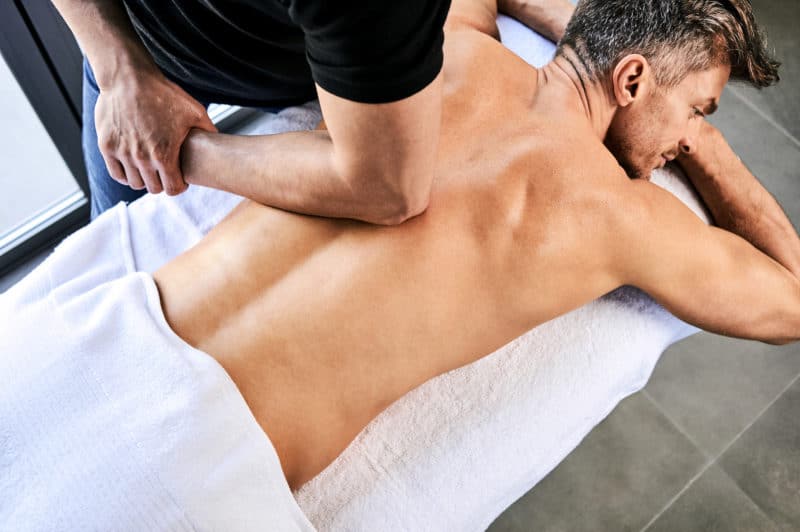
As an athlete playing padel, part of my routine is massage therapy. I’ve already written about my foam rolling routine and TENS machine that are my daily way of keeping my muscles massaged, but of course, there is no substitute for real massage sessions with a qualified therapist.

Getting frequent massages might seem to be an unnecessary luxury at first glance, but I’ll show you in this article why it’s not.

Here are the top reasons why massage should be part of every serious athlete’s routine:

  • Massage can reduce injuries
  • Massage is beneficial to more than muscles

[Read more…]

Filed under: Health & Fitness, Padel

Making a Will in Spain

Last updated: September 11, 2022Leave a Comment

Having a valid will is good practice for any family, no matter your age. When changing residency and moving to another country, it is important to make sure that your will is valid in this country as well. Let’s see how foreign wills are treated in Spain.

In Spain, it is not essential for an owner of assets to make a will. Foreign wills are valid and enforceable, although, in order for them to be enforced within the Spanish jurisdiction, foreign wills must be legalized before a Spanish consul (or affixed with an apostille in countries signatory to the Apostille Convention) and translated into Spanish. However, it is advisable to execute a Spanish will for Spanish assets.

The law applicable to succession determines the formalities for making a will.

Within the Spanish jurisdiction, there are different regional regulations, which apply depending on the testator’s civil residence (vecindad civil). Where regional regulations do not apply, formalities for making a will are set out in the Spanish Civil Code.

Under the Spanish Civil Code, the formalities for making a will are the following:

  • All wills must give proof of the testator’s identity and capacity to testate.
  • Only sane people over 14 years of age can testate.
  • A will is a strictly personal act that cannot be delegated; joint wills are forbidden.

Types of Wills

  • Open will. A will is open if the testator declares his last will in the presence of a notary public who is aware of the dispositions made.
  • Closed will. A will is closed if the testator, without revealing his last will, declares that it is contained in the document presented to a notary public.
  • Holographic will. A will is holographic when entirely handwritten by the testator.

How Much Does it Cost?

Quotations I got from law firms in Barcelona were all around €500 including VAT for a couple (two wills). This is in the case of an open or closed will.

A holographic will does not really cost anything to prepare. Article 688 states that a holographic will can be granted in the testator’s own language, so, for example, it could be written in English.

In order for a holographic will to be valid, it should meet the following requirements (a testator is a person writing the will):

  • The testator must be of legal age at the time of granting the will.
  • The will and its contents must have been totally handwritten and signed by the testator stating the year, month and day when it was granted.
  • If there are any crossed out words, amended words or words written between the lines, then these should have been corrected by the testator and signed by him.

Holographic wills are very simple to grant and require no type of formality beyond the abovementioned elements. However, issues arise when it is time to validate the will upon the death of the testator. The will must be notarized at this time unless the will in question was previously validated by the Judge of First Instance (Juez de Primera Instancia) of the last residence of the testator. The document signed by the deceased must be presented to this Judge within five years of the time of death, and it must be presented by the individual to whom it was entrusted or by an interested party, whether heir, legatee, executor or any other interested individual. It is important to note that holographic testaments are invalid if they are not validated by the Judge within the designated time period.

Given the inherent simplicity of this type of will, the procedures that the heirs must follow for determining the validity and identity of the will and the testator are very arduous, complex, and above all, costly. Judicial intervention is necessary. The judge may make use of handwriting experts and a notary public. There is a risk that a judge may not deem the will valid.

In any case, the greatest risk is that this type of will may be destroyed by an individual disfavoured in the will provisions, or that the will is either lost or found after the statutory period of validity has expired.

The many risks assumed once this type of will is drafted make it inadvisable in practice.

Filed under: Expat life

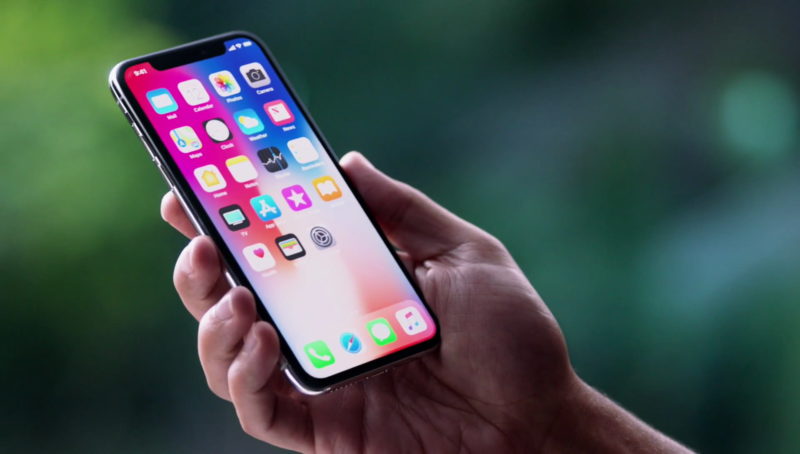
How to Export Photos from iPhone to an External Drive

Last updated: December 06, 2020Leave a Comment

I don’t like using Apple’s applications and proprietary file storage types for photos. I like it old school where I can just drag photos from my devices to my external drive in a folder and organize them manually via folders.

Storing photos on iCloud is a privacy concern that not many people care about, but I do so I prefer to avoid it.

I’ll therefore talk about how I manage the exporting process of images from my iPhone to my local storage.

iMazing Backup

A couple of years ago I started using iMazing Backup which is an excellent software for Mac that enables me to bypass the whole Apple silo by making my own automated backups of Apple devices we have in the family over Wi-Fi. So the main reason I purchased it was to have an iCloud backup alternative.

However, it is also an excellent manager for Apple devices. I frequently use it to drop PDF books onto my iPad, for example. The process is extremely easy.

Another use case for me is exporting images from my phone onto local storage. I like to keep my phone as clean as possible and export all my photos every month or so. The disadvantage is that I don’t have easy access to all my photos, but on the other hand I know that my photos are safe and backed up at all times.

iMazing Backup has an excellent photo and video expert utility that also includes some smart folders. You can read about how it all works on iMazing’s guide.

This tool lets me export all images including the live photos (which in reality are short video clips) as well as original versions of edited photos. You can also choose to automatically convert from HEIC to JPEG and also change the naming structure of the photos.

Image Capture (My Previous Method)

This had been my go-to method prior to starting to use live photos. I then realized that this method would not export the live photos but only the still version. So I had to stop using this method.

Here’s how to do that process to transfer photos from an iPhone to an external drive, or anywhere on your Mac for that matter.

  1. Connect Your External Hard Drive To Your Mac. First, connect the hard drive to your Mac and make sure it shows up in the Finder’s sidebar.
  2. Connect Your iOS Device To Your Mac.
  3. Launch Image Capture.
  4. Select Destination.
  5. Click Import.

What to do if you already have your photos in the Photos app

If you had already used the Mac Photos app to import your photos from the phone, and you now want to export the individual photo files, you should follow these steps:

  1. Launch Photos on your Mac.
  2. Hold down the Option (⌥) key while dragging images to the Finder.

All of the original parameters of your images will be entirely preserved. In Photos 1.0, dragging an image out of the app would save your selection as a downscaled JPEG file. In the most recent release, dragged images retain their original resolution but are still recompressed as JPG files.

Note that I’ve had problems copying a whole album at once if it has a lot of photos in it. I’m not sure if it’s a general issue or just a local thing on my setup. What I do in that case is just select smaller batches of photos to move over.

Filed under: Tech

A Guide to Renting an Apartment in Barcelona

Last updated: April 14, 2020Leave a Comment

Barcelona is currently my favorite city in Europe, and I thought it would be fun to do some research into renting an apartment in Barcelona. I’ll be focusing on long term rentals as short term rentals have been covered to death, and anyway, we all know that nowadays companies like Airbnb have completely dominated short term rentals.

Let’s say you want to spend more than 3 months in Barcelona, a year even. What should you know before you get to Barcelona?

The Importance of Agents

Your best bet for finding an apartment in Barcelona is through an agent. These agents can either be independent or be employed by one of the big agencies. This holds especially true if you are looking for a mid to high-end apartment and don’t want to waste time trawling the various property rental listing websites.

Upon finding an apartment, the new tenant pays the agent’s fee, and it’s usually the equivalent of one month’s rent, but can be up to 10% of the annual cost of the rental. VAT at the rate of 21% will be added on top of that.

Any reasonably priced flat that’s in a good condition will rent out quickly. Spain might be in a recession but the rental market in Barcelona certainly doesn’t seem to be affected, things here move fast. If you find something you really like, go for it. A good property can be gone in a matter of days, hours even.

Properties are available for viewing when the previous tenants have moved out. That means you’ll be seeing the apartment in a ready-to-rent state and also implies that you should be ready to move immediately.

When you find a property you like, you’ll probably want to dig a little deeper. Here’s a handy checklist:

  • Are communal charges included in the rent? (usually yes)
  • Are utility bills included? (usually not, ask about electricity, water and gas)
  • Is there an extra cost for central heating?
  • Is the agency fee 1 month’s rent or 10% of the annual rent? (the latter works out more expensive)
  • What are the deposit terms? (usually two months rent)

I would also suggest checking if there are any planned works (construction) nearby, and see what kind of neighbors you would have. It’s also important to have a good look at the state of the building itself. Some rental apartments can be in great condition, but the building itself would have some serious problems.

For example, I rented an apartment that was absolutely excellent and we were the first tenants in, however, after a few weeks we discovered that if someone smoked in any of the other apartments, the smoke would seep through into our apartment through the kitchen extraction fan tubing. Ridiculous, I know, but it’s just an example of the many non-obvious problems that you can have.

I also suggest speaking to the owner about how they handle repairs, especially if it’s not a new apartment. Some owners that are not professional will leave you waiting for days, while others offer same day (usually within the hour) repairs because they have someone on call for such incidents.

Prices

Prices have been on the rise in recent years. As of August 2018, you can expect to pay between 900 and 2000 euros for an apartment, depending on the size and condition. A reformed three bedroom apartment in a good area will fetch between 1500 and 2000 euros. A reformed one bedroom will be closer to 900 euros.

Renting a Room

If you’re strapped for cash and don’t mind living with other people, you can also rent a room in an apartment. One of the best apps for finding such rooms is Badi. Expect to pay 400-800 euros for a good room.

Good luck with your apartment or room search, and if you have any questions just leave a comment below and I’ll do my best to answer.

Filed under: Expat life

The Best Books and Resources for Learning Exercise Physiology

Last updated: March 13, 2026Leave a Comment

As I continue to immerse myself in padel and strive to improve every year, I’ve taken it upon myself to really learn how the human body works, especially in relation to exercise and sport.

Understanding exercise physiology has changed the way I train. Instead of blindly following workout programs, I can now evaluate whether an exercise makes sense for my goals, understand why certain recovery protocols work, and make informed decisions about my training. Whether you’re an athlete trying to optimize performance or just someone who wants to train smarter, these resources will give you a solid foundation.

Exercise Physiology Textbooks

These are the go-to academic texts in the field. They’re dense, but incredibly comprehensive if you want to truly understand how the body responds to exercise.

  • Exercise Physiology: Theory and Application to Fitness and Performance — by Powers and Howley. This is the textbook used in many university exercise science programs. It covers everything from cellular metabolism to cardiovascular responses to training adaptations. Excellent diagrams and chapter summaries make the complex material digestible. I’d recommend this as your first textbook if you want a thorough but readable introduction.
  • Exercise Physiology: Nutrition, Energy, and Human Performance — by McArdle, Katch, and Katch. Another heavyweight textbook that puts more emphasis on nutrition and energy systems than the Powers book. Particularly strong on body composition and the metabolic aspects of exercise. A good complement to Powers if you want the full picture.
  • Physiology of Sport and Exercise — by Kenney, Wilmore, and Costill. This one takes a more practical, sport-focused approach. Great chapters on training for different sports, environmental considerations (heat, altitude, cold), and age-related changes in exercise capacity. If you’re primarily interested in sports performance rather than clinical exercise physiology, start here.

Sport-Specific Training

  • Advanced Strength and Conditioning for Tennis — While specifically about tennis, much of the content applies directly to padel and other racquet sports. Covers movement patterns, injury prevention, periodization, and sport-specific strength exercises. One of the few books that bridges the gap between academic exercise science and real-world racquet sport training.
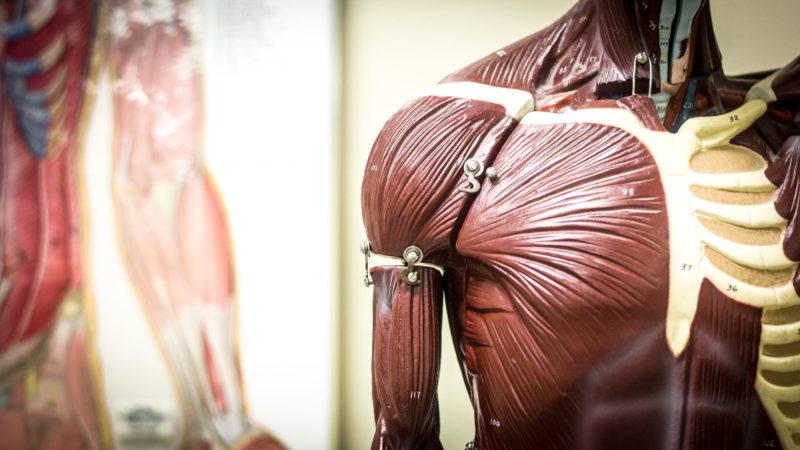
  • Strength Training Anatomy — by Frederic Delavier. Not a textbook in the traditional sense — it’s essentially an atlas of exercises with detailed anatomical illustrations showing exactly which muscles are working during each movement. Invaluable for understanding your own training and for identifying which exercises target specific muscle groups. I reference this one constantly.

Online Courses

If you learn better through video and structured lessons than through reading, these Coursera courses are excellent starting points:

  • Science of Exercise — A well-structured course that covers the fundamentals of how exercise affects the body. More accessible than the textbooks and a great entry point if you’re new to the subject.
  • Introductory Human Physiology — Broader than just exercise, this covers how the major body systems work. Understanding the cardiovascular, respiratory, and musculoskeletal systems at a fundamental level makes everything else click into place.

Practical Fitness Books

These are less academic but still grounded in solid science. If the textbooks above feel like too much, these are a more approachable way to improve your training knowledge:

  • Starting Strength — by Mark Rippetoe. The definitive guide to barbell training. Even if you don’t follow Rippetoe’s specific program, the detailed breakdowns of squat, deadlift, bench press, and overhead press form are essential knowledge for anyone who lifts weights.
  • Becoming a Supple Leopard — by Kelly Starrett. Focuses on mobility, movement quality, and fixing common dysfunction patterns. If you sit at a desk all day (like most of us) and then try to perform athletically, this book will help you identify and address your mobility limitations.
  • Calisthenics for Beginners — A practical guide to bodyweight training with progressive exercises. Good if you want to build strength without a gym.
  • The Practice of Natural Movement — by Erwan Le Corre. A different approach to fitness that focuses on natural, functional movement patterns rather than isolated gym exercises. Thought-provoking and a good counterbalance to traditional training methods.
  • How to Build Strong & Lean Bodyweight Muscle — Another solid bodyweight training resource with clear progressions for different skill levels.

Where to Start

If you’re coming to this with no background in exercise science, I’d suggest starting with the Coursera Science of Exercise course and Strength Training Anatomy. The course gives you the foundational knowledge, and the anatomy book makes it tangible.

Once you’re comfortable with the basics, pick one of the three textbooks based on your interest — sport performance (Kenney), general fitness (Powers), or nutrition-focused (McArdle).

Do you have any other resources to recommend? Let me know in the comments section.

Filed under: Health & Fitness, Padel

  • « Previous Page
  • 1
  • …
  • 63
  • 64
  • 65
  • 66
  • 67
  • …
  • 89
  • Next Page »

Latest Padel Match

Jean Galea

Investor | Dad | Global Citizen | Athlete

Follow @jeangalea

  • My Padel Experience
  • Affiliate Disclaimer
  • Cookies
  • Contact

Copyright © 2006 - 2026 · Hosted at Kinsta · Built on the Genesis Framework