
Jean Galea

Health, Wealth, Relationships, Wisdom

  • Start Here
  • Guides
    • Beginner?s Guide to Investing
    • Cryptocurrencies
    • Stocks
    • P2P Lending
    • Real Estate
    • Forex
    • CFD Trading
    • Start and Monetize a Blog
  • My Story
  • Blog
    • Cryptoassets
    • P2P Lending
    • Real estate
  • Consultancy
    • Consult with Jean
    • Consult a Lawyer on Taxation and Corporate Setups
  • Podcast
  • Search

My Favorite Podcasts in 2025

Last updated: May 15, 2025Leave a Comment

Here’s a list of my favorite podcasts in 2025. I’ve noted down my favorite crypto podcasts separately.

Politics & Economics

  • The Reason Interview – Nick Gillespie
  • EconTalk – Russ Roberts
  • Free Thoughts
  • Infinite Loops
  • Intelligence Squared

Tech

  • The a16z podcast
  • Building at the edges
  • Interdependence – Mat Dryhurst. Holly Herndon

Psychology, Philosophy and Spirituality

  • The Michael Shermer Show – Michael Shermer
  • Within Reason – Alex O’Connor
  • Making Sense – Sam Harris
  • Skeptoid – Brian Dunning
  • You are Not so Smart – David McRaney
  • On Being – Krista Tippett
  • Where Should We Begin? – Esther Perel
  • Heart Wisdom – Jack Kornfield
  • No Stupid Questions – Stephen Dubner, Angela Duckworth

Life Mastery

  • The Tim Ferriss Show – Tim Ferriss
  • The Knowledge Project – Shane Parrish
  • The Better Human Show – David Rachford
  • The Productivity Show – Asian Efficiency
  • Lex Fridman Podcast – Lex Fridman

Health & Fitness

  • Huberman Lab – Andrew Huberman
  • The Peter Attiah Drive – Peter Attiah
  • Mind Pump – Various
  • Muscle Intelligence – Ben Pakulski
  • Neuro Athletics – Louisa Nicola
  • Rich Roll Podcast – Rich Roll

Business & Investing

  • Hidden Forces – Demetri Kofinas
  • Money For the Rest of Us – J David Stein
  • The Tropical MBA – Dan Andrews & Ian Schoen
  • Macrovoices – Erik Townsend
  • Masters in Business – Bloomberg
  • Odd Lots – Weisenthal, Alloway

Parenting

  • Respectful Parenting – Janet Lansbury

Science

  • Crowdscience
  • Science VS – Gimlet

Future

  • Interdependence

Filed under: Thoughts & Experiences

Living in the City Versus the Suburbs

Published: November 05, 20224 Comments

A question I’ve been contemplating lately is whether we should continue living in the city center or move to a house in the suburbs. The distinction between a city and a suburb isn’t clear-cut. While a city is the core of a metropolitan area, a suburb is an area on the periphery of city limits. Generally, cities have large populations over a small area, but suburbs can have even larger populations of hundreds of thousands or a million residents — just spread across a lot more square kilometers.

Here are a few thoughts on the subject.

Lockdown Experience

The COVID-19 lockdown has given us a taste of how life could be without the noise and air pollution produced by cars, trucks and most of all scooters/motorcycles in big cities. As a person who works from home, it was fantastic to be able to keep windows open during the day, breathe fresh air at any time and even smell the sea when the wind was blowing inland. Along with those novelties, I started to cycle and exercise outside and found it extremely enjoyable. The streets were pretty much taken over by bicycles and runners in fact, and cycling shops recorded record sales during the lockdown months.

The day the lockdown was partially lifted was a big contrast. Cycling suddenly became much more dangerous and frankly, the noise and pollution killed all the joy of it. Moreover, being on lockdown also offered another perspective on how important or not it is to be surrounded by shops and activities as well as the importance of having a home that you enjoy.

I was born and raised in Malta, where the concept of cities and suburbs is blurred since you don’t really have a big central city; there are parts that look more like a city and others that feel more like rural living, but you never get the same feeling as living in a real city. Using personal means of transportation is a must and you get accustomed to needing 15-40 minutes to get anywhere important such as the university, work, beach, gym, etc.

City Life Experience

Although I’ve traveled a lot and visited many big cities, my first real experience of living in one was Barcelona, and I fell in love with the lifestyle instantly. I liken it to the experience of drinking Vodka and Red Bull mixed together (a favorite from back in the clubbing days in my early twenties although I wouldn’t recommend it). It’s exactly that feeling of losing some inhibitions and being more open to new ideas, plus the buzz and excitement of new opportunities that abound in a city like Barcelona.

Chiang Mai was another big city I had the experience of living in, although in a funny way it feels both more rural and way more congested and polluted than the typical city in Europe.

The upsides of living in a city:

  • More meetups and new experiences than you can even keep up with
  • Possibility of meeting an incredibly diverse set of people
  • Being challenged in new ways and possibly having to face some inner demons. I see this as a good thing if addressed correctly.

Looking back, I can see how life in a city has taken all the attributes of my character and amplified them. That meant that I was able to advance very rapidly in work and fitness due to the people I met, inspirational work spaces and meetups, and the wealth of sports facilities, athletes, and coaches. On the other hand, it also meant that some of the weak points of my character were also severely put to the test.

For example, it has always been really important for me to have a safe space, which I usually found at home and more specifically my room at home. As long as I had that one comfortable space where I could shut off the rest of the world and recharge (reading, writing, video games, etc) I felt safe and at peace. I am very sociable but I need to be able to retreat to that space when I need to. Life in the city for the most part robbed me of that space. This brings me to the next point.

Life with Kids

When you have kids, you really need more space, and city apartments start looking much less attractive. Kids can still benefit of the proximity to things in the city and the multitude of things they can do, but home life can be challenging especially if one or both parents are working from home.

Then there’s the question of schools. In our case, we ended up choosing a school that was quite far from the city center. That means a longish commute to and from the school on a daily basis, which gets tiring and expensive if you’re using taxis. I’ve since learned that for young families, proximity to their kids’ schools is usually the number one factor when they choose where to live.

Safety

One can argue that life in the suburbs is safer. There are fewer people, less traffic, and potentially a stronger neighboring community. On the other hand, if you’re being targeted by thieves, a house can in many cases be more vulnerable than an apartment.

Pollution

Suburbs clearly win out on this point. There’s less noise and less air pollution when compared to life in the city.

Transportation

With most suburbs, due to the fact that everything is much more spaced out, you will need to have one or more cars to function on a daily basis. This can mean less time spent walking and biking; two essential activities for health. You might need to regularly drive back to the city if you attend any activities there such as gyms, music or art lessons, etc.

Depending on where you live, the suburbs might also be hilly parts which make moving around even more uncomfortable and oblige you to use motorized transportation. This is the case in Barcelona and its immediate suburbs, for example. Cities tend to rise around flat plains and access to water historically, so they are more or less flat and easy to walk around, although there are exceptions of course.

Bottom Line

The main points in favor of suburb life are less pollution, more space, and perhaps a safer environment. In favor of cities, we have easier access to hospitals, restaurants and other institutions. We have definitely more cultural activities and diversity.

School proximity is also a factor but since some schools can also be within the city it really depends on what school you end up choosing.

I am still torn between the two options, so if you have any thoughts and have tried both, please do leave a comment below.

Filed under: Thoughts & Experiences

Net Worth Goals For Investors and Entrepreneurs Aged 35-45

Last updated: November 09, 20222 Comments

net worth 35-45 years old

Over the past years, I’ve spoken to many entrepreneurs and investors in my age group (35-45), and one of the questions I like to ask is what their net worth goal is, irrespective of where they’re currently at. It’s a question that is designed to make them think about what is the amount of money that would cover all their dreams at the moment and foreseeable future, while also being believable.

Interestingly enough, it turns out that almost everyone’s answer falls around the same figure: 10 million dollars.

Now, that’s a lot of money, especially if you come from a modest background. My net worth in my mid-twenties was practically zero, and if you were to talk to me about these kinds of figures they would have been hard to conceive. However, once you start forging ahead in your financial status, you start revising your goals and relationship with money.

Here are a few ways that people in this age group have been able to achieve that net worth figure:

  1. Gain leverage at your job: become a unique and indispensable player in your company and in your industry. You can then break free of the typical salary ceilings that exist within any company and industry.
  2. Open your own business: here you assume higher risk in the hopes of higher returns. The higher theoric risk is reduced by your mastery and knowledge of the industry. Put simply – you’re more likely to succeed than the rest of your peers, because you are already one of the best people in the space.
  3. Start to invest: when the job or business starts to give off more money than you need for your living expenses, invest the rest.

Why is the $10 Million Figure So Attractive?

I believe that it is the most commonly mentioned figure due to being a nice round number, and the fact that most young entrepreneurs and investors tend to have amassed a few million during this age bracket, but have enough knowledge of their skills and the niche they operate in to see themselves getting to that $10 million figure. Sometimes it might mean having to sell their business, and that comes with its own disadvantages, but they typically see it as an attainable figure.

With $10 million dollars, if you have high aspirations and love the finer things in life, you won’t be set for life, but rather you will have a very nice platform to launch off from to even bigger things.

For example, you can afford to:

  • Buy a very nice house in a great neighborhood, cash payment
  • Get yourself some nice cars and other toys
  • Send your kids to the best private schools
  • Travel first class or even using rented private jets
  • Eat out at fine dining locations regularly

It basically allows you to do whatever you want with your life while also giving you the opportunity to make some expensive capital acquisitions like a house and cars.

I describe it as a launchpad because I wouldn’t personally be sitting on my laurels at that $10m level without having a plan in place to double or triple it within the next decade. Cashflow is extremely important to sustain a high flyer lifestyle, and the biggest mistake one can do is to think they’ve made it when they hit a goal like a $10mm net worth, when in reality they have no cashflow.

That’s why getting a big amount of money from an inheritance, fantastic investment, or sale of your business is actually quite hard to handle. Yes, you end up with a lot of money, but if we’re thinking long term, upgrading your lifestyle to the points I just mentioned means the money will run out in a few years at best, and it’s much harder downgrading your lifestyle once you’ve gotten used to better quality all around you.

Meanwhile, some NFT holders don’t even fancy selling their JPEG profile pic for almost $10m:

Why I rejected a 2500 ETH ($9.5M USD ) offer from @poapxyz on CryptoPunk #6046

This could have been the largest ever on-chain NFT sale in USD, but I chose to reject the offer.

Here is the story and why 👇 pic.twitter.com/zeURo4C5z6

— richerd.eth (@richerd) October 16, 2021

Let’s Talk Liquidity

Having a high net worth is great, but unless it is liquid net worth, it can be quite hard to really enjoy it.

For example, you might own a business that is worth $8 million, but that doesn’t really translate into anything practical in your life, since you can’t spend any of that money, and there’s also the risk that the valuation might change at any point in time. We’ve seen how the valuations of public companies can change drastically from one year to another in recent years. For private companies, you have the same story. This is especially true if you’ve been working towards building a company that can be acquired. At certain times the economical circumstances might mean that venture capital dries up, or this is a general dearth of acquisitions in your industry, meaning you’ll need to wait a few more years for the exit. For some companies, this can indeed drive them to the verge of collapse if they haven’t been managing their runway and cash flow property. In short – it’s a treacherous journey and you can’t really change the way you live based on your company’s theoretical valuation.

It’s worth noting that a well-known financial trick of the super-rich (typically $25m+) is to leverage their best assets to obtain loans, but this is not that easy to work out for younger people with lower net worth figures and typically in risky assets. The super-rich can leverage their own private company stock, or their public stock portfolio, real estate, etc, but again they tend to have lower-risk assets and much bigger amounts, making them way more interesting for banks and institutions who are considering lending them money.

In conclusion, the dream state seems to be $10 million in liquid assets plus a healthy cash flow that covers all your monthly costs. Even better if that monthly cash flow is as passive as possible, which would give you the free time to actually use that higher purchasing power and enjoy material possessions, travel and other experiences.

I would also like to add that having lofty net worth objectives does not mean that there are no intermediate stages and that one would only be happy and satisfied if they reach that goal. I do believe that money does buy happiness to a certain degree, but there are diminishing returns the higher you go. Financial strife is one of the most common problems for people, even contributing to the breakup of marriages, and we should all be trying to attain a level of net worth that eliminates or lessens those kinds of basic financial problems.

Once the lower levels of the hierarchy of needs are covered, we’re already in a great position and can now think of fulfilling dreams and ambitions rather than worrying about basic needs. At that point whether it’s time to kick back and relax or continue to work very hard on achieving a higher net worth level depends entirely on one’s dreams.

What’s your take on this topic? Leave a comment below to continue the discussion.

Filed under: Thoughts & Experiences

The Revolution You Seek is Within – Why We Don’t Need Collectivist Ideologies

Published: October 22, 2022Leave a Comment

RevolutionThis is a quick post that I hope to be able to expand on in the future. I was inspired to write some notes after an interesting and intense discussion with a communist friend of mine. I’ve gotten similar thoughts and feelings after heated debates with other people who held strong beliefs about certain things, most typically politics or religion.

I am no expert in politics, it’s an area that I’ve always shied away from, rightly or wrongly. I grew up in a middle-class family in Malta, within a fairly religious (Catholic) environment, and I’ve experienced many of the frustrations that typically haunt people in their late teens and early twenties. Ultimately, the biggest mistake that one can do within this period is to think that some authoritative figure, political party, religion or institutions can provide the solution to your problems.

I feel that it is best to have strong opinions that are weakly held. That means that I will strive to reach informed conclusions about things as fast as possible, but be very open to change those conclusions if someone or something comes along that offers better reasoning. Even further, I strive to prove myself wrong by reading opposing opinions and engaging in discussions with people on the total opposite side of my ideas, always in a respectful manner so that I can really understand their point of view and their emotional background for their thinking.

When I’m in doubt about something, I like to go back to basics. One can observe nature and the behavior of animals as well as our historical records and theories of evolution. These usually shed a lot of insight into human behavior that can be used to reach certain conclusions.

For example, it is pretty clear to me that people mostly think and act in self-interest.

The saddest part for me is that I do believe that most people want the same things, but they get really radicalized by these idea viruses that create so much hate and destruction.

Ultimately, the revolution and change that you seek generally lies within. It’s in the way you think and view life and the things that happen to you. Even if deprived of all autonomy and freedom (prison, physical incapacity), people can have vastly different experiences of life depending on what their outlook is.

This is why I abhor ideologies like socialism and communism, and love ideas that promote freedom and individual rights with minimal government intervention.

Socialism and communism have failed wherever they have been tried out, with extreme pain and loss of life inflicted on the people that were enslaved in those regions. It is quite telling that such regimes have to enforce border control in order to prevent their people leaving. Why would so many people want to leave if the ideology’s implementation is so good?

And no, Scandinavian countries are not a great example of the success of socialism. In the Scandinavian countries, like all other developed nations, the means of production are primarily owned by private individuals, not the community or the government, and resources are allocated to their respective uses by the market, not government or community planning.

Socialism is the Big Lie of the Twentieth century. While it promised prosperity, equality, and security, it delivered poverty, misery, and tyranny. Equality was achieved only in the sense that everyone was equal in his or her misery.

On the other hand, capitalism, while certainly not perfect, is the only working system we have. The strength of capitalism can be attributed to an incentive structure based upon the three Ps: (1) prices determined by market forces, (2) a profit-and-loss system of accounting and (3) private property rights. The failure of socialism can be traced to its neglect of these three incentive-enhancing components.

As I said, this is mostly a very rough draft of some thoughts I want to continue expanding upon in the coming years. Feel free to comment or ignore as you see fit.

Filed under: Thoughts & Experiences

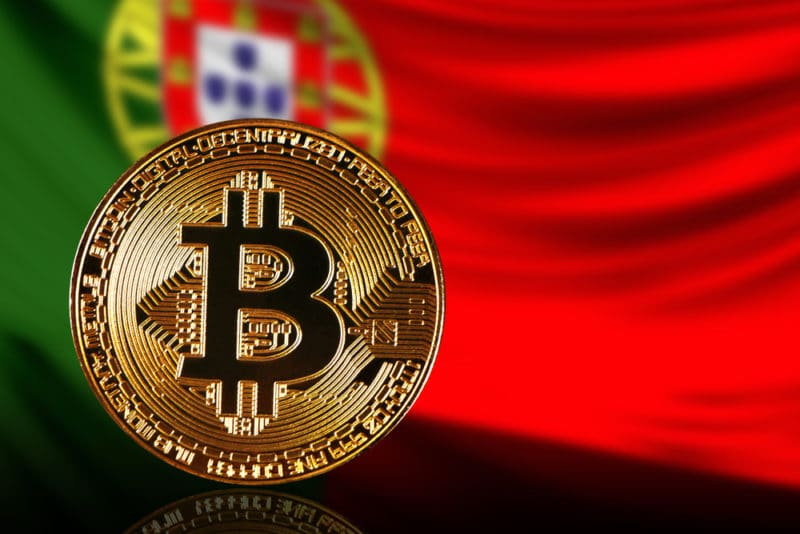
Is Trading Crypto in Portugal Tax-Free?

Last updated: December 22, 20232 Comments

The main reason for the enthusiasm about Portugal from people involved in the crypto space is that until 2022, crypto earnings are tax-free in Portugal.

Currently, crypto trading gains are taxed at 28%. However, crypto held for more than one year will not be taxed on disposal, which still means that Portugal is one of the best places to live in for crypto and NFT investors.

For a historical perspective, here’s the information on the previous situation which led to crypto gains for Portuguese residents being tax-free:


In a 2016 official ruling, the Portuguese Tax Authority analyzed the possible classification of cryptocurrencies within certain types of income that are subject to Portuguese tax, notably capital gains, capital income and income from business activities, and decided that, as a general rule, natural persons should not be taxed in respect of gains derived from the valuation or sale of cryptocurrencies, except that, in the case of sale of cryptocurrencies, if they correspond to the individual’s main recurrent activity, income obtained from such activity could be subject to Portuguese tax.  It should also be noted that this was only a partial decision that did not elaborate on other types of income derived from other cryptocurrency-related activities (e.g. mining and farming activities).

Have a look at the 2016 binding information as it’s the most relevant document for crypto investors. The linked document is in Portuguese, but it consists of the Portuguese tax authority’s reply to a direct question about crypto taxation.

I’ll provide a basic interpretation (in my own words, not a word-for-word translation) for those of you who don’t understand Portuguese:

Cryptocurrencies or virtual currencies are not technically considered money due to not having legal tender in Portugal. However, they can be exchanged, with a resulting profit, for real currencies (euros, dollars, or other) at exchanges, with the prices being determined by the demand for said cryptocurrency.

Thus, cryptocurrencies can generate different types of taxable income:

  1. Gains obtained from the purchase and sale of virtual currency units/exchange from the cryptocurrency to real currency (whatever it may be)
  2. For obtaining commissions for the provision of services related to obtaining cryptocurrency.
  3. For gains derived from sales of products or services in cryptocurrency

This document only considers the first scenario. This is the scenario faced by most crypto investors.

The profits from this activity are candidates for three categories of income types:

  1. Capital Gains – category G (e.g. sale of an apartment, sale of shares)
  2. Capital Yields – category E (e.g. rent of an apartment, dividends)
  3. Professional Income – category B (e.g. consultancy, freelance work)

Category G

Article 10 of the IRS Code specifies the cases that are taxable as capital gains. The key thing to note here is that when the legislator created this law, they resorted to a closed type, meaning that the law is specifically for the items mentioned and nothing else. Since cryptocurrencies do not fall within the specific cases mentioned, and their value is merely determined by supply and demand, therefore we can conclude that they are not taxable within this category.

Category E

This category clearly does not apply to the sale of crypto assets since it relates to yields on capital e.g. dividends, rental income. On the other hand, I would note that the income derived from services such as YouHodler and other crypto interest accounts would probably fall in this category. The same goes for income from crypto staking e.g. Ethereum staking.

Category B

Here’s the tricky one. Category B relates to the income of a self-employed worker. When a type of income can be classified as of category B or any of the other two categories considered here, category B would prevail. So in this category income can be taxed whether it comes from sales, whether it is capital income, or any other nature, pursuant to paragraph 1 of article 3 of the IRS Code.

To determine whether the income falls into this category, one would need to consider its frequency and the orientation of the activity towards obtaining profits. If the existence of the exercise of a business or professional activity is verified, then the taxpayer is obliged to comply with the declarative obligations contained in paragraph 6 of article 3 of the Code of IRS, i.e. to issue an invoice or equivalent document (electronic invoice-receipt), whenever you sell some product or provide a service.

The reason I say that it’s a tricky one is that crypto traders need to consider carefully whether their activities would be considered professional income or not. Here I would suggest that if you’re in doubt you should consult a tax lawyer. The general rule worldwide is that if trading is your main source of income and you are opening and closing positions on a daily basis you would most likely classify as a professional trader and your income will fall in this category – therefore not being tax-free.

The conclusion of the document states clearly that the sale of cryptocurrencies is not taxable in Portugal unless due to its frequency it constitutes a professional or entrepreneurial activity, which would make it taxable under category B.

This latter point also results in a lot of questions about whether or not one would be classified as a professional trader.

There are several factors that determine whether one’s trading activity is professional or not. These include:

  • Number of trades per day/week/month/year.
  • Holding period of financial products
  • Complexity of traded financial products
  • Number of trading platforms used
  • Debt-to-equity ratio, credit financing
  • Profit level and relationship to other income
  • Additional relevant trading activities (such as advice)
  • Traders’ main activity (where else do you get your money from?)

The fact that one of the factors listed above applies to you does not automatically make you a professional trader. Ultimately one must look at every individual’s overall situation, and this can only be reliably done by involving a tax lawyer who will give you a written opinion.

In summary, cryptocurrencies in Portugal are only taxable if you do it as a professional trading activity and therefore you need to open an activity as a trader and pay taxes according to your profit, otherwise they are considered non-taxable in Portugal due being unable to fit in any category.

Note that the above is true for individuals but not for corporate entities. If you hold your crypto in a Portuguese company, all the gains from cryptocurrency trading are taxed together with any other profit the company had, irrespective of whether the company is engaged in trading or whether it held the crypto as a long-term investment.

Contact me if you need to speak to a tax lawyer who knows how to deal with crypto. It’s very important that you assess your individual case before making any decisions.

Filed under: Cryptoassets, Money

  • « Previous Page
  • 1
  • …
  • 22
  • 23
  • 24
  • 25
  • 26
  • …
  • 95
  • Next Page »

Latest Padel Match

Jean Galea

Investor | Dad | Global Citizen | Athlete

Follow @jeangalea

  • My Padel Experience
  • Affiliate Disclaimer
  • Cookies
  • Contact

Copyright © 2006 - 2026 · Hosted at Kinsta · Built on the Genesis Framework