Jean Galea

Health, Wealth, Relationships, Wisdom

  • Start Here
  • Guides
    • Beginner’s Guide to Investing
    • Cryptocurrencies
    • Stocks
    • P2P Lending
    • Real Estate
  • Blog
  • My Story
  • Community
  • AI Consultancy
  • Search

Understanding Interest Rates: How They Shape the Economy and Influence Global Currencies

Published: December 23, 2024Leave a Comment

Interest ratesInterest rates are among the most influential tools in the financial world, wielded by central banks to regulate economic activity and maintain stability. But how do they work, and why do they matter so much? Moreover, how do decisions by the U.S. Federal Reserve (Fed) ripple beyond the United States, impacting currencies like the euro and the lives of people in other economic zones? Let’s break it down.

What Are Interest Rates?

At their core, interest rates represent the cost of borrowing money or the reward for saving it. For borrowers, they determine how much must be repaid in addition to the principal amount. For savers, they reflect the return on their deposits.

Central banks, like the Federal Reserve in the U.S. or the European Central Bank (ECB) in the Eurozone, set a benchmark interest rate. This rate acts as a reference for banks when lending money to one another and influences the rates offered to businesses and consumers.

Why Do Interest Rates Matter?

Interest rates are a critical lever in managing economic activity:

  1. Encouraging or Discouraging Spending:
    • When rates are low, borrowing becomes cheaper, encouraging individuals and businesses to take loans for spending or investment. This boosts economic activity.
    • Conversely, higher rates make borrowing more expensive, discouraging spending and investment, which can cool an overheating economy.
  2. Controlling Inflation:
    • Inflation occurs when prices rise too quickly, eroding purchasing power. Central banks may raise interest rates to reduce spending and slow inflation.
    • When inflation is too low or the economy is sluggish, central banks may lower rates to stimulate growth.
  3. Influencing Employment and Growth:
    • Lower rates generally lead to more business investments and job creation, while higher rates may slow growth and potentially increase unemployment.

Money Printing and Its Role in the Economy

Money printing, or quantitative easing (QE), is another powerful tool used by central banks, often in conjunction with interest rate policies. To understand this, we must first explore how money is created in the modern financial system.

How Money is Created

  1. Central Bank Creation:
    • Central banks create money electronically. For example, the Federal Reserve doesn’t physically print dollars but adds reserves to banks’ accounts in the central banking system.
    • This newly created money is typically used to purchase financial assets, such as government bonds, injecting liquidity into the economy.
  2. Fractional Reserve Banking:
    • Commercial banks play a significant role in money creation through lending. When you deposit money in a bank, only a portion of it is held in reserve; the rest is loaned out.
    • For example, if a bank holds $1,000 in reserves and has a reserve requirement of 10%, it can lend out $900. The borrower spends this money, which is then deposited in another bank, allowing further lending. This process effectively multiplies the initial deposit, expanding the money supply.
  3. Quantitative Easing (QE):
    • In QE, the central bank creates money to purchase long-term financial assets like government bonds or mortgage-backed securities.
    • This increases the balance sheets of financial institutions, encouraging them to lend more to businesses and consumers, which stimulates economic activity.

Impact of Money Printing

  1. Lowering Long-Term Interest Rates:
    • By buying large quantities of bonds, central banks increase their prices and reduce their yields, which are a proxy for long-term interest rates.
  2. Stimulating Borrowing and Spending:
    • The increased liquidity and lower borrowing costs encourage businesses and consumers to take loans and spend, boosting economic activity.
  3. Preventing Deflation:
    • In times of economic downturn, money printing helps prevent deflation by maintaining liquidity and ensuring there’s enough money circulating in the economy.
  4. Boosting Asset Prices:
    • QE often leads to higher stock and real estate prices as investors seek returns in riskier assets due to the abundance of cheap money.

Risks of Excessive Money Printing

While money printing can help stabilize economies during crises, excessive use can lead to problems such as:

  • Inflation:
    • When too much money chases too few goods, prices rise, eroding purchasing power.
  • Currency Depreciation:
    • Over-reliance on money printing can weaken a currency’s value compared to others, making imports more expensive.
  • Asset Bubbles:
    • Excess liquidity can inflate the prices of assets like stocks and real estate, leading to unsustainable bubbles that may burst.

During the COVID-19 pandemic, for example, significant money printing by central banks worldwide helped economies recover but also contributed to inflationary pressures in subsequent years.

The Fed’s Role in the Global Economy

The Federal Reserve’s decisions have a far-reaching impact, given the U.S. dollar’s status as the world’s primary reserve currency. Changes in the Fed’s interest rates can:

  1. Strengthen or Weaken the Dollar:
    • Higher U.S. rates attract foreign investors seeking better returns, increasing demand for the dollar and strengthening its value.
    • A stronger dollar can make U.S. exports more expensive and less competitive globally but reduces the cost of imports, benefiting U.S. consumers.
  2. Affect Capital Flows:
    • When the Fed raises rates, investors may pull money out of other economies to invest in the U.S., leading to capital outflows from emerging markets and potentially weakening their currencies.
  3. Set a Global Benchmark:
    • Many countries’ currencies and economic policies are tied, either directly or indirectly, to the dollar. A change in U.S. rates can force other central banks, like the ECB, to adjust their policies to maintain competitiveness or economic stability.

Impact on the Euro and the Eurozone

When the Fed changes rates, it can create significant ripple effects in the Eurozone:

  1. Exchange Rate Dynamics:
    • A stronger dollar often means a weaker euro. This can make European exports more competitive globally but increases the cost of importing goods priced in dollars, such as oil.
  2. Economic Policy Pressure:
    • If the Fed raises rates and the ECB keeps them low, the euro’s value may drop further. To counterbalance, the ECB might need to adjust its policies, even if it conflicts with domestic economic goals.
  3. Consumer Impact:
    • A weaker euro can lead to higher prices for imported goods, contributing to inflation in the Eurozone and reducing the purchasing power of consumers.

How It Affects People in the Eurozone

The decisions by the Fed can influence daily life in the Eurozone in several ways:

  • Cost of Living: Changes in exchange rates can affect the prices of imported goods, energy, and travel.
  • Savings and Loans: If the ECB adjusts its rates in response to the Fed, it can impact mortgage rates, savings returns, and credit availability for European citizens.
  • Job Markets: Currency fluctuations and capital flows can affect industries reliant on exports or foreign investments, influencing job opportunities.

When the Fed Announces Interest Rate Changes

The Federal Reserve’s Federal Open Market Committee (FOMC) typically meets eight times a year to discuss and decide on interest rate policy. These meetings are closely watched by investors, economists, and policymakers worldwide. The dates are pre-scheduled and publicly available, providing a regular cadence for market anticipation.

When the Fed announces a change in interest rates:

  1. Immediate Market Reaction:
    • Asset valuations, such as stocks, bonds, and real estate, can experience swift shifts. For instance, higher rates often lead to a drop in stock prices as borrowing costs rise and future cash flows are discounted more heavily.
    • Bond prices typically fall when rates increase because existing bonds with lower yields become less attractive compared to newly issued bonds.
  2. Impact on Risk Appetite:
    • Higher interest rates can reduce the appeal of riskier assets, such as equities and emerging market investments, as safer options like U.S. Treasury bonds offer better returns.
    • Conversely, lower rates can push investors toward riskier assets in search of higher yields.
  3. Real Estate Valuations:
    • Changes in rates directly influence mortgage costs. Higher rates often lead to cooling housing markets as borrowing becomes more expensive, while lower rates can spur demand and drive up property prices.
  4. Currency Movements:
    • The dollar’s value can rise following a rate hike as global investors seek higher returns, further impacting international trade and financial markets.

Understanding the timing and impact of these announcements is crucial for investors and policymakers, as they provide insight into the Fed’s assessment of the economy and its future trajectory.

The Interconnected World of Interest Rates

In our interconnected global economy, no country operates in isolation. Central bank policies, especially from major economies like the U.S. and the Eurozone, have far-reaching effects. For individuals and businesses, understanding these dynamics is essential for making informed financial decisions, whether it’s about investing, borrowing, or planning for the future.

Interest rates are more than just numbers; they are a reflection of economic health and a tool for shaping the path forward. As the Fed and other central banks navigate complex challenges, their decisions will continue to shape not only their domestic economies but also the global financial landscape.
Filed under: Banking, Money

Banking Options for Businesses in Malta – Is it Possible to Open an Account?

Last updated: March 11, 2026Leave a Comment

Malta has long attracted businesses looking for a favorable EU tax environment, an English-speaking workforce, and a well-developed regulatory framework. But there’s a catch that most incorporation guides gloss over: opening a business bank account is genuinely difficult, and for non-traditional businesses — crypto, gaming, fintech — it can be close to impossible with the mainstream banks.

This is the reality on the ground. Here’s how to navigate it.

Why Business Banking in Malta Is So Hard

The short version: Malta was placed on the FATF grey list in 2021, which triggered a sweeping tightening of banking compliance across the entire financial sector. Malta was removed from the grey list in June 2022, but the banks haven’t relaxed much. If anything, their appetite for risk has permanently shrunk.

The result is that even straightforward businesses — consultancies, e-commerce companies, software firms — can face rejection from the two largest banks. For anything touching crypto, gaming, or financial services, expect rejection as the default unless you come very well prepared.

The Big Banks: Bank of Valletta and HSBC Malta

These two institutions dominate Malta’s banking landscape, but both have adopted conservative low-risk policies that make them difficult to work with for new business customers.

Bank of Valletta (BOV) is the largest bank in Malta. For business accounts, their bureaucracy is formidable. Long processing times, in-person requirements, extensive documentation, and a tendency to decline anything they don’t immediately understand. Customer reviews reflect this consistently — the experience is slow, unpredictable, and often frustrating.

HSBC Malta has traditionally been the more professional of the two, but equally conservative when it comes to onboarding new business customers. Important context: in December 2025, HSBC Continental Europe signed a definitive agreement to sell its 70.03% stake to CrediaBank (a Greek bank, formerly Attica Bank) for €200 million. Completion is expected late 2026 or early 2027, pending MFSA/ECB/Bank of Greece approval. HSBC Malta continues to operate normally for now, but opening a new business account with an institution mid-acquisition is an additional variable you probably don’t need.

For most businesses, particularly non-Maltese-owned or non-traditional ones, neither of these banks is a realistic first stop.

Alternative Banks: Agribank and Sparkasse

For businesses that can’t get through the door at BOV or HSBC, there are alternatives worth approaching.

Agribank is the name that comes up most often among businesses that have been rejected elsewhere. It’s a smaller commercial and agricultural bank, but it has consistently been more willing to work with companies that have legitimate but non-traditional business models — including those with crypto exposure. If you need a Maltese IBAN that can actually send and receive transfers to crypto exchanges, Agribank is your best option among local banks.

Sparkasse Bank Malta, a subsidiary of the German Sparkassen Group, is primarily focused on private banking and investment services, but it does offer corporate accounts. It’s been helpful for some companies that have struggled with the larger institutions. More niche than Agribank for standard business banking, but worth a call if you have a wealth management or custody component to your operations.

Other banks operating in Malta include APS Bank, Lombard Bank, and BNF Bank. These can be worth approaching, particularly APS Bank which has been growing its retail and business offering. None are guaranteed easy wins, but they’re less bureaucratically rigid than BOV.

One thing to expect across all of these alternatives: application fees. It’s standard practice for smaller Maltese banks to charge a processing fee (often a few hundred euros) just to evaluate your application. They’ll also typically charge higher ongoing fees than the big banks. Factor this into your cost-benefit calculation.

The Practical Option: Wise for Business

For many Malta-registered businesses — especially those with international transactions — Wise Business is the most sensible starting point.

Wise is not a bank in the traditional sense, but it offers:

  • A multi-currency business account with a real EU IBAN
  • Local account details in EUR, GBP, USD, and other currencies
  • Debit cards for company spending
  • Transparent, low fees on currency conversions — far better than any Maltese bank’s rates
  • Fast, simple account opening with no branch visits

For companies doing international transactions — paying contractors abroad, receiving payments from foreign clients — Wise is genuinely excellent. Many companies operating out of Malta use it as their primary or only banking solution, particularly in the early stages before they’ve navigated the local banking maze.

The limitation: Wise doesn’t offer business loans, overdraft facilities, or the kind of local banking infrastructure that some clients or partners will expect. If you’re dealing with Maltese government entities or larger local businesses, having a local Maltese IBAN from an actual bank still carries weight.

Open a business account with Wise

Crypto and Gaming Businesses

If your business operates in crypto or online gaming, be aware that even getting through Malta’s regulatory licensing process doesn’t solve your banking problem.

Malta Gaming Authority (MGA) licensing and VFA/CASP licensing from the MFSA are real achievements — they give you EU regulatory standing and the ability to operate. But they don’t come with a bank account. BOV and HSBC will still decline you. Even more accommodating banks will subject you to enhanced due diligence, extended timelines, and higher fees.

For crypto businesses, Agribank is the most commonly cited Maltese banking option that will actually engage. Beyond that, many businesses in this space rely on specialized payment processors and EMI (Electronic Money Institution) providers that operate across the EU rather than trying to force a relationship with a traditional Maltese bank.

The practical playbook for most crypto or gaming companies operating out of Malta:

  • Wise or Revolut Business for day-to-day operations and international payments
  • Agribank for a local Maltese IBAN and crypto-adjacent transfers
  • A specialist payment processor for merchant banking if you’re handling customer funds

The Honest Summary

Business banking in Malta remains harder than it should be. The FATF grey list period did lasting damage to the banks’ risk appetite, and while the country’s regulatory standing has improved, the banks haven’t noticeably loosened up.

If you’re a clean, simple business — consulting, software, professional services — you have a reasonable shot at BOV or APS Bank with a complete application and patience. If you’re in crypto, gaming, or anything else that raises a compliance eyebrow, start with Wise for your operational banking needs, work on Agribank as your local option, and go in with realistic expectations about timelines and fees.

It’s not a great situation, but it’s a manageable one if you plan for it upfront rather than discovering it after you’ve already incorporated.

Filed under: Banking, Money

The Best Online Bank Accounts in Europe in 2026

Last updated: March 09, 20264 Comments

Best Online Bank Accounts in Europe

If you’ve spent any time dealing with traditional banks in Europe, you already know the problem. Hidden fees. Useless customer support. Weeks-long waits for basic account changes. And if you’re an expat, a freelancer, or anyone with financial activity that crosses a border? Good luck.

I’ve had some bad experiences with banks in Malta — extreme levels of due diligence and no support for crypto transactions — and also banks in Spain: unprofessionalism, unexpected charges, outright discrimination, and account closures. The truth is that traditional banking is not going through its finest moment. Many European countries have a collection of shitty banks, and it’s wiser to use one of these online banks than hassle with the local ones.

The good news is that a handful of fintech companies have built genuinely better alternatives. I use all four of the banks on this list, and between them they cover pretty much every financial need a person living in Europe could have — from day-to-day spending to international transfers to investing.

Here’s my ranking, based on real daily use.


1. Revolut — Best Overall Online Bank in Europe

Revolut is my primary account. I’ve had it ever since they launched and have encountered zero problems with them. With over 70 million customers worldwide and a full EU banking license through its Lithuanian subsidiary, Revolut is the closest thing Europe has to a financial super-app.

Deposits are protected up to €100,000 under EU deposit guarantee schemes — the same protection you’d get from a high-street bank.

What makes Revolut stand out

The feature set goes well beyond basic banking. Within one app you get currency exchange at interbank rates, commission-free stock and crypto trading, eSIM data plans for travel, junior accounts for kids, travel insurance, and airport lounge access on the higher tiers. For anyone who travels regularly or deals with multiple currencies, it replaces a stack of separate products.

Revolut offers five plans ranging from a free Standard account up to the Ultra tier at around €45/month. The free plan is genuinely useful — you get a real IBAN, a debit card, and fair currency exchange within monthly limits. Paid plans (Plus at €3.99/month, Premium at €8.99/month, Metal at €15.99/month) remove limits and stack on perks like cashback, better exchange allowances, and insurance bundles.

The one downside

Revolut is mobile-only. There’s no desktop web app, which is occasionally frustrating if you want to manage your finances from a computer. It’s a real gap, and if that’s important to you, N26 (below) handles it better.

Read the full Revolut review for a deep dive into every feature and plan.

Open a Revolut Account


2. N26 — Best for Desktop Access and Regulatory Confidence

N26 is my secondary account. It’s a German bank regulated by BaFin, one of the most respected financial regulators in Europe, and that matters — both for peace of mind and for certain use cases where a German banking license carries more weight than a Lithuanian one.

With over 8 million customers across Europe and €100,000 deposit protection, N26 sits firmly in the tier of established, trustworthy neobanks.

Where N26 wins

The standout feature is desktop access. Unlike Revolut, you can log into N26 via a browser on any computer and do everything you’d do on mobile — check balances, make transfers, manage cards. For anyone who works at a desk all day, this is a significant quality-of-life difference.

N26 has also integrated Wise for international transfers, which means you get competitive exchange rates and low fees on cross-border payments without leaving the app. The interface is clean and unfussy — N26 has always prioritized doing the basics exceptionally well over loading the app with features.

Plans run from a free Standard account up to Metal at €16.90/month, with Smart (€4.90/month) and Go (€9.90/month) in between. N26 operates in 24 European markets — worth noting that it exited the UK and US in 2022 and is now exclusively focused on Europe.

The tradeoff

N26 is leaner than Revolut on features. No crypto, no stock trading, no eSIMs. If you want a dedicated everyday bank account with strong regulation and desktop access, it’s excellent. If you want a financial super-app, Revolut covers more ground.

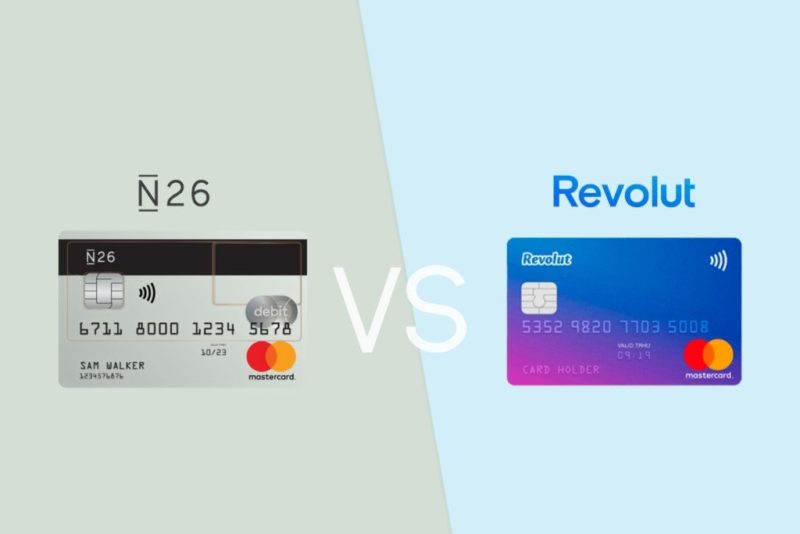
See how they compare side by side: N26 vs Revolut. Or read the full N26 review.

Open an N26 Account


3. Wise — Best for International Transfers and Multi-Currency

Wise is not a bank in the traditional sense — it’s an Electronic Money Institution authorized by the FCA in the UK and licensed across the EU. That means your balance is not covered by a deposit guarantee scheme the way it would be at Revolut or N26. Wise safeguards your funds (they’re held separately from company funds), but it’s a distinction worth understanding.

That said, Wise is the best product on this list for a specific job: moving money across currencies and borders as cheaply as possible.

What Wise does better than anyone

Wise uses the mid-market exchange rate — the real rate you see on Google — and charges a small, transparent fee. Banks and most rivals mark up the exchange rate and hide the cost. Wise doesn’t. Over time, and especially if you’re moving significant sums, the difference is material.

Beyond transfers, Wise gives you local bank account details in over 10 currencies — meaning you can receive payments in USD, GBP, EUR, AUD, and others as if you had a local account in each country. You can hold balances in over 40 currencies simultaneously and earn interest on EUR, GBP, and USD holdings.

Wise is publicly listed on the London Stock Exchange, which brings a level of transparency and accountability that private fintechs don’t have. As of late 2025, customers held over £25 billion in Wise accounts — it’s not a startup experiment anymore.

Who it’s for

Freelancers invoicing international clients. Anyone receiving a salary in a foreign currency. Expats sending money home. Digital nomads who need to receive and spend in multiple currencies. If any of that describes you, Wise is essential — not optional.

For a complete breakdown, read the full Wise review.

Open a Wise Account


4. bunq — Best for Digital Nomads and Sustainability-Focused Users

bunq is the Dutch neobank that doesn’t get as much attention as Revolut or N26, but it earns its place on this list. It holds a full banking license from the Dutch Central Bank (DNB) and offers €100,000 deposit protection — solid regulatory footing.

Available in 27 EU and EEA countries, bunq has carved out a niche as the bank for people who care about where their money goes — both financially and ethically.

What bunq does differently

The multi-IBAN feature is genuinely useful: you can create up to 25 separate IBAN accounts within one bunq account, making it easy to separate spending categories, savings goals, or business and personal finances. Paid plans include ZeroFX — no foreign exchange markup — and weekly interest payments on your balance, rather than the monthly or annual schedules most banks use.

bunq also plants trees based on your spending, which sounds gimmicky but is one of those small things that adds up if you spend a lot. For users who want their bank to reflect their values, it’s a differentiator.

Plans run from a free tier up to bunq Elite at €18.99/month, with Core (€3.99/month) and Pro in between. The free plan is more limited than Revolut’s free tier, so most users who want the full experience will be on a paid plan.

Who it’s for

Digital nomads, frequent travelers, and anyone who wants multiple sub-accounts without opening multiple bank accounts. Also a strong choice if BaFin or Lithuanian regulation feels too mainstream and you’d prefer Dutch Central Bank oversight.

Read the full bunq review for the complete picture.

Open a bunq Account


My Setup — and What I’d Recommend

Here’s how I actually use these: Revolut handles 90% of my daily spending — it’s on my phone, it’s on my Apple Watch, and the exchange rates are unbeatable for travel. N26 is my backup account and the one I use when I need to do something on my laptop without picking up my phone. Wise is non-negotiable for international transfers — I’d lose real money using anything else for that.

If you’re starting fresh, open Revolut first. It covers the most ground for free, and the paid plans are worth it once you see what you’re getting. Add Wise if you do anything with foreign currencies. And consider N26 if desktop access or German regulation matters to you.

You don’t need all four. But you almost certainly need at least one of them — and probably two.

If you’re based in Spain specifically, I’ve also put together a guide to the best commission-free banks in Spain for local options. And if crypto is part of your financial life, check out my roundup of crypto-friendly banks in Europe.

Filed under: Banking, Money

The Best Crypto-Friendly Banks in Europe

Last updated: March 10, 202643 Comments

The conversation around banks and crypto in Europe has changed completely since I first wrote about this topic back in 2020. Back then, the problem was simple and frustrating: banks were blocking transfers to exchanges, freezing accounts, and treating anyone who touched Bitcoin like a suspected money launderer. Finding a bank that would let you move money to Coinbase without interrogating you was a genuine challenge.

That era is largely over. Here’s what happened and what actually matters now.

Why Things Are Different in 2026

The single biggest shift is MiCA — the EU’s Markets in Crypto-Assets Regulation, which came into full force on December 30, 2024. MiCA requires crypto asset service providers (CASPs) to obtain an EU license to operate. Exchanges like Coinbase, Kraken, Bitpanda, and Bitstamp are now regulated financial entities operating under the same kind of licensing framework as brokers and investment firms.

This matters for banking relationships because it removed the ambiguity that banks used to justify blanket refusals. When your compliance department asks “who is this transfer going to?”, the answer is now “a licensed, regulated financial institution operating under EU law” — not some offshore entity with no regulatory oversight. Banks that used to say no on principle have far less justification to do so.

There’s also the Travel Rule, which has been in effect since late 2024. It requires exchanges to collect and share sender and recipient information on crypto transfers, the same way wire transfers work. Ironically, this layer of compliance has made banks more comfortable, not less. Transparency reduces the risk flags that triggered account reviews.

The practical result: for most European crypto investors in 2026, transfers between a regular bank and a MiCA-licensed exchange work without drama. The 2020 era of getting your account frozen for sending €500 to Coinbase is not the normal experience anymore.

That said, there are still differences between banks — and choosing the right one does matter. Some banks still flag large inflows from exchanges. Some are proactive and crypto-integrated. Others are indifferent but functional. And some traditional banks in certain countries remain stubbornly behind.

The Best Banks and Fintechs for Crypto Users in Europe

Revolut

Revolut is the easiest all-in-one option for crypto users in Europe, and it has come a long way from where it started.

In October 2025, Revolut secured a MiCA license from Cyprus’s financial regulator (CySEC), enabling it to offer fully regulated crypto services across all 30 countries in the European Economic Area. That’s on top of the EU banking license it already holds out of Lithuania. It now supports over 280 tokens, zero-fee staking, and direct stablecoin conversions at 1:1 rates with no spread.

For day-to-day use, Revolut lets you buy and sell crypto directly inside the app, send and receive from external wallets, and connect to platforms like Trust Wallet for instant purchases. Transfers in from MiCA-regulated exchanges are accepted. You can withdraw to self-custody wallets, which is a significant improvement over the old model where your crypto was held with Revolut and couldn’t leave.

The practical advantage is consolidation: your EUR account, crypto exposure, and exchange on-ramps all live in one app. If you’re a retail investor who wants convenience above all else, Revolut is where to start.

Read my full Revolut review for a detailed breakdown.

N26

N26 is a solid, no-friction option if you want a clean European bank account that doesn’t treat your crypto activity as suspicious.

N26 permits transfers to and from regulated crypto exchanges without enforcing blanket restrictions. It holds a full German banking license, operates under BaFin supervision, and SEPA Instant transfers are free for EUR transactions. It has also quietly built in crypto trading through a partnership with Bitpanda, giving you access to over 350 tokens directly from the N26 app — though that’s more of a side feature than a core use case.

Where N26 stands out is simplicity. It’s a clean, well-designed neobank that works the way you expect, doesn’t create friction around crypto-related transactions with regulated platforms, and is widely available across Europe. If you want to keep banking and crypto separate (a setup I’d actually recommend — more on that below), N26 works well as your primary account.

See the full N26 review here.

Wise

Wise’s position on crypto is nuanced and worth understanding clearly before you rely on it.

Wise does not allow you to send money to crypto exchanges — that remains against its acceptable use policy. However, it does accept incoming transfers from regulated platforms. Specifically, Wise allows withdrawals from exchanges that are regulated and/or supervised in the EU or UK. In practice, this covers the major MiCA-licensed exchanges: Coinbase, Kraken, Bitstamp, Bitpanda, and others.

Where Wise genuinely shines for crypto users is as a multi-currency receiving account. If you’re withdrawing from an exchange in USD, GBP, and EUR, Wise’s borderless account handles all three without conversion fees at the point of receipt. For anyone operating across multiple currencies — which describes a lot of European crypto investors who use US-domiciled platforms — this is genuinely useful.

Think of Wise as a complement to your main account rather than a primary banking solution for crypto activity.

Full review: Wise Borderless review.

Bankera

Bankera is a Lithuanian neobank built specifically for the crypto and fintech sectors, and it’s one of the more interesting options on this list for anyone with serious crypto activity.

It offers dedicated personal and corporate IBAN accounts, SEPA and SWIFT payments, and physical and virtual cards. Unlike Revolut or N26, Bankera was designed from day one to serve individuals and businesses involved in crypto and digital assets — it doesn’t just tolerate crypto activity, it’s built around it.

For retail investors, the practical benefit is zero friction on exchange transfers in either direction. No unexpected holds, no compliance calls because you received €20,000 from Kraken. Bankera is also the banking partner of SpectroCoin, its sister crypto exchange, which makes the whole ecosystem quite integrated.

It’s not a mass-market product with a polished consumer app, and it won’t replace Revolut for convenience. But if you’re moving larger amounts between fiat and crypto regularly, having an account with Bankera specifically for that purpose is a smart setup.

Bank Frick (Liechtenstein)

Bank Frick is in a different category from the neobanks above. It’s a traditional, fully licensed bank in Liechtenstein — one of the most crypto-native regulated financial institutions in Europe, and it has been since well before it was fashionable.

Bank Frick received MiCA authorization from the Liechtenstein Financial Market Authority and offers direct crypto trading and custody, tokenization services, staking (including for ETH, SOL, and others), and institutional-grade settlement infrastructure. Its assets under management grew 27.5% between 2023 and 2024, driven almost entirely by crypto-focused clients.

This is not a consumer product. Bank Frick is for high-net-worth individuals, family offices, and businesses that want a regulated bank relationship that includes crypto custody, tokenization, and sophisticated financial services under one roof. If you’re at the stage where you’re thinking about holding significant crypto through a regulated custodian rather than self-custody, Bank Frick is one of the strongest options in Europe.

Banks That Still Cause Problems

MiCA improved the legal landscape, but it didn’t change institutional culture overnight. Several traditional banking systems in Europe continue to cause disproportionate friction for crypto users.

Spain, where I’m based, is an interesting case. The major banks — BBVA, Santander, CaixaBank — have technically complied with MiCA timelines, but the reality on the ground varies. BBVA has actually been one of the more forward-looking large banks, launching crypto services directly. Others are more conservative and compliance teams at branch level can still flag transfers to exchanges, especially large inflows, requesting source-of-funds documentation.

Malta is the example I know best from personal experience, and it remains a cautionary tale. Despite the “blockchain island” branding that the government pushed for years, Malta’s banking sector was and still largely is hostile to crypto. Bank of Valletta and HSBC Malta were notorious for blocking transfers and closing accounts of anyone with visible crypto activity. Local bank employees had no idea what they were dealing with — it wasn’t policy based on analysis, it was reflexive fear of the unfamiliar. The few banks that nominally accepted crypto business (like Agribank) were charging a premium for the privilege. The blockchain island narrative was a marketing exercise that had almost no connection to how the country’s banking infrastructure actually operated.

Italy follows a similar pattern to Malta at the retail level — large traditional banks are slow to adapt and compliance departments in branch offices can still create friction.

If you’re living or banking in these countries and dealing with crypto, the practical answer is: don’t fight your main bank. Use a fintech account (Revolut, N26, Bankera) for your exchange activity and keep your traditional bank clean.

Practical Setup That Actually Works

The most sensible approach for European crypto investors in 2026 is to separate concerns rather than try to do everything through one account.

  • Main bank account — your traditional bank or a solid neobank like N26, used for salary, rent, everyday spending. Keep this account clean and don’t run exchange withdrawals through it.
  • Dedicated crypto on/off-ramp account — a separate account (Revolut, Bankera, or similar) that you use specifically for transfers to and from exchanges. If your bank’s compliance team ever questions activity, this account is easy to explain: it exists for crypto and has a clean paper trail.
  • Multi-currency receiving — Wise borderless if you’re withdrawing in multiple currencies from non-EUR exchanges.

The reason for separating your main account from crypto activity isn’t fear — it’s documentation hygiene. When you cash out a significant amount from crypto after years of trading, you’ll need to show a bank where that money came from. A dedicated account with a clear, continuous transaction history is far easier to explain to a compliance officer than a main account with years of mixed activity.

On that note: MiCA-licensed exchanges now produce proper transaction documentation. Coinbase, Kraken, Bitstamp, and others all provide downloadable transaction histories and tax reports. Keep these. If a bank requests source-of-funds documentation on a large inflow, a clean exchange statement from a regulated platform answers the question immediately.

What to Avoid

The one practice that will still get you flagged by any bank in Europe is using unregulated exchanges or peer-to-peer platforms for significant fiat movements. P2P crypto trading creates fiat transactions that lack the documentation trail that bank compliance departments need to see. Even if your activity is entirely legitimate, bank AML systems are pattern-matching on behavior — and irregular cash-like transfers from individual counterparties trigger reviews.

Stick to regulated, MiCA-licensed exchanges for any meaningful fiat on or off-ramp. The compliance overhead of doing otherwise is not worth it.

The Bottom Line

Europe in 2026 is genuinely a better environment for crypto investors than it was five years ago. MiCA created a licensing framework that has brought the major exchanges into the regulated financial system, and most banks have adjusted their posture accordingly. You no longer need to hunt for obscure banks willing to tolerate your Coinbase transfers.

What does still matter is how you structure your accounts, which banks you choose for different purposes, and whether you’re working with regulated platforms that can back up your transactions with proper documentation.

For most retail investors, Revolut covers the vast majority of use cases. Add a Wise account for multi-currency receiving and you have a clean, functional setup. If your activity is more substantial, Bankera or Bank Frick are worth looking at seriously.

The problem has shifted from “find a bank that won’t block you” to “find the right setup for your level of activity.” That’s a much better problem to have.

What’s your experience with banks and crypto in Europe? Has MiCA actually made a difference where you are? Let me know in the comments.

Further reading:

  • The most crypto-friendly countries in Europe
  • Best cryptocurrency trading apps
  • How to buy Bitcoin
  • Best online bank accounts in Europe

Filed under: Banking, Cryptoassets, Money

N26 vs Revolut – Why I Think There is a Clear Winner

Last updated: March 11, 202614 Comments

N26 vs Revolut

Back in 2020, I wrote a comparison of N26 and Revolut and concluded that N26 was the better bank. At the time, I stood by that call — N26 felt more like a real bank, had cleaner design, and Revolut was still finding its footing.

A lot has changed since then. I still use both, and I’ve been meaning to revisit this for a while. The honest answer in 2026 is that my conclusion has flipped. Revolut has become my primary account for most things, and I think for the majority of people comparing the two, it’s now the stronger choice — though N26 hasn’t stood still, and there are still specific situations where I’d recommend it.

This is a full rewrite, not a refresh. Let me walk you through how I see it now.

Quick Overview: Where Each Bank Stands Today

N26

N26 was founded in 2013 in Berlin and has around 8 million customers. It holds a full German banking license regulated by BaFin, which means your deposits are protected up to €100,000 under the German deposit guarantee scheme. That’s real, solid protection. I’ve written a full N26 review if you want a deeper look at the platform on its own terms.

The headline story for N26 over the past few years has been retreat rather than expansion. It exited the UK market in 2022 and shut down its US operations the same year. It’s now focused exclusively on select European countries. If you’re outside Europe, N26 simply isn’t an option for you.

Revolut

Revolut was founded in 2015 in London and has grown to over 65 million customers across 48+ countries — including the US, UK, EU, Australia, and Japan. It operates as a global financial super-app, and that description is more accurate than ever. My standalone Revolut review covers the platform in more detail if you want to go deeper before deciding.

In Europe, Revolut operates through Revolut Bank UAB, a fully licensed European bank based in Lithuania, regulated by the Bank of Lithuania and the European Central Bank. EU deposits are protected up to €100,000 under the Lithuanian Deposit Guarantee Scheme. In the UK, Revolut’s full banking license has been in progress but delayed due to regulatory concerns — something worth keeping in mind if you’re UK-based.

The scale difference between the two is striking. Revolut has grown roughly eight times over since I last wrote this piece.

Deposit Protection and Licensing

In 2020, this was a clear win for N26. Revolut wasn’t a licensed bank in the EU, which meant your money wasn’t covered by a deposit guarantee. That was a legitimate reason to be cautious.

The gap has narrowed significantly. Revolut now holds a full EU banking license and offers the same €100,000 deposit guarantee as N26 for European customers. If you’re in the EU, deposit protection is no longer a differentiator — both banks offer it.

The remaining asterisk is the UK. Revolut’s full UK banking license has faced delays, with regulators citing concerns about risk management controls keeping pace with the company’s rapid expansion. N26 isn’t available in the UK at all anymore, so this comparison only matters to UK residents choosing between Revolut and something else entirely.

For European customers: this section is now essentially a draw.

Plans and Pricing

Both banks follow a tiered freemium model. Here’s how they compare:

N26 Plans

  • Standard — Free
  • Smart — €4.90/month
  • You — €9.90/month
  • Metal — €16.90/month

Revolut Plans

  • Standard — Free
  • Plus — €3.99/month
  • Premium — €7.99/month
  • Metal — €13.99/month
  • Ultra — €45/month

Revolut’s plans are slightly cheaper at most tiers. The Ultra plan at €45/month is clearly aimed at heavy travelers and power users — it includes perks like airport lounge access and higher-tier concierge services. The Standard plan on both is genuinely usable without paying anything, though Revolut’s free tier has more built into it.

If you’re comparing like-for-like tiers, Revolut wins on price and feature density at almost every level.

Foreign Exchange and Travel

This was one of the original reasons both banks became popular, and it remains a strong point for both.

Revolut exchanges currency at the interbank rate during weekday market hours, which is about as good as it gets. On weekends and for some exotic currencies, there’s a small markup — typically around 1%. For the currencies most travelers actually use, the rates are excellent.

N26 uses Mastercard exchange rates for card spending, which are competitive but not quite at the interbank rate. Still much better than a traditional bank, but Revolut has the edge on raw exchange rate quality.

For travel more broadly, Revolut has built out a much more comprehensive suite of features. Higher-tier plans include travel insurance, airport lounge access via LoungeKey, and the ability to purchase travel eSIMs directly from the app so you’re connected the moment you land somewhere new. N26’s higher plans also include travel insurance, but the breadth of Revolut’s travel-specific features is in a different league.

If you travel frequently, Revolut is the more useful companion.

International Transfers

N26 uses Wise (formerly TransferWise) for international transfers outside SEPA. That’s a solid choice — Wise is one of the best services for cross-currency transfers, offering transparent fees and competitive rates. The integration is seamless from within the N26 app.

Revolut handles international transfers natively, with competitive rates and broad currency support. The experience is smooth, and for most transfers you’re getting a good rate without needing to leave the app.

Both get the job done well. N26 essentially delegates to the best third-party service, while Revolut handles it in-house. For the end user, the practical difference is minimal. I’d call this roughly even.

Features and Tools

This is where the gap is widest, and it’s not close.

N26 keeps things relatively focused: Spaces (virtual sub-accounts for saving toward specific goals), shared spaces for splitting expenses, basic savings accounts, and a clean spending overview. It’s a solid set of features for day-to-day banking. What you don’t get is much beyond that.

Revolut has become a financial super-app in the most literal sense. On top of standard banking, it offers:

  • Crypto trading — buy, sell, and hold a range of cryptocurrencies directly in the app
  • Stock trading — invest in individual stocks and ETFs
  • Savings vaults — earn competitive interest rates on money you set aside (check the app for current rates)
  • Group vaults — shared savings goals with others
  • Junior accounts — accounts for children with parental controls
  • Travel eSIMs — buy mobile data for your destination directly in the app
  • Stays — book accommodation through the Revolut app
  • Salary advance — access part of your salary before payday
  • Robo-advisor — automated investing based on your goals and risk tolerance
  • LoungeKey access — airport lounge entry on higher-tier plans

Whether you use all of this or not is beside the point. The fact that it’s there — and works well — means Revolut is capable of replacing more financial apps and services in your life. I’ve found myself using it for things I never expected to handle from a neobank.

N26 isn’t trying to be a super-app, and that’s a deliberate choice. But when comparing features head-to-head, Revolut wins by a significant margin.

Desktop and Browser Access

Here’s where N26 has a genuine, practical advantage that I think gets underreported in most comparisons.

N26 has a full web interface. You can log in from any browser, see your transactions, manage your account, and do most of what you’d do in the app. If you’re on a laptop, working from a desktop, or just prefer managing finances on a larger screen, that option exists.

Revolut is app-only. There is no web dashboard. You manage everything from your phone. For most people most of the time, this isn’t a problem — but there are moments when it’s a real frustration. Trying to copy an IBAN from your phone to a laptop, reviewing longer transaction histories, or doing anything that benefits from a larger screen requires you to work around it.

This is a meaningful win for N26, and one that Revolut still hasn’t addressed after years of users asking for it. It tells you something about where Revolut’s priorities are — they’re focused on the mobile-first demographic — but it does create friction for users who live across multiple devices.

Customer Support

Both banks have had a rocky history with support, and both have improved. The honest answer is that neither is exceptional, though both have gotten better at resolving issues through in-app chat.

Revolut has significantly expanded its support team as it has grown. Response times through the chat are generally faster than they used to be, though they can still vary depending on the complexity of your issue and the time of day. For anything genuinely urgent involving account access or a blocked card while traveling, the experience has improved from the early days when support was nearly nonexistent.

N26 has similarly invested in support infrastructure. The in-app chat is the primary channel, and they’ve added phone support for certain account types and situations.

Neither bank has cracked this fully. If you want to call someone immediately and speak to a human being, you’ll likely find both frustrating at times. That said, for the kinds of issues that actually come up day-to-day — a chargeback, a question about a transaction, updating account details — both handle it adequately.

This is roughly a draw, with a slight nod to N26 for having a less chaotic support reputation historically.

Security

Both banks take security seriously and offer a comparable baseline of protections.

Standard on both: biometric authentication (Face ID / fingerprint), instant card freeze, real-time transaction notifications, and the ability to set spending limits. Both allow you to disable and re-enable contactless payments, online transactions, and ATM withdrawals directly from the app.

Revolut adds a few additional layers: the ability to create single-use virtual cards for online shopping (which limits exposure if a site is compromised), and more granular controls over which transaction types are permitted at any given time.

N26 offers a strong default security setup with a slightly simpler interface for managing it. For most users, both provide more control than they’d get from a traditional bank.

Revolut has a slight edge on security features, mainly because of virtual card functionality and additional controls, but N26 is not lacking in the essentials.

Who Should Use What

After spending years with both accounts, here’s how I’d break it down:

Choose Revolut if:

  • You want the best exchange rates for travel and international spending
  • You want one app to handle banking, investing, crypto, savings, and more
  • You’re based outside Europe and need a neobank option (N26 simply isn’t available)
  • You travel frequently and want travel insurance, eSIMs, and lounge access in one place
  • You want junior accounts for your kids
  • You’re comfortable managing finances entirely from your phone

Choose N26 if:

  • You prefer desktop/browser access for managing your finances
  • You want a focused banking experience without the complexity of a super-app
  • You value the German BaFin regulatory framework and find the Revolut Lithuania setup less reassuring
  • You primarily want a clean, simple bank account without lots of adjacent features

There’s also a third option worth considering: use both. That’s what I do. N26 for situations where I need desktop access or want a simple, separate account for specific purposes. Revolut for day-to-day spending, international travel, and anything requiring currency exchange.

My Verdict: Revolut is Now the Clear Winner

In 2020, I picked N26. The main reasons were the stronger regulatory standing, the more established banking feel, and Revolut’s uneven reputation at the time for customer support and transparency.

In 2026, the landscape looks different. Revolut now has a full EU banking license with deposit protection matching N26’s. It has 65 million customers and operates in 48+ countries. The feature set is in a completely different category — crypto, stocks, eSIMs, savings vaults, junior accounts, travel insurance, robo-advisory — and the app is genuinely polished.

N26 has focused and refined rather than expanded. That’s not a bad strategy, but it means the gap in features has widened significantly. The company has also pulled back from markets rather than pushing into new ones, which limits who can even use it.

The one area where N26 still has a clear edge is desktop access — and I do use that. But it’s not enough to make N26 the better overall recommendation for most people.

Revolut has earned the top spot. If you’re starting fresh and choosing one, start with Revolut. If you’ve been using N26 and are wondering whether to switch, the features and exchange rates alone make Revolut worth trying — you can always keep both running while you decide.

If you want to sign up for N26, you can do so here. And if you’re sending money internationally, Wise is still worth having alongside either bank for larger cross-currency transfers where the rates and fee transparency really matter.

Filed under: Banking, Money

  • « Previous Page
  • 1
  • 2
  • 3
  • 4
  • Next Page »

Latest Padel Match

Jean Galea

Investor | Dad | Global Citizen | Athlete

Follow @jeangalea

  • My Padel Experience
  • Affiliate Disclaimer
  • Cookies
  • Contact

Copyright © 2006 - 2026 · Hosted at Kinsta · Built on the Genesis Framework