Jean Galea

Health, Wealth, Relationships, Wisdom

  • Start Here
  • Guides
    • Beginner?s Guide to Investing
    • Cryptocurrencies
    • Stocks
    • P2P Lending
    • Real Estate
    • Forex
    • CFD Trading
    • Start and Monetize a Blog
  • My Story
  • Blog
    • Cryptoassets
    • P2P Lending
    • Real estate
  • Consultancy
    • Consult with Jean
    • Consult a Lawyer on Taxation and Corporate Setups
  • Podcast
  • Search

Computers, Consoles, Games and How They Shaped My Future

Last updated: August 31, 20258 Comments

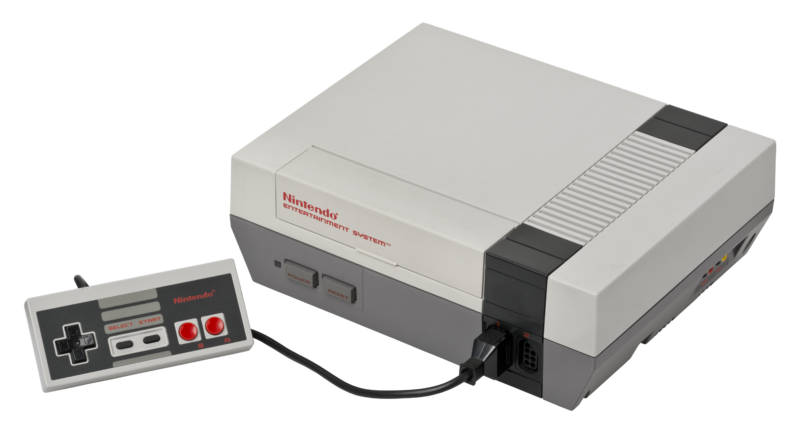
Since early on in my childhood, I’ve had electronic toys and computers to play with. My parents were very avant-garde in this area, although none of them had any involvement in the technology sector. As I’m never short on ideas and interests to pursue, I’ve lately decided to dedicate one theme for side projects each month. This month’s project was gaming and retro computing.

The first step was to look back in my archives and try to remember all the computer games I played as well as the systems I owned over the years. Digging in my drawers and cupboards I managed to unearth most of them; luckily the vast majority are still in excellent condition.

Each machine or device I found took me on a trip back in time and I couldn’t resist switching them back on after so many years and spending some time on each. It’s amazing how skills can lie dormant in us for many years but can then be re-activated instantly once the appropriate trigger is pressed. As I switched on each console or game, all the commands and history of each game rushed back into my mind and it was like no time had passed at all. Pretty powerful and amazing stuff indeed.

That got me into a deeper mood as I reflected on the influence that these games and devices had on me while I was growing up. I’d say the most intensive of my gaming days was between the ages of 6-13.

This may come as a surprise to millions of parents. https://t.co/mGB6EzECE7

— Inc. (@Inc) March 2, 2021

To give some context I’m going to proceed in listing the various devices I used or had access to, as well as some of the best games for each. This is going to be a personal post but perhaps it will also rekindle some fond memories of others in my age group.

[Read more…]

Filed under: Thoughts & Experiences

🇲🇹 Why I Left Malta

Last updated: January 13, 2026789 Comments

Originally published: August 2017

Note: I wrote another article about Malta in 2022, sharing my latest views and feelings about the situation there.

A few years ago I decided to leave my home country and try my luck abroad. This wasn’t a spontaneous decision at all, rather it was the result of many years during which my disillusion and frustration with Malta had been growing and growing until I felt I had to take action or I would fall into a very negative perpetual state of mind.

Of course, I have many friends and dear family back in Malta, but honestly, I don’t miss living there. I make it a point to visit at least once a year and I usually have a good time catching up with friends and spending time with my family, but I don’t feel like I would like to go back and live there.

As you can imagine, several friends and family members ask me why this is so. I’ve finally found some time to really list the reasons for my moving away from Malta and why I don’t feel as comfortable living there as I do in other places.

While this post will be very honest, I’m afraid that some readers will find it too negative or downright offensive. Please keep in mind that this is an honest outpouring of my thoughts and feelings and is in no way meant to attack anyone or show any lack of appreciation. I did grow up in Malta and received many good things, I was blessed with a great family and a good education and also had lots of great experiences. However, as I grew older I started to feel that this was not the place where I wanted to spend the rest of my life in, and this is an attempt to describe why.

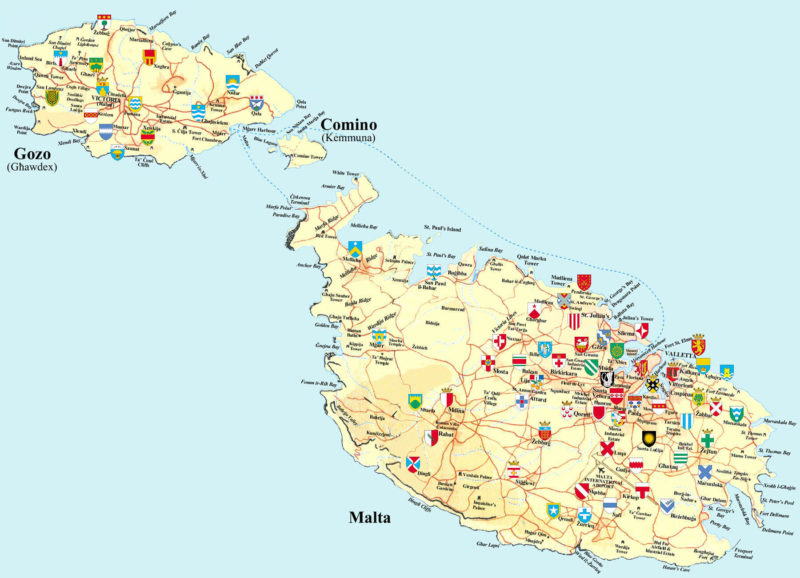
Malta is described in propaganda as being an idyllic “paradise on earth” island in the middle of the Mediterranean Sea. Surely life is incredibly good over there! Not to mention it’s a tax haven!

First of all, Malta is no tax haven if you’re Maltese. There are a few schemes designed to attract business and executives from abroad. These schemes have been widely used and abused, and that’s where the reputation for being a tax haven is coming from. The island is also famous for housing a great number of online gambling companies. These companies came to Malta due to the fiscal and regulatory incentives and they are by and large doing extremely well.

Online gambling is not something that interests me and in general, I don’t like the vibe that they have about them. I’m sure many Maltese will disagree with me on this, but this is my view on the topic. The gambling companies pay very well and usually provide attractive offices and perks to their employees. Due to them, property prices in the Sliema and St Julian’s area have risen to incredible levels (many would agree that it’s bubble stage already). A whole financial services industry has grown to support these companies.

The downside? Apart from the moral doubts of working at these companies or even incentivizing them to move to Malta, I see a lot of dependence on them. If another country were to offer better regulations and tax incentives, it is likely that many of these companies would leave, as they don’t have any significant ties with Malta. They are merely using the country. In the eventuality of them leaving, we will see serious repercussions on property prices and the financial services industry. Whether this situation ever plays out is anyone’s guess, but it’s definitely something that has always bothered me.

Now I don’t mean to turn this into an attack on gambling companies. They do well to seek out the best environment for them to operate so I don’t blame them for anything. I certainly didn’t leave Malta because of this, so let’s explore some other more important reasons for me leaving.

If I were to describe Malta in one word, it would be frustrating. There is no doubt that islands are (were?) blessed with natural beauty, great weather and beautiful sea. I think the small size of the islands is, however, a big problem for people like me. It is clear that you can find idiots in every country, but in bigger countries, you can mostly keep away from them. You can frequent different places, live in different areas, and generally live amongst people that you like. Not so in Malta, every time you step outside of your door you are bound to experience some kind of ignorance, be it illegal construction, irresponsible driving, and unprofessional behavior. There is no deeply ingrained culture of doing things the right way. Rather it’s more of a “whatever, if it barely works then it’s good enough”.

I acknowledge that I have trouble really describing what it is that frustrates me and pains me so much about living in Malta. I also know that most Maltese genuinely love living in Malta, and whenever I have tried to speak out against the way things are done, the usual reaction is to try and shut me up and tell me that things aren’t so bad.

I inevitably realized that there was no way I’m going to change the culture of a country. One of the best pieces of advice was given to me by a Bulgarian builder in Malta. In one of my moments of frustration, the builder, who was fixing some stuff in our office, overheard me complain about things in Malta. He calmly came up to me and told me “my friend, if you don’t like the menu, change the restaurant”. It was a seemingly joking and simple comment, but it rang so true for me that that was the moment that I decided to leave for good, and sure enough, two months later I left.

Living in Malta, at least as a local, involves sustaining yourself (whether you want it or not) on a constant stream of local news. You can’t escape the latest political mess, and the smallest incidence can make front-page news. It is really an environment that discourages you to think big and expand your mental horizons. For many years I found it very stifling and I harbored a lot of internal anxiety, frustration, and anger due to this situation over which I had little control.

Since moving abroad, all these effects instantly disappeared and I finally felt free to be what I really want to be and rapidly increase my knowledge in the areas that interest me, such as investing.

They say that a person is the sum of the other people that are closest to him. In Malta, I always struggled to surround myself with people who would constantly inspire me and drive me to become a better person. Due to the small island mentality, there seems to be a lot of jealousy and people try to keep you in line. You’re best just being an average Joe behaving like everyone else if you want to live a good life there. Do something significantly different than the rest and you’re going to have a very difficult time indeed.

But come on Jean, you might say, what about the lovely “best in the world” weather that Malta is blessed with? Well yes, Malta does indeed have very hot summers and mild wet winters. The problem is that the vast majority of houses have zero insulation and in the winter months you can feel really uncomfortable due to the insane levels of humidity and cold inside. Although I always felt bad during the winters, reality really struck during my first experience of winter in the UK, when I realized that I was much happier in winter there than I had ever been in Malta. Like many other countries, buildings there are well insulated and have good heating, so you can stay in your flip-flops and shorts inside in winter. In Malta, I would be wearing jackets, long johns and a beanie and I’d still be uncomfortably cold.

One other big pain point: the roads. Malta’s road surfaces are among the worst in Europe and are more befitting of a third-world country than a country that presents itself as being a hub of innovation and being on par with its European counterparts. I once tried taking my Brompton bike to Malta to cycle around during our holiday but ended up walking back home after 200 meters. There are way too many potholes, bumps, and uneven road surfaces to be able to ride a bike like that comfortably without damaging it. Not to mention the challenge of staying alive when riding a bike in Malta.

Some of my friends have been severely injured due to irresponsible driving or bad road surfaces, and one of them even died by the roadside after being run over by a youngster driving without a license. I won’t even get started on the Maltese judiciary, but I’ll just mention that after eight years this man has not been sentenced yet. See here and here for more great examples of Maltese incompetency where justice is concerned.

A related aspect is the lack of good pavements. Unfortunately, Malta is not a walkable place at all. We grow up getting accustomed to getting out of our houses and into the car to get whisked to wherever we need to be. This leads to people exercising less and the resulting obesity issues. Malta has the highest child obesity rate in Europe, and Maltese adults are the second most obese in Europe. This fact is evident to me whenever I land in Malta and have a look around. I believe the walkability issue is a significant contributor to the problem. Owning a car is almost a necessity and gives you the independence to go wherever you want, while public transport is of average quality and mostly consists of buses and taxes (an underground metro system would be a game changer). Of course, we can all see with our own eyes that traffic has increased exponentially during the past twenty years, to the point that you are now guaranteed to get stuck in a traffic jam every time you go for a drive, at any time except during the night. Given that in general people tend to keep their cars far longer than the European average, we have a lot of pollution from vehicles and that affects everyone’s health.

Moreover, Maltese people in general tend to overeat, with typically huge portions being served in families, while fast food has gained in popularity. The famous mediterranean diet is not really present in Malta, instead people tend to consume large quantities of bread, junk food and pasta. Kids are given sweets abundantly. This is coupled with a sedentary lifestyle and other bad habits like smoking and alcohol consumption, and you get the resulting obesity situation. A visit to the country’s main hospital will also give a clear indication to where all this is leading to, with crowded waiting rooms filled with people who could clearly used a better diet instead of being given more pills.

Back to the lack of paving. In other countries, I got used to walking a lot, but in Malta it’s impossible to run any errands on foot except if you’re going around the corner from your house. Pavements seem to be an afterthought and come in all shapes and sizes. Some are tiled, some have rough surfaces, some are super narrow etc. What this also means is that we have a big problem with accessibility. One of the main highlights of my trips to Malta is spending time with my 93-year-old grandma, and I would love to be able to take her out for a walk while we chat about our lives. Alas, it’s pretty much impossible given the state of the pavements and the very close proximity of cars and trucks belching out fumes.

Lastly, let’s come back to the idyllic island thing one more time. During the past thirty years, there has been way too much indiscriminate development. Many ugly buildings were built and a good part of them were built in areas that were meant to remain in their natural state. The result is an overexploited island where very few green areas remain. As a kid, I used to go out and play soccer with my friends in the fields nearby. This was commonplace wherever you lived in Malta. Nowadays there is no chance that kids would be able to do that.

A Times of Malta showing illustrating over development in Sliema and St. Julian’s.

Everything’s been built up, and as I said, it’s been one huge land rush with developers making big money while they exploited every inch of the island. Of course, this constant development has also brought with it a lot of air and noise pollution, apart from visual eyesores. We are now seeing an increasingly high rate of respiratory diseases, and frequent complaints about noise due to construction. Gozo, the other island, is currently at a very nice balance between nature and man-made buildings, but I’m afraid that the developers will turn their greedy eyes there next.

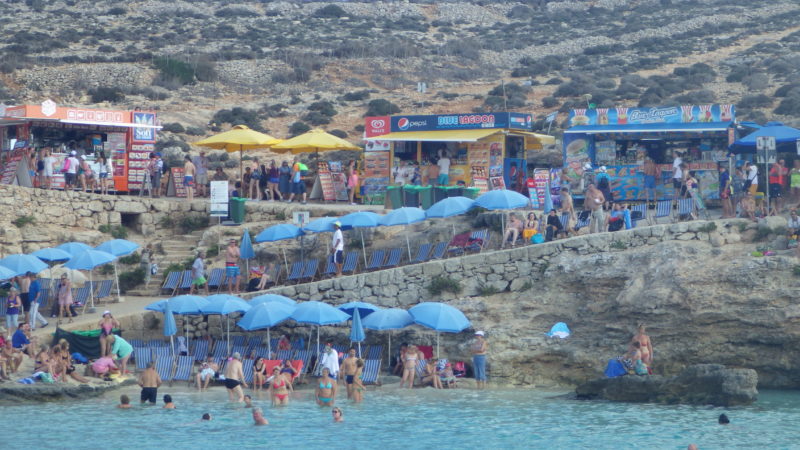
Over exploitation (umbrella rentals) of one Malta’s iconic spots – Blue Lagoon

How about the famous Smart City? Rather than attracting all the big IT companies and making Malta another silicon valley, as was originally promised, it’s been sitting there mostly empty. Moreover, it seems likely that it will soon be turned into another luxury apartment complex. This land had been given to the Smart City developers on the condition that it will be used for ICT purposes, but it seems that the new fashion is to completely disregard such contracts. Real estate agents are already selling apartments on plan even though it is still technically an IT office center and there are absolutely no building plans in place to turn it into an apartment complex. Something similar happened just last year with the former ITS complex in Pembroke. Such free-for-all practices are very common when it comes to building and development.

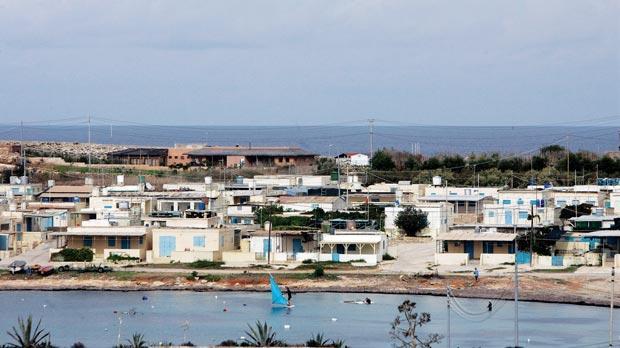
It’s not only big developers who are the problem though. Many individuals have also constructed illegally while the authorities have turned a blind eye. There is a whole village of illegal properties in Armier bay, and no political party has done anything to remove them over many years.

Armier bay illegal construction.

To make matters worse, much of the remaining countryside is taken up by hunters who occupy whole swaths of land. Yes, in Malta bird hunting is a very popular pastime, and incredibly just a few years ago a referendum to ban this barbaric practice in spring failed to get a majority backing. Any walk in the countryside is sure to be accompanied by the sounds of guns as the hunters try their best to blast every bird out of the sky.

A protected bird illegally shot down in Malta.

No wonder you will hardly see any birds in Malta. Illegal hunting is a widespread and serious problem, with poachers specifically targeting raptors (birds of prey) and Herons as well as rare migratory birds such as the Greater Flamingo, Black Stork and Eurasian Spoonbill, among others. Moreover, as I mentioned, hunters occupy a lot of public lands and block off access to hikers, mountain bikers and the regular folk who are out to enjoy a bit of countryside.

In line with the selfish nature so prevalent in Malta (a so-called Catholic country), we find the issue of smoking. Smoking was banned in enclosed public places and workplaces in Malta on July 1, 2004, with the implementation of the “Protection of Non-Smokers Health Regulations.” This ban was extended to include bars and restaurants in 2005, and in 2018, Malta introduced a comprehensive smoking ban that prohibited smoking in all public places, including outdoor areas like beaches and parks. The ban also prohibited smoking in private vehicles when children under the age of 18 are present. The implementation of the smoking ban in Malta has been enforced in restaurants and offices, which arguably already had arrangements for smokers before the ban, but it is a miserable failure when it comes to clubs and many bars. If you don’t believe me, go have a look for yourself, pick any club and you will most likely see the bouncers, DJ and other people in management smoking, so it is little wonder that patrons also feel at liberty to smoke. The ban in outdoor areas is another complete joke, again just visit any park and beach and see for yourself. As a health-conscious non-smoker, I find this to be another prime example of the selfishness and short-term thinking of the Maltese.

Sometimes people will challenge me by posing the question: “If Malta is so bad, why do so many foreigners fall in love with Malta and want to live here?”. I think that’s a very interesting question that merits delving into.

First of all, Malta is a very very unique place, for many reasons. It has a rich and varied history having been under the rule of several nations and cultures. Its size and geography is also unique, as is the fact that Maltese people have their own language. I can definitely see how these exotic qualities can be such a strong attraction for foreigners.

They would have never have experienced such an environment before, especially if they come from a big city/country where things are much more impersonal. Landing in Malta you tend to feel very welcome as people are very friendly and ready to help out, it feels like everybody treats you like family. This leads to foreigners saying hey, this is an awesome place to live in. Back home I’m just a number and nobody cares about anyone, but here everybody is so involved in each other’s lives, this is something special! I totally see why a foreigner would feel like this. I myself sometimes wish I were a foreigner so I could feel that way. If you don’t speak Maltese there is a better chance of insulating yourself from the daily gossip and mannerisms that end up getting on one’s nerves.

Here’s the thing though. While I acknowledge that some foreigners do move to Malta, love it and enjoy living there for many years, many others try the experience and leave after 3-4 years because they just can’t take the way things are done there. It’s one thing living a life of work-beach-party (Malta is the best place for that) and quite another when you decide to settle down, start dealing with the authorities, buy a house and try to get contractors to deliver quality work, etc etc.

People who are used to not having to struggle to get simple things done will start to get pissed off at how much time they’re spending dealing with seemingly innocuous tasks, and eventually end up leaving the island. Of course, the passage of time also amplifies the feeling of living in a very small place that acts like an echo chamber and innovation is stifled by the local way of life and culture, and that can also lead to one deciding to leave and live in a more open environment.

I guess I’ve written more than I meant to, the reality is that I really struggle to put my feelings into words, and that is why I don’t frequently share my thoughts on the subject. I prefer to focus on the positive things I have in my life rather than acting all pessimistic. My feelings about Malta at the end of the day are genuine sadness for what was once really an idyllic place that has been destroyed over the years. I would love to say that I hope to one day return, but I really can’t see how the culture can change and the harm due to construction undone.

P.S. While in this post I focused on the negative things about Malta that led me to leave, there is, of course, the flip side. There are many great things about Malta, and I do still think that it is a very good place for digital nomads to spend some time in.

Click here to leave a comment

2019 Update

It’s been more than two years since I wrote this post, and I’ve interacted with many people about the subject both in the comments section as well as over email exchanges. Unfortunately, not only has the situation in Malta not become any better since I wrote this, but things took a nasty turn for the worse.

The obvious big news item was the assassination of journalist Daphne Caruana Galizia in 2018, followed by several scandals in the political scene. During the last few months of 2019 we’ve seen Malta in the worldwide news for all the wrong reasons, with several top members of the governing party being forced to resign due to their misdeeds and connections to the murder.

As we close off the year, prime minister Joseph Muscat has been named ‘Person of the Year’ for organised crime and corruption by a consortium of investigative journalists.

It was a busy 12 months in the world of organized crime and corruption. But without further ado, here is our 2019 Person of the Year: https://t.co/oDVXs9EZYI#occrpaward #CorruptActor2019

— Organized Crime and Corruption Reporting Project (@OCCRP) December 27, 2019

Dr Muscat joins a list of previous winners of the OCCPR’s yearly prize that includes strongmen such as Russia’s Vladimir Putin, Azerbaijan’s Ilhan Aliyev, Venezuela’s Nicolas Maduro and the Philippines’ Rodrigo Duterte.

“Under Muscat’s leadership, criminality and corruption have flourished — and in many cases gone unpunished,” the OCCPR said.

The organisation highlighted the way Dr Muscat had acted throughout the investigation into the murder of journalist Daphne Caruana Galizia.

I had intentionally avoided politicising things with my original post, as I don’t consider myself a supporter of a particular party in Malta, but things have really gone to new extremes with the Labour party in government led by Dr Muscat in recent years.

Not only have things become worse in Malta, but the country’s reputation overseas is at an all-time low due to this government’s shenanigans.

What is quite impressive to me is that the Maltese population by and large has been quite passive during this whole debacle. Not to mention that probably around half of the population still doesn’t think that anything irregular has taken place in the past few years, as you can witness if you open any article on local newspapers reporting cases of corruption. The kind of brainwashing on display is at least on par with what you would expect from people in communist countries with no access to outside information. To see people defending the prime minister and his cronies while hurling abuse at any detractors, Maltese or foreign, is just sad.

One would hope that the Maltese will choose better people in leadership, independently of which party they’re from, and avoid further damage to the country. It’s worth keeping in mind that right now, the Maltese economy seems to be doing very well, however I am of the opinion that this boom has not been very organic nor is it built on solid ground.

If we take an honest look at the last 15 years of growth in the Maltese economy, we would find that the big driver has been an artificially favorable tax system designed to attract foreign companies to relocate their business in Malta and thus gain huge tax benefits. That drove an influx of foreigners needed to staff the relocated companies (most of them online gaming companies), which in turn drove up property prices and helped build an impressive financial industry to service these aforementioned companies. If one of these pillars were to be affected by the scandals rocking the political scene, all the pieces will fall like dominoes causing a serious crisis in Malta.

Taking the Decision

Over the years since I’ve written this post, I’ve received many emails from (mostly young) people who identify with my feelings and are struggling with taking the decision.

I want to make it clear that while we live in an era where travel is very easy and affordable, uprooting yourself and moving to another country is still a significant psychological and logistical challenge for most people.

Here’s a copy of an email reply I sent to a person who reached out to ask for advice on how to approach the decision. I hope it can be of help to others in the same stage of their lives.

Every person who decides to leave their home country will have the fears and worries that you mention, that is perfectly normal.
I had the same concerns myself when I was in the same situation. What I did was to sit down in a quiet place for an hour or so, take a pen and two sheets of paper. On one list the pros and the other the cons about moving. Take your time and let your heart and mind both outpour onto those two pages. When you’re done, you should have a clearer picture of what you should do. If it’s still not clear, assign a rating of 1-5 or 1-10 next to each point that you list, with 1 being of least importance and 10 being essential for you. Then add the scores up and hopefully one should be significantly higher than the other.
Know that you can’t control what you’ll find on the other side, but you owe it to yourself to at least seek a betterment of your situation if that’s what you need to do.
I have yet to come across anyone who regretted leaving a negative environment that bothered them (job, country, etc) but I have met plenty of older people who have significant regrets about not taking a chance on a better future when they were younger.

Further Reading

  • Bloomberg – Why the EU is furious with Malta – covers problems that I mentioned in the post and other big issues that surfaced in the past year since I’ve written this post.
  • Only in Malta – Facebook group showcasing daily unbelievable occurrences in Malta
  • Malta New Reality – More shenanigans in Malta
  • The Shift – Daily updates on scandals and corruption in Malta
  • 70% of Malta’s young people wish to leave.

Filed under: Thoughts & Experiences

The Tony Robbins Morning Priming Exercise

Last updated: September 18, 20192 Comments

YouTube video

Here’s a textual description of the Tony Robbins morning priming technique. Tony uses this technique every morning and I’ve been trying it out myself for the last few weeks. It’s truly powerful.

There are three parts of three minutes each in this priming exercise.

Phase 1 – Breathing

Tony uses an adaptation of Kapalabhati Pranayama for his breathing exercise.

  1. Get in a comfortable, seated, position. Close your eyes.
  2. With your arms raised above your head, breathe deeply through your nose.
  3. Lower your arms and blow out through your nose as your arms are coming down.
  4. Repeat for 30 breaths.
  5. Rest for 10 seconds. Feel your body and any sensations.
  6. Repeat the set for 3 times.

Phase 2 – Gratitude

  1. Put your hands on your heart and feel it beating.
  2. Breathe in and feel the blood rushing through your body.
  3. Think of 3 moments or people that you can feel deeply grateful for. Feel what you felt and see what you saw, make it real.

Phase 3 – Goal setting

Focus on three important goals that you have for the next day, month or year. He calls it Three to thrive.

Will you try it out? Let me know how it goes!

If this doesn’t work for you, another breathing exercise I like is the one recommended by Dr. Andrew Weil. You can find more information about his 4-7-8 technique here and here.

Filed under: Thoughts & Experiences

How I Meditate and How it Helps Me

Last updated: February 06, 20237 Comments

I’ve been meditating in various forms since my teenage years, albeit with many on and off periods. Lately, I seem to have found a style that suits me very well, and I’ll be sharing some background on that today.

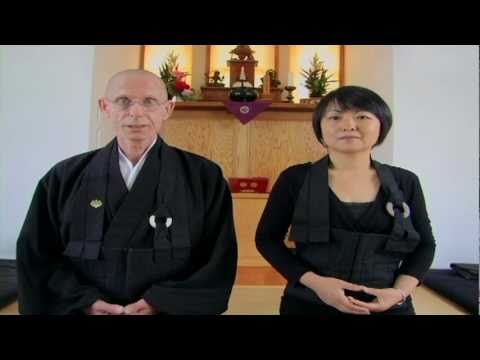
Essentially, I’ll be describing zazen meditation.

Zazen is primarily a seated type of meditation. There are several types of meditation, including ones that involve walking or even lying down. Zazen is considered the heart of Japanese Soto Zen Buddhist practice.

The aim of zazen is that of suspending all judgmental thinking and letting words, ideas, images and thoughts pass by without getting involved in them. Of course, all this is done while being immersed in sitting meditation.

In Zen temples and monasteries, practitioners traditionally sit zazen as a group in a meditation hall, usually referred to as the zendo. The practitioner sits on a cushion called a zafu, which itself is usually placed on top of a low, flat mat called a zabuton.

Before taking one’s seat, and after rising at the end of the period of zazen, a Zen practitioner performs a gassho bow to their seat, and a second bow to fellow practitioners.

The beginning of a period of zazen is traditionally announced by ringing a bell three times (shijosho), and the end of a round by ringing the bell either once (houzensho).

Long periods of zazen may alternate with periods of kinhin (walking meditation). In such cases the bell sequence will be a bit more elaborate than what I just described:

  1. Three rings to start zazen
  2. Two rings to end zazen and start kinhin
  3. One ring to end kinhin
  4. Three rings to start zazen again
  5. One ring to end zazen

If you go to a zazen meditation center you will most likely take part in a longer session that will be punctuated by breaks of walking meditation, so you will hear the bell sequence I just described.

There is no need to use music while practising zazen meditation. It’s not common to have any background music at the zendo. At home, you are free to use whatever works for you.

This practice might seem difficult, but daily practice is very effective in increasing your sense of self-awareness and intuition. While the practice of zazen typically awakens a certain energy and sense of wakefulness in us, there is no need to set any objectives or aims to achieve anything. It simply consists of concentrating on the posture and the breathing as well as the mind and the thoughts it gives rise to.

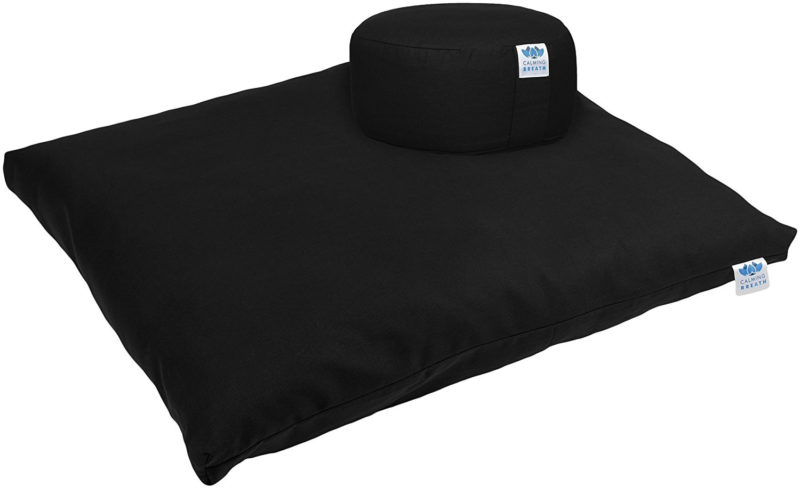
You will need a zafu and zabuton, as we already mentioned. These can easily be found on Amazon. Here’s a picture of the Calming Breath set I got; I’m very happy with them. The zafu also doubles as a foot rest while working, which is great.

Let’s take a deeper look at each of these three pillars of zazen meditation:

Posture

Sit on the zafu (cushion) cross legged, with the zabuton beneath you for comfort.

There are several poses you can use:

  • Full Lotus
  • Half Lotus
  • Burmese

Full Lotus pose

If you can sit in Full Lotus without serious pain, then it is by far the most stable of all the cross-legged postures.

Place one foot on top of the opposite thigh then lift your other foot up onto its opposite thigh. The soles of your feet should be facing slightly upward and outward. If you experience pain, try going back to one of the easier postures while you continue to work on your mobility for this pose.

Half Lotus pose

Many people who cannot manage Full Lotus can sit quite comfortably in Half Lotus.

Place one foot on top of the opposite thigh. Your other foot should be resting on the floor just under the opposite thigh/knee. Try it both ways. You may find that one side is considerably easier than the other. If that’s the case, then consider some yoga stretches to work on the imbalance so that eventually you can alternate sides and work on Full Lotus.

Burmese pose

The Burmese Pose is ideal for those who aren’t flexible enough to comfortably stay in the Lotus poses. For this reason, it’s currently my preferred pose for meditation.

Put the sole of one foot against the inside of the opposite thigh. Put the sole of the other foot against the shin of the opposite leg. All of both your legs and feet should be in contact with the floor. It’s not an easy position but does offer a really stable platform for those that can manage it.

The weight of the body is placed on three points: the knees pushing against the ground and the perennial muscle which presses against the zafu. The spine is straight and vertical. The back is flexed, and the shoulders are relaxed. The chin is tucked in, the back of the neck is stretched. Push the top of your head up towards the sky. The mouth is closed and the tongue touches the upper palate and the inside of the two front teeth. This calms  “interior chatting”. The eyes are half-closed and look down towards the ground, about one meter in front, without focusing on anything in particular.

Breathing

The rhythm of the breath is very important in zazen meditation.

Breathe calmly through the nose, remaining totally conscious of it, meaning being attentive to each breath, like a tiger on the watch. Breathe naturally and breathe out calm, long, deep breaths all the way under the navel. Don’t judge your breathing – if it’s slow or rapid – it is just the way it is.

Little by little, with practice, breathing out becomes soft, slow, peaceful, long and deep; pushing the abdominal mass downwards and creating a concentration of energy in the zone which is called the kikai tanden (ocean of energy) located under the navel. At the end of the breath, breathing in is done naturally.

State of Mind

Once you have the right posture and the breathing rhythm in place, you can start noticing your state of mind. In the first practices of zazen you will most likely get distracted easily, and you will have many thoughts going on. Once you settle into the practice, however, you will notice that you start to take control over your mind and you start to adopt a stronger, more centered state of mind.

At the end of the day, Zen is very simple, but at the same time very hard to comprehend. It’s a question of struggling and practicing repeatedly, much like life itself. In this seated position of zazen, without doing anything special and expecting nothing in return, if our posture, our breathing, and our mental attitude are in harmony, we will begin to understand the authentic Zen.

If you don’t feel comfortable with zazen, I would recommend that you adopt the pose itself and use a more mainstream kind of meditation. You can use apps like Calm or Headspace for example, which are excellent introductions to the practice of meditation.

Whenever I want to do a quick meditation I still revert to Calm. For example, at times when I don’t have time to do a full zazen meditation session, I’ll just pop in my noise canceling earphones and use Calm to do a 15-minute meditation. You don’t even need a mat for that, you can do it sitting down anywhere.

Further reading and viewing:

A five-minute instruction introducing the correct positioning and breathing for the Zazen style of meditation:

YouTube video

A ten-minute zazen session:

YouTube video

A longer explanation of Zazen and posture:

YouTube video

An introduction to meditation in general, including why it’s beneficial and how to make it a daily habit:

YouTube video
  • Dojo Zen Barcelona Kannon
  • Association Buddhiste Zen d’Europe

Dealing with Irritation

By nature, I’m quite easily irritated and frustrated, and I am constantly working on improving this part of myself. I know exactly how it feels and how it manifests in my body. I clench my teeth, I can feel my heart beating rapidly, my legs get restless, and everything else in the world seems to fade away as my whole being zooms in on the discomfort and injustice of the situation. It’s a dark place to be in and not conducive to any good result especially when interacting with people.

This sense of irritation and frustration is easily triggered, but a very typical trigger is when I have to call customer service for any big company. Here’s a recent one from when I had to call my bank. As usual, I had to navigate my way through a series of automated questions and subsequent questions, which is enough to trigger some frustration and “don’t waste my time” feeling. Add to that the fact that I was calling due to a mistake the bank had made with my account, so I was already charged going into the call. As I was put on hold and left alone with the elevator music, I noticed stress in my stomach and tension in my body. I stopped, realizing this irritation felt familiar. I know I have this tendency to get frustrated and I didn’t want to strengthen it.

It was an opportunity to tap into my practice. So I took a few deep breaths and helped my mind and body relax. I made a commitment to myself that when the customer rep would come on the phone I would express no irritation and treat them warmly. When she asked if I was having a nice day, instead of projecting my irritation, I said “I am, thanks. How are you?”. The conversation then proceeded calmly, it was indeed their mistake and I had to explain what happened, wait until I was put on hold for a few more minutes, and then have them acknowledge the mistake and rectify it. In this situation there was nothing I could do to influence things, they made a mistake and it needed to be fixed, following all their standard procedures. The only factor I had under my control was my response before and throughout the conversation.

Since this is a challenging scenario for me, when I hung up the phone I had a sense of triumph. If we remain grounded and mindful in situations where we can easily become irritated, even if we don’t get what we want we release the stress and irritation that we are carrying. To me, that in itself is a victory. The way Thich Nhat Hanh describes it is that every feeling is a field of energy; a pleasant feeling is a feeling that can nourish, irritation is a feeling that can destroy. Under the light of awareness, the energy of irritation can be transformed into an energy which nourishes. So basically, our choices directly strengthen the qualities within us. If we practice patience, we strengthen patience. If we get swept away by irritation, we strengthen irritation.

It’s up to us which quality we wish to strengthen.

Building Resilience

resilience

During a recent session of meditation I came across this insightful quote by the 8th-century Indian Buddhist monk Shantideva:

Where could I possibly find enough leather to cover the surface of the thorny earth?

Yet leather on the soles of my shoes is as good as covering the entire earth.

Likewise it is not possible for me to restrain the external course of things.

But if could I restrain this mind of mine why would I need to restrain all else?

Too many times we get angry and distressed at what’s happening around us. To be sure, we are never going to be short of things to pick on in this crazy world that we live in.

Shantideva tells us that it is hopeless to try and control the many aggravations of our daily lives. Yet is it possible to change our way of experiencing life instead?

Of course it is! Life is a subjective experience. As I think about this quote, I remember my 93 year old grandmother, who maintains an incredibly positive and cheerful state whatever comes her way.

She’s lived through the Second World War and the early death of her husband amongst many other hardships, but I can’t recall a single time when I found her in an angry, stressed or depressed state.

Unfortunately I haven’t inherited her natural gift of defaulting to having a positive outlook on the world around us, but I know through experience that I can continuously retrain the mind to achieve the same state.

Daily meditation is an essential tool for this purpose. It builds awareness and helps increase our resilience to the challenges and obstacles that we encounter.

Meditation helps remind me of the impermanence of things; the natural ebb and flow of life. It’s a great way to culture feelings of forgiveness, love, and kindness toward the world and fellow humans.

If you have never meditated or have not made it a daily practice, I highly encourage you to do so. For help in getting started, you can check out my favorite meditation app: Calm.

Filed under: Thoughts & Experiences

The Best Productivity and Relaxation Music

Last updated: April 05, 20244 Comments

music

Music is a very important thing in my life; I listen to a wide range of music styles, have experience in DJing, and play basic guitar and piano. In this article I will focus on music styles and apps that help me immerse myself in work and shut the rest of the world out.

Research on Music’s Effectivity

There is some good research done with regard to music and concentration:

Music stabilizes mental, physical and emotional rhythms to attain a state of deep concentration and focus in which large amounts of content information can be processed and learned. Baroque music, such as that composed by Bach, Handel or Telemann, that is 50 to 80 beats per minute creates an atmosphere of focus that leads students into deep concentration in the alpha brain wave state. Learning vocabulary, memorizing facts or reading to this music is highly effective. On the other hand, energizing Mozart music assists in holding attention during sleepy times of day and helps students stay alert while reading or working on projects.

Music Streaming Services

Music streaming services have revolutionized the way we listen to music. They offer vast libraries of songs and albums, personalized recommendations, and the ability to stream music on multiple devices, making it easier than ever to discover and enjoy music on demand.

The size of the music libraries offered by Spotify, Amazon Music, Google Play Music, and Apple Music are similar, with all four services offering over 70 million songs.

While all four services have a vast library of songs, the specific selection of music may differ between the platforms. Some songs or albums may be available on one platform but not on the others, so it may be worth checking the libraries of all four services to see which one offers the specific content you are looking for. Additionally, the pricing and features offered by each service may differ, so it is important to compare them and choose the one that best meets your needs and budget.

For general background music, I like to discover new music from the following styles:

  • Instrumental Jazz
  • Instrumental Bossa Nova

I don’t have any favourite jazz or bossa nova bands so I rely on Spotify to find new albums whenever I get tired of what I’m currently listening to.

Ambient music works really well for tasks such as programming and tech related work. Here are my recommendations:

  • Brian Eno
  • Tycho
  • Jens Buchert
  • Emancipator
  • Kraftwerk
  • Jean-Michel Jarre

While remaining in the electronic realm, trance and electro sometimes work well for me, especially when I need music that packs more punch and infuses a sense of urgency to what I’m doing. This can turn out to be ideal also in the afternoon when I generally tend to feel a bit sleepy. I don’t have too many favourites here, although I do love to listen to the album Berlin Calling from Paul Kalkbrenner every now and then. The Tron soundtrack is also awesome, as is that of The Social Network.

When I need to be really pumped up and I don’t mind lyrics I turn to my favourite music in the form of euro dance and rock. I have an extensive euro dance collection from the late 90s and early 00s and that’s what I put on in these occasions. My favourite rock band is Queen and they are usually the ones on my playlist when I need some comforting music to help me through some menial work that I would be dreading doing.

You can also check out classical music such as Vivaldi’s Four Seasons. Many people work well with classical music. It’s not my favorite for working but I do use it at times when I’m tired of everything else.

At times all I need is some background noise; I might use some white noise collections on Spotify, Coffitivity, or Noisli.

Spotify

Spotify is a digital music, podcast, and video streaming service that provides access to millions of songs, albums, and other audio content. It was founded in 2006 in Sweden and has since become one of the largest and most popular streaming services in the world. With Spotify, users can stream music on demand, create playlists, discover new music, and listen to podcasts.

The service is available as a free, ad-supported version, as well as a premium version that offers additional features, such as offline playback and higher quality audio. Spotify also provides a platform for artists to share their music and reach a large audience, and it offers a variety of tools for music discovery, such as curated playlists and personalized recommendations based on users’ listening habits. Overall, Spotify is a popular choice for people who want to access a large library of music and audio content from anywhere, at any time, and on any device.

I use Spotify (€9.99/month in Spain, or €6.99 in Malta), and they have geographical pricing in play, see this interactive chart of Spotify prices around the world. Most other services have similar regional pricing schemes.

Amazon Music

Amazon Music ($9.99 or $14.99 for a family plan) is a music streaming service offered by Amazon. It provides access to a vast library of songs, albums, playlists, and podcasts, as well as live radio stations and original content. Amazon Music is available as a standalone service or as part of Amazon’s Prime membership, which includes other benefits such as free shipping, access to Prime Video, and more.

With Amazon Music, users can stream music on demand, create playlists, download songs for offline playback, and access personalized recommendations based on their listening habits. The service also provides a platform for artists to share their music and reach a large audience. Amazon Music integrates with Amazon’s Alexa virtual assistant, allowing users to control playback using voice commands. Overall, Amazon Music is a popular choice for people who are already Amazon Prime members or who are looking for a music streaming service that is closely integrated with other Amazon services.

Apple Music

Apple Music (€9.99 or €14.99 for a family plan) is a music and video streaming service developed by Apple Inc. It allows users to stream over 70 million songs, as well as a large collection of music videos, live concerts, and exclusive content from artists. Users can also create their own playlists, listen to curated playlists and radio stations, and access expert recommendations based on their listening history.

In addition to music streaming, Apple Music also offers music downloads, allowing users to store music locally for offline playback. The service is available on Apple devices such as iPhone, iPad, Mac, and Apple TV, as well as on Android and Windows devices through a dedicated app. Apple Music also integrates with Siri, Apple’s virtual assistant, allowing users to control their music with voice commands. Overall, Apple Music is designed to provide a comprehensive music experience for its users, combining the best of traditional music services with cutting-edge technology and a focus on artists and their work. The new Apple Music Sing feature allows you to turn off voice tracks, converting any song into an instrumental piece, potentially suitable as a background for focused work.

Music and Sound Therapy Apps

These apps provide audio content, such as music and soundscapes, aimed at promoting relaxation, sleep, focus, and well-being. They use various techniques, such as binaural beats, psychoacoustics, and neuropriming, to create personalized audio experiences that are designed to have a positive impact on the brain and body.

This type of technology is often referred to as “music therapy” or “sound therapy” and is gaining popularity as a tool for improving mental health and overall well-being.

Brain.fm

Brain.fm is a website and app that offers audio programs designed to enhance focus, relaxation, and sleep using sound patterns and music. It is based on the principles of binaural beats and other sound frequencies that are believed to have an impact on the brain and promote various cognitive and emotional states.

Brain.fm claims to use artificial intelligence and scientific research to create soundscapes that can help users focus, sleep better, or reduce anxiety and stress. The app provides access to a library of audio programs that users can choose from based on their desired outcome.

Focus@Will

Focus@Will is a website and app that provides music specifically designed to help people concentrate and increase their productivity. It is based on the concept of “neuropriming,” which involves using specific types of music to stimulate different areas of the brain and enhance focus.

The app features a library of more than 50 channels of music that have been specifically selected and composed to promote focus and minimize distractions. The channels range from classical music to nature sounds and ambient soundscapes. Focus@Will claims to use science and research to create its music and states that it has been tested and proven to increase focus and productivity. The app allows users to customize their listening experience by adjusting the volume, tempo, and type of music, and also includes a timer to help users stay focused for a set period of time.

Endel

Endel is a mobile app and web platform that provides personalized audio for better sleep, focus, and relaxation. Endel uses a proprietary algorithm to generate real-time, adaptive soundscapes based on specific parameters like the time of day, weather, and user’s preferences. The soundscapes produced by Endel are designed to enhance sleep quality, improve focus and concentration, and reduce stress and anxiety.

The app offers a variety of sound profiles that users can choose from depending on their needs, and the audio adapts in real-time to provide a personalized experience. The app is based on the principles of psychoacoustics, which is the study of how sound affects the human brain and body, and is aimed at helping people improve their well-being through sound.

Alternative Music Apps

Digitally Imported

Digitally Imported (DI.FM) is a web-based music streaming service that specializes in electronic dance music (EDM) and other dance music genres. It was established in 1999 and has since grown into one of the largest online music streaming platforms for electronic dance music fans. DI.FM offers over 80 channels of hand-curated music from a wide range of dance music genres, including trance, house, techno, and more. The service also offers personalized recommendations, song information, and a user-friendly interface.

In addition to its web-based service, DI.FM also offers a mobile app for iOS and Android devices, allowing users to stream music on the go. The service offers both free and premium subscriptions, with the latter offering ad-free listening, higher-quality audio, and offline playback. Overall, DI.FM is designed to provide a comprehensive and immersive music experience for fans of electronic dance music and other dance music genres.

Coffitivity

Coffitivity is a mobile app and website that recreates the ambient sounds of a coffee shop to boost creativity and productivity. It provides users with a background soundtrack of café noise, including the sounds of people chatting, espresso machines, and gentle background music, to create a calming and inspiring environment for work, study, or relaxation.

The idea behind Coffitivity is that the moderate level of background noise in a coffee shop can help people focus and be more productive, while also reducing stress and improving mood. The app is available for both iOS and Android devices, as well as on the web. Users can choose from a selection of different coffee shop sounds, or create a customized mix of sounds to suit their preferences.

Noisli

Noisli is a Chrome browser extension that provides ambient soundscapes to help you focus, relax, or sleep. It offers a variety of sound options, including white noise, rain, thunder, wind, forest, and coffee shop sounds, among others. The extension can be used for productivity, to reduce stress and anxiety, or for background noise while working, studying, or reading. You can customize the sound mix to your liking and save your favorite combinations for later use.

YouTube

I’m including YouTube as an alternative app as it isn’t strictly for music, but many still use it as their main platform for listening to and discovering music.

I typically use YouTube on my secondary monitor to listen to DJ sets from the channel Cercle and some similar ones.

Hope this is helpful and I’d love to know what music you all listen to while working!

Filed under: Thoughts & Experiences

  • « Previous Page
  • 1
  • …
  • 8
  • 9
  • 10
  • 11
  • Next Page »

Latest Padel Match

Jean Galea

Investor | Dad | Global Citizen | Athlete

Follow @jeangalea

  • My Padel Experience
  • Affiliate Disclaimer
  • Cookies
  • Contact

Copyright © 2006 - 2026 · Hosted at Kinsta · Built on the Genesis Framework