
Most coffee sold in Portuguese supermarkets is a blend of arabica and robusta, and several of the big brands still use torrefacto, where sugar is burned onto the bean during roasting. It gives you the dark, bitter, thick-crema cup that a Portuguese café serves, and it rules out the entire category for anyone grinding fresh at home. So when I moved to Cascais I had to work out where to buy actual specialty beans, with a known origin and ideally a roast date on the bag.
I asked around locally and got about a dozen names back. Most of them were commercial brands. A few were genuinely good. Below are the ones that survived checking, ranked by what I’d actually order, with what each one costs and how it reaches you.
The Folks (Lisbon)
The Folks started as a café in Chiado in 2022 and has been roasting its own coffee in Lisbon since 2024, now across six locations in the city. They hold a place on the World’s 100 Best Coffee Shops 2026 list, and they’re rated 4.7 on Google.
They earned the top spot on one line from their roastery page: beans rest, then go into valve bags within three days of roasting, with the roast date on every label. That single sentence solves the problem I ran into with almost every other option. Plenty of roasters tell you the coffee is fresh. Very few commit to a number you can read on the bag before you buy.
They also roast each lot to a stated purpose rather than one profile for everything, so a coffee is labeled filter, espresso, or omni, and the curve is logged per lot. For espresso the current lineup runs Vale do Mel from Brazil at €15 for 250g or €45 a kilo, Monte Sereno from Colombia and Sunset from Ethiopia both at €17 and €55, and Praliné from Honduras at €18 and €55. There’s a sugarcane decaf at the same price if you want something for the evening.
Delivery to Cascais is €5 by CTT, dropping to free on larger orders. There’s no Cascais café, so unless you’re already heading into Lisbon, this one arrives by post.
Unity Coffee Roasters (Cascais)
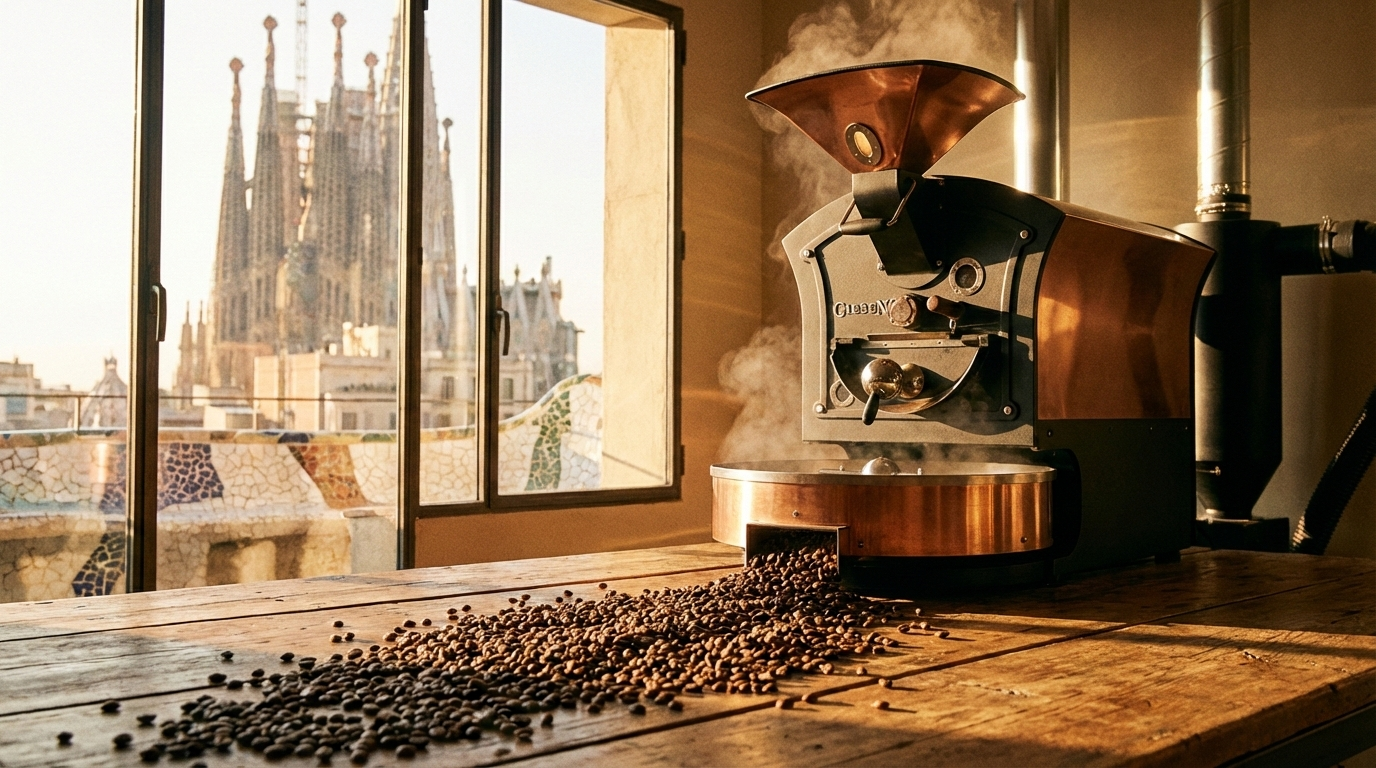
Unity is the shortest distance between a roaster and my grinder. They opened in 2023 on Avenida 25 de Abril, roast in house on a Giesen, and now have a second café in Oeiras. Everything they sell is single origin, and every coffee comes in an espresso roast or a filter roast, which matters more than it sounds if you pull shots.
Their lot documentation is the most detailed of anything I found locally. A bag of their Brazil Cláudio Nakamura tells you the farm, the altitude band, the variety, the fermentation method, and an 86-point cupping score. That’s the level of information I’d expect from a roaster three times their size.
Prices run from around €13 to €22 for 250g depending on the lot, with kilos from about €46. Shipping is free over €35 within mainland Portugal, and a subscription takes 20 percent off. They also sell discovery sets of five 100g portions, which is the cheapest sensible way to work out what you like before committing to a kilo.
The one thing they don’t publish is a roast date. They say every batch ships within days of roasting, and being able to walk in and look at the shelf makes that easy enough to check yourself.
Roastberry, via Crust (Cascais)
This one took some digging. Crust is an artisan bakery that opened on Avenida 25 de Abril in July 2025, after a couple of years supplying bread to restaurants from a production space in Alcântara. The coffee they serve is Roastberry, which the same group owns, so it’s their own roastery rather than a wholesale account.
Roastberry is a serious operation, with a coffee lab in Lisbon and a shop split into espresso roasts and filter roasts. The lots are named and specific: Kenya Gatomboya, Ethiopia Shantawene, Nicaragua Tierra Linda, Brazil Jaguara. Sourcing is direct and fair trade.
They’re also the cheapest genuine specialty on this list by a clear margin. Espresso beans start at €13 for 250g, and the kilos are €40 for the Brazil and €44 for the Nicaragua, against €45 to €55 at The Folks and around €46 at Unity. Shipping is free over €40, or you can pick up a bag with your bread.
Bocca (Amsterdam)
The first of two Dutch options, and the best value of anything that crosses a border to reach you. Bocca has been roasting since 2001, buys its green coffee through Trabocca, roasts on refurbished 1963 Probats, and is B Corp certified. They’ve also won the Allegra European Coffee Award for best artisan roaster in Europe.
Their house and espresso blends are €8.10 for 250g, The Blend is €10.80 for 250g or €37.90 a kilo, and their Ethiopia is €11.20 and €39.40. Shipping to a Cascais address is €7.98 for anything up to 2kg, with a carrier estimate of five to eight days. The €45 free shipping threshold is domestic only, so don’t expect it to apply here.
They roast after your order lands rather than shipping from stock, which partly offsets the transit time. For a lever machine, The Blend or their Espresso Blend are the sensible starting points.
DAK Coffee Roasters (Amsterdam)
DAK is where the interesting coffee is, and it’s priced accordingly. Espresso is an explicit roast option per lot, with farm-level traceability on every bag: region, lot name, variety, altitude, process. Their Amsterdam showroom won European Coffee Trip’s Netherlands award in 2025.
Bags run €14.25 to €24.95, with kilos between roughly €54 and €70. They ship across Europe by DPD, dispatching Wednesday and Thursday with one to three days in transit, and shipping to Portugal is free over €65. That threshold makes a four or five bag order the rational way to buy from them.
A warning on the house style. DAK leans heavily into naturals and anaerobic ferments, and the fruit-forward end of their range is punishing as espresso if you’re used to something rounder. Take the bodied options, Hazel Nuts from Honduras or Plum Butter from Uganda or Pretty Nuts from Brazil, and give them ten to fourteen days to rest after they arrive.
Fábrica Coffee Roasters (Cascais), With a Caveat
Fábrica opened in 2015 as Portugal’s first third-wave roastery, sources direct trade, and roasts at its own facility in Terrugem, just outside Sintra. In Cascais you can buy from their café on Avenida Valbom or from their stall at the Mercado de Cascais on Wednesdays, Saturdays, and Sundays.
I’ve included them because they’re the name everyone gives you and they’re genuinely convenient, but I don’t rate them as specialty any more. The operation has scaled a long way past where it started, nothing on the shelf carries a roast date, and what I’ve bought has been closer to a good commercial roast than to the lots the others are selling. Treat this as my palate rather than a spec sheet, and taste it yourself before taking my word.
The prices are the draw: 250g bags from €12.90 and an espresso blend at €49.90 a kilo, free shipping over €30, subscriptions from €15.90 a delivery. If you do buy, buy in person at Valbom or the market rather than online, so you can at least see what you’re getting.
What I Ruled Out
Roughly two thirds of the recommendations I collected didn’t make it, and most of them are names you’ll hear constantly in Portugal, so they’re worth addressing.
Delta is the default answer from almost anyone you ask in Portugal, and it’s genuinely good at what it does. Several of its lots use torrefacto, which puts it outside specialty by definition rather than by preference. Bogani is a commercial brand aimed at cafés and offices, with no roast dates and no origin detail beyond a country name. Both work fine in a moka pot and neither has much to give once you’re grinding for origin character.
The Italian suggestions, Kimbo from Naples and Alunni from Rome, are traditional bar roasters: dark, robusta-inclusive, built for crema, no roast date on the pack. Alunni’s arabica-forward blend is the better of the two, but it only reaches Portugal through a German retailer with a €50 minimum, and beans that have been in a warehouse and then on a van for a week aren’t competing with anything above.
I’d also skip the organic grocery shelf, however good the brand sounds. Coffee sitting in a shop that sells mostly vegetables has no roast-date control and slow turnover, and by the time it reaches you it has already been trucked across Europe.
What I’d Actually Do
The Folks gets my default order. The roast date on the label and the three-day packing window make them the only option on this list where freshness is a published commitment rather than a claim, and at €5 delivery there’s no reason to bulk order.
When I want to talk to the person who roasted it, I walk to Unity.
Roastberry is the cheapest way to drink properly here. Forty euros a kilo, collected from Crust along with the bread.
The two Dutch roasters cover what the local ones don’t stock. Bocca is the value pick and DAK is the one worth being curious about, and both involve enough transit that I treat them as an occasional order rather than the everyday bag.
Coming from Barcelona, where I’d settled into a handful of roasters I trusted, the Cascais scene is smaller but not thin, and the gap to Lisbon is a half hour rather than a different country. It took more work than it should have to find out, mostly because the loudest recommendations are the commercial brands. If you want to know what I’m doing with the beans once they arrive, I’ve written separately about how I drink coffee and why.
Related




Leave a Reply