I was at a concert recently. Great band, perfect venue. And as I looked around, all I could see was a sea of phone screens — hundreds of people recording the performance instead of watching it.
I felt something I’ve been feeling a lot lately: a pull in two directions at once.
Because here’s the thing. I spend hours each day working with AI tools. I’m genuinely excited about what they can do. I think we’re living through one of the most transformative periods in human history, and I want to be part of it.
But watching people experience a live performance through a 6-inch screen? That made something in me recoil.
This is the Xennial paradox. And if you were born between roughly 1977 and 1985, you probably know exactly what I’m talking about.
The Micro-Generation That Straddles Everything
The term “Xennial” was coined by Sarah Stankorb in 2014 to describe those of us born in the crack between Gen X and Millennials. A relatively small cohort globally, but one with an unusual vantage point.
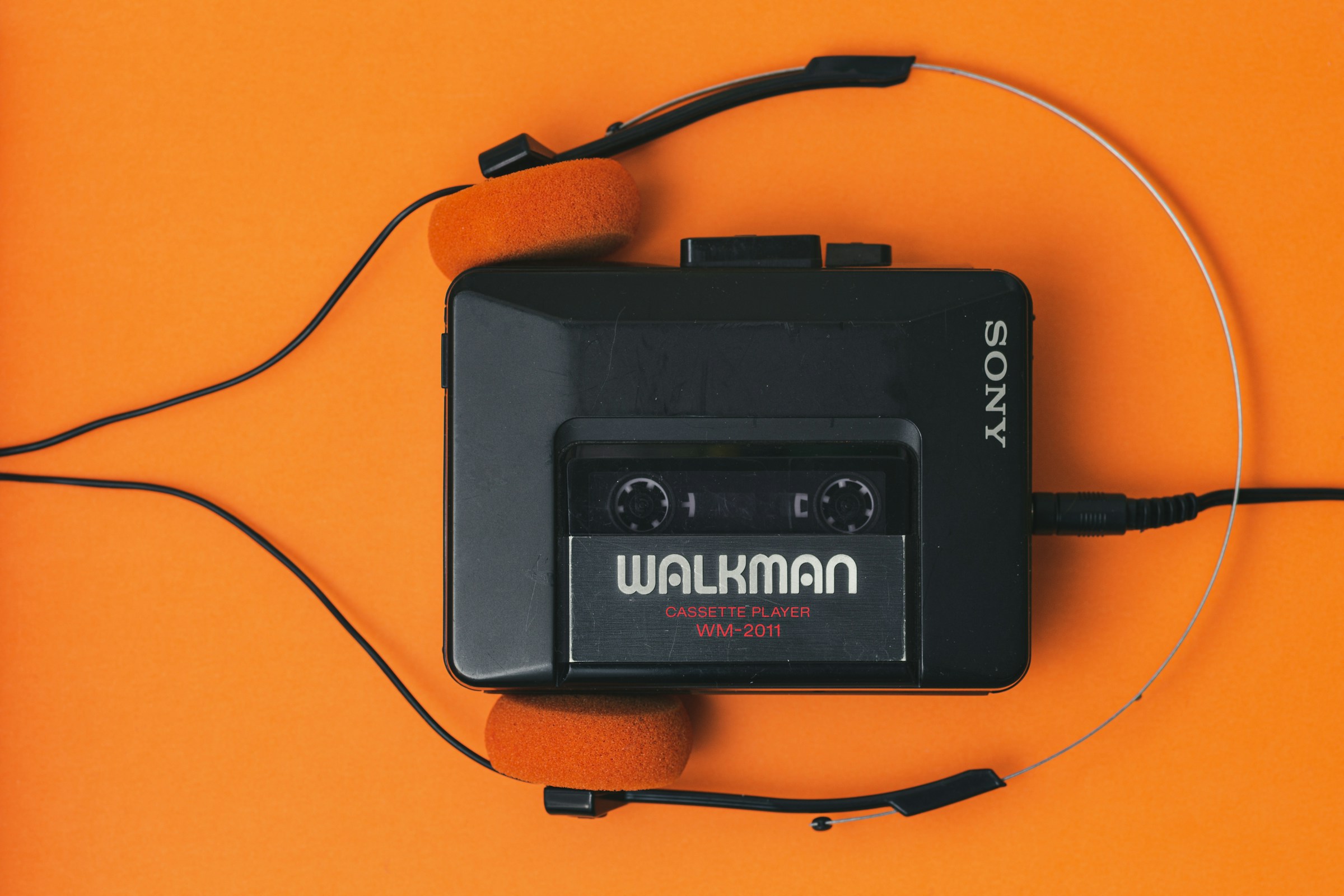
We had analog childhoods. Rotary phones. Paper maps. Three TV channels. Playing outside until the streetlights came on, with no way for our parents to reach us. We memorized phone numbers because there was no alternative. We got bored — genuinely, deeply bored — and had to figure out what to do with that feeling.
Then we had digital young adulthoods. We were the right age for dial-up internet, MSN Messenger, Napster. We got our first email addresses at university and our first smartphones in our late twenties. By the time social media arrived, we were old enough to adopt it without being consumed by it.
Anna Garvey, who coined the alternative name “Oregon Trail Generation,” described our adolescence as “the last gasp of a time before sexting, Facebook shaming, and constant communication.” We lived through the transition in real time, and we carry the before and after in our heads simultaneously.
As Garvey put it, we got “both a healthy portion of Gen X grunge cynicism, and a dash of the unbridled optimism of Millennials.” That combination shows up in everything we do.
The Cognitive Architecture You Can’t Download
Here’s where it gets interesting.
Dr. Cornelia C. Walther, a visiting scholar at the Wharton AI & Analytics Initiative, argues that people who grew up before the mid-1990s “developed cognitive architecture through sustained friction — reading maps, memorizing phone numbers, navigating boredom.”
That friction wasn’t just inconvenient. It built neural pathways.
Research from McGill University shows that people who rely heavily on GPS have reduced hippocampal activity and, over time, measurable atrophy in the brain region responsible for spatial memory. The famous London taxi driver study found the opposite: drivers who memorized the city’s entire street layout had significantly larger hippocampi, with volume correlating to years on the job.
And that boredom we endured as kids? Neuroscience shows it activates the default mode network and the prefrontal cortex — strengthening creativity, executive function, and divergent thinking. The kids who had nothing to do became adults who could sit with a problem long enough to actually solve it.
Xennials didn’t choose this cognitive advantage. We just happened to grow up in conditions that built it. But it’s an advantage that cannot be replicated, because the conditions no longer exist.
The Double-Edged Sword
I used to think my discomfort with phones at concerts was just nostalgia — sentimental longing for a world that’s gone. But recent research suggests something more interesting is happening.
A landmark 2024 study published in the Journal of Personality and Social Psychology examined nostalgia’s relationship with technology across seven studies, 1,629 participants, and three cultures. They found that nostalgia operates through two opposing pathways simultaneously.
On one hand, it increases skepticism about change. The past was good; why mess with it?
On the other hand, it increases feelings of social connectedness — and that connectedness makes people more open to innovation.
The key finding: nostalgic people embrace technology that enhances human connection but resist technology that merely replaces human function.
That explains the paradox perfectly. I’m excited about AI because it amplifies what I can do — it’s a collaborator, an extension of human capability. But phones at concerts aren’t enhancing the experience. They’re substituting documentation for presence. The screen becomes a barrier between you and the thing you came to feel.
It’s not that Xennials are anti-technology. We’re anti-technology-that-erodes-what-makes-life-worth-living.
Gen Z Wants What We Had
Here’s something I didn’t expect.
Younger generations are actively seeking the analog experiences that were simply daily life for us. Concert attendance hit record highs in 2025, driven largely by Gen Z. CD sales have been growing for a decade, again led by younger buyers. Fortune documented a trend they call “analog islands” — board games, vinyl records, handwritten journals, even stick-shift cars — driven by people who have “an almost longing wistfulness because so little of their life feels tangible.”
A Harris Poll found that 77% of adults aged 35-54 would like to return to a time before we were all “plugged in.” But 63% of 18-to-34-year-olds felt the same way. They’re nostalgic for something they never had.
Meanwhile, the “digital native” concept — the idea that being born into the digital age makes you inherently more digitally competent — has been challenged by nearly 1,900 academic papers. Turns out, young people often know how to use apps but lack the critical evaluation skills that come from having learned technology deliberately rather than absorbing it by osmosis.
This is where the Xennial position gets genuinely useful. We didn’t just adopt technology — we watched it arrive. We can see its architecture because we remember what was there before it was built.
The Window Is Closing
Dr. Walther’s most striking observation is also her most urgent: “Within two decades, there will be no one in positions of leadership who remembers what it felt like to develop cognition in that environment.”
Think about that for a moment.
The ability to remember sustained attention before notifications. Communities before algorithms. Learning before Google. Navigation before GPS. Boredom before infinite content.
That memory isn’t sentimental. It’s a reference point for what human cognition looks like when it develops without digital mediation. Once the people who carry that reference point leave positions of influence, there’s no way to get it back.
Michael Harris, who won the Governor General’s Literary Award for The End of Absence, calls us the “straddle generation” with “a rare opportunity to recognize the difference between Before and After.” He spent an entire month offline and documented how uncomfortable it felt — even for someone who remembered the Before clearly. That discomfort is itself evidence of how deeply even the analog generation has been rewired.
What This Means Right Now
I use AI tools extensively. I build with them, I think through them, I’m not afraid of them. I believe they represent a genuine leap in what individuals can accomplish.
But I bring something to that relationship that someone who grew up entirely in the digital age cannot: a vivid memory of what it’s like to think without algorithmic assistance. To sit with a problem without reaching for a search engine. To be uncertain and let the uncertainty do its work.
That memory is a compass. Not one that points backward, but one that keeps me oriented. It helps me insist that AI serve human potential rather than replace it. That convenience doesn’t always equal progress. That the point of technology is to make life richer, not just faster.
The Sedikides research calls nostalgia “a double-edged sword” — but for Xennials, both edges cut in useful directions. Our skepticism keeps us from adopting technology blindly. Our connectedness keeps us from rejecting it reflexively. We get to be excited and critical at the same time.
Xennials didn’t ask to be the bridge generation. We just happened to be born at the exact moment the world pivoted from analog to digital. But that accident of timing gave us something valuable: the ability to see what technology costs as well as what it provides.
Right now, as AI reshapes how we work, create, and think, that double vision might be the most useful perspective in the room.
Related








Leave a Reply