Rechargeable batteries have come a long way. I first wrote this article back in 2014, and while the core advice hasn’t changed — rechargeables save money, reduce waste, and perform better for most uses — the specific products and technology have evolved. Here’s what you need to know in 2026.
Why Rechargeable Batteries Are Worth It
The economics are simple. A set of four quality rechargeable AAs and a decent charger costs around €40-50. That one-time investment replaces hundreds of euros worth of disposable alkalines over the next 5-10 years. Most households can eliminate alkaline battery purchases entirely for a one-time investment of €50-80.
The environmental case is even stronger: rechargeable batteries use 23x fewer resources, produce 28x less global warming impact, and create 30x less air pollution compared to disposables. The break-even point is around 50 charge cycles — trivial when modern rechargeables last for 2,100 cycles.
The Best Rechargeable Batteries
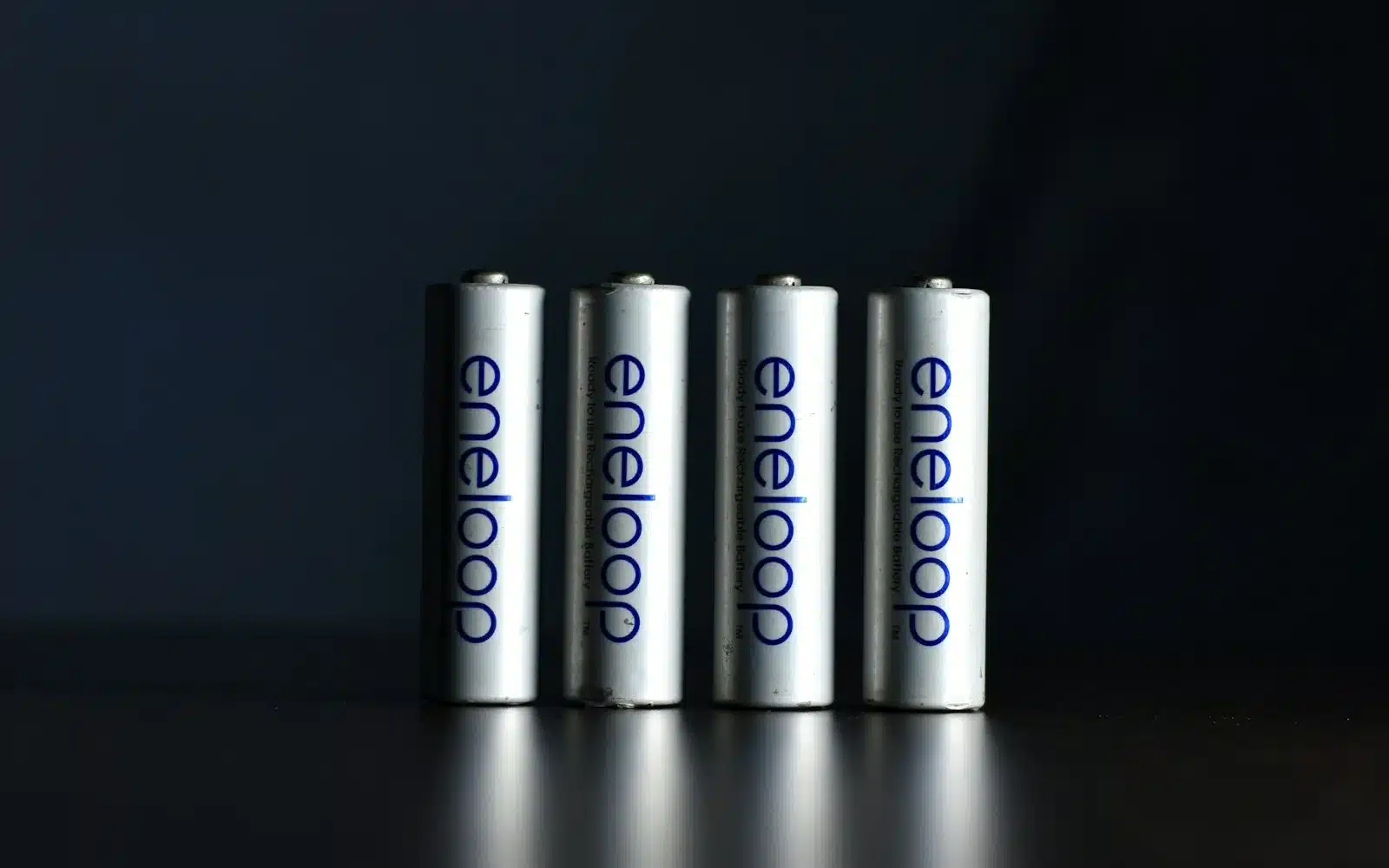
Panasonic Eneloop remains the gold standard. (They used to be Sanyo Eneloop — Panasonic acquired the brand in 2013.) The standard white Eneloop offers 2,100 charge cycles and retains 90% of its charge after a full year sitting in a drawer. For most people, these are the ones to buy.
Eneloop Pro offers higher capacity (2,500 mAh vs 1,900 mAh) but trades cycle life (only 500 cycles) and charge retention (75% at one year) for that extra power. Only worth it for high-drain devices like camera flashes where you need maximum capacity per charge.
IKEA LADDA is the value play. The Japan-made LADDA batteries use FDK cells from the same factory as Eneloops, and independent testing has found less than 0.05% performance difference. At 40-60% less cost, these are the smart buy if you want Eneloop performance without the premium price. Important: check the packaging — some lower-capacity LADDA models are now made in China with different specs.
Budget high-capacity options: EBL and HiQuick offer batteries rated at 2,800 mAh at budget prices. They don’t hold their charge as well when sitting idle, so they’re better suited for devices you use daily rather than ones that sit in a drawer for weeks.
A New Category: USB-C Rechargeable Batteries
One genuine innovation since the early days is 1.5V lithium-ion batteries that charge via USB-C (brands like Paleblue and EBL Li-ion). They maintain a true 1.5V output throughout their discharge cycle, which some devices prefer. They’re convenient for travel since you don’t need a separate charger. However, they have lower effective capacity than traditional NiMH rechargeables and cost more per battery. A nice complement, not a replacement.
Choosing a Smart Charger
A good charger matters as much as good batteries. Cheap chargers can overcharge cells, reduce their lifespan, and even become a safety hazard. Look for these essential features:
- Individual slot charging — charges each battery independently, so you can mix different charge levels
- Negative delta-V detection — stops charging at the right moment to prevent overcharging
- Discharge/refresh mode — reconditions older batteries to restore lost capacity
- Capacity testing — tells you how much charge a battery can actually hold, useful for identifying dying cells
For most people: The XTAR VC4SL (~€30) is USB-C powered, portable, and handles everything most users need. The Panasonic BQ-CC65 (~€35) is another great option with a built-in Refresh mode — set it and forget it.
For power users: The SkyRC NC2200 (~€70) is a dedicated NiMH analyzer with five charging modes and detailed diagnostics.
For enthusiasts: The SkyRC MC3000 (~€110) or MC5000 (~€150) support 9+ battery chemistries, Bluetooth app connectivity, and PC data export.
Troubleshooting: When Your Charger Shows “Null” or Won’t Detect a Battery
If you’re using a TechnoLine BC-700 (or similar rebranded charger like the AccuCell BC-700 — these are the same unit sold under different names) and a slot displays “null”, here’s what it usually means and how to fix it:
Common causes:
- Battery voltage too low — a deeply discharged cell may be below the charger’s detection threshold
- Poor contact — dirt, oxidation, or weak spring pressure in the slot
- Battery inserted incorrectly — even slightly misaligned cells can fail detection
- Chemistry mismatch — putting lithium cells in a NiMH/NiCd charger will fail
- Dead battery — high internal resistance from age or damage
- Faulty slot — if the same slot always shows null with different batteries
Quick fixes:
- Remove and firmly reinsert the battery
- Try a different slot
- Clean battery terminals with a dry cloth or rubbing alcohol
- Test another battery in the same slot to isolate whether it’s the battery or the charger
- If the battery is very flat, leave it in for 1-2 minutes — some chargers recover slowly
The key diagnostic: If one battery shows null but others charge normally, the battery is likely at end of life. If many batteries show null randomly, the charger contacts or power supply may need attention. For older rechargeable AAs that are several years old, “null” often means internal resistance has risen too much, even if they still show some voltage on a multimeter.
When to Use Single-Use Batteries Instead
Rechargeable batteries aren’t the right choice for everything. Here’s when disposables make more sense:
- Smoke detectors and carbon monoxide alarms — use Energizer Ultimate Lithium (single-use). They last 5-10 years and won’t trigger false low-battery chirps. NiMH rechargeables run at 1.2V instead of 1.5V, which can cause safety devices to incorrectly report low battery
- Emergency kits and survival gear — Energizer Lithium has a 20-year shelf life and works in extreme temperatures
- Ultra-low-drain devices — wall clocks, basic IR remotes, and other devices where batteries last 1-2+ years anyway. The hassle of rotating rechargeables isn’t worth it
For everything else — wireless keyboards and mice, game controllers, camera flashes, children’s toys, bike lights, torches, portable speakers — rechargeable batteries are the clear winner.
Summary
- Buy Panasonic Eneloop (or Japan-made IKEA LADDA for the same quality at a lower price)
- Pair them with an XTAR VC4SL or Panasonic BQ-CC65 charger
- Keep Energizer Ultimate Lithium single-use batteries for smoke detectors and emergency kits
- The investment pays for itself within a few months



 Malta in 2026 is a strange place. On paper it looks like a success story: one of the richest countries in Europe, the