Twino was one of the first P2P lending platforms I invested in. It launched in Latvia in 2009 (the web platform went live in 2015), and for years it was a reliable part of my portfolio. I earned a steady 9%+ with zero defaults.
But a lot has changed since then. The Russia-Ukraine war froze a major chunk of investor funds. Operations in Vietnam and the Philippines collapsed. The CEO has changed four times in five years. And the platform’s geographic footprint has shrunk from five countries to essentially one: Poland.
This review covers where Twino stands in 2026 — what went wrong, what’s improved under new leadership, and whether it still deserves a place in your portfolio.
The Big Picture: What Happened to Twino?
To understand Twino today, you need to understand what happened between 2020 and 2025. It was a rough stretch.
Russia (the biggest blow): In 2018, 73% of Twino’s loans were issued in Russia. When Russia invaded Ukraine in February 2022, EU sanctions and Russian capital controls made cross-border transfers nearly impossible. Twino suspended Russian loan repayments to investors almost immediately. At its peak, approximately EUR 6.8 million in investor funds were frozen.
The Russian loan originator (Moneza) had the money — the issue was getting it out. Russian decree limited transfers to “unfriendly states” (which includes all EU countries) to a maximum of RUB 10 million per month. So repayments have trickled out slowly. By January 2026, the frozen balance had been reduced to approximately EUR 1.9 million, with Twino offering affected investors a buyback deal: 80% of remaining capital plus 100% of accrued interest, with the option to transfer claims to the parent company.
Vietnam: Twino expanded into Vietnam, but the local lending company defaulted in 2024. Around EUR 1.6 million in investor funds are at stake, and recovery prospects are described as “very limited.” This is likely a total loss.
Philippines: A brighter spot — the Philippine portfolio (approximately EUR 855,000) was fully repaid in January 2026, with Twino covering EUR 70,000 from its own funds to make investors whole.
Georgia and Kazakhstan: These markets were quietly wound down. Twino no longer operates in either country.
The net result: Twino went from operating across Russia, Poland, Latvia, Georgia, and Kazakhstan to being almost entirely dependent on Polish consumer loans.
Twino in 2026: The Poland Story
Today, Twino’s core business is built on its Polish subsidiary Fincard, which operates consumer lending under the NetCredit and Halvo brands. This is where almost all of the platform’s loan supply comes from.
The numbers for Fincard are actually strong. In 2024, the Polish operation posted EUR 7.91 million in profit with a 5.3% return on assets and a 36.5% equity ratio. The outstanding loan portfolio sits at around EUR 40 million, of which approximately EUR 32 million is funded through the Twino platform.
There is, however, a significant regulatory risk to understand. In January 2024, Poland banned P2P lending in its traditional form. Twino responded by reclassifying its Polish lending portfolio as credit card products through Fincard, which technically falls outside the new regulation. This workaround allows them to keep operating, but it means the entire business model depends on Polish regulators continuing to accept this classification. If the loophole is closed, Twino would need to find another structure — fast.
Adding to this uncertainty, the EU Consumer Credit Directive 2 (CCD2) is expected to be implemented in Poland by November 2026, which could further squeeze profitability margins.
How Does Twino Work?
Twino works similarly to other P2P lending platforms, connecting investors in the European Economic Area with consumer loan opportunities. You can learn more about how P2P lending works on my dedicated page.
When you invest on Twino, you are buying asset-backed securities tied to consumer loans originated by Fincard in Poland. The platform is regulated under MiFID II and holds an investment brokerage license from the Latvian Financial and Capital Market Commission (FCMC).
There are currently two main investment types available:
Consumer Loan Securities (Poland): Short-term (up to 12 months) unsecured consumer loans from Poland. These come with a 60-day buyback guarantee from Fincard, meaning if a borrower is more than 60 days late, the originator buys back the loan at face value plus accrued interest. Interest rates currently sit at around 12%.
FLEXI (coming soon): A new liquidity product approved by the Latvian regulator, offering 6% annual interest with daily withdrawal access. Think of it as Twino’s answer to Bondora Go & Grow, but launched under MiFID II supervision. Internal testing is scheduled for March 2026, with a likely mid-2026 launch and an initial cap of EUR 10,000 per investor.
There are no fees for investors — no deposit fees, no withdrawal fees, and no management fees.
Getting Started on Twino
Opening an account on Twino is straightforward. You create an account, verify your identity, and deposit funds via bank transfer. I typically use Revolut or Wise (formerly TransferWise) to avoid transfer fees.
The minimum investment is EUR 10 per loan. The platform operates in EUR only.
Important note for UK investors: Since April 2022, Twino has stopped accepting new UK-based clients due to post-Brexit regulatory issues. Existing UK investors can still manage their accounts, invest funds already on the platform, use the secondary market, and withdraw — but no new money can be deposited. As of early 2026, there is no indication that this restriction will be lifted soon.
You can also open a company account if you are investing through a business entity.
Auto-Invest
Most investors use Twino’s auto-invest feature to deploy funds automatically. You can set parameters including interest rate range, loan term, investment amount per loan, and total portfolio target. The system then matches available loans to your criteria.
Given that the loan supply is now almost entirely Polish consumer loans at a relatively uniform 12% rate, there is less to configure than there used to be. A sensible starting point: set the investment per loan to EUR 10-25, select the buyback guarantee, and let it run.
There is also a secondary market where you can sell loans to other investors if you need to exit early.
What Happened to Twino Ventures?
Twino Ventures — the secured real estate investment product launched in 2020 — has been wound down. In June 2025, Twino announced that the real estate segment underperformed and required disproportionate resources. The company committed to returning investors’ capital and profits as properties are sold.
As of early 2026, there were still approximately EUR 1.8 million in outstanding capital across roughly 10 properties, with the first property sold in January 2026. Twino aims to sell one property per quarter, but investors should expect modest returns (around 2%) during the wind-down period.
The original article on this page incorrectly stated that Ventures loans were “pre-screened by Mintos.” That was an error — Mintos is a separate, competing platform.
Leadership and Team
Twino was founded by Armands Broks, who remains the 100% shareholder. But the operational leadership has been a revolving door:
- Armands Broks — original CEO, stepped back in 2019
- Anastasija Oleinika — CEO from late 2019, then moved to CEO of Twino Group
- Helvijs Henselis — CEO from 2022 to early 2025
- Nauris Bloks — current CEO since April 2025
Four CEOs in five years is not ideal. However, Nauris Bloks is not a newcomer — he previously worked at Twino from September 2016 to July 2022, so he knows the business. Early signs under his leadership are positive: communication quality has improved, the Philippines portfolio was resolved, and he has been more transparent about the platform’s challenges than his predecessors.
Bloks has stated his vision is to develop Twino into a “one-stop shop” for alternative investments in Europe, with plans to expand into the Czech Republic and Romania (targeting 2027) and to focus exclusively on lending entities fully controlled by the Twino group.
Platform Profitability
This is an area that requires honest assessment. Twino Investments (the platform entity) has not been consistently profitable:
- 2023: Consolidated loss of EUR 2,700 (essentially break-even)
- 2024: Modest profit of EUR 362,000
These are thin margins for an investment platform. The good news is that the underlying Polish lending operation (Fincard) is solidly profitable at EUR 7.91 million in 2024. The platform entity’s tight margins reflect the cost of regulatory compliance as a licensed MiFID II brokerage, plus the drag from winding down failed ventures in Russia, Vietnam, and real estate.
Twino reports a capital adequacy ratio of 202% and a liquidity ratio of 503%, both well above regulatory minimums. So while the platform is not generating large profits, it is not in immediate financial danger either.
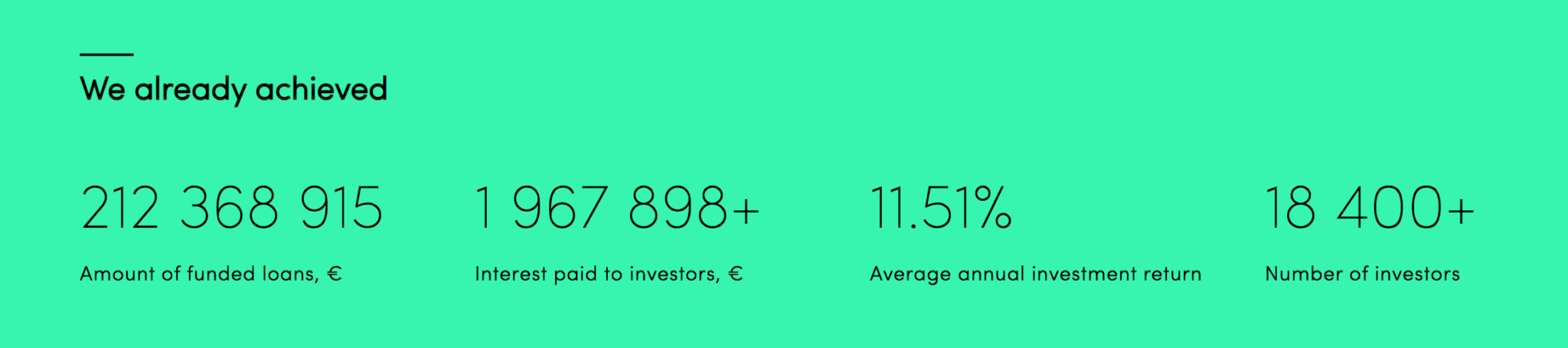
As of late 2025, the platform managed over EUR 35 million in assets under management, with over 20,000 registered investors.
Key Risks
I want to be upfront about the risks, because there are several that matter:
1. Single-country concentration: With Russia, Georgia, Kazakhstan, Vietnam, and the Philippines all gone, Twino is almost entirely dependent on Poland. If something goes wrong with the Polish operation or regulatory environment, there is no fallback.
2. Regulatory arbitrage risk: The credit card reclassification workaround in Poland is clever, but it is exactly the kind of thing regulators tend to close eventually. The CCD2 directive coming in late 2026 could force changes.
3. Frozen Russian funds: While most has been recovered, approximately EUR 1.9 million remains frozen. Investors with Russian exposure should carefully evaluate the buyback offer.
4. Vietnam losses: The EUR 1.6 million in Vietnam is likely gone. This is a real loss for affected investors.
5. CEO turnover: Four leaders in five years suggests organizational instability, even if the current CEO appears capable.
6. No skin in the game: Unlike some platforms, Twino does not co-invest alongside its investors.
What I Like About Twino
Despite the challenges, there are genuine positives:
- Regulatory oversight: Twino is one of the few P2P-style platforms operating under a full MiFID II investment brokerage license. This means real regulatory supervision, capital adequacy requirements, and mandatory financial reporting.
- Solid Polish lending arm: Fincard is genuinely profitable and growing. The underlying loan performance is strong.
- Competitive returns: 12% on Polish consumer loan securities is attractive in the current European rate environment.
- Improved transparency: Under Nauris Bloks, communication has noticeably improved. Monthly CEO updates, published financial statements, and proactive disclosure of problems (Vietnam, Properties wind-down) are all good signs.
- Resolution of legacy issues: The Philippines repayment, the Russia buyback offer, and the Properties wind-down all suggest the new leadership is focused on cleaning house.
Alternatives to Twino
If you are building a diversified P2P lending portfolio, here are other platforms worth considering alongside or instead of Twino:
Diversifying across 3-4 P2P lending platforms is a sensible approach. More than that becomes a hassle to manage unless you have a very large portfolio.
The Bottom Line
Twino in 2026 is a very different platform from the one I first invested in. The geographic diversification that once made it attractive is gone. The Russia crisis, the Vietnam default, and the Ventures wind-down have all eroded trust. And the platform entity itself is barely profitable.
But there are reasons for cautious optimism. The Polish lending arm is genuinely strong. The new CEO is bringing better transparency and cleaning up legacy problems. The MiFID II regulation provides a level of oversight that many competitors lack. And the upcoming FLEXI product could attract new capital and improve liquidity.
Is Twino worth investing in today? I would say it can be part of a diversified P2P portfolio, but with a clear understanding of the risks — particularly the single-country concentration on Poland and the regulatory arbitrage that underpins it. This is not a platform to go all-in on. Keep your allocation modest, use the buyback guarantee, and stay informed about regulatory developments in Poland.