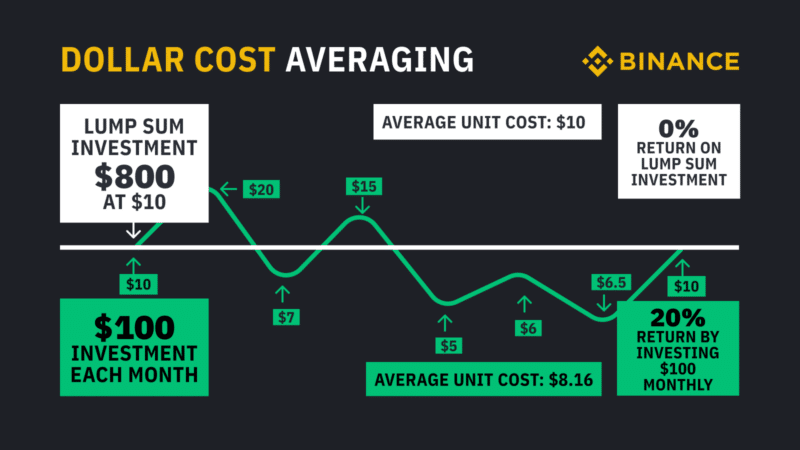
Let’s start with the basics. DCA (Dollar Cost Averaging) is a strategy where you invest a fixed amount at regular intervals — say $200 every month — regardless of the price. Instead of trying to time the market, you spread your purchases over time.
Here’s a simple example: if you invest $200/month for five months and the price of Bitcoin at each buy is $95,000, $85,000, $75,000, $70,000, and $90,000, your average purchase price would be $83,000. If you’d invested the full $1,000 upfront at $95,000, you’d have paid $12,000 more per coin.
DCA doesn’t guarantee profits. But it removes the paralysis of waiting for the “perfect” entry point — which, in my experience, is the single biggest reason people never end up investing at all.
Why Dollar Cost Average into Crypto?
Over the years, one of my most important realizations as an investor has been that the best approach is to find an investment I believe in with a long-term vision, and then make a sustained bet on it. Once that conviction is in place, the only remaining question is: at what price do I get in?
That question has stopped more people from investing than any market crash ever has. I’ve lost count of the stories of people who were ready to buy Bitcoin or Ethereum early on but didn’t pull the trigger because they feared buying at a bad price. Then they watched the price 10x over the next few years.
DCA solves this. Here’s why it works well for crypto specifically:
- Crypto is volatile. Bitcoin can move 20% in a week. DCA smooths out these swings over time.
- It removes emotion. Once your savings plan is set up, it buys automatically. No agonizing over charts, no panic selling, no FOMO buying.
- It works with a salary. If you earn a predictable monthly income, you can allocate a fixed portion to crypto automatically. Set it up once and forget about it.
- It builds discipline. The hardest part of investing isn’t picking the right asset — it’s actually doing it consistently. Automation solves that.
DCA is not a magic bullet. If the asset you’re investing in goes to zero, DCA won’t save you. But for assets you believe in long-term, it’s one of the most practical strategies available.
Now let’s look at the platforms that make DCA easy.
Best Platforms for Dollar Cost Averaging in Crypto (2026)
Kraken — Best for Low-Fee Recurring Buys
Kraken is one of the oldest and most trusted crypto exchanges, and they’ve added a solid recurring buy feature that supports hundreds of cryptocurrencies.
Fees: Kraken’s Instant Buy (which includes recurring purchases) charges approximately 1% + spread, which works out to roughly 1.5-2.5% all-in. However, if you use Kraken Pro (same account, no upgrade needed), maker fees are 0.25% and taker fees are 0.40% at the base tier. The difference is significant over time.
How recurring buys work: Set up a recurring order to automatically buy crypto on a daily, weekly, biweekly, or monthly schedule. You can pause, modify, or cancel at any time.
What I like: The Pro tier pricing is genuinely cheap. If you’re comfortable placing manual orders on a schedule (or using Kraken Pro’s features), you can DCA at a fraction of the cost of most other platforms.
What to watch: The Instant Buy convenience fees are steep compared to Pro. If you’re going to DCA on Kraken, take the five minutes to learn the Pro interface.
For more, see my Kraken review.
Coinbase — Best for Beginners
Coinbase is the most beginner-friendly crypto exchange, and setting up recurring buys takes about 30 seconds. They’re fully licensed in multiple jurisdictions, including a BaFin license for Germany.
Fees: 1.49% per recurring buy transaction. For smaller amounts: $0.99 for orders under $10, $1.49 for $10-$25, $1.99 for $25-$50, and $2.99 for $50-$200. SEPA deposits are free, which helps.
What I like: The interface is incredibly simple. Set the asset, amount, frequency, and payment method — done. Coinbase also offers educational content and “learn and earn” campaigns that give you free crypto for completing short courses.
What to watch: The fees are among the highest on this list. For a $200/month DCA plan, you’re paying roughly $3 per buy. That adds up to $36/year in fees alone. Not terrible, but significantly more than Kraken Pro or Binance.
Read my full Coinbase review for more.
Binance — Best for Wide Crypto Selection with Auto-Invest
Binance has the largest selection of tradable cryptocurrencies among major exchanges, making it ideal if you want to DCA into altcoins beyond just Bitcoin and Ethereum.
DCA options: Binance offers two paths:
- Recurring Buy: Set up automatic purchases using fiat (EUR via SEPA, cards, etc.) on a daily, weekly, or monthly schedule.
- Auto-Invest: Use your existing stablecoin balance to schedule recurring crypto purchases. Purchased crypto is automatically enrolled in Binance Earn’s Flexible Savings to generate additional yield.
Fees: Binance’s spot trading fees are among the lowest at 0.1% maker/taker (with further discounts for BNB holders). Recurring Buy fees include a spread, so the effective cost is slightly higher than spot trading.
What I like: The sheer breadth of assets available for DCA. If you want to build a diversified crypto portfolio across 50+ coins, Binance is the most practical option. The Auto-Invest feature that puts your purchases into Earn products is a nice touch — your DCA’d crypto starts generating yield immediately.
What to watch: Binance has faced regulatory challenges in several European countries. Check the current status in your specific country. Also note that Auto-Invest availability may vary by region.
Check out my Binance review for a deeper dive.
Swan Bitcoin — Best for Bitcoin-Only DCA (U.S. Residents)
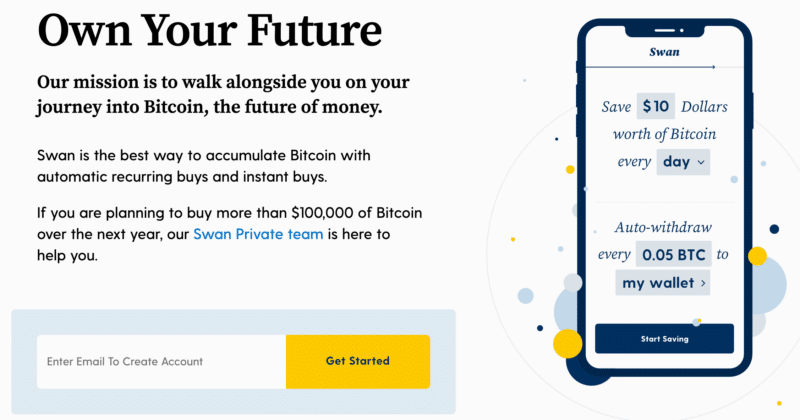
If you’re a U.S. resident and you only want to accumulate Bitcoin, Swan Bitcoin was built specifically for this purpose. The entire platform is designed around recurring Bitcoin purchases.
Fees: 1% fee on all buys and sells (updated July 2025). New customers get their first $10,000 in transactions fee-free, which is a generous onboarding perk.
How it works: Set up automatic Bitcoin purchases on a daily, weekly, or monthly schedule. Swan also supports auto-withdrawals to your personal wallet, which is a big deal for security-conscious Bitcoiners who want to self-custody.
What I like: Purpose-built for Bitcoin DCA. No distractions, no altcoin temptation, no complex trading features. Just consistent Bitcoin accumulation with automatic self-custody options.
What to watch: U.S. only. Bitcoin only. If you want to DCA into Ethereum or other cryptos, or if you’re based in Europe, you’ll need a different platform.
DCA Fee Comparison Table
| Kraken | 1.5-2.5% (Instant) / 0.25-0.40% (Pro) | Yes (Recurring Orders) | Low-fee DCA via Pro | Global (most of Europe) |
| Coinbase | 1.49% | Yes (Recurring Buy) | Beginners | Global (most of Europe) |
| Binance | ~0.1% (spot) + spread | Yes (Auto-Invest + Recurring) | Wide crypto selection | Global (check local status) |
| Swan Bitcoin | 1% (first $10K free) | Yes (core feature) | Bitcoin maximalists | U.S. only |
Tips for Effective Crypto DCA
A few practical tips from my own experience:
- Start small. You don’t need to commit $500/month. Even $50/month builds up significantly over a few years. The point is consistency, not amount.
- Use SEPA transfers. If you’re in Europe, SEPA bank transfers are usually free. Avoid card payments when possible — the convenience fees add up.
- Consider self-custody. Once your holdings reach a meaningful amount, move them to your own wallet. Platforms like Swan and Kraken support automatic withdrawals. See my guide to the best Bitcoin wallets.
- Don’t check the price daily. The whole point of DCA is to remove emotion. Set it up, let it run, and review quarterly at most.
- Track your cost basis. For tax purposes, keep records of every purchase. Most platforms provide transaction history exports. Tools like Koinly or CoinTracking can automate this.
For more on buying Bitcoin specifically, check out my guide on how to buy Bitcoin in Europe.
Frequently Asked Questions
What is the best frequency for crypto DCA?
Weekly or monthly are the most common. Research suggests that the frequency matters less than the consistency. A weekly $50 buy and a monthly $200 buy produce similar long-term results. Choose whichever aligns with your income schedule — if you get paid monthly, DCA monthly.
Is DCA better than lump-sum investing?
Historically, lump-sum investing outperforms DCA about two-thirds of the time because markets tend to go up. But DCA reduces the risk of buying at a peak and provides psychological comfort. For volatile assets like crypto, DCA is particularly valuable because the price swings are extreme.
Which platform has the lowest DCA fees?
For automated recurring buys, Binance offers the lowest effective fees (around 0.1% on spot). Kraken Pro is also very competitive at 0.25-0.40%. Coinbase charges more (1.49%) but offers a simpler setup experience.
Can I DCA into multiple cryptocurrencies at once?
Yes. Coinbase, Binance, and Kraken all allow you to set up multiple recurring buy plans for different assets.
Is DCA safe for crypto?
DCA reduces timing risk, but it doesn’t eliminate investment risk. If the crypto you’re buying goes to zero, DCA won’t protect you. Stick to established projects with strong fundamentals (Bitcoin and Ethereum are the most common DCA targets) and only invest money you can afford to lose.
How do I track my DCA performance?
Most exchanges provide transaction history and average cost basis in your account dashboard. For a more comprehensive view across multiple platforms, tools like crypto portfolio trackers can aggregate your holdings and show your overall DCA performance.
Related


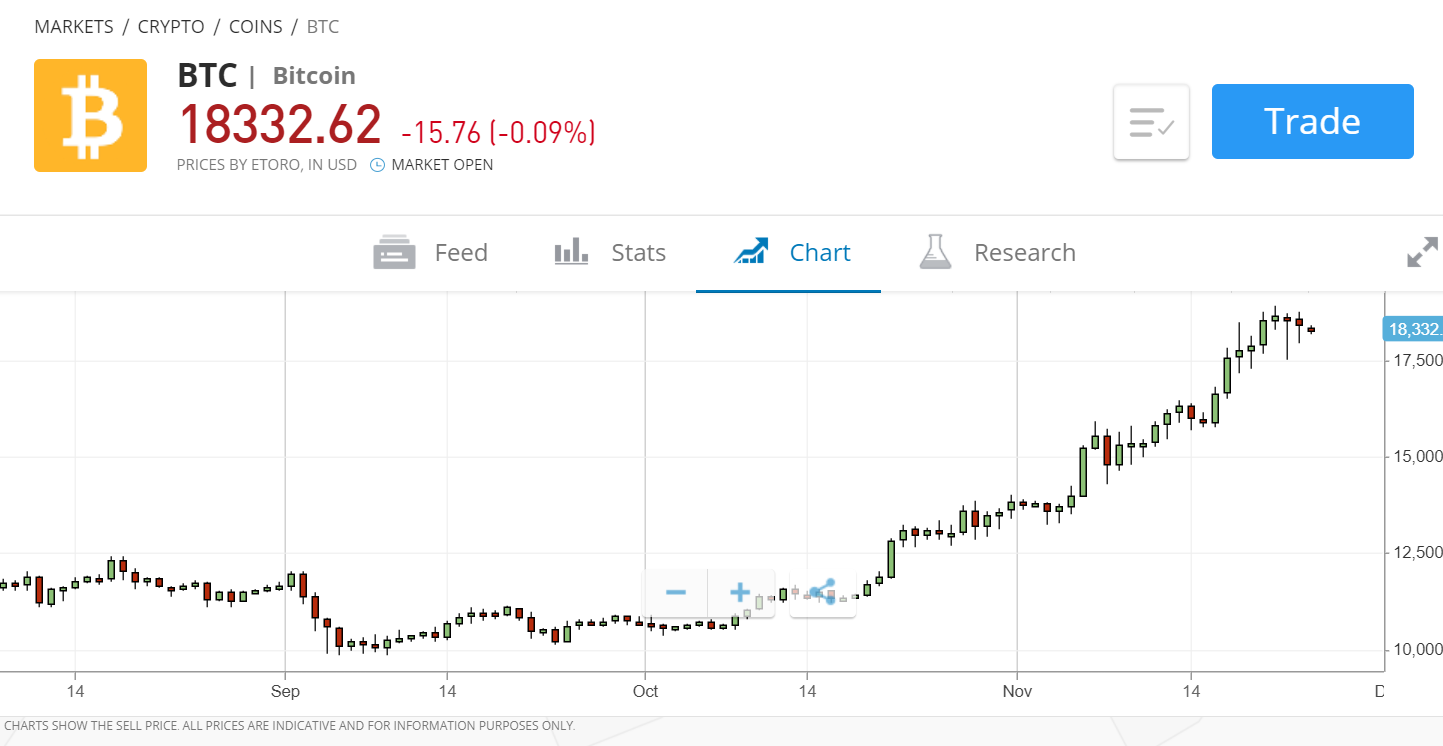



kraken HAS DCA.
pherhaps, Just in mobile version