Jean Galea

Health, Wealth, Relationships, Wisdom

  • Start Here
  • Guides
    • Beginner?s Guide to Investing
    • Cryptocurrencies
    • Stocks
    • P2P Lending
    • Real Estate
    • Forex
    • CFD Trading
    • Start and Monetize a Blog
  • My Story
  • Blog
    • Cryptoassets
    • P2P Lending
    • Real estate
  • Consultancy
    • Consult with Jean
    • Consult a Lawyer on Taxation and Corporate Setups
  • Podcast
  • Search

The Ultimate Guide to Investing in European Real Estate Online

Last updated: February 02, 202612 Comments

Real estate investing needs little introduction. We all know that this asset class has been one of the top choices for investors since time immemorial. Nothing beats owning land and buildings. It’s an asset that you can see, use or rent out. It doesn’t require any technical knowledge so the barrier to entry is very low. And that is why real estate remains the number one place for people to park their money.

I have been dabbling in real estate through various platforms over the years, and this has given me a good idea of what works and what doesn’t. Here’s a quick list of some of my favorite property-based P2P lending and real estate crowdfunding platforms reviewed on this site.

  • EstateGuru
  • Raizers
  • Bulkestate
  • Property Partner

For more information about real estate investing you can head over to my dedicated page on property investments.

REITs vs Real Estate Crowdfunding vs Private Investing

When talking about the real estate market, currently there are three ways of investing:

  • Property Crowdfunding
  • Real Estate Investment Trusts (REITs)
  • Private Investing

There are various pros and cons of each way of investing, so I will describe all three of them in more detail so that you can decide which one is most suitable for your situation and goals.

Property Crowdfunding

Real estate crowdfunding platforms are part of the fintech surge of recent years and have become very popular in countries such as the US, UK, and Spain. A property crowdfunding platform will typically have an attractive and modern website and give the user an experience that is very similar to owning the property directly. As an investor, you will have the opportunity to view properties in exposition phase, where you can read about the location of the property, the developer’s plans and financials, as well as the type of financing to be used (leveraged vs non-leveraged).

Typically, your money will be tied up for a 3-5 year term, although many platforms have now introduced a secondary market where you can put up your shares for sale to other investors.

I have personally invested in several property crowdfunding platforms (such as Raizers) and so far I’m happy with the results. I’m convinced that we’ll be seeing many more people making their first entry into property investing via property crowdfunding platforms versus REITs or private ownership.

Real Estate Investment Trusts (REITs)

Let’s now talk about one of the best ways you can diversify your property portfolio; real estate investment trusts (REITs). They started in the USA but are now available in many other countries around the world. A pure REIT represents the shares of an individual real estate company, while a REIT electronically traded fund (ETF) passively track indexes for the larger real estate market. These REIT indexes include a number of different types of REITs as components. The individual performance of REITs can vary widely. Many REITs are traded on major stock exchanges, but there are also a number of private and non-publicly traded REITs.

REITs own many types of commercial real estate, ranging from office and apartment buildings to warehouses, hospitals, shopping centers, hotels and timberlands. Some REITs engage in financing real estate.

The iShares Europe Developed Real Estate ETF is an example of a European real estate ETF that you might want to check out. The ETF seeks to track the investment results of an index composed of real estate equities in developed European markets. You can expect to pay around 0.5% in fees when choosing such an ETF.

The Vanguard REIT ETF (VNQ)is the largest US REIT in the sector and began trading in 2004. It invests in stocks issued by REITs and seeks to track the MSCI U.S. REIT index, the most prominent REIT index.

One thing to consider is that a publicly-traded REIT is usually highly liquid. That means that you can easily sell your investment at any point in time if you need the money or if you’re not satisfied with your investment.

With a REIT you can obtain much wider portfolio diversification with the same amount of money when compared to private investment. You will also be totally detached from the management of these properties, which you might consider to be a bad thing or a good thing, depending on your interest and skills in real estate.

Private Investing

Private investment is the oldest and most well-known form of investing in the property market. An investor would purchase one or more properties and rent them out to obtain a monthly rent payment. To possibly obtain higher returns, the investor could also flip properties. Flipping properties involves buying an older property, fixing it up and selling it again. The whole operation is usually done within 8-12 months and in areas where the price of housing is rising in a fast and consistent manner.

Private investing offers you maximum control over your investment. You can deal with clients personally as well as refurbish the property as you deem fit. If you’re an expert in the local market and have the right contacts, this might be a good opportunity for you. Needless to say, you will need a lot of time to supervise the refurbishment of properties, as well as to make sure that your rented properties are well managed and your clients are properly taken care of whenever they have a problem.

The biggest con with private investing, apart from the time requirement, is the lack of diversification. Unless you have millions of euros/dollars to invest and have a deep knowledge of the property market in several countries/cities, you will struggle to diversify your property portfolio. You will thus be at the mercy of the local economy of typically one city/country, as well as the building you invested in.

Another issue is that if you invest in just one or even a few properties, vacant periods will seriously affect your cash flow. It might easily take one or two months to find a new tenant (even assuming strong demand in the rental market) and during that period you will have zero income from your property. Whether this will affect your lifestyle, of course, depends on your particular situation. Imagine a retired person with limited savings who relies on the rent payment from one property to get him through each month. Then imagine the property remains vacant for a few months due to whatever reason. You can understand why that would have a very significant impact on his life.

Personally, I am not a fan of private investing. Dealing with the day-to-day issues that crop up is something that would seriously affect my sense of freedom, and hiring a property management firm would involve more overheads and take away control over the level of service that the clients receive.

Secondly, I am not a property market expert and have little interest in keeping up-to-date with several local markets.

Thirdly, I don’t have the money to purchase several properties in order to diversify, and neither do I fancy taking out loans from the bank to fuel such purchases. Again, I’m only giving some insight on my personal situation to illustrate that every person needs to make his own analysis of his situation and conclude whether one style of investing is ideal for him or not.

To sum this section up, I would say that private investing is ideal for people who are passionate about property, have considerable capital to play around with (or are comfortable with taking out several loans), and want to do this as a part-time or full-time job.

Why I Prefer Real Estate Crowdfunding

As I already mentioned, private investing is definitely not something I’m interested in at this stage. I have zero interest in the day-to-day management of properties, and furthermore, I don’t have the capital nor the wish to take on loans to finance the purchases of property.

My biggest issue with REITs is precisely the fact that you are very detached from the underlying properties.

With property crowdfunding, I find that I can stay free from the annoying parts of managing properties, while at the same time having full access to the properties’ financials, business plans and individual performance. So far I’ve had a go at investing in Spanish property, UK real estate. The Baltic real estate platforms were the best performing by far.

Apart from the potential to earn a good return, property crowdfunding is a great educational experience that will probably come in handy in the future if I decide to go for private investing or buy my own property to live in.

Why do Borrowers Obtain Finance from Real Estate Crowdfunding Platforms?

A common question that comes up with investors new to real estate crowdfunding, is why exactly do borrowers go to these platforms when borrowing rates are so low these days? Why don’t they go to the banks directly?

Every entrepreneur and property developer is looking for the best measures to save money and earn a solid profit, so why would they take on debt obligations with an interest rate of 11% per annum?

The answer is not unequivocal as there are several advantages to be taken into account when evaluating financing possibilities on P2P lending platforms and real estate crowdfunding sites:

Speed

When using traditional financing methods, real estate developers often fail to get the desired results within the required timeframe – banks make decisions slowly, the period from application submission to receiving funding may be up to 4-6 months, while P2P lending platforms can provide an indicative offer within 24 hours of submission and money on the borrower’s account within 2 weeks. Developers are happy to use this opportunity as a “bridge” – you can start working on your project while the bank is still evaluating it.

Loan Period

When considering the possibility of using a P2P lending platform for financing your project, it should be taken into account that this is a short-term solution for the sales period of the property, during the development phase of the project or a bridge loan. The major benefit can however be seen in the fact that many of the above platforms allow early repayments with no penalties, so should the borrower sell one of the apartments or establish long-term financing, they can repay the loan earlier if convenient. This means that if the funds were used for 6 months and 6 days, then the interest payment will be calculated for exactly 6 months and 6 days.

No monthly payments

P2P lending platforms normally enable flexible repayment schedules, for example, the possibility to pay both interest and principal at the end of the period – you won’t find this kind of opportunity in traditional financial institutions. This significantly boosts work on a new project by enabling the borrower to fully focus on the project, with no additional liabilities each month. The developer can use the money to actually finance the project, not to pay interest.

Additional marketing

What is the cost of a new development project’s sales campaign in the media and how effectively can you reach people who are interested in real estate? Many of these platforms have thousands of registered investors from different countries interested in property and development, which gives the developers free publicity for their projects.

Doesn’t the publication of a project’s financial data in a public manner negatively affect the eventual sale of the property?

Not really, although it might initially appear to have that effect. In reality, what happens is that the eventual buyer is looking at the property and comparing the price to other properties in the same area in the same conditions. The buyer is also comparing the price and property to other properties he has shortlisted, even in other areas. Therefore, ultimately these two facts are much more important than the limited downside of the project details being published on the platform.

Many platforms also limit access to the project’s most important financial details to investors themselves, meaning the eventual buyer (unless he is an investor himself) would not have seen those details.

Communication and knowledge

A less important factor might be the opportunity to get another partner on board. A partner who understands the business has evaluated dozens of similar projects. If your project gets rejected, it probably means that there is something seriously off and you can go back to the drawing board to make adjustments. With banks, sometimes getting rejected is just the result of excessive bureaucracy and doesn’t mean there is necessarily anything wrong with your project.

When investing in real estate, there are many ways we can put our money to work. Each type of real estate investment carries its own risk factor as well as yield percentage.

How Property Crowdfunding is Taxed

So how does taxation of property crowdfunding finance work? We can use Property Partner as an example.

Property crowdfunding is a form of indirect property investment. This consists of the investment in shares of a company that owns, develops and manages property on behalf of its shareholders. Investors will hold legal shares in the company that owns a specific property. For each investment, an SPV company is created. Information on the special purchase vehicle (“SPV”) that holds the property can be found on the companies house website. Please type the SPV name into the search box on their site to find out more details.

Each property is held for a fixed term which is specified on each investment page. The investor hopes to receive a financial return in the form of dividends on rent received as well an increase in the value of the property subsequently shown as an increase in share price. The value of investment may go down as well as up and, as with all investments, you may get back less than you have invested. Indirect property investment allows investors to enter property markets without having to provide the full, up-front capital of buying a house or flat.

Your shares are held in a nominee account, registered in the name of Property Partner Nominee Limited. This account is ring-fenced from the assets and liabilities of Property Partner. You, as the beneficial owner, will receive all of the economic benefits including dividends and capital returns. More information on the nominee structure can be found on the Property Partner site.

Investment Costs are calculated using a First In First Out (FIFO) costing method per share, rounded to the nearest penny.

What income is taxed?

In most countries, you are taxed on capital gains as well as dividends, which are the two ways you can make money with property crowdfunding on platforms such as Property Partner.

With that in mind, you will then have to consult the laws of your country of residence to determine the tax rates for capital gains and dividends.

Please note that I am not an accountant or financial advisor, the above is the fruit of my personal research, and might contain inaccuracies. Before you submit any tax returns, I highly recommend you contact a tax consultant or accountant to check your numbers. 

How to Evaluate Real Estate Crowdfunding Investments

With the proliferation of real estate crowdfunding websites over the past years, investors can now invest all over Europe and the UK from the comfort of their homes.

Not all platforms and investments are equally good, however, and while it is good practice to diversify and thus spread the risk, it still makes a lot of sense to have a basic skill set in evaluating real estate investments, before you hit the Invest button.

In general, from my experience, investing in loans tends to be riskier, however, it is the format favored by many projects on these crowdfunding websites, as it is much more straightforward to structure. The alternative is to set up a company that owns the property, but that incurs more costs and is harder to manage. The advantage for an investor, however, is that he would own shares in a property and thus not be at the sole mercy of the developer.

Loan-To-Value

If the deal involves giving a loan to a property developer to build or refurbish a property, a very important metric to look at is loan-to-value, or LTV in short.

The lower the loan amount compared to the value of the property, the safer you are as an investor, as it means that in case of any problems, the chances of recouping the investment are higher.

You have to be extra cautious with this one, and take a close look at what value figure is being taken into consideration.

This can easily be explained by an example. Let’s say the developer puts up a project that involves buying an old and dilapidated building at 500,000 Euro, refurbishing it completely to luxury standard, and selling it off within a year for 1,000,000 Euro. He asks for a loan of 250,000 Euro for the project.

Now, here’s the trick some platforms use. Instead of listing the project as having a loan-to-value figure of 50% (250,000 divided by 500,000), they will use the anticipated value of the finished project, giving a loan-to-value figure of 25% (250,000 divided by 1,000,000).

I would advise staying away from these kinds of projects, as they tend to be much riskier. The price that the project is eventually sold at depends on many factors, including how good of a job the developer does, prevailing market conditions, the buyers’ profile, etc. As investors, we should concentrate on the facts, and therefore look at the value of the property right now, and that is 500,000 Euro in our example.

The fantastical figures that developers provide can lead to investors getting burned, as happened with the Lendy platform, which eventually went bust.

First or Second Rank Mortgage

A mortgage is the collateral of real estate which is pledged against borrowed capital. It is divided into primary and secondary ranks, which indicate which investor or institution is the first to recover the money. Typically, a first-rank mortgage holder in large projects is a bank or other large financial institution, while the second-rank mortgage is held by crowdfunding platforms or other institutions.

In general, you should prefer first rank mortgages. Platforms like LANDE only do first rank mortgages, for example. Other platforms might offer the riskier (but potentially more profitable) second-rank mortgages.

Secondary rank mortgages are quite popular on the German and British real estate crowdfunding platforms, such as Property Partner.

There are nuances, of course.

For example, if the property is already built and has tenants that generate rental income the risk is naturally lower. When assessing the risk in such a scenario, one should look at the property’s profitability.

Consider the case of a €5M property that is generating a net rental income of €350,000 or a 7% annual return, You can check what would be the return for primary and secondary mortgage holders. You can do this with a simple formula:  €350,000 (rental profit) / €3,600,000 (sum of primary and secondary mortgages loan values) * 100 = 9.72% net yield.

This step is important to assess the liquidity of the real estate, which helps to understand whether after a takeover of the asset it would be difficult to find a buyer and repay both mortgages to the investors. In this scenario, selling a property that is generating a yield above 9% shouldn’t be complicated.

Apply Financial Ratios & Rules

When you are buying a property, or investing through online real estate crowdfunding platforms. it’s a good idea to keep in mind the following ratios that can help you in judging whether this is a good investment or not.

Price/Rent Ratio

Look at the median price and median rent for the area in which you are considering buying a property. You will want to favor lower ratios versus higher ones.

The 50% Rule

The 50% Rule is just a shortcut to estimate the Net Operating Income or NOI of a rental property.

The 50% Rule says that you will only keep 50% of the rent you collect on an average rental after paying for vacancy, management, taxes, insurance, and maintenance.

The 50% Rule and NOI exclude mortgage costs.

Capitalization Rate

The 50% Rule allows us to quickly determine a cap rate so that we can decide to pursue the deal or not.

A capitalization rate is a tool experienced investors use to compare the performance of one property to another.

In some neighborhoods, a 6% cap rate will be a great deal. In other neighborhoods (usually lower-priced ones) a 12% cap rate or more might be needed to make it worthwhile.

The 1% Rule

The 1% Rule states that your gross monthly income from the rent of a property must equal or surpass 1% of the total investment in that property. By total investment, I mean the purchase price plus fees and expenses to refurbish the property before putting it onto the rental market.

As an easy example, if your total investment into a property was €100,000, then you would want to get at least €1,000 a month in gross rental income.

The 2% Rule

This is exactly the same as the 1% Rule, except this time we are looking for a 2% gross return in monthly rent versus the total investment.

When To Apply Each Rule

The obvious question is, therefore: when should we apply each of these rules. The answer is that it is totally dependent on the area you’re considering. There are some areas where a 2% deal is possible from time to time, and other areas where even a 1% deal would be a real stroke of luck.

The key here is to know the yields being produced in the area and the investments needed to produce those yields. Armed with that information you can then decide whether to apply the 1% or 2% rule to your investment options.

Rule Limitations

Like every shortcut, these rules have limitations. The major limitation you should be aware of is that what matters most in buy-to-let is the net rental income.

Here are a few costs that will eat into your gross monthly rental:

  • Taxes
  • Insurance
  • Maintenance
  • Management
  • Vacancy/Turnover
  • Condominium Fees

Some of these costs will inevitably be equal for all properties in a particular area (taxes is one such example), but others may not (for example maintenance). An older building might meet the 1% Rule criteria while a new building wouldn’t, however, the older building will probably have significantly higher maintenance costs. It might therefore very well be the case that the newer property might end up outperforming the older property even though at first glance and based on the 1% Rule the old building looked like a better investment.

Using the Rules

Given the additional intricacies we discussed, the best use of these rules is for quick filtering and comparison. If you’re using crowdfunding property platforms, for example, you’re likely to have several options to consider every month, and having a few quick rules to sort out the wheat from the chaff will be useful in saving precious time. Once you narrow down your options to a handful of properties, you can then dig deeper until you find your perfect investment.

Consider the Platform’s History

Take a look at the history of the platform you plan to invest in. Ideally, it should have been operating for a number of years already with no significant issues. If it’s been through a sideways or downward market and emerge unscathed that’s even better. Everybody can perform well when the market is up, but when the market is not helping many platforms cease to make updates and run into problems.

Property Partner are a good example of how to keep things professional and take care of your investors in a bad market, such as that of the UK during and after Brexit and the COVID crisis.

Read Reviews

While you should always assume that the reviews you read online are biased in some way or another, I still recommend checking out blogs, forums and specialist review websites to get a general feel of whether a platform is trustworthy or not.

Do you use any other criteria when evaluating real estate crowdfunding platforms? Let me know in the comments section.

Yield VS Risk Relationship in Real Estate Investing
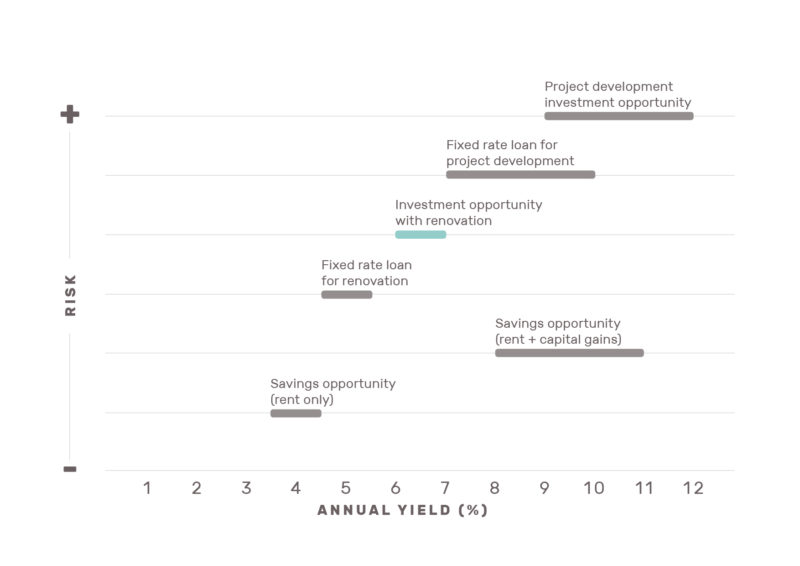
Like any financial product, the higher the estimated yields the higher the risks. Investment opportunities with renovation are placed in a balanced position in the real estate investment type chart, almost in the middle, which is also why they are one of the most popular projects on many crowdfunding platforms.

Which are your favorite types of real investment? I’m a big fan of renovations that last around 8 months from purchase to an eventual sale. I tend to balance my portfolio with this type of investment together with savings opportunities where I get dividends/rent every month and have a constant flow of income.

Do you invest in real estate? Have you tried out property crowdfunding or other types of investing in property? Let me know in the comments section.


Filed under: Money, Real estate

What do You Spend Time On?

Last updated: February 10, 20232 Comments

One question that I’ve ruminated on a lot (as in, years of internal thought, research, etc) is how should I spend my time.

I’ve always had this feeling that we don’t give too much importance to this question, and fall into well-defined societal templates without much care.

Over the years, I’ve realized that the question does not involve endless productivity exercises and extremes of lifestyle design and optimization.

It really boils down to what my priorities are.

That might seem like an easy answer, but it was quite a struggle to get to the bottom of it and be honest enough with myself to come up with three main priorities.

Anyway, here they are:

  1. Health and Fitness
  2. Relationships
  3. Wealth Generation
  4. Learning and Hobbies

With those in place, it’s very easy to know what I need to do every day in order to feel fulfilled and satisfied.

Within the health and fitness domain, my main objectives are strength, flexibility and injury prevention. With those covered, I also cover the cardio and play needs through playing padel and tennis. Being in good health and physical shape keeps me lucid and positive, and thus able to reach out beyond myself and move on to my second priority: relationships. I need to train with specific objectives in mind, using the deliberate practice theory.

Hopefully, we all know how relationships are essential to leading a good life. The saying no man is an island really is true. I’m not talking about constantly being surrounded by people, but about cultivating deep relationships with at least 5 people in our lives. I know who those 5 people are and make sure that my bond with them stays strong. Of course, when you have kids this point becomes even more important.

And my third priority is wealth generation. Generating wealth in various ways keeps my mind alive and excited. I’ve always been interested in business and ways I could provide value to the rest of society and in so doing generate wealth for my family. It’s not that much fun being very healthy and having great relationships when you can’t provide for your family and enjoy fine things in life like a comfortable and relaxing home, good food and drink, travel, etc.

My fourth priority is learning and hobbies. I am always learning something new, maybe languages, how to draw, playing some instrument, or just reading about new topics such as history or science. This keeps my mind active and my knowledge always growing.

Be sure to be completely honest with yourself about whatever your priorities might be, and don’t let others’ expectations define your priorities and the way you live.

I’ve recently come to a very important realization that has revolutionized my approach to productivity and really my life in general.

I frequently used to feel overwhelmed by the opportunities I have around me and the stress to be successful and do all the worthwhile activities that I have the opportunity to do. The problem is that there never is enough time in a day, and that leads to anxiety and a sense of having missed out on something great and instead spent time on something less useful.

Here’s an exercise that I started doing periodically, and it really is the starting point to living a great life.

Imagine you had infinite financial resources and time to do whatever you want. What would you do? I make a list of all the things I want to do, and categorize them into daily, weekly, and less frequent things.

Here are some examples:

Daily

  • Meditation
  • 5 hours of work
  • Studying languages
  • Reading a book

Weekly

  • Calling friends and family
  • Cooking a new dish
  • Cycling day with my wife
  • Attending meetups

Occasional

  • Short (1 week or less) trips to other countries
  • Research and shopping

The fastest way to gain control over your time and eradicate this sense of overwhelm is to eliminate everything you can and have a proper framework for saying Yes to the right things and No to the wrong things.

I do my best to follow Derek Sivers’ advice on this: No “yes.” Either “HELL YEAH!” or “no.”

As Steve Jobs said during Apple’s WWDC in 1997, there are situations where “the total is less than the sum of the parts”. Apple was doing too many things and failing as a company before he was put back into the driving seat. His biggest move was to ditch many of the projects (a painful exercise) and focus on a very limited number of products that could really revolutionize the market and Apple’s fortunes. The result of that was legendary products such as the iMac and iBook.

“People think focus means saying yes to the thing you’ve got to focus on. But that’s not what it means at all… It means saying no to the hundred other good ideas that there are. You have to pick carefully… I’m actually as proud of the things we haven’t done as the things we have done. Innovation is saying no to 1,000 things” – Steve Jobs

YouTube video

What all this boils down to is the act of starting from zero and imagining that you have infinite resources, then start noting down what you would spend your time on. Of course, the resulting list will probably include things that you really enjoy or that give you a lot of benefits in return.

So the act of thinking in terms of infinite resources helps to clear your mind from any judgments and artificial walls that might be preventing you from committing to doing something. On the other hand, the fact that you focus on eliminating distractions and judiciously choosing which items to put on your list will make sure you have a limited list of things to focus on. When a new distraction comes along, you will most probably have already thought about it and discarded it in favour of more important things, so you can quickly dismiss it before it starts eating into your day and mind space.

Here’s an interesting question I came across:

What do you see as unimportant and don’t spend time on that a lot of other people see as important and spend a lot of time on?

I love these kind of questions as they let me reflect on the way I behave and perhaps find things that I should change. This is quite a loaded question and is framed within the context of the lives of the majority of people living in the West.

Here’s my list:

  • Social media (except for Twitter ~10 mins a day)
  • Religion
  • Discussing mainstream news
  • TV (I do watch a few thought-provoking series though)
  • Celebrity culture
  • Daily stock/crypto prices
  • Politics
  • Group discussions (I prefer deep 1-1 conversations)
  • Commuting during rush hours

On the other hand, there are also a number of things that I spend a lot of time on that a lot of other people probably don’t. Here’s a few I thought of:

  • Researching restaurants to try out
  • Practicing sports (mostly training and playing padel)
  • Health (education, check ups, physiotherapy)
  • Travel
  • Learning languages
  • Reading
  • Meditation
  • Education
  • Blogging
  • Journaling
  • Tidiness (keeping possessions organized and clean, data backups and organization)

On occasions when I want to make a major purchase I will spend an inordinate amount of time on research, which might not be that optimal. On the other hand, I do enjoy the process of research and educating myself about the product I’m planning to buy, and I feel it makes my appreciation of the product I end up getting.

Perhaps after spending some time reflecting on this question, it’s worth reading about the five most common regrets of the dying.

Here’s what the majority say:

  1. I wish I’d had the courage to live a life true to myself, not the life others expected of me.
  2. I wish I hadn’t worked so much.
  3. I wish I’d had the courage to express my feelings.
  4. I wish I had stayed in touch with my friends.
  5. I wish that I had let myself be happier.

I guess it’s well worth rethinking how you spend your time in the light of these regrets of the dying.

What would your lists look like?

Your Life in Perspective

Here’s a very interesting thread from the Twitter account @Kpaxs. It really makes you think about how we spend our time here on earth.


  • You sleep for thirty years without opening your eyes.
  • You spend seven months having sex.
  • For five months straight you flip through magazines while sitting on a toilet.
  • You take all your pain at once, all twenty-seven intense hours of it. Bones break, cars crash, skin is cut, babies are born. Once you make it through, it’s agony-free for the rest of your afterlife. But that doesn’t mean it’s always pleasant.
  • You spend six days clipping your nails.
  • Fifteen months looking for lost items.
  • Eighteen months waiting in line.
  • Two years of boredom: staring out a bus window, sitting in an airport terminal.
  • One year reading books.
  • Two weeks wondering what happens when you die.
  • One minute realizing your body is falling.
  • Seventy-seven hours of confusion.
  • One hour realizing you’ve forgotten someone’s name.
  • Three weeks realizing you are wrong.
  • Two days lying.
  • Six weeks waiting for a green light.
  • Seven hours vomiting.
  • Fourteen minutes experiencing pure joy.
  • Three months doing laundry.
  • Fifteen hours writing your signature.
  • Two days tying shoelaces.
  • Sixty-seven days of heartbreak.
  • Five weeks driving lost.
  • Three days calculating restaurant tips.
  • Fifty-one days deciding what to wear.
  • Nine days pretending you know what is being talked about.
  • Two weeks counting money.
  • Eighteen days staring into the refrigerator.
  • Six months watching commercials.
  • Four weeks sitting in thought, wondering if there is something better you could be doing with your time.
  • Three years swallowing food.
  • Five days working button.

Our life is split into tiny swallowable pieces, where moments do not endure, where one experiences the joy of jumping from one event to the next like a child hopping from spot to spot on the burning sand.


Here are some other posts that help put a perspective on the time we have here on earth:

  • 100 Blocks a Day
  • Your Life in Weeks
  • Putting Time in Perspective

Filed under: Thoughts & Experiences

How to Improve Your English Pronunciation

Last updated: September 05, 20255 Comments

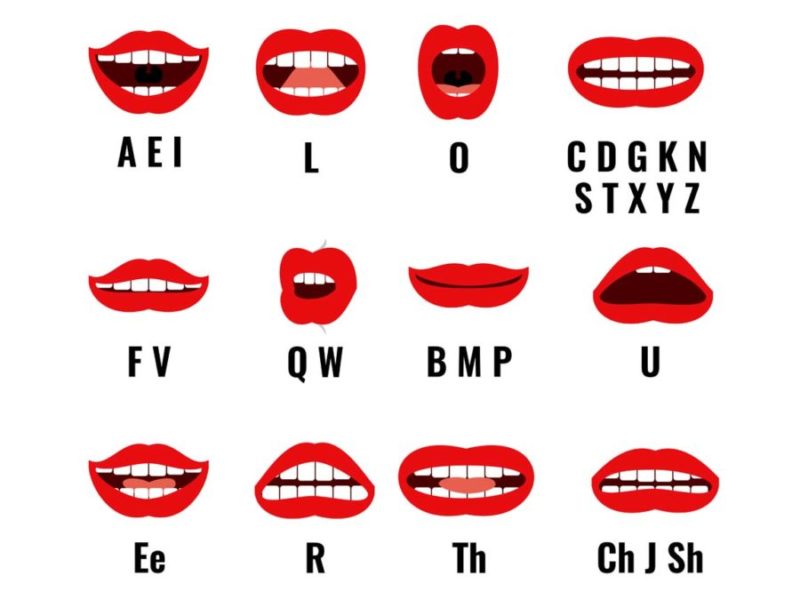
These are my top tips, based on my experience, on how you can improve your English pronunciation.

Decide which flavour of English you want to concentrate on

The three big ones are American English, British English and Australian English when it comes to pronunciation. Most people will want to learn American English as it is the most widely used, and frankly, for business use, that’s the best one to learn. In the future, we might need to learn Mandarin, but for now, the US is the world leader in business and innovation. So go with American English pronunciation unless you have some specific reason to learn one of the other two. A typical reason might be acting in a movie where your character is supposed to have a British English accent.

I like to use SoundsAmerican for learning the correct pronunciation of letters. I use the BoldVoice app regularly for improving my pronunciation when I’m not working with a personal tutor. ChatGPT can also be a great ally.

Methodologies. Books, Courses, One-to-One Training?

There are several resources available to you for helping you improve your English pronunciation. An important factor is your budget. There is no doubt in my mind that the most effective strategy is to go for personal one-to-one training, which can be done online using Skype. It is unfortunately also the most expensive option. Refer to the recommended tutors list below.

Recommended Books & Audio CDs

  • American Accent Training – Ann Cook
  • Tree or Three? Student’s Book and Audio CD: An Elementary Pronunciation Course – Ann Baker (British accent)
  • Ship or Sheep? Book and Audio CD Pack: An Intermediate Pronunciation Course – Ann Baker (British accent)
  • English Pronunciation in Use – Mark Hancock

Recommended Online Video Courses

  • Rachel’s English
  • Pronunciation Workshop

Recommended Tutors for Private Lessons

Should you opt for the personalized route, here are a few expert tutors to consider:

  • Geoff Lindsey (30-minute sessions via Skype)
  • Tom Kelley (1-hour lessons via Skype)
  • Pronunciation Pro (several packages to choose from)

Filed under: Expat life

Padel Points FAQ – Was it a Valid Point or Not?

Last updated: March 18, 202391 Comments

Many times while playing padel, we encounter situations where we have a doubt: was that ball a fault or not?

The official rules of padel can be found here, but the situations described below tend to cause confusion and debate even in professional tournaments, so it’s worth revising them and knowing how to act if the situation arises.

Let’s have a look and attempt to clarify some of the most common doubts that padel players face.

Case 1 – The ball bounces right in the angle between the back wall and the ground. Was it out or in?

This is known as huevo in Spanish, which means egg. I’m not sure why that is so, but that’s what it’s called. In order to understand whether it was in or out, we need to consider the angle of the trajectory taken by the ball after its bounce. If the ball’s trajectory forms a 45 degree angle or bigger with the ground, then it is considered in, while if it bounces off closer to the ground then it was out. It’s quite logical really, just applying the laws of physics.

Case 2 – We serve and the ball bounces on the ground and then rebounds off the part between the mesh and the side wall, called pico in Spanish, and border in English.

If the ball rebounds in the direction of the receiver, then it’s a valid serve, if not it is a bad serve. This is a rule that is very often confused at beginner level, and it is commonly given as a let. This is incorrect, and the rule just described should apply instead. It has to be either a good or bad serve, and never a let.

Case 3 – We run up to the net to return a ball, and we don’t manage to break fast enough and touch the net by mistake. 

The net cannot come into contact with our bodies or rackets at any point during the match, hence we automatically lose the point in this case.

Case 4 – In the attacking position, close to the net, we hit the ball while our racket is in our opponents’ side of the court. 

Whether it’s a valid point or not depends on the situation:

  1. If the ball hasn’t yet crossed to our side of the court, then it’s not a valid point and play is stopped as this is an infraction of the rules.
  2. If the ball has crossed to our side, rebounded against the walls and is heading back towards our opponents’ side, then we are free to invade our opponents’ court with our racket to return the ball. It is important not to touch the net while doing so.

Case 5 – In our attacking position, we hit the ball on our side of the court but subsequently our racket invades the opponents’ side of the court due to swing inertia.

It’s valid, keeping in mind that we can at no point in time touch the net with our racket or any part of our body or clothing.

Case 6 – We serve and the ball bounces more than one time in the receiver’s box. 

It’s a valid point for the server as the receiver cannot let the ball bounce twice in his side of the court.

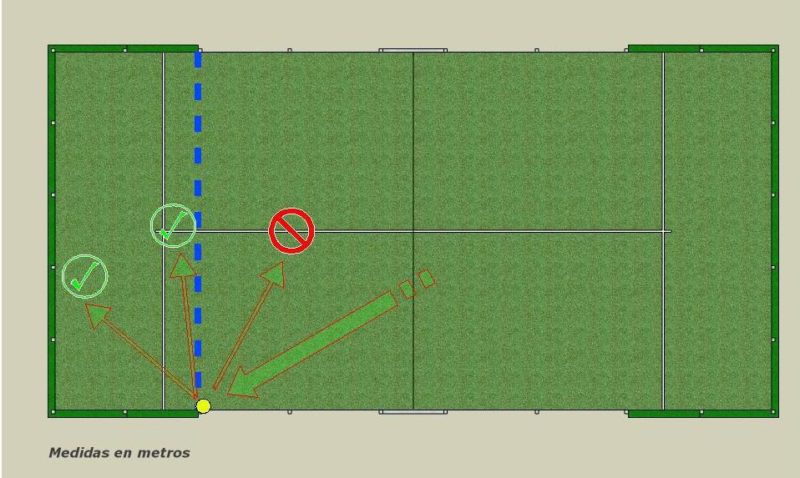
Case 7 – We serve while stepping on the imaginary central line that there is from the center of the court till the end of our side of the court. 

It’s a bad serve as we cannot invade the other side of the court while serving, nor step on the imaginary line.

Unfortunately many amateur players do this and even insist that it’s allowed. No doubt, seeing professionals do it and not being sanctioned encourages this kind of nonsensical behavior.

Here’s an example from a tournament in 2019, a quarter final no less. Agustin Silingo, a top player, repeatedly serves illegally in a very clear way, and has the audacity to pretend that he didn’t know what the problem was when the referee faults him on one of his illegal serves.

YouTube video

Case 8 – When serving, we bounce the ball inside the box. 

This is a bad serve, since we should bounce and hit the ball outside of the box. Keep in mind that you cannot step on the box’s back line either.

Case 9 – We serve and the ball bounces on the serving line or the center line of the receiver’s box. 

It’s a valid serve, the lines are included in the receiving box area.

Case 10 – The ball bounces on our side and rebounds off the fence at the back of the court, above the glass wall.

The ball remains in play, there are no issues. However you cannot bounce the ball off this part off the fence yourself, as you would when bouncing the ball off the back wall to return it.

Case 11 – We hit a high ball, or globo, and the ball hits the ceiling.

Play stops and a point is awarded to your opponents. The same thing happens if the ball hits the floodlight or any other external object.

Case 12 – While returning the ball I carry it. Instead of the usual hitting the ball, there is that extra moment or two of contact between the racket and the ball, as I accompany the ball instead of hitting it. This is typical of balls that end up very close to the back wall after a lob, or during the execution of a chiquita, or during a dropshot.

The point is valid. Check this video of Bela doing an incredible dropshot:

YouTube video

This is the excerpt from the official rules in Spanish:
Regla 14, Punto g), Reglamento FIP: Devolución correcta.
Si se “acuchara” o se empuja la pelota se considerarà correcta la devoluciòn siempre que el jugador no la haya golpeado dos veces, el impacto se efectùe durante un mismo movimiento y no varìe sustancialmente la salida natural de la pelota.

Do you have any other questions or doubts about padel points? Let me know and I’ll add more Q & As.

Filed under: Padel

How I Found the Best Web Hosting for WordPress Blogs and Sites

Last updated: September 21, 20224 Comments

Searching for a web hosting company to host your blog or site can be a really time-consuming, frustrating, and draining task. That’s a fact. I know people who have been publishing sites for years and who have still not found a hosting solution that they are completely satisfied with.

Today I am sharing my experience to help you find a perfect host for your needs.

Yes, we need to focus on your needs in order to find the best web hosting solution for you. The biggest mistake you can make is to read page upon page of reviews on web hosting forums, without first carefully analysing your particular use-case. Sure, some web hosts are more reliable than others, some of them have great customer service and others seem hell bent on making their customers lives miserable, but that is not the most important thing to start from.

I started my adventure with web hosting many years back, and my first web hosting experience was far from positive. In fact, the first company I had chosen suddenly disappeared, taking with it all its clients’ data. Can you believe that? That cost me much grief as in those times I used to rely on backups provided by the hosting company itself. Which means that I had no access to my data and neither to the backups.

After that traumatic experience, I decided that I was going to change my strategy with hosting completely.

Here’s what I did.

First of all at that time I switched over to WordPress, and have been using this CMS for any website I build since then. If you’re building sites and haven’t used WordPress, you’re really missing out, go check it out immediately!

Anyway, the first step of my strategy was to take responsibility for my own backups. After much research, I decided to use BlogVault.

With backups taken care of, I proceeded to take a good look at the websites I needed to host. I had a whole range of sites, some of them my own, and others of friends of mine. Not all of them had the same requirements, a few would do with basic hosting while others like WP Mayor needed specialized hosting to handle a large number of visitors.

By now I’m sure you’re realising that you cannot go searching for the cheapest web hosting, the fastest web host, etc. because there ain’t no such thing.

There is no best web hosting provider.

But…

There is a best hosting solution for each of your sites.

What are we saying here? We’re simply saying that your search for web hosting needs to start from the needs of each and every website you want to host, and once you know what you want, it’s relatively easy to find a good web host.

I told you that for a site like WP Mayor I needed specialised hosting. Why is that? Well, that particular site has a global audience, so the site must be loading fast from any corner of the world. That suggests the need for a Content Delivery Network (CDN) so anyone can get the page elements loaded from a location closest to him.

What about server power? That site receives thousands of monthly visitors, and so I needed a server which packed a punch in its setup, and was able to handle sudden spikes of traffic. Caching was definitely on the cards here, together with raw computing power. Besides, I don’t have the time or knowledge to tweak a hosting setup for these specialised requirements.

A quick look around and it was fairly evident what the solution for WPMayor’s hosting was: a WordPress managed-hosting solution. I needed someone to host my site, someone who I could rely on and who had experience working with WordPress and tweaking the hosting environment to be perfectly optimised for this CMS. Turns out there is a hosting company which provides just that, and everyone who works there is knowledgeable at WordPress + Hosting. Just perfect!

Specialized Managed WordPress Hosting: WP Engine or Kinsta

WP Engine and Kinsta are in my opinion the most reliable WordPress hosting solutions out there, with an equally reliable support staff who are always ready to help you out with any issue you might have.

If you have specialised requirements for your blog, or run a high-traffic blog, look no further because both WP Engine and Kinsta will give you all you need.

The cheapest plan at WP Engine, which caters for 1 site and up to 25,000 visits/month, is available at $35/month with a CDN included. This is especially great if your target audience is a global one.

If you want to host more than one site at WP Engine you can step up to the next package which will set you back $115/month but includes a CDN and hosting for up to 5 websites, with a maximum of 100,000 visits/month.

Since I have many websites that I manage or am involved with in some way, I get to use several good WordPress managed hosts. Several of my bigger sites are hosted on either Kinsta or WP Engine, so I took some notes that I will update as I go along on the experience with both of these highly ranked hosts.

Support

Ease of connecting to support is a hands-down win for Kinsta. With WP Engine, you have to select what’s the issue, then wait to get connected. It’s an older and cumbersome chat system when compared to Kinsta, which uses Intercom.

WP Engine staff are excellent at handling the basic questions, but might need to ask a higher-tier support person for more complicated questions. The chat system for Kinsta feels a bit more personal and the first level staff feels more knowledgeable to me. Nevertheless, both offer great support and this shouldn’t be something that sways you one way or the other.

Transactional emails

WP Engine – Password reset emails can be sent from our servers but these other emails would be considered bulk email use that you would need to setup a 3rd party email service for.

Backups

With Kinsta backups are taken every 6 hours or every hour.

Analytics

Kinsta has some cool analytics that WP Engine doesn’t provide. Not a deal-breaker but it’s cool to have that extra tool to play with.

Blog and Knowledgeable Base

Another clear win for Kinsta. They have an excellent blog and publish lots of performance-related content that’s not easily found on other WordPress blogs. The knowledge base seems to anticipate what I need. WP Engine’s is good, but Kinsta just seems to know exactly what I need, I guess I just prefer their style of content production.

Content Delivery Networks (CDN)

WP Engine allows custom URLs and Kinsta does not. WP Engine uses MaxCDN and Kinsta integrates with KeyCDN.

After testing jeangalea.com with both the Kinsta CDN and the Cloudflare CDN activated, I found that the combination doesn’t work very well. I tried using just the Kinsta CDN, and then switched to the Cloudflare CDN, with the latter proving to be clearly superior, perhaps also due to the other goodies that come with Cloudflare such as image optimization and file minimization.

I can highly recommend both WP Engine and Kinsta. They are very well managed companies who have been involved with WordPress for years, and your website will be safe with any one of them. Right now I would give the edge to Kinsta, unless you have low traffic, simple sites, in which case WP Engine will work out to be cheaper for you.

Over to You, Go Get Your Perfect Hosting Solution!

That’s my web hosting story with a happy ending. Nowadays I have my mind at rest hosting all my sites between WP Engine and Kinsta, and having them backed up via BlogVault. I’ve found this to be an absolutely fantastic setup that can be adopted by many of you out there, which prompted me to share my experience. Hope you can benefit from my experience.

Do you have any questions about hosting which I haven’t answered in this post? Please leave a comment and I’ll do my best to help you out.

Filed under: Tech

  • « Previous Page
  • 1
  • …
  • 74
  • 75
  • 76
  • 77
  • 78
  • …
  • 95
  • Next Page »

Latest Padel Match

Jean Galea

Investor | Dad | Global Citizen | Athlete

Follow @jeangalea

  • My Padel Experience
  • Affiliate Disclaimer
  • Cookies
  • Contact

Copyright © 2006 - 2026 · Hosted at Kinsta · Built on the Genesis Framework