Jean Galea

Health, Wealth, Relationships, Wisdom

  • Start Here
  • Guides
    • Beginner’s Guide to Investing
    • Cryptocurrencies
    • Stocks
    • P2P Lending
    • Real Estate
  • Blog
  • My Story
  • Community
  • AI Consultancy
  • Search

How do Bitcoin Options Work and Should You Trade Them?

Last updated: July 29, 20259 Comments

bitcoin options guide

Trade options on Deribit

I recently wrote an in-depth guide on Bitcoin futures – where I explained that they meet the needs of a certain type of investor that wishes to place sophisticated trades. You do, of course, also have Bitcoin options – which is beginning to pick up ground in the cryptocurrency scene.

Make no mistake about it – options are even more financially complex than futures. But, once you get your head around how they work, they can be a great way to place low-risk, high-reward trades. Put simply, this is because with options – the most you can lose is the ‘premium’ that you pay to access the market.

In this guide, I am going to explain everything there is to know about Bitcoin options. I’ll discuss the specifics of how this trading scene works. Including, how they allow you to make money, the risks involved, and how you can start trading Bitcoin options today.

If you’re looking for a quick link to the best Bitcoin Options and Futures trading platforms, here are the ones I recommend:

    • Deribit – my Deribit review
    • Binance – my Binance review
    • Bitfinex – my Bitfinex review

[Read more…]

Filed under: Cryptoassets, Money

Padel Progress Report – Year 4 (2020)

Last updated: September 30, 20222 Comments

Pre-match photo at the second padel club in Malta

Well, what can we say about 2020? It was a real shit show for the whole world really, and my padel journey got heavily affected by the whole COVID crisis and lockdowns.

I started the year strongly, winning the first tournament I participated in. The rest of January was quite tough though, as right when I was hitting top form I got injured during a match and had to nurse my shoulder for the rest of the month, doing physio and recovery work.

I took the opportunity to do some reading and continue watching video tutorials of padel and tennis. I had bought some tennis courses and had then on my todo list for a while, so I worked through those during these lower intensity days. A lot of things transfer over to padel from tennis, but we’re now starting to see the first baby steps in English padel tuition as well, which is a good thing for the expansion of the sport.

[Read more…]

Filed under: Padel

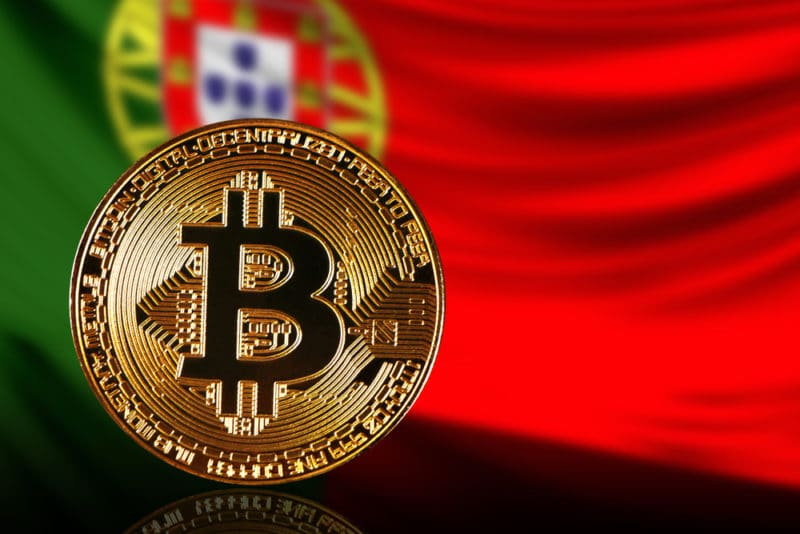
Portugal – One of the Most Crypto-Friendly Countries in Europe

Last updated: March 10, 2026113 Comments

Portugal has long attracted crypto investors, digital nomads, and entrepreneurs looking for a favorable tax environment in Europe. And it remains genuinely compelling — but the rules have changed significantly since 2023, and it’s important to understand exactly what you’re getting into before you pack your bags.

The short version: Portugal is still one of the best places in Europe to hold crypto long-term. If you hold for more than 365 days, your gains are tax-free. That’s a real and meaningful benefit. But the old Non-Habitual Resident (NHR) program that made Portugal a near-blanket tax haven is gone. Its replacement, IFICI, is a much narrower tool that most passive crypto investors won’t qualify for.

Here’s the full picture.

Buy Bitcoin

Since writing the original version of this article, I’ve personally received a ton of emails from people who have moved to Portugal or are in the process of moving, many of them with significant crypto holdings. That tells me there’s real appetite for this information — and also real risk of people acting on outdated advice about NHR that no longer applies to new arrivals.

See also: The Best Crypto Trading Apps

For those of you who have never visited Portugal, here’s some background.

Portugal is a member of the European Union and sits right on the Western edge of Europe, bordering Spain. Its climate is generally similar to Spain but it sits on the Atlantic coast, which means its seas are wavier and colder — a surfers’ paradise. The population sits at around 10 million, healthcare is ranked among the best worldwide, the local population is friendly and largely English-speaking, and crime levels are very low.

Portugal went through a genuinely tough economic period in the early 2000s, which led many younger people to leave and seek better conditions abroad. Tax incentive programs like the NHR were a deliberate countermeasure — an attempt to attract expats, returning Portuguese citizens, and international talent back to the country.

join binance

Portugal is one of the few countries that has been genuinely forward-looking about attracting high-net-worth individuals, investors, and entrepreneurs. But the specific tools it offers have changed. Let me walk you through what’s current.

See also: Lisbon vs Barcelona

What Happened to the NHR?

The original Non-Habitual Resident (NHR) program ran from 2009 to 2023. It was one of the most generous tax regimes in Europe — qualifying residents paid a flat 20% on high-value Portuguese-sourced income, and foreign income (including dividends from foreign companies) was broadly exempt from Portuguese tax. For crypto holders under NHR, this was extremely powerful.

The NHR closed to new applicants on 31 December 2023. Anyone who registered before that date continues to enjoy their benefits for the full 10-year period. But for anyone who hasn’t already registered, the old NHR is gone.

Portugal replaced it with a new program called IFICI.

IFICI (NHR 2.0): Much Narrower Than the Original

IFICI — Incentivo Fiscal à Investigação Científica e Inovação — came into effect on 1 January 2025. The headline numbers look similar to the old NHR: a flat 20% tax on qualifying Portuguese-sourced income, with foreign income exempt, for a 10-year period.

The critical difference is who qualifies.

Do you want to cut straight to the chase and know for sure if Portugal is the right place for you to move to? Schedule a consultation with my trusted Portuguese crypto lawyer to get all your questions answered.

Book a consultation with a Portuguese lawyer

Alternatively, are you still undecided about where to live or want to speak to me directly about crypto or other topics that I write about?

>> Schedule a 1-on-1 session with me.

IFICI is specifically designed for people working in science, technology, and innovation. To qualify you generally need to:

  • Not have been a Portuguese tax resident in the previous 5 years
  • Hold a university degree (EQF Level 6+ Bachelor’s or PhD)
  • Fall into one of these categories: university professors or scientific researchers; employees of companies with 50%+ export turnover in qualifying sectors (manufacturing, IT, R&D); employees or founders of certified startups; or certain highly qualified professionals in science, technology, healthcare, or green energy
  • Spend 183+ days per year in Portugal or maintain a permanent home there
  • Apply by 15 January of the year following establishment of residency

Passive investors — including crypto traders and holders who don’t work in a qualifying field — do not qualify for IFICI. The regime is explicitly designed for active contributors to innovation, not for financial structuring. Retirees are also excluded.

If you used the old NHR and are still within your 10-year window, none of this affects you. If you’re arriving in Portugal as a new resident from 2025 onwards, IFICI is the only game in town — and most crypto investors won’t qualify for it.

If you’re interested in Portuguese tax residency and want to know whether you qualify for IFICI, I can put you in touch with a Portuguese tax lawyer who can answer your questions and assess your situation.

How Crypto Tax Works in Portugal

The crypto space is getting more complex over time with staking, lending, DeFi, NFTs, and tokenized assets — and each of those needs to be considered carefully. I’ll keep expanding this section based on my own research and discussions with Portuguese tax experts. Here’s the current state of play.

Crypto held more than 365 days: tax-free

This is the headline benefit that still makes Portugal genuinely attractive for long-term crypto investors. If you hold crypto assets for more than 365 days, any gains on sale are exempt from Portuguese tax. This applies regardless of whether you qualify for IFICI or any other special regime — it’s baked into the standard tax code.

This puts Portugal alongside Germany as one of the few EU countries that fully exempts long-term crypto gains. For a Bitcoin holder with a multi-year horizon, that’s a real and meaningful advantage.

Crypto held less than 365 days: taxed at 28%

Short-term gains — assets sold within 365 days of purchase — are taxed at a flat 28%. This has been the rule since 2023, when Portugal closed the pre-2023 loophole that made virtually all crypto trading tax-free.

Staking and lending income: taxed at 28%

Passive crypto income — staking rewards, lending yield, and similar — is generally taxed at 28% in Portugal. This is not covered by the 365-day exemption, which applies specifically to capital gains from sale. If you’re generating meaningful income from DeFi or staking, factor this in.

Reporting requirements since 2024

Since 2024, all crypto transactions must be reported in the annual Portuguese tax return (Modelo 3), even if the gains are fully exempt. If you hold crypto for more than a year and pay zero tax on the gains, you still need to declare the transaction. Good record-keeping and crypto tax software are essential.

Tokenized securities

Tokenized securities may not qualify for the 365-day exemption — the treatment is less clear-cut than for standard crypto assets. If you hold tokenized stocks, bonds, or similar instruments, get specific advice.

Non-cooperative jurisdictions

Tax exemptions may not apply to crypto assets linked to exchanges or structures in jurisdictions on Portugal’s blacklist. If you’re using platforms based in blacklisted territories, that’s worth checking.

Get in touch with a Portuguese crypto tax lawyer

The Honest Summary: Is Portugal Still Good for Crypto?

Yes — with an important caveat.

For long-term holders (1+ year), Portugal remains one of the best options in Europe. Zero tax on gains after 365 days is a genuine, substantive benefit. If you’re the type of investor who buys and holds, Portugal is still a strong choice.

For short-term traders and active DeFi participants, Portugal is no longer the obvious answer. A 28% flat rate on short-term gains and staking income is competitive with other European countries, but it’s not a standout advantage.

For most passive crypto investors hoping to use IFICI to avoid tax on other income, the regime won’t help. The old NHR era of moving to Portugal and legally paying near-zero on foreign dividends and investment income is over for new arrivals. If you’re a researcher, a qualified tech professional, or a startup founder, IFICI may genuinely suit you. If you’re primarily a passive investor, you’ll need to look at other structures — read my article on European tax structures for more on that.

Inheritance Taxes

There is no inheritance tax in Portugal, but stamp duty may apply to certain transfers of assets — including immovable property, movable assets, and securities located in Portugal — as part of an estate.

The position on cryptocurrencies specifically remains legally ambiguous. In the absence of explicit legislation or a binding ruling from the Portuguese tax authorities, there’s a reasonable argument that the relevant legal provisions don’t expressly foresee crypto assets, which could exclude them from stamp duty. That said, estate planning with crypto in Portugal should be assessed case by case, with all variables considered.

VAT

In a 2019 official ruling, the Portuguese Tax Authority confirmed the precedent from the Court of Justice of the European Union (Case C-264/14, Skatteverket v. David Hedqvist) to argue that although cryptocurrencies such as Bitcoin are analogous to a “means of payment” and therefore technically subject to VAT, they are exempt by application of VAT exemption rules consistent across EU Member States.

How to Buy Bitcoin in Portugal

You can use the world’s best crypto exchanges in Portugal without any problem. There are no limitations imposed by the country or by any of the major exchanges.

My suggestions:

  • Binance (see my review)
  • Coinbase (see my review)
  • Bitpanda (see my review)

You can also use crypto borrowing and lending platforms such as Nexo and YouHodler without any problems. Keep in mind that lending and staking income will be taxed at 28% in Portugal, so factor that into your calculations.

Even if your crypto gains are fully exempt from tax, you still need to keep good records and report transactions in your annual Modelo 3 return. A tool like Cointracker makes this a lot easier. See my article on crypto portfolio and tax preparation tools for the best options.

Crypto-Friendly Banks in Portugal

Please leave a comment if you have found a suitable crypto-friendly bank in Portugal. You can also have a look at the best European crypto debit cards that work in Portugal.

Buying Property with Crypto

Some real estate sales in Portugal have already been done using crypto. The most famous case is this one. I expect this to become more commonplace given the number of crypto people moving to Portugal.

Contact me if you want to buy property with crypto; I’ll put you in touch with my agent.

Golden Visa Investments

If you’re looking for good golden visa-related investments, I can put you in touch with a fund that invests within Portugal, and with an architecture firm that creates homes targeted directly towards satisfying the requirements of getting a Golden Visa. Just get in touch and I’ll put you through.

Participating in the Portuguese Crypto Community

You can follow this Twitter list that features many of the big crypto players that are based in Portugal. Please let me know about other crypto players and communities in Portugal by leaving a comment below or by contacting me.

Hard Fork Cafe is a cool YouTube channel dedicated to crypto, although you need to understand Portuguese for that. It’s a good way to practice learning the language though if you want to hit two birds with one stone.

Filed under: Cryptoassets, Money

Lisbon (Portugal) VS Barcelona (Spain)

Last updated: December 29, 202319 Comments

Barcelona vs Lisbon

This is going to be a highly opinionated post about my thoughts on Lisbon and Barcelona. It’s written from the viewpoint of an entrepreneur/investor who appreciates the good things in life and is also planning the future of his kids.

I’ve lived in Barcelona for several years and visited Lisbon many times. I have friends who are entrepreneurs and investors who live in both cities. Right from the outset, it is obvious that I can’t probably draw an accurate or scientific comparison between the two cities as I’ve never lived in Lisbon. The whole point of the article is to sort out my thoughts and possibly decide to live long-term in one of these cities.

I’m absolutely in love with Barcelona (and Spain in general), despite its many problems, and for many years have considered it the best place to live in the world. However, while Barcelona’s attractiveness has been declining over the past few years due to several reasons, Lisbon has been gaining a lot of traction. Given that 5 years ago I would have told you that Barcelona is clearly my favorite and that Lisbon would come in at second place, I am forced to revisit the question to see whether the choice is not that clear anymore.

In a wider context, this can also be taken as a Spain VS Portugal article, but I feel that focusing on Lisbon and Barcelona, in particular, is more important, as those two cities have a very different feel to the rest of the cities in each country. While they benefit from country-wide benefits (such as tax incentives in Portugal) as well as problems (Lisbon does not save itself from the red tape and bureaucracy that Portugal is known for), there are many more things that are quite specific to each of these two cities.

Business-friendliness

In Barcelona, it is quite frequent, and it was especially so in 2020 with the pandemic crisis, to see newspaper articles asking whether there are enough help programs for entrepreneurs and businesses.

This led me to realize how the local government has got it all wrong. The question to ask is the following:

Are there too many obstacles to entrepreneurship?

In Barcelona’s case, in my opinion, the answer to that question is absolutely non-debatable. It’s a resounding yes. Anyone who embarks on an entrepreneurship journey in this city is doubly a hero in my view. First to go against the grain and take the big risks that all entrepreneurship necessitates, and second for having the patience and grit to deal with all the bullshit one has to go through to legally start a business and maintain it. Not to mention that if they are eventually lucky and good enough to turn that business into a huge success, the government will be the first in line to heavily tax the business and the entrepreneur as if it had some huge part to play in that success.

Spain manages to attract many wealthy expats and entrepreneurs due to the climate, beauty and history of the country, but then discourages them from taking an active part in the economy with high taxes, complicated procedures for operating businesses, as well as the language barriers.

Portugal, on the other hand, is wide open for business. Lisbon has been attracting many expats over the past years, mostly due to the NHR scheme but not only. The NHR scheme has now been dropped, so it remains to be seen how this will affect things.

Taxation

Arguably the biggest reason for the influx of expats to Portugal has been the NHR scheme which permitted retirees, investors and entrepreneurs to receive their incomes tax-free in Portugal for a period of 10 years. However, this has now been canceled.

Spain, on the other hand, burdens you with many forms of taxation, including wealth tax and the modelo 720 report which is extremely cumbersome and intrusive.

It’s no surprise that tons of Spanish and expat entrepreneurs, high-income earners and investors are moving to other jurisdictions like Andorra and Portugal. Others who have been considering their options for moving from their home country skip the Spain option altogether. Catalonia, the region within which Barcelona resides, has the worst tax oppression in Spain.

Hoy justo me ha llegado a mi un mail de un cliente, nuevo, que se acaba de trasladar a Portugal desde España. Quiere que le ayude si/cuando la AEAT lo requiera. https://t.co/6jSpi85Rd9

— Cris Carrascosa ⚡️ (@CarrascosaCris_) January 19, 2021

Portugal does not require any such reporting nor does it levy wealth tax, which is a big relief given that these two things are what most expats feel most burdened by in Spain. If not on the NHR programme, however, taxes are in the same region as those in Spain. Barcelona has higher income taxes compared to Lisbon though.

On the other hand, it is also a valid point to think that the NHR could have been considered as a kind of trap to lure you in with the promise of no taxation, knowing that once you settle in the country it will be hard to leave once the ten years are up, and will compensate for the lost taxation in early years by spending another 20-40 years paying high taxes in Portugal.

Language

A much higher percentage of Lisbonites speak English when compared to the Barcelona natives. You will find signs in English, contracts can be in both Portuguese and English, and you will have no problem navigating the daily needs if you only speak English. This has made Portugal a hotspot for native English speakers like Americans and British, who are less likely to speak other languages. For Europeans who are used to learning and speaking multiple languages, the barrier is usually lower in Spain, but in Barcelona, you also need to deal with the fact that a lot of the official documentation is in Catalan, including signage. Many times a Spanish version is not available either. For those who are struggling to even learn Spanish, also having to deal with Catalan can be a deal-breaker.

I’m a big fan of learning langauges and have studied both Spanish and Catalan. I’ve found the process very enriching and enjoy my conversations with the locals and being able to communicate easily for my daily needs, but it’s undeniably harder to do things in Barcelona if you don’t speak Spanish or Catalan versus Lisbon if you don’t speak Portuguese.

If you’re moving to one of these countries and learning a new language is one of your highest priorities, then maybe Barcelona would be the winner in this area as Spanish is arguably a much more useful language than Portuguese on a worldwide basis. Ultimately though, once you learn any of these three languages, it’s pretty straightforward to learn the other two as they are very similar in my opinion.

Education

While I would probably send my children to a private school in either of the two cities, I see it as something of an absolute must in Barcelona. Public schools use Catalan as their primary language, giving it preference over Spanish. English comes in a far-off third place. Realistically speaking, unless public school students take private tuition, they will not be able to speak English when they leave school. This is a total fuckup in my opinion. I’ve shared my thoughts on the Catalan independence debate already, so I won’t get into that again here, but it’s a well-known fact that there is at least some indoctrination going on in public schools in order to produce youngsters that are pro-independence. That’s another thing that is unacceptable to me.

Turning our eyes to private schools, both cities offer a good selection of options where native English speakers are in charge of teaching most subjects, and where there is a reasonable expectation of a good percentage of students to be international rather than local.

Lisbon wins here, although education is not just about the school experience. I’d say kids and youngsters have more opportunities in Barcelona, especially if they excel in sports and want to take that seriously.

Accommodation

Due to the ignorant leadership of the Catalan government, in Barcelona, there has been little new development in recent years. What I would consider a basic and decently furnished apartment in Barcelona would be promoted as “luxury living” by the local estate agents, with the corresponding price tag.

The same problem exists in Lisbon but from the opposite side of the spectrum. The Portuguese market was hampered by rent controls for many years so buildings were practically abandoned by owners since there was no incentive to refurbish and maintain them. Now that the market has been liberalized things are moving once again, but it will take a few years till there is a steady supply of modern properties on the rental market. The “new” properties that are currently marketed are typically 20 years old.

Properties marketed as “luxury” are barely decent by my standards, same as in Barcelona.

Check out the following portals for finding property in Lisbon and surrounding areas:

  • Imovirtual
  • Longtermlettings
  • Idealista
  • Spotahome
  • Luxuryestate
  • Longtermrentalsportugal
  • Sotheby’s
  • Keller Williams
  • Re/Max
  • Urbanprofile

While the prices are also on the high side, I think if you’re looking at the premium market in both cities, you’ll find more opportunities in Lisbon. I believe that it is better to buy than rent right now in Lisbon given the dearth of good apartments on the rental market. However you will have more luck finding furnished apartments in Barcelona compared to Lisbon.

Keep in mind that it is easier to find heating in Barcelona apartments than it is in Lisbon. If you’re stuck with a non-heated apartment, be prepared for a very cold few winter months. Those coming from cold countries think this is a joke until they go through their first winter without good heating. Then they learn the lesson. I would not live in any apartment that is not well insulated and preferably have central heating.

Cost of Living

The cost of accommodation in Barcelona and Lisbon is around the same, but most other things are cheaper in Lisbon. That leaves out online shopping though (more expensive and more of a hassle in Lisbon), so it might be a tie if we factor that in.

Energy costs are more expensive in Portugal. There are also many toll roads, and fuel is more expensive too.

Purchasing a vehicle is more expensive in Portugal. Although people say that eating out is cheaper in Lisbon, on my most recent trip I found that eating at good restaurants costs just the same as in Barcelona, if not more.

Air Pollution

Barcelona is the 6th worse city in Europe when it comes to air pollution according to this study. The Spanish capital Madrid is number one while Lisbon is ranked 116th. Therefore Lisbon clearly wins in this aspect.

Weather

Barcelona has better weather than Lisbon for my tastes. I like sunny, dry days with no wind. That’s what Barcelona provides for most of the year. Lisbon, on the other hand, gets windy and wet especially in the winter months. You will need to layer up as the temperature changes rapidly during the day. It’s definitely one of the bigger dfferences. If it’s sun you’re looking for, then both cities provide a lot of it.

Transport

Moving around within the city is hands-down easier in Barcelona than it is in Lisbon, not least because of the hilly terrain that Lisbon is famous for. I love cycling around Barcelona on my Bromptons and it’s not much fun to do the same in Lisbon. The cobblestone streets don’t help either. Barcelona has a multitude of transport options available. I can think of an amazing seven convenient transport options off-hand for getting into the center from the outskirts of the city. Transport is one of the things that I’ve never had a problem with, and it’s only gotten better over the years.

One of the few good things that the local government has done is to continue adding bike lines throughout the city, so it’s really easy to move around by bike.

Buying a car is significantly more expensive in Portugal. I would say it’s around 20% more expensive. One exercise to verify for yourself is to configure your favorite car on both Portuguese and Spanish websites, and see the resulting price. This will give you a clear picture of the difference. Moreover, some more attractive options for car features are typically not available in Portugal.

Nightlife

I have limited experience of the nightlife in both cities, all I can say is that whenever I went out in these cities I had a great time. It’s important to note that drinking alcohol on the street is not illegal in Portugal, so you will find lots of that in the city’s parks. I grew up in a similar environment and while I understand the negative consequences of allowing this, I never really experienced any significant mishaps myself. Ultimately, banning street drinking just resulted in people crowding into bars and having to spend more money there. I would therefore prefer the Portuguese way of doing things.

Friendliness of locals

This is another nuanced topic. I understand that if you don’t speak Spanish or Catalan in Barcelona you’re going to face an uphill struggle due to the low level of English literacy. You might meet people who get flustered if spoken to in English, although it’s mostly frustration about not being able to communicate rather than unfriendliness. In Lisbon, on the other hand, it’s much easier to find English-speaking locals and that might make it seem a friendlier place.

I can’t complain about the friendliness of people in either location. People in Catalunya are generally friendly, although they are perceived as less friendly than in other parts of Spain (I blame the language and separatism issues for that), and I haven’t had enough experience to comment deeply about the people in Lisbon. I have noticed a certain resentment by the Portuguese locals towards expats, mostly due to the typically big wage gap and the fact that the government seems to be doing its best to attract foreigners while perhaps giving the locals a raw deal. This resentment is visible especially if you read articles about Lisbon written by foreigners. You’ll always find some Portuguese who write negative comments related to what I just explained. On the other hand, other Portuguese are just as typically quick to jump in and slam their compatriots’ comments and apologize on their behalf, further lending credibility to the idea of the overall friendliness of the locals in Lisbon.

One observation that will be of interest to any male single readers is that you will probably find a bigger dating pool in Barcelona than in Lisbon. In Barcelona, you’ll see many beautiful local women, and that’s not as much the case in Lisbon. I’m sure it has some impact psychologically on men whether consciously or subconsciously, so I thought I’d mention it as well.

Diversity

Both Lisbon and Barcelona are cosmopolitan cities, however, I would have to say that Barcelona is hands-down the winner in this regard. It is a bigger city that has managed to draw in a very big percentage of expats from all over the world. Lisbon, on the other hand, historically has drawn in immigrants from Portuguese-speaking territories (the biggest being by far Brazil) and the rest of the nationalities are a much more recent phenomenon. Portugal feels a bit more distant from mainland Europe, not least because of its geographic location and smaller size compared to Spain.

Safety

Lisbon wins this one without any doubt. Portugal is ranked as one of the safest countries in the world, with Spain being quite a way off in the rankings.

I would still consider Barcelona to be generally safe, but there are some important problems that have not been dealt with by the authorities and are becoming bigger and tarnishing the city’s reputation internationally. Pickpockets are everywhere, and I’ve yet to meet anyone who has spent any time in the city and not been a victim at some point. Violent robbery, while almost unheard of just a few years back, is now also a significant problem especially in the center of Barcelona.

We then have the problem of home break-ins and occupation, which is the terror of any tenant and owner. You can read this article if you want to learn more about this topic. It’s a huge problem and the blame for this lies squarely on the authorities for not taking action and in some cases even encouraging occupation (as in the case of Barcelona’s mayor).

Startups and Coworking spaces

Barcelona is a bigger city with a strong startup history, and it remains one of the leading cities for startups in Europe. There is no contest here, Barcelona wins by a wide margin. It seems that everyone wants to move to Barcelona, so attracting talent is not a problem. This ease of attracting talent, moderate wages and the fantastic weather and city serve to attract companies to relocate to Barcelona or startup there. On the other hand, Lisbon is still doing pretty well and improving every year. Also check out the Lisbon entrepreneurs’ community.

Coworking spaces have flourished over the past 4 years in Barcelona, and the city is now blessed by a multitude of big and comfortable spaces where you can focus on work while being served healthy food and even have the opportunity to train within the same complex. I haven’t seen anything that comes close to the Barcelona spaces over in Lisbon, but that can easily change in the future.

Online Shopping

The obvious winner here is Spain. Amazon is a big player in Spain and has driven everyone else to up their game in a significant way over the past ten years. It’s an online shopper’s paradise, with same-day delivery, free returns, etc. It’s super easy to get stuff delivered and shop online for all kinds of stuff, including groceries and take-out meals. This benefit was especially apparent during the COVID-19 epidemic in 2020, when many shops and restaurants were forced to close or citizens’ mobility was restricted.

Connections

I was thinking about sea and air connections when I came to this point, where Barcelona is the hands-down winner. However, it goes beyond that really. Certain cities make you feel like you’re in a buzzing place where things are happening and where people want to live. It’s hard to explain, but I’ve felt it in places like New York, London, and Berlin. Barcelona also gives me that feeling, in fact, I can’t imagine any other place that makes me feel so alive, and I’ve traveled a fair bit.

Your Thoughts?

What are your thoughts? As I said, my article merely reflects my current opinions based on my experience of the two cities so far, and this might very well change completely in the future.

Barcelona and Lisbon are my two favorite cities in Europe, and I love them both. Lisbon seems to be on an uptrend while Barcelona, on the other hand, is passing through a rough patch and I’m not sure whether the near future will be any better.

Spain, in general, has been following a misguided tax policy that results in most entrepreneurs, investors and higher net-worth individuals feeling persecuted, even if they have spent their whole lives following the tax code to the letter and paying very high taxes for the privilege of living in Spain. This has resulted in a drain of the country’s most talented local and expat people to other countries that treat them better. I am seeing this trend accelerate dramatically in the past two years. This leaves little doubt in my mind that Spain’s time is over, and Portugal is where the action will be in the coming years.

Lisbon seems to be attracting many American and British expats in particular. No doubt they’re attracted by the fact that they can speak English in a foreign country rather than having to learn Portuguese. Lots of people from the UAE are also making the move, given that it offers similar tax advantages but arguably a much nicer social environment, better geographical location in Europe and better weather.

I’d love to hear, especially, from people who have lived in both cities, or have moved from one to the other due to specific reasons (whether I mentioned those reasons here or otherwise).

In the meantime, I’ll update my article if I can think of anything else.

Filed under: Expat life

Where to Park Your Car at the Barcelona Airport

Last updated: April 03, 2024Leave a Comment

A taxi from the city center to the airport costs around 35 euro. I would suggest avoiding the local taxi companies and getting a Cabify cab instead. You’ll get better service for the same price or less.

If you want to travel to the airport in your own car, this is another convenient option, since there are numerous parking options.

Aena General Parking

The most expensive option but probably the safest and most convenient is to leave the car in the airport’s own official parking. For a 4 and a half day stay (4 days and 6 hours to be exact) I was charged €53 to park in the General T1. This is by booking in advance through the web interface. According to the same site, parking without booking would cost €114.50 as it just goes by the hourly rate. If I understand correctly unused hours will be refunded when you exit the parking. The parking is located in a building annexed to the airport terminal T1, and you can just walk to the terminal in 4 minutes – no hassle whatsoever.

PROCEDURE FOR USE OF THE CAR PARK:

On entering the car park:

Take a ticket as you enter the car park. IMPORTANT: Please, wait in front of the barrier until the Automatic Number Plate Recognition recognises your vehicle and a ticket will be issued automatically. YOU MUST NOT PRESS THE BUTTON. If you press the button, the ATM will charge you the normal price and not the reservation price. Proceed into the car park and park your car in any available parking space.

On your return:

When you return to the car park, please go to the ATMs to make the payment. If you have any problems, please use the Customer Service integrated in the ATMs. Amount calculated based on the stay booked. If the actual stay of the vehicle is different, this amount may vary.

You can purchase this parking on the official site or on elParking or Parkvia. elParking offers free cancellation up to 24h before the reservation starts.

[Read more…]

Filed under: Expat life

  • « Previous Page
  • 1
  • …
  • 36
  • 37
  • 38
  • 39
  • 40
  • …
  • 89
  • Next Page »

Latest Padel Match

Jean Galea

Investor | Dad | Global Citizen | Athlete

Follow @jeangalea

  • My Padel Experience
  • Affiliate Disclaimer
  • Cookies
  • Contact

Copyright © 2006 - 2026 · Hosted at Kinsta · Built on the Genesis Framework