Jean Galea

Health, Wealth, Relationships, Wisdom

  • Start Here
  • Guides
    • Beginner’s Guide to Investing
    • Cryptocurrencies
    • Stocks
    • P2P Lending
    • Real Estate
  • Blog
  • My Story
  • Community
  • AI Consultancy
  • Search

Coffee – Why and How I Drink It

Last updated: February 02, 2026Leave a Comment

coffee
Growing up in Malta, I used to drink Nescafe instant coffee, which is pretty low-quality stuff, but that’s what was popular at the time. I used to add milk to it and probably go through a whole pack of sugar-loaded Italian biscuits. Not the healthiest point in my life for sure.

Up until my twenties, coffee wasn’t a really big thing for me. I believe it was when I went to live in Chiang Mai that I really got hooked on it. Thailand and Chiang Mai in particular has a very strong coffee culture, and they have amazing coffee and baristas.

I started to educate myself about coffee, and eventually learned that many Italians carry a Moka pot wherever they go for their morning coffee fix. I adopted the habit and the Moka pot became my brewing method of choice for my daily coffees. I also bought a french press around that time, and I use that one when I want a bigger cup of coffee that I can sip on slowly while working.

Here’s my recipe for the moka pot:

  • Use finely ground beans
  • Fill the coffee puck to the brim and shave anything extra off the top, but don’t compress
  • Put boiling or close to boiling water in the water recipient then screw the two parts and put on low fire
  • Leave the lid open so you can monitor extraction
  • Once the coffee is almost fully extracted remove the pot from the fire and use cold water on the bottom part to stop the extraction
  • Serve

The big mistakes I see with this method tend to be the following:

  • Using bad quality beans (typically the supermarket variety)
  • Compressing the ground coffee in the puck
  • Not stopping the extraction in time (if you see frothing and bubbles at the end it’s gone over already)

Brewing coffee is also part of my morning routine:

The brewing of coffee is a meditative process in itself and gets me primed for the structured meditation that comes after it. By using a moka pot and manually grinding the beans I would have previously selected from a local roastery, I’m injecting a bit of art and manual work into the process, and it definitely means more and feels more satisfying to finally drink the brewed shot of coffee while I start my meditation, compared to if I had just used a Nespresso machine.

It’s also a component of my afternoon power nap, which usually happens just after lunch and leaves me feeling brand new and ready to kill it in the second half of the day.

My latest addition is an AeroPress, which is a popular coffee brewing device that is known for its versatility, ease of use, and portability. It consists of two plastic cylinders that fit together to create a vacuum, which forces hot water through a filter and into a chamber where the coffee is brewed.

The AeroPress allows for precise control over the brewing process, including water temperature, grind size, and brewing time, which enables users to experiment with different variables to create a customized cup of coffee. Additionally, its compact size and durable construction make it an ideal option for travel or for use in small spaces.

The AeroPress has become my most used tool for making coffee, and nowadays I typically brew a cold brew and have it available in the fridge to drink over the next two days, which is extremely convenient. For the cold brew, I use the Puck Puck extension for the AeroPress.

Although it’s a simple tool, there are loads of ways to experiment with an AeroPress, so head over to sites like Aeroprecipe or download the Aeromatic app and have some fun.

Of course, I still enjoy a nice espresso at a good coffee shop, and luckily Barcelona has quite a few of those. I’ve also written a detailed guide to the best coffee roasters in Barcelona if you want to explore where to buy beans.

Sourcing My Coffee

Living in Barcelona, I’m fortunate to have access to some excellent local roasters. For a comprehensive guide to all the roasters in the city, check out my article on the best coffee roasters in Barcelona. Here are the ones I typically buy from:

Barcelona-Based

  • Coffee Hackers – Small-batch roasting with meticulous quality control
  • Right Side Coffee – Competition-level quality from a three-time Spanish Roasting Champion
  • Nomad Coffee – The pioneers of Barcelona’s specialty coffee scene
  • Cafés El Magnífico – Over a century of coffee heritage in El Born

Beyond Barcelona

  • Terres de Café – One of France’s leading specialty roasters, ships throughout Europe
  • D·Origen Coffee Roasters – Quality Spanish roaster from the Costa Blanca region

Coffee Timing

Caffeine is one of the most widely used stimulants in the world, but its effects on sleep—particularly deep sleep—are often underestimated. Many people assume they’re unaffected because they can fall asleep after an evening coffee, but what happens beneath the surface is more significant. The quality of sleep, especially the depth of deep sleep, can be heavily compromised even if sleep onset seems normal.

Caffeine has a half-life of about 5 to 6 hours and a quarter-life of 10 to 12 hours, meaning it remains in the body long after its stimulating effects fade. Even moderate caffeine intake later in the day can reduce deep, restorative sleep by up to 30%. Such a reduction in sleep quality can leave the body and brain less recovered, impacting mood, energy, and cognitive performance the next day.

This often leads to a cycle where the individual wakes feeling unrefreshed, reaches for more caffeine to push through the day, and then faces even more difficulty getting quality sleep at night. Sometimes, people turn to alcohol in the evening to relax or fall asleep, which only further fragments sleep and suppresses REM. The combination disrupts the natural sleep-wake rhythm and can erode long-term sleep health.

A simple but effective guideline is to stop consuming caffeine 8 to 10 hours before your regular bedtime. For someone going to bed around 10:30 p.m., this means avoiding caffeine after about 12:30 to 2:30 p.m. Protecting this caffeine-free window helps preserve the depth and continuity of sleep, allowing for better recovery, more energy, and greater clarity the following day.

The Good and Bad News About Coffee

This is a very informative video about coffee, especially if you’re interested in its effects on fitness and performance.

YouTube video

I can drink between 2 and 5 cups of coffee a day, and in general, I think I metabolize the coffee pretty quickly, as it has a very mild effect on me. Having said that, I try to avoid coffees after 5pm in order to prevent the caffeine from having any negative effects on my sleep.

I also have a lot of respect for Dr Huberman, and this is his take on caffeine:

YouTube video
YouTube video

Filed under: Health & Fitness

How to do Tax Loss Harvesting on Crypto

Last updated: January 15, 2026Leave a Comment

Before we start – the usual disclaimer that this should not be taken as tax advice. Always consult a qualified tax lawyer or consultant before you take tax-related financial decisions.

Towards the end of every year, you will come across a lot of talk about tax loss harvesting, especially in the USA, where it is a very popular technique.

This is also true in the crypto space, where tools like Cointracking can help you do tax loss harvesting for your cryptos. What this means is that if you bought Bitcoin and other cryptos when their prices were high and were forced to sell for a loss, there’s a silver lining: these losses could place you in a lower tax bracket. What’s more, claiming those losses is easier than you might assume. Read on to find out everything you need to know about how to file your crypto losses.

So what is tax loss harvesting?

Tax harvesting is basically the sale of non-performing investments so that for tax purposes the resultant realized loss can be set-off against realized capital gains registered during the same year. This is based on the premise that unrealized capital losses cannot be set-off against realized capital gains in one’s tax computation.

E.g. In 2020, Mr Smith sells one BTC at a profit of $10,000 but he also has an unrealized loss on the holding of XMR. Under the tax harvesting strategy, Mr Smith can sell the XMR on the 31st December (thereby realizing a tax-deductible loss) and re-purchase the same amount of XMR on the 1st January at basically the same price. This would minimize Mr Smith’s tax liability for the year.

Note that this repurchase can occur on the same date as the sale unless there is any provision in the law against it. You don’t need to wait for the following year to commence.

In practicing tax harvesting one should however be aware of the transaction costs incurred in selling and re-purchasing investments and any tax abuse provisions that tax regimes might have on this sort of practice, e.g. they might not allow as tax-deductible any losses incurred on the sale of investments unless there is a minimum period of say 30 days before any eventual re-purchase of assets in the same class takes place.

In the United States, there are no existing provisions against tax loss harvesting on cryptos, so investors are free to do so. On the other hand, there are provisions against doing so with stocks. So you need to consider carefully the asset in question. For now, cryptos are game.

Filing Your Crypto Taxes 101: How Does it Work?

For the purposes of taxation, the US and most other governments consider cryptocurrencies to be assets. This means that whenever you trade cryptocurrency, the transaction falls into one of two categories: a capital gain or a capital loss.

  • Capital gain. A capital gain occurs when you sell cryptocurrency for more than the amount that you paid to purchase it.
  • Capital loss. If you sell cryptocurrency for less than the amount that you paid for it, this is considered to be a capital loss.

You have to sell or buy an asset to trigger a taxable gain or loss. Once you decide to make a move, tax authorities consider the loss to be “realized.” If your loss is great enough, you may be able to use it to enter a lower tax bracket.

Deducting Your Crypto Losses

One of the biggest benefits of claiming a loss is that you can offset income gained from other sources.

In the US, the IRS lets you deduct up to $3,000 worth of net capital losses each year from the amount of money you’ve earned at your day job. If the amount you lost was greater than $3,000, you can get another deduction of up to $3,000 when you file your taxes next year.

If you currently make just over $50,000 per year at your job, that $3,000 cryptocurrency loss could place you in a lower tax bracket. This could result in significant tax savings.

What’s more, if you’ve earned some income through stocks or through the sale of property, there’s no limit to the amount you can deduct from those revenues.

Here’s Where It Gets Complicated…

Figuring out how much you’ve made or lost can be a headache, particularly if you haven’t been keeping track of your purchases or if you placed a huge amount of trade orders last year. Fortunately, there is software available that can crunch all your crypto tax data for you.

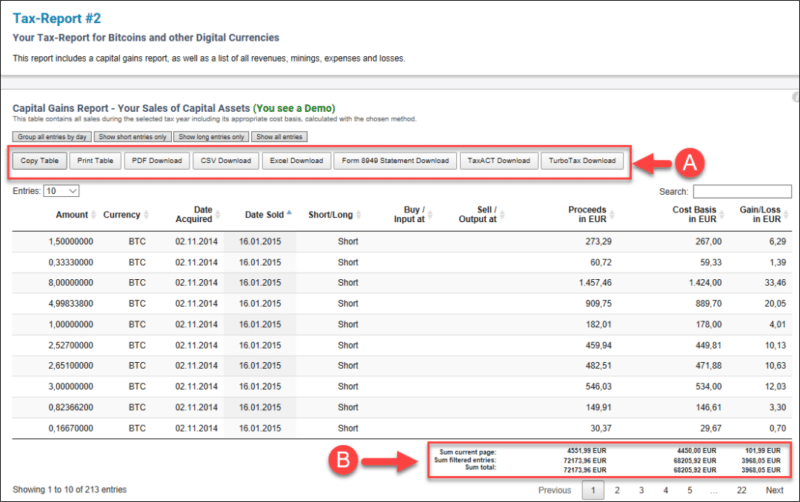
The tool depicted below, called CoinTracking.info, can import your transactions from all your cryptocurrency wallets and exchanges. The interface walks you through how to do the imports.

At the end of the import process, you can download IRS form 8949. This is the form you need to submit to report your loss.

Other download options include CSV, TaxACT and TurboTax.

cointracking account

Conclusion

If you lost money in crypto markets, you may be able to offset some– or perhaps even all– of those losses at tax time. Reporting your capital losses might help you move to a lower tax bracket. If your deductions qualify you for a lower bracket, filing them could save you thousands of dollars when you submit. Visit CoinTracking.info for more information.

There are of course other software alternatives to CoinTracking, although the latter is one of the earliest and most reliable ones. Read my article about crypto tax preparation tools for more information.

Filed under: Cryptoassets, Money

The Best Crypto-Friendly Banks in Europe

Last updated: March 10, 202643 Comments

The conversation around banks and crypto in Europe has changed completely since I first wrote about this topic back in 2020. Back then, the problem was simple and frustrating: banks were blocking transfers to exchanges, freezing accounts, and treating anyone who touched Bitcoin like a suspected money launderer. Finding a bank that would let you move money to Coinbase without interrogating you was a genuine challenge.

That era is largely over. Here’s what happened and what actually matters now.

Why Things Are Different in 2026

The single biggest shift is MiCA — the EU’s Markets in Crypto-Assets Regulation, which came into full force on December 30, 2024. MiCA requires crypto asset service providers (CASPs) to obtain an EU license to operate. Exchanges like Coinbase, Kraken, Bitpanda, and Bitstamp are now regulated financial entities operating under the same kind of licensing framework as brokers and investment firms.

This matters for banking relationships because it removed the ambiguity that banks used to justify blanket refusals. When your compliance department asks “who is this transfer going to?”, the answer is now “a licensed, regulated financial institution operating under EU law” — not some offshore entity with no regulatory oversight. Banks that used to say no on principle have far less justification to do so.

There’s also the Travel Rule, which has been in effect since late 2024. It requires exchanges to collect and share sender and recipient information on crypto transfers, the same way wire transfers work. Ironically, this layer of compliance has made banks more comfortable, not less. Transparency reduces the risk flags that triggered account reviews.

The practical result: for most European crypto investors in 2026, transfers between a regular bank and a MiCA-licensed exchange work without drama. The 2020 era of getting your account frozen for sending €500 to Coinbase is not the normal experience anymore.

That said, there are still differences between banks — and choosing the right one does matter. Some banks still flag large inflows from exchanges. Some are proactive and crypto-integrated. Others are indifferent but functional. And some traditional banks in certain countries remain stubbornly behind.

The Best Banks and Fintechs for Crypto Users in Europe

Revolut

Revolut is the easiest all-in-one option for crypto users in Europe, and it has come a long way from where it started.

In October 2025, Revolut secured a MiCA license from Cyprus’s financial regulator (CySEC), enabling it to offer fully regulated crypto services across all 30 countries in the European Economic Area. That’s on top of the EU banking license it already holds out of Lithuania. It now supports over 280 tokens, zero-fee staking, and direct stablecoin conversions at 1:1 rates with no spread.

For day-to-day use, Revolut lets you buy and sell crypto directly inside the app, send and receive from external wallets, and connect to platforms like Trust Wallet for instant purchases. Transfers in from MiCA-regulated exchanges are accepted. You can withdraw to self-custody wallets, which is a significant improvement over the old model where your crypto was held with Revolut and couldn’t leave.

The practical advantage is consolidation: your EUR account, crypto exposure, and exchange on-ramps all live in one app. If you’re a retail investor who wants convenience above all else, Revolut is where to start.

Read my full Revolut review for a detailed breakdown.

N26

N26 is a solid, no-friction option if you want a clean European bank account that doesn’t treat your crypto activity as suspicious.

N26 permits transfers to and from regulated crypto exchanges without enforcing blanket restrictions. It holds a full German banking license, operates under BaFin supervision, and SEPA Instant transfers are free for EUR transactions. It has also quietly built in crypto trading through a partnership with Bitpanda, giving you access to over 350 tokens directly from the N26 app — though that’s more of a side feature than a core use case.

Where N26 stands out is simplicity. It’s a clean, well-designed neobank that works the way you expect, doesn’t create friction around crypto-related transactions with regulated platforms, and is widely available across Europe. If you want to keep banking and crypto separate (a setup I’d actually recommend — more on that below), N26 works well as your primary account.

See the full N26 review here.

Wise

Wise’s position on crypto is nuanced and worth understanding clearly before you rely on it.

Wise does not allow you to send money to crypto exchanges — that remains against its acceptable use policy. However, it does accept incoming transfers from regulated platforms. Specifically, Wise allows withdrawals from exchanges that are regulated and/or supervised in the EU or UK. In practice, this covers the major MiCA-licensed exchanges: Coinbase, Kraken, Bitstamp, Bitpanda, and others.

Where Wise genuinely shines for crypto users is as a multi-currency receiving account. If you’re withdrawing from an exchange in USD, GBP, and EUR, Wise’s borderless account handles all three without conversion fees at the point of receipt. For anyone operating across multiple currencies — which describes a lot of European crypto investors who use US-domiciled platforms — this is genuinely useful.

Think of Wise as a complement to your main account rather than a primary banking solution for crypto activity.

Full review: Wise Borderless review.

Bankera

Bankera is a Lithuanian neobank built specifically for the crypto and fintech sectors, and it’s one of the more interesting options on this list for anyone with serious crypto activity.

It offers dedicated personal and corporate IBAN accounts, SEPA and SWIFT payments, and physical and virtual cards. Unlike Revolut or N26, Bankera was designed from day one to serve individuals and businesses involved in crypto and digital assets — it doesn’t just tolerate crypto activity, it’s built around it.

For retail investors, the practical benefit is zero friction on exchange transfers in either direction. No unexpected holds, no compliance calls because you received €20,000 from Kraken. Bankera is also the banking partner of SpectroCoin, its sister crypto exchange, which makes the whole ecosystem quite integrated.

It’s not a mass-market product with a polished consumer app, and it won’t replace Revolut for convenience. But if you’re moving larger amounts between fiat and crypto regularly, having an account with Bankera specifically for that purpose is a smart setup.

Bank Frick (Liechtenstein)

Bank Frick is in a different category from the neobanks above. It’s a traditional, fully licensed bank in Liechtenstein — one of the most crypto-native regulated financial institutions in Europe, and it has been since well before it was fashionable.

Bank Frick received MiCA authorization from the Liechtenstein Financial Market Authority and offers direct crypto trading and custody, tokenization services, staking (including for ETH, SOL, and others), and institutional-grade settlement infrastructure. Its assets under management grew 27.5% between 2023 and 2024, driven almost entirely by crypto-focused clients.

This is not a consumer product. Bank Frick is for high-net-worth individuals, family offices, and businesses that want a regulated bank relationship that includes crypto custody, tokenization, and sophisticated financial services under one roof. If you’re at the stage where you’re thinking about holding significant crypto through a regulated custodian rather than self-custody, Bank Frick is one of the strongest options in Europe.

Banks That Still Cause Problems

MiCA improved the legal landscape, but it didn’t change institutional culture overnight. Several traditional banking systems in Europe continue to cause disproportionate friction for crypto users.

Spain, where I’m based, is an interesting case. The major banks — BBVA, Santander, CaixaBank — have technically complied with MiCA timelines, but the reality on the ground varies. BBVA has actually been one of the more forward-looking large banks, launching crypto services directly. Others are more conservative and compliance teams at branch level can still flag transfers to exchanges, especially large inflows, requesting source-of-funds documentation.

Malta is the example I know best from personal experience, and it remains a cautionary tale. Despite the “blockchain island” branding that the government pushed for years, Malta’s banking sector was and still largely is hostile to crypto. Bank of Valletta and HSBC Malta were notorious for blocking transfers and closing accounts of anyone with visible crypto activity. Local bank employees had no idea what they were dealing with — it wasn’t policy based on analysis, it was reflexive fear of the unfamiliar. The few banks that nominally accepted crypto business (like Agribank) were charging a premium for the privilege. The blockchain island narrative was a marketing exercise that had almost no connection to how the country’s banking infrastructure actually operated.

Italy follows a similar pattern to Malta at the retail level — large traditional banks are slow to adapt and compliance departments in branch offices can still create friction.

If you’re living or banking in these countries and dealing with crypto, the practical answer is: don’t fight your main bank. Use a fintech account (Revolut, N26, Bankera) for your exchange activity and keep your traditional bank clean.

Practical Setup That Actually Works

The most sensible approach for European crypto investors in 2026 is to separate concerns rather than try to do everything through one account.

  • Main bank account — your traditional bank or a solid neobank like N26, used for salary, rent, everyday spending. Keep this account clean and don’t run exchange withdrawals through it.
  • Dedicated crypto on/off-ramp account — a separate account (Revolut, Bankera, or similar) that you use specifically for transfers to and from exchanges. If your bank’s compliance team ever questions activity, this account is easy to explain: it exists for crypto and has a clean paper trail.
  • Multi-currency receiving — Wise borderless if you’re withdrawing in multiple currencies from non-EUR exchanges.

The reason for separating your main account from crypto activity isn’t fear — it’s documentation hygiene. When you cash out a significant amount from crypto after years of trading, you’ll need to show a bank where that money came from. A dedicated account with a clear, continuous transaction history is far easier to explain to a compliance officer than a main account with years of mixed activity.

On that note: MiCA-licensed exchanges now produce proper transaction documentation. Coinbase, Kraken, Bitstamp, and others all provide downloadable transaction histories and tax reports. Keep these. If a bank requests source-of-funds documentation on a large inflow, a clean exchange statement from a regulated platform answers the question immediately.

What to Avoid

The one practice that will still get you flagged by any bank in Europe is using unregulated exchanges or peer-to-peer platforms for significant fiat movements. P2P crypto trading creates fiat transactions that lack the documentation trail that bank compliance departments need to see. Even if your activity is entirely legitimate, bank AML systems are pattern-matching on behavior — and irregular cash-like transfers from individual counterparties trigger reviews.

Stick to regulated, MiCA-licensed exchanges for any meaningful fiat on or off-ramp. The compliance overhead of doing otherwise is not worth it.

The Bottom Line

Europe in 2026 is genuinely a better environment for crypto investors than it was five years ago. MiCA created a licensing framework that has brought the major exchanges into the regulated financial system, and most banks have adjusted their posture accordingly. You no longer need to hunt for obscure banks willing to tolerate your Coinbase transfers.

What does still matter is how you structure your accounts, which banks you choose for different purposes, and whether you’re working with regulated platforms that can back up your transactions with proper documentation.

For most retail investors, Revolut covers the vast majority of use cases. Add a Wise account for multi-currency receiving and you have a clean, functional setup. If your activity is more substantial, Bankera or Bank Frick are worth looking at seriously.

The problem has shifted from “find a bank that won’t block you” to “find the right setup for your level of activity.” That’s a much better problem to have.

What’s your experience with banks and crypto in Europe? Has MiCA actually made a difference where you are? Let me know in the comments.

Further reading:

  • The most crypto-friendly countries in Europe
  • Best cryptocurrency trading apps
  • How to buy Bitcoin
  • Best online bank accounts in Europe

Filed under: Banking, Cryptoassets, Money

The Best Brompton Resources

Last updated: April 05, 20241 Comment

I’m a big fan of Brompton bikes and own several of them. On this page, I’ll be listing a few of my favorite resources and products.

Youtube Channels

YouTube video
  • Brilliantbikes
  • 781 Brompton Premium Parts
  • Brompton Traveler
  • I Bike unfolded
  • Brompton Collector
  • Javier Brommie Pimp
  • Brompton official channel – some maintenance videos
  • Path Less Pedaled
  • Chris by Bike
  • 2Bikes4Adventure
  • BIKE Gang
  • Susanna Thornton

Blogs

  • Bromptoning
  • My Orange Brompton
  • The Brompton Traveler
  • Brompton Bumble B
  • Melbourne Brompton Club (some very useful guides here)

Maintenance

  • Quick Visual Guide to Brompton Maintenance
  • Brompton Dealer Manual
  • Basic Brompton Maintenance
  • Brompton docs on maintenance
  • Tips on Cleaning your bike
  • Brompton user manual
  • Brompton Data schematics
  • Brompton Reddit

Books

  • Brompton Bicycle
  • Unfolding Travels
  • Just Ride
  • It’s all about the bike

Modding Shops

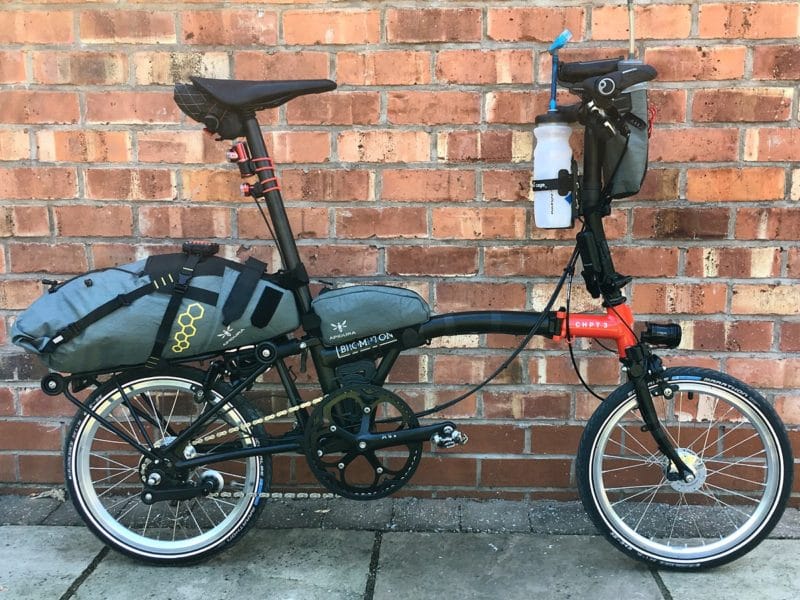
chpt3 with accessories

  • Dinokiddo
  • Bike Gang
  • B-Spokes
  • Novdesign
  • Valeria’s Bikes
  • Aceoffix
  • Bike48
  • Tiparts
  • 781 Brompton Premium Parts
  • Colorplus
  • Speddial

Touring

YouTube video
YouTube video

Top Articles

  • Comparison of Brompton Tyre Options
  • Chainring switching

My Favorite Mods

  • H&H Titanium Rear Q Mini-Rack – Stylish and makes rolling easier.
  • JK Ultrafirm suspension block – improves performance by minimizing energy loss
  • Matsumura shock absorber – a more attractive alternative to the JK block
  • EZ Suspension Block
  • JK Carbon Wheelset
  • JK Brompton Easy Wheel
  • JK Lite Knob Set
  • Tyres
    • JK Strozzapreti
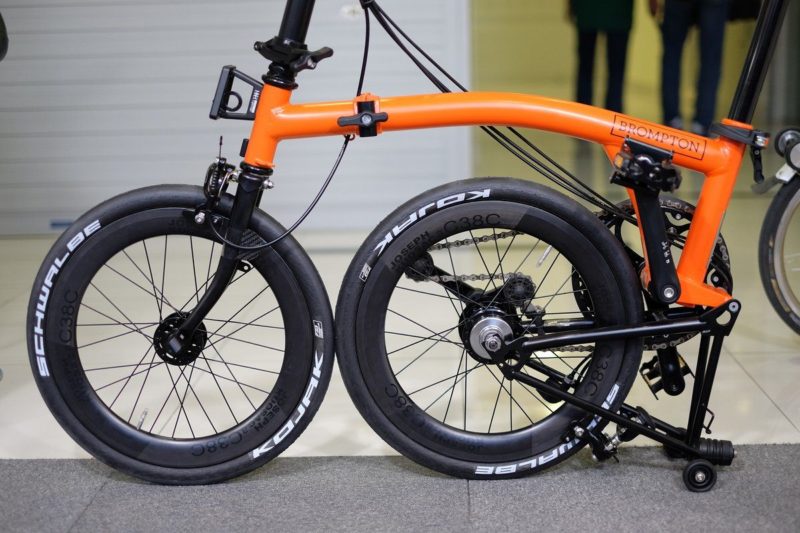
    • Schwalbe Tan Wall
    • Schwalbe Kojak
  • MKS Solution Ezy Superior pedals with SPD clips
  • H&H Front Carrier Block
  • H&H Seatpost / H&H Carbon seatpost / Titanium Seatpost / Brompfication post
  • MiniMods Brompton X-Roller Easy wheel extender
  • H&H Clamp set
  • Borough roll top bag
  • Mini O Bag
  • Swissstop Brake pads
  • Pere kid seat / Maza r-pipe
  • Bryan support for Bobike Mini (kids)
  • Brompton Complete rear rack kit / H&H rack (nicer looking but less usable)
  • Quadlock mount for phones
  • H&H front axle hook
  • EZ Clamp spring
  • Ergon GP 1 Grips
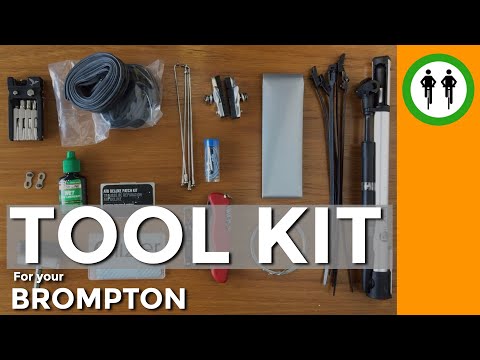
  • Brompton toolkit
  • Cateye Micro Wireless cycle computer
  • Brooks Cambium C17 saddle – also check out the C15 or C13 and the carved versions
  • Brooks B17
  • Ergon ST Core Prime
  • Monkii cage and clip (V version of the cage is better, also read this) / Fidlock
  • Brompton Transport Bag / Backpack Transport bag / KGear Backpack
  • B&W Brompton foldon suitcase
  • Cateye Volt400
  • Rockbros rear light / Enfitnix Cubelite II / Xlite / Indicator lights
  • GoPro camera support
  • Carbon fibre stop
  • Aceoffix seatpost clamp hook
  • Carbon chain protector / Tiparts protector
  • Metal badge
  • Expedition saddle bag
  • Leather mud guards
  • Cateye cycling computer
  • Abus folding lock with alarm / Abus 6100/75
  • Muc-off cleaning products
  • ParkTool Chain scrubber
  • ParkTool repair stand

[Read more…]

Filed under: Health & Fitness

Carry Trading: How to Do it “Crypto Style” to Generate Profit

Last updated: March 12, 2026Leave a Comment

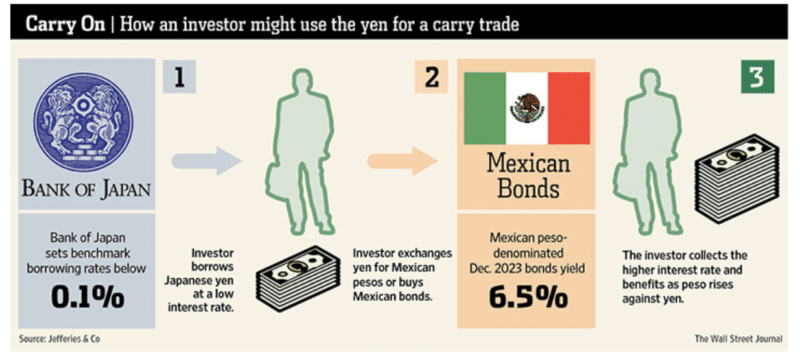
carry tradingA carry trade or “carry trading’ is a unique trading strategy where one takes a loan at a low-interest rate and then takes that loan to invest in an asset that provides a significantly higher rate of return. It’s a strategy that has been used in traditional markets for many years between various fiat currencies but lately, many cryptocurrency enthusiasts are using this same strategy with a twist. It’s time to introduce yourself to the crypto carry trade.

The crypto carry trade: A product of low-interest rates at banks

Before we start diving into the specific of the crypto carry trade, let’s first examine how this strategy made such an efficient transition from traditional markets to digital ones. The culprit here is our beloved central banks.

Central banks all over the world are lowering interest rates in an effort to incentivize investors to buy more assets, stop them from “passively holding” fiat in banks, and in turn, stimulate the economy. Whether this is an effective economic strategy is up for debate and could be the topic of a whole new article. However, the point here is that with low-interest rates (and in some cases, even negative interest rates in Europe), traders started getting creative with how to let these low rates work in their favor.

[Read more…]

Filed under: Cryptoassets, Money

  • « Previous Page
  • 1
  • …
  • 39
  • 40
  • 41
  • 42
  • 43
  • …
  • 89
  • Next Page »

Latest Padel Match

Jean Galea

Investor | Dad | Global Citizen | Athlete

Follow @jeangalea

  • My Padel Experience
  • Affiliate Disclaimer
  • Cookies
  • Contact

Copyright © 2006 - 2026 · Hosted at Kinsta · Built on the Genesis Framework