
Jean Galea

Health, Wealth, Relationships, Wisdom

  • Start Here
  • Guides
    • Beginner’s Guide to Investing
    • Cryptocurrencies
    • Stocks
    • P2P Lending
    • Real Estate
  • Blog
  • My Story
  • Community
  • AI Consultancy
  • Search

eToro Review 2026 – Is It the Best Social Trading Platform?

Last updated: March 11, 202611 Comments

Note: This review only applies to non-US residents.

eToro is a Jack of all Trades in the online investment space, with the broker offering a full range of asset types that can be purchased at the click of a button. Now a publicly traded company on the Nasdaq (it went public in May 2025 at a ~$4.2 billion valuation), eToro has cemented its position as one of the most recognized names in retail investing. On top of traditional stocks, ETFs, and thousands of CFD (Contract For Differences) products (CFDs are not available in the US though) – eToro also allows you to buy and sell cryptocurrencies like Bitcoin.

If you are thinking about using eToro, I welcome you to read my in-depth review. I cover the ins and outs of what you need to know before opening an account – including metrics surrounding regulation, fees, commissions, payment methods, and of course – safety.

Open an eToro account

*76% of retail investor accounts lose money when trading CFDs with this provider. You should consider whether you can afford to take the high risk of losing your money.

What is eToro?

Launched in 2006, eToro is an online broker and trading platform that has grown into a global operation serving over 3.85 million funded accounts. As a member of the site, you will have access to a full range of asset classes. In terms of traditional ownership – you can buy and sell thousands of stocks from a number of international markets, as can you do with ETFs. Moreover, eToro is also home to thousands of CFD products – including but not limited to hard metals, energies, indices, interest rates, and currencies. The company posted record financials in 2025, with net income reaching $216 million.

With that being said, if you’re more interested in the cryptocurrency side of the platform – the broker gives you the best of both worlds. This is because you can invest in digital currencies and retain full ownership of the asset, or alternatively, trade via CFDs. Importantly, eToro now supports cryptocurrency withdrawals through the eToro Money wallet, so you can transfer your coins to an external wallet if you prefer to self-custody your assets.

[Read more…]

Filed under: Cryptoassets, Money

Can Digital Nomads Legally Pay No Taxes?

Last updated: March 11, 202669 Comments

digital nomad tax

I spent a good part of my twenties traveling around the world during what was the start of the digital nomad movement.

A recurring theme I kept hearing was the possibility of optimizing taxes by being a digital nomad.

Just walk into any co-working space in South-East Asia, and a 20-year-old from the EU or Canada will swear that flying circles between Thailand, Bali, and Vietnam for a year means nobody has the right to tax his income.

At the time, I kept things simple by paying tax in my home country where I had always paid as a self-employed person.

Need travel and health insurance for digital nomads? Check out SafetyWing.

When I started hearing all the strategies others were using, I started to feel like I was leaving money on the table. So I spent time learning as much as possible about all the options available for legal tax optimization.

What I found: the approach I had chosen was actually one of the safest. The “clever” tactics many nomads were using were grey-area schemes at best — and plain tax evasion at worst.

To this day, as the digital nomad movement has grown into a mainstream lifestyle, I still hear the same strategies bandied around. So here’s my honest take on how a digital nomad should handle taxes — updated for 2026.

[Read more…]

Filed under: Business

How to Remove DRM from Amazon Books

Last updated: March 10, 20266 Comments

remove drm amazon

Every Kindle book you buy comes locked with Digital Rights Management (DRM). That means you can only read it through Amazon’s own apps and devices. You can’t convert it to EPUB, you can’t open it in Calibre, and if Amazon ever decides to pull a title or shut down your account, those books are gone.

This guide walks through how to remove DRM from your Kindle books so you can read them on any device, convert them to any format, and back them up properly. You bought these books — you should be able to use them.

Is This Legal?

This is a gray area that varies by jurisdiction, but the ethical case is straightforward: you’re not pirating anything. You bought the book. You’re removing a technical restriction that prevents you from using something you already paid for. You’re not distributing copies or bypassing protection to avoid paying.

In the US, the DMCA makes circumventing DRM technically illegal even for personal use. In the EU and other regions, personal backup rights are stronger. Know your local laws. This guide is written for people who own the books they’re removing DRM from — not for piracy.

What You’ll Need

  • Calibre — the open-source ebook management tool (calibre-ebook.com)
  • DeDRM plugin — maintained by noDRM on GitHub (github.com/noDRM/DeDRM_tools)
  • Kindle desktop app — an older version (more on why below)

Step 1: Install Calibre

Download and install Calibre from calibre-ebook.com. This is the foundation — it handles your ebook library and does the format conversion once DRM is stripped.

If you already have Calibre installed, make sure you’re on a reasonably recent version. Calibre 6.x or 7.x both work fine with the current DeDRM plugin.

Step 2: Download the DeDRM Plugin

The DeDRM plugin is the tool that actually strips the DRM during import. It was originally created by Apprentice Alf and is now maintained by noDRM on GitHub.

Go to github.com/noDRM/DeDRM_tools/releases and download the latest release. The file will be named something like DeDRM_tools_X.X.X.zip.

Important: Don’t extract this archive yet. Keep it as a ZIP file — you’ll need to drill into it in the next step.

Step 3: Install the DeDRM Plugin in Calibre

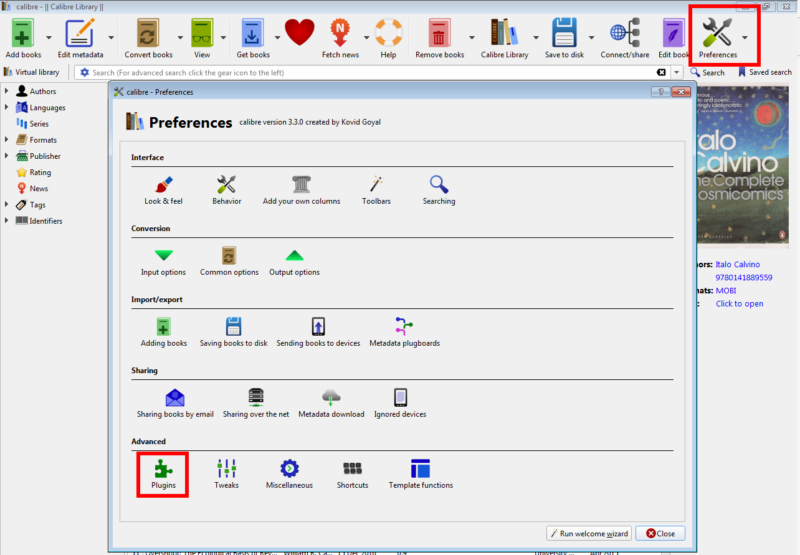
Open Calibre, then go to Preferences → Plugins → Load plugin from file.

Here’s where people run into trouble: you need to navigate inside the downloaded ZIP to find the actual plugin file. Open the archive you downloaded and look inside — you’ll find a file called DeDRM_plugin.zip. That’s the file you want to load into Calibre, not the outer archive.

The full path inside the archive looks something like: DeDRM_tools_X.X.X.zip → DeDRM_calibre_plugin → DeDRM_plugin.zip

Extract just that inner DeDRM_plugin.zip to your desktop or downloads folder, then point Calibre’s plugin loader at that file.

If Calibre throws an error like InvalidPlugin: The plugin ... is invalid. It does not contain a top-level __init__.py file, you’ve loaded the outer archive instead of the inner plugin ZIP. Go back and extract the inner file.

Once the plugin loads successfully, restart Calibre. The plugin won’t be active until you do.

Step 4: Get an Older Version of the Kindle Desktop App

This step matters more than people expect. Amazon’s newer Kindle desktop apps download books in KFX format, which is a newer Kindle format that can be harder to work with. Older app versions download books as .azw or .azw3 files, which the DeDRM plugin handles cleanly.

The recommended versions are:

  • Mac: Kindle for Mac 1.17 — this is the last version that reliably downloads in the older format on macOS
  • Windows: Kindle for PC 1.26 — same reasoning on Windows

You can find these older versions on sites like MobileRead forums or via direct archive links that circulate in the ebook community. Uninstall any newer version of the Kindle app first, then install the older one. When prompted to update, decline.

The KFX workaround: If you’re working with a newer app version or already have KFX files, you can still strip DRM — but you’ll also need the KFX Input plugin for Calibre, available from the MobileRead forums. Install it the same way as DeDRM. With both plugins installed, Calibre can handle KFX files on import.

Step 5: Download Your Books via the Kindle Desktop App

Open the older Kindle app and sign into your Amazon account. Your library will populate. Right-click on any book and choose Download (the option name varies slightly by version).

Downloaded books are stored locally on your machine. On Mac, you’ll find them in ~/Library/Containers/com.amazon.Kindle/Data/Library/Application Support/Kindle/My Kindle Content/. On Windows, look in My Documents\My Kindle Content\ or %LOCALAPPDATA%\Amazon\Kindle\content\.

Each book will be a folder containing an .azw or .azw3 file along with some metadata files.

Step 6: Import into Calibre

With the DeDRM plugin installed and Calibre restarted, drag the .azw or .azw3 files into your Calibre library — or use Add books to import them. The DRM is stripped automatically during the import process. There’s no separate “remove DRM” step to trigger.

If a book imports but still shows as DRM-protected when you try to convert it, something went wrong with the plugin setup. Double-check that you loaded the correct inner ZIP file and that you restarted Calibre after installing.

Step 7: Convert to Your Preferred Format

Once your book is in Calibre without DRM, you can convert it to any format: EPUB, MOBI, PDF, AZW3, or anything else Calibre supports. Right-click the book in your library, choose Convert books, pick your output format, and hit OK.

EPUB is the most universally compatible format and the best choice for reading on non-Kindle devices (Kobo, Apple Books, any e-reader running standard software).

Why Amazon Keeps Making This Harder

Amazon has been steadily tightening the screws on local book access. In recent years they removed the ability to download books directly from the Amazon website, pushing everything through the Kindle apps. They’ve introduced newer formats that are harder to work with. The direction of travel is clear: they want your library to live in their cloud, not on your device.

That’s exactly why having a local, DRM-free backup of books you’ve paid for makes sense. Kindle accounts get banned for various reasons, titles get pulled from stores, and licensing agreements between publishers and Amazon expire. Any of those events can result in books you paid for disappearing from your library.

This process is worth doing for any book you genuinely want to own.

Filed under: Tech

Is it Stupid to Travel While Renting Long-Term?

Last updated: September 21, 20227 Comments

travel while still renting

I spent the latter half of my twenties traveling the world, and now that I’m in my mid-thirties, a topic that comes up with my wife and friends is whether it makes financial sense to still do any long-term traveling while also renting an apartment at our home base.

In our twenties, we could fit all our possessions in a pair of suitcases, and once we left a country we would terminate the rental agreement and then rent another apartment in the new country we move to. However, since we settled in Barcelona we have a nice apartment that we rented long-term, and rental prices in Barcelona are not exactly on the cheaper end.

Hence if we were to consider spending a few months every year traveling and therefore renting an apartment in another city or country, it is worth considering if that would make financial sense.

The initial knee-jerk reaction is usually that it doesn’t make any sense to be paying two rents. However, let’s see if we can assuage our panicking brains.

Before I continue, I need to say that as a family we would never be comfortable renting out our apartment while we travel. There are many people who feel totally comfortable doing so, and that was actually the motivation behind Airbnb, however, it’s just not for us. Our home is too much of a personal space to be able to rent it out.

That is why if we travel for a few months every year, we would not be able to offset the extra costs by renting out our home.

Now let’s move on to see if we can figure out a way to make this work.

A good apartment in Barcelona costs around €600,000. We could buy an apartment and then still travel, thus having no guilt feelings about paying rent for two places while only using one.

Buying the apartment outright, apart from requiring a big sum of money to be tied up and practically killing any notions of diversification in our net worth, would eliminate any possible investment income.

There’s also the other option of taking out a loan, but you’d still need to pay the mortgage which of course includes interest apart from the principal. For the purposes of this calculation, and because I am not a big fan of debt, I’ll leave that option out of the equation.

I feel confident in being able to make 8-10% per year when investing, so that would return €50,000 if I invested that sum of money. Remove tax of around 30% and we are left with €35,000.

The rent per month of that same apartment costs around €2,000, so we get a total yearly cost of €24,000. The money earned from the investment more than covers the rent, meaning that I should not be worrying about whether this traveling is a bad financial decision.

Every financial decision has to be taken in the context of life ambitions and what we want to achieve. If traveling for a few months a year will really enhance our enjoyment of life, and we are earning enough money from investments to cover the costs, then there is absolutely no problem in doing so.

Do you agree?

Filed under: Money, Real estate

Is Peer-to-Peer Lending Safe?

Last updated: March 12, 2026Leave a Comment

p2p lending platforms safe

Interest rates have risen significantly since the near-zero era, but P2P lending platforms still attract investors looking for returns above what savings accounts and bonds offer. That demand brings healthy skepticism — especially from people who don’t fully understand how these platforms work.

A very common question I get is some kind of variation of this:

I am looking to diversify my investments and have been reading with interest your articles about peer to peer investments. From your experience, do you think these are safe platforms?

Let’s dig a little deeper into this question.

I like the first part as it means that the investor has already started investing in other asset classes, probably traditional ones like stocks and bonds. This brings us to the first point I want to make.

I don’t think P2P lending should be your first and only investment unless you have a very high-risk tolerance or really know what you are doing and have a specific strategy you are executing.

There are no get rich quick schemes in life, so if you’re thinking of going all-in with P2P lending due to the higher returns they offer, you should probably stop and re-evaluate. Investing and risk go hand in hand, and P2P lending is very clearly on the riskier side of the spectrum.

Moving on to the second part of the question, it’s fine to ask someone’s opinion on things, but I feel that there is no answer to this second part of the question. First of all, one investor’s experience does not prove anything. I might have had a great run with P2P lending but that doesn’t mean you will achieve the same results. Secondly, I always emphasize that you should not ask for investment and financial advice online.

A related question I get is the following:

Are P2P lending platforms regulated?

All the platforms I invest in and speak about on this blog are regulated (this isn’t wild west territory as in crypto), and one of the biggest selling points for these websites is how transparent they are. They are therefore incentivized to be transparent and show you historical data about their loan performances.

However, there is no standard European-wide regulation yet, so if you’re not comfortable with that, you might want to consider waiting until that’s implemented, although it could take several years for that to happen. If you don’t want to wait, you’ll have to assume the extra risk of some platforms being regulated by a different authority than your country’s own.

All platforms need to conduct KYC and AML checks and have other basics in place, but it should be very clear that they don’t offer any ultimate protection for your money in the way that banks can protect up to 100,000 euros of your savings. This is an investment and with any real investment, your money is always at risk.

What are the risks with P2P platforms?

Let’s move on to discuss specific risks when dealing with peer to peer lending platforms.

Credit Default risk

The repayment of your investment is directly dependant on the repayments of each particular borrower. In some cases, loans are secured with underlying collateral from the borrower, and in some cases not.

Loan originators sometimes offer buyback obligations (previously called buyback guarantees) making debt collection and repayment enforcement relatively easier. In other cases, loans are totally unsecured, and therefore carry a higher risk of repayment delay and borrower default.

Loan Originator risk

Ultimately, even with a payment guarantee and buyback guarantee in place, if the loan originator itself goes bust, you will most likely lose some or all of your money invested in its loans.

Many P2P platforms act as aggregators, bringing many loan originators on board and having them offer their loans to investors.

Each Loan Originator is a professional lending entity that is specialised in lending to a particular type of customer (consumer loans, businesses etc.) and is compliant with all relevant regulations in its respective country of operations.

Lending companies are founded with a purpose to generate profits. In case of unsuccessful business activities and failure to achieve the targets set, a Loan Originator can go out of business and stop operations.

A good P2P platform does some essential work here. Prior to partnering with a Loan originator, there should be an extensive due diligence process, consisting of financial, legal, and other analyses. Once the LO is approved, there should be ongoing monitoring of the Loan Originators’ performance.

Should a Loan Originator become late on any of its settlement payments, the platform typically initiates an in-depth investigation of the situation at the Loan originator including legal proceedings and on-demand site visits. If the Loan Originator ends up halting its activities, the P2P platform collaborates with the company and its appointed insolvency administrator in order to settle all outstanding investments in the particular Loan Originator’s listings on the marketplace.

The best way to reduce loan originator risk is to diversify among different loan originators and also to have a look at the financials of each loan originator to make sure they are sound.

Operational risk

This is the risk that the P2P platform itself will go bankrupt. There are many reasons why this could happen, but ultimately platforms are normal businesses that need to make more money than they spend in order to remain in business.

Some of them have startup funding but eventually, they will run out of their runway and need to find a way to stay sustainable. That is why I recommend that you check the audited accounts of platforms and only invest in those that are already turning a profit.

Platforms that don’t even publish their accounts are higher risk and I wouldn’t personally invest my money with them unless there is some very good reason to do so.

In the event that a platform goes out of business, the appointed insolvency administrator will be responsible to achieve successful settlement of all outstanding investments and partnerships. Good platforms also work with a Certified Auditor Office, providing a backup of all investment data for storage to the Auditor on a monthly basis. These should be some of the questions you ask about a platform before you decide to invest.

One way of reducing operational risk is to spread your investments across several platforms. But it’s not as simple as that, since more platforms = more work for you to administer everything and keep on top of what platforms are doing.

Currency risk

Most European P2p lending platforms operate in Euros, but some of them offer the opportunity to invest in loans denominated in other countries. Mintos is one such example. Fluctuations in the currencies can result in both higher losses and higher profits.

In order to diminish exposure to Currency risk, I make sure that any non-Euro investments I conduct have ample timeframes so as to be able to ride out any negative patches in the exchange rates. Thus, I will not find myself in a need to withdraw money to use for living expenses when the exchange rate is not to my benefit.

Concentration risk

Focusing investments on only one asset class or investment type results in high exposure to the respective asset class or investment type. Therefore, even the smallest fluctuation can affect the return to a very large extent.

In order to diminish exposure to concentration risk, try diversifying your investment portfolio across several different asset classes, investment types and geographies. In my opinion, P2P lending should only compose a small part of your portfolio, unless you’re an expert in this area and have an appetite for risk.

Liquidity risk

Loans are very frequently delayed. There is a reason we are being paid high interest rates. And that reason is that the borrower, whether it’s a business or person, is in dire straits. That means that it is possible that they might not get out of their negative situation in time to be able to pay back their loans. In such cases, the loan is extended. Different platforms handle this in different manners, for example, Mintos have a buyback obligation whereby any loans delayed by more than 60 days are automatically bought back by the loan originator.

However, if the loan originator experiences mass delays in payments from the borrowers, then it might be forced into insolvency, meaning that the loans are not only delayed but are most probably considered bad debt, and will never be recovered.

Market risk

There are several market risks that you can read up on, such as macroeconomic risks, political risks, legal risks, inflation risks, etc.

Ethical concerns

Many platforms, unfortunately, are not transparent with who they loan your money to and at what rates. We might not know if the money is being used for ethical business purposes or for some shady business. The platform might also be lending to borrowers at very high interest rates bordering on usury, while giving the investors relatively low returns.

For this reason, I recommend investing only in platforms that make transparency one of their core values.

What returns do I get for this extra risk?

I would be aiming for 8% to 14% per year as a target earnings rate before tax when investing in peer to peer lending sites.

Anything less than 8% and I would start to get worried and probably shift my investments elsewhere.

This is because peer to peer lending is not as safe as investing in real estate, just to mention another asset class, so if my returns get that low I would prefer obtaining more safety through real estate investments.

How can you minimize risks?

There are some things you can do on your end to minimize the risk of losing your money with P2P lending. Here are a few things I do.

Research and due diligence

You should always investigate each platform individually and you should also have a checklist that you use to evaluate in a uniform way. I’ve already shared some of the points I keep in mind when evaluating platforms.

You should always read reviews and investigate each platform yourself before deciding to invest. Ask other investors how they are doing, and have some interaction with the platform itself by chatting with them, phoning them or using their email support system. Check how they reply to you and use that to guide your investment decisions.

I have compiled a list of my favorite P2P lending platforms and also a list of peer to peer lending platforms that I don’t trust, and I suggest you avoid them as well. But always do your own research and don’t rely on my opinion or anyone else’s.

Diversifying your investments

Obviously, don’t invest all your money in peer to peer lending sites. It is never a good practice to put all your eggs in one basket. I like to keep a healthy balance of stocks, cash, investments in other businesses, real estate, and loans.

Periodic review

I recommend reviewing your investments on a monthly basis so that if you see a bad trend developing on any of the platforms, you can take corrective action early. It is also a good idea to diversify as much as possible. If you have €10,000 to invest, you can choose to put €100 in each loan, so even if 2 loans go bad, you will still have €9,800 safe.

You will still receive interest on all the other loans so by the end of the year you will still be comfortably ahead. In the game of peer to peer lending you must be prepared for a small percentage of loans to go bad, that’s just the nature of how things work. Don’t get too frustrated about it when it happens, but rather make sure that your overall returns for the year are positive.

Conclusion

As you can see there are several risks that need to be taken into consideration when it comes to P2P lending. At the end of the day, this is an alternative investment that carries meaningful risk. The regulatory environment has improved significantly with the ECSP framework now in place across the EU, but the industry is still relatively young compared to traditional financial markets.

Whether you should go ahead and invest or not is a personal decision that takes into consideration things like your overall net worth size, your other investments, and your appetite for risk.

In my case, P2P lending fits in very nicely in my portfolio. I am happy to take the risk for the outsized returns, but it’s never going to be the biggest part of my portfolio either. I’d rather invest a bigger chunk in an active business that I can manage and influence or even the stock market which is well regulated and highly liquid.

What are your thoughts?

Filed under: Money, P2P Lending

  • « Previous Page
  • 1
  • …
  • 45
  • 46
  • 47
  • 48
  • 49
  • …
  • 89
  • Next Page »

Latest Padel Match

Jean Galea

Investor | Dad | Global Citizen | Athlete

Follow @jeangalea

  • My Padel Experience
  • Affiliate Disclaimer
  • Cookies
  • Contact

Copyright © 2006 - 2026 · Hosted at Kinsta · Built on the Genesis Framework