Jean Galea

Health, Wealth, Relationships, Wisdom

  • Start Here
  • Guides
    • Beginner?s Guide to Investing
    • Cryptocurrencies
    • Stocks
    • P2P Lending
    • Real Estate
    • Forex
    • CFD Trading
    • Start and Monetize a Blog
  • My Story
  • Blog
    • Cryptoassets
    • P2P Lending
    • Real estate
  • Consultancy
    • Consult with Jean
    • Consult a Lawyer on Taxation and Corporate Setups
  • Podcast
  • Search

YouHodler vs Nexo – A Competitive Analysis

Last updated: September 05, 20233 Comments

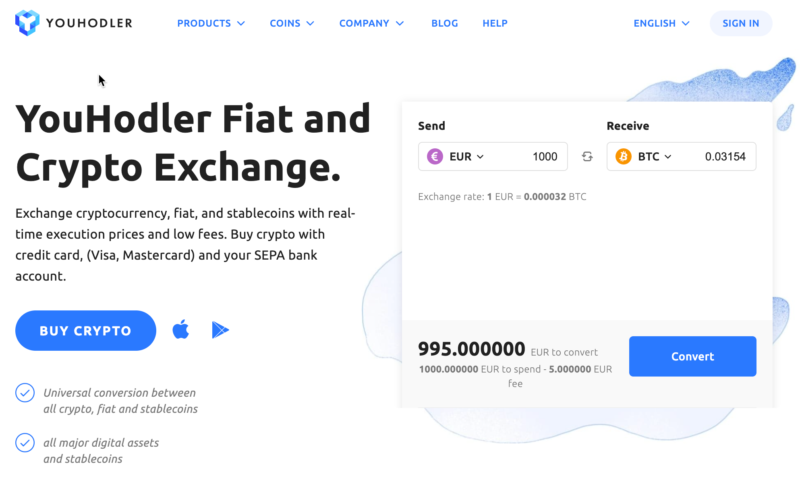
YouHodler trading

In the realm of financial technology (FinTech), YouHodler and Nexo are two highly competitive platforms offering a variety of crypto/fiat financial services. What really brought both platforms to international fame is their interest-earning accounts though. Crypto enthusiasts are constantly looking for the best platforms to safely store their crypto while simultaneously earning a passive income on it. These two platforms offer some of the best rates around in addition to a few other exciting tools to help “HODLers.” But which one is the best?

In this competitive analysis, we’ll do a deep dive into both companies to see which features set one apart from the rest.
[Read more…]

Filed under: Cryptoassets, Money

The Best Crypto-Friendly Countries in Europe

Last updated: March 09, 20261 Comment

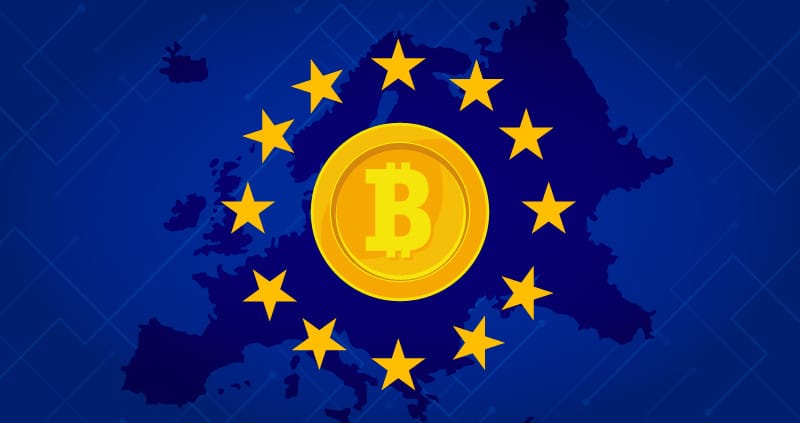
crypto friendly countries europe

If you hold crypto assets and want your tax situation to actually make sense, where you live matters enormously. Governments across Europe have taken wildly different approaches to crypto — some have leaned in, others have pulled back, and a handful have made it genuinely attractive for long-term holders and businesses alike.

As an investor in or holder of crypto assets, it would be ideal to live in a country whose government and financial system is knowledgeable about crypto and has a favorable tax and banking situation. Beyond taxes, it’s also worth considering whether other investors and crypto companies are already there — because you get real networking opportunities and the ability to work with or for those companies.

This guide focuses on Europe specifically, covering the countries that stand out — for better or worse — and what’s actually changed in recent years. I’ve lived in Spain for years and follow this closely as a crypto investor myself, so I’ll give you my honest take alongside the facts.

Important disclaimer: Tax law changes constantly. This article is a starting point, not legal advice. Always verify the current rules with a qualified tax professional before making any decisions. For a broader look at how crypto is taxed, see my crypto tax guide here.

MiCA: Europe’s New Crypto Rulebook

Before getting into individual countries, there’s a big-picture development that affects all of them: the EU’s Markets in Crypto-Assets regulation, known as MiCA.

MiCA came fully into force on December 30, 2024, making the EU the first major jurisdiction in the world to have a comprehensive, unified regulatory framework for crypto assets. It covers licensing requirements for crypto service providers, rules around stablecoins, market abuse protections, and more.

For investors, this is a meaningful positive. It means that operating a legitimate crypto business in the EU is now much clearer legally, and that exchanges and service providers operating here are subject to real oversight. The wild west era of unregulated crypto businesses is ending in Europe — which is actually good news for serious long-term participants.

It doesn’t mean every EU country has the same tax treatment — that’s still decided at national level. But it does mean the broader regulatory environment across the EU has matured significantly.

The Best Crypto-Friendly Countries in Europe

Switzerland — The Gold Standard

Switzerland isn’t in the EU, but it’s the first place any serious crypto investor in Europe should look at. The canton of Zug — nicknamed “Crypto Valley” — has become the most important crypto hub on the continent, home to the Ethereum Foundation, the Cardano Foundation, the Solana Foundation, Polkadot, and dozens of major crypto companies and projects.

For individual investors, Switzerland has no capital gains tax on crypto. If you qualify as a private investor (rather than a professional trader), profits from selling crypto are completely tax-free. You need to meet the “Safe Haven” criteria: hold for at least six months, no debt financing, and keep your trading volume and gains within reasonable limits relative to your overall wealth. For a typical long-term crypto holder, this is straightforwardly achievable.

What you will pay is an annual wealth tax on the value of your crypto holdings — typically between 0.1% and 0.5% depending on the canton. Zug has one of the lowest wealth tax rates in Switzerland, which is part of why it’s so popular. Staking rewards are also treated as income.

The other major advantage over most of this list: Swiss banks actually work with crypto. That’s not something you can say about most European countries, and it matters enormously if you’re holding or moving significant amounts.

Switzerland is genuinely the top destination in Europe if you’re a serious crypto investor or working in the space. The combination of zero capital gains tax, world-class banking, and the density of crypto talent and companies in Zug is hard to beat.

Portugal — Still One of the Best for Long-Term Holders

Portugal built a strong reputation as a crypto-friendly destination, and that reputation is still mostly deserved — but the rules have changed and are worth understanding clearly.

Since 2023, Portugal taxes short-term crypto gains at 28%. If you sell crypto you’ve held for less than 365 days, you’ll pay tax on the profit. However, if you’ve held for more than 365 days, those gains remain completely tax-free. That puts Portugal firmly in the same camp as Germany for long-term holders — and it still makes the country significantly more attractive than most of Europe for investors with a buy-and-hold approach.

Portugal also has a well-established expat infrastructure, a relatively low cost of living compared to western Europe, and a sizable community of digital nomads and crypto people who’ve relocated there over the past several years. The networking opportunities are real.

I’ve written a detailed breakdown of crypto and Bitcoin in Portugal if you want to go deeper on the specifics.

Germany — Reliable and Underrated

Germany doesn’t get talked about as much as Portugal in crypto circles, but it arguably should. The rules are clear, have been consistent for years, and the long-term holding exemption is straightforward: if you hold crypto for more than one year and then sell, the gains are completely tax-free. No minimum holding amount, no annual cap — just hold for a year and you’re done.

That’s a significant advantage for long-term holders with meaningful positions. Germany is also a large country with actual economic substance — there are real crypto and fintech companies based there, real banking options, and Berlin in particular has a strong tech ecosystem.

The downside is that Germany is an expensive, heavily bureaucratic place to live in, and the short-term tax rate (under one year) is your full marginal income tax rate, which can be steep. But for patient holders, it’s one of the cleanest setups in Europe.

Czech Republic — A New Entrant Worth Watching

The Czech Republic passed a significant crypto tax reform at the end of 2024 that came into effect on January 1, 2025. Under the new rules, crypto gains are completely tax-free if you hold for more than three years. There’s also a separate exemption for those whose total annual crypto sales don’t exceed CZK 100,000 (roughly €4,000) — useful for smaller holders regardless of holding period.

The three-year threshold is longer than Germany’s or Portugal’s one-year rule, so it’s not quite as flexible. But for anyone genuinely committed to a long-term hold strategy, it’s a real benefit. The law also grants crypto companies the right to open bank accounts without restriction, which signals a government that’s trying to be serious about this.

Prague has a growing tech and startup scene, and the cost of living is significantly lower than in western Europe. It’s an interesting option that hasn’t yet gotten the attention it deserves.

Slovenia — No Longer the Safe Haven It Once Was

Slovenia used to be one of the more interesting cases in Europe. Individuals paid no capital gains tax on crypto — only companies were subject to corporate tax rates. That individual exemption made it appealing for personal investors.

That’s changing. In 2025, Slovenia’s finance ministry proposed a 25% tax on crypto gains for individuals, with the change set to take effect in 2026. Gains realized before January 1, 2026 would not be taxed retroactively, and crypto-to-crypto swaps would remain exempt. But the window for Slovenia as a tax-free jurisdiction for individuals is closing fast.

If you’re considering Slovenia specifically for its crypto tax treatment, verify the current status of this legislation before making any plans. The situation is in flux.

Malta — The Blockchain Island That Wasn’t

Malta announced that it wanted to be the blockchain island during the ICO craze a few years back. It even published regulations that were favorable toward blockchain companies, and that eventually led to Binance basing itself there — although I was never convinced that any meaningful operating activity actually took place on the island. You wouldn’t have found any significant Binance offices with real teams working there, so it never helped much with networking opportunities for the community.

Binance has since left Malta entirely, and the blockchain island dream is all but dead from what I’ve heard from friends I have there. Banks in Malta remain deeply averse to crypto, and I’m still not sure how the vision of becoming a blockchain hub was ever going to be made real given that fundamental issue. The practical infrastructure for a crypto professional — banking, community, ecosystem — simply isn’t there.

From a pure tax perspective, long-term capital gains treatment can still be favorable in Malta, but that’s a thin silver lining given everything else. I’d look elsewhere.

Lithuania — Small but Functional

Lithuania is worth a brief mention, primarily because it’s home to Revolut Bank UAB — Revolut’s EU banking entity — which gives it a certain fintech credibility. The country has been relatively open to crypto businesses and has a lower cost of living than most western European alternatives.

For individuals, crypto gains are currently taxed at a flat 15% rate. That’s not zero, but it’s competitive compared to many western European countries where income tax rates on investment gains can be significantly higher. One important caveat: from January 2026, Lithuania is moving to a progressive tax structure (20%, 25%, and 32%) that will apply to most income including crypto gains. So the 15% window is closing.

There’s a small exemption threshold — only gains above €2,500 are taxable for occasional traders. Lithuania isn’t a standout destination, but it’s a reasonable mid-tier option if you have other reasons to be there.

Estonia — A Cautionary Tale

Estonia was an early crypto-friendly jurisdiction and attracted thousands of crypto companies between 2017 and 2022, largely because of its e-Residency program and relatively easy licensing process. At one point there were nearly 500 licensed crypto service providers operating under Estonian licenses.

Then came the 2022 AML crackdown. Estonia tightened its anti-money laundering requirements dramatically, and the result was an 80% drop in licensed crypto firms — around 389 licenses were revoked or voluntarily surrendered. The financial intelligence unit found “suspicious circumstances” in a large number of applications and moved aggressively.

Estonia still has a 20% flat tax on crypto gains, which is straightforward. And it’s not hostile to crypto in principle. But it’s a useful reminder that “crypto-friendly” licensing regimes can reverse quickly, and that regulatory risk is real. Estonia went from being seen as one of the most open jurisdictions in Europe to a cautionary example of regulatory whiplash within a few years.

Belarus — Don’t

Belarus has technically maintained a crypto tax exemption — it was extended through at least 2025 — and there have been signals from the Lukashenko government about wanting to position the country as a crypto hub. In 2025, Lukashenko himself pushed regulators to finalize rules for crypto and digital tokens.

But here’s the honest assessment: even setting aside the tax picture, who actually wants to live in Belarus right now? The country is under an authoritarian government that has violently suppressed its own population and has provided active support for Russia’s invasion of Ukraine. It’s subject to heavy international sanctions. The banking system has serious restrictions. And whatever the official tax rules say, legal security in a country without rule of law is meaningless in practice.

No tax incentive is worth the political and personal risk of living under the Lukashenko regime. Cross it off the list.

The Bottom Line

If I were ranking these purely on the overall package — taxes, banking, ecosystem, quality of life — Switzerland comes out clearly on top. The zero capital gains tax for private investors, combined with actual banking infrastructure and the Crypto Valley cluster in Zug, makes it the most compelling destination for a serious crypto investor in Europe. The catch is the cost: Switzerland is expensive to live in.

For long-term holders who want something more affordable, Germany and Portugal are the two most established options. Both offer tax-free treatment on holdings over one year, have real infrastructure, and are practical places to live. The Czech Republic is the most interesting newer entrant and could become more prominent as its 2024 reform bedded in.

Malta and Belarus are, for different reasons, not worth serious consideration. Slovenia was interesting but is in the process of closing its window.

And across all of these: MiCA has raised the baseline regulatory standard for the entire EU. That’s a good thing for anyone operating legitimately in this space — clearer rules mean fewer nasty surprises, even if individual countries still vary significantly in how they tax you personally.

If you’re thinking seriously about relocating or structuring your affairs around your crypto holdings, get proper local legal and tax advice. These rules change, sometimes quickly. For more on the tax side of things, start with my guide to crypto taxes, and if you’re still building your position, here’s how I think about buying Bitcoin today.

Filed under: Cryptoassets, Money

Bitpanda Review: One of the Best European Crypto Exchanges

Last updated: April 02, 20244 Comments

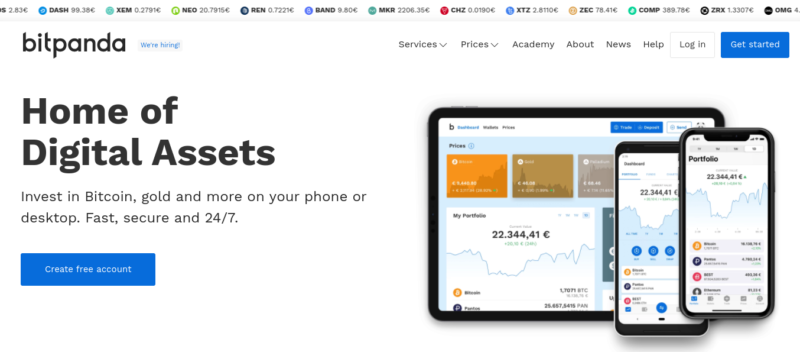
Bitpanda review

Bitpanda was created to offer a simple way to buy and sell cryptocurrencies. The Austria-based fintech platform has since garnered a notable reputation in this space, with the provider claiming to be behind more than 1 million active traders.

In this review, I dive into the many features of Bitpanda and how it measures up against the other cryptocurrency trading platforms in the market. In particular, I look at supported markets, fees and commissions, user-friendliness, and safety.

Buy cryptos at Bitpanda

What is Bitpanda?

Bitpanda began its journey under the name Coinimal in October 2014. The platform gained attention with its simplicity – making it easier for both experts and novice traders to step on to the cryptocurrency trading scene.

Today, the platform has evolved to provide an array of digital assets – including 46 cryptocurrencies, four metal tokens, and three different Bitpanda crypto indices.

what is Bitpanda?

In addition, the team at Btpand has also introduced several other financial management tools that aid in the process of online trading.

Here is an overview of the key features found at Bitpanda:

  • Buy and sell digital assets and tokens directly – 24 hours a day, seven days a week
  • More than ten options to pay for digital assets – with bank cards, e-wallets, and SEPA bank transfers
  • Fast and convenient transactions with fully-automated order systems
  • Create price alerts for supported digital assets
  • Set up a personal savings account to automatically buy digital assets
  • Unlock trading discounts with the Bitpanda Ecosystem Token
  • Gain access to competent and reliable support

Bitpanda was designed specifically for newbie traders who want an easy to use interface to access cryptocurrency. That said, the platform has also expanded to accommodate the needs of professional traders.

More specifically, Bitpanda Pro was created for seasoned traders and businesses that demand more advanced tools, as well as integrate the platform with trading bots.

All in all, Bitpanda strikes as a well-rounded platform for traders of all shapes and sizes. You can also access all its features through a native mobile application, which offers a smooth transition between different devices, and allows you to access your assets from anywhere, anytime.

[Read more…]

Filed under: Cryptoassets, Money

The Best Bitcoin Wallets of 2024 – A Full Review

Last updated: April 02, 2024Leave a Comment

crypto wallets bitcoin

Crypto storage is an extremely important topic. There are countless options out there to consider but not every Bitcoin wallet is the same. Every Bitcoin wallet app comes with its own set of features and today, we’re going to highlight a few of them you should consider. The following bitcoin wallets are not just great for safe storage, but they also feature unique tools that help you manage your crypto portfolio efficiently, effectively, and ideally, profitably.

  1. YouHodler – The best wallet for earning interest
  2. Ledger Nano X – The best hardware wallet
  3. Electrum – The best bitcoin wallet for Bitcoin maximalists
  4. Exodus – The easiest wallet to use

1. YouHodler

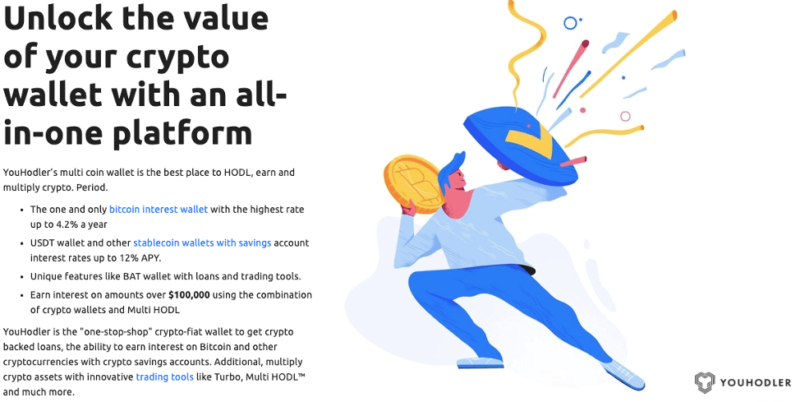
First up on your list is YouHodler. YouHodler has crypto wallets of varieties but as for the Bitcoin wallet, it is quite unique in that it lets you earn interest, in addition to taking advantage of Bitcoin multiplication features.

YouHodler

Earn Interest on Crypto

YouHodler is the only crypto wallet app that lets clients earn up to 12% APR + compounding interest on various stable coins and cryptocurrencies.

Users can earn interest in Bitcoin in addition to top cryptos like ETH, LINK, LTC, BCH, XRP, and more. Stablecoins featured on the platform are USDC, USDT, TUSD, PAXG, PAX, HUSD, BUSD, DAI, and EURS. Every Bitcoin wallet app needs to have good security and insurance and YouHodler has one of the best.

Insurance Via Ledger Vault

Clients of this wallet benefit from Ledger Vault’s pooled crime insurance program. Crypto assets on the platform are insured up to $150 million which is led by the highly regarded Arch UK Lloyds of London syndicate. This insurance plan covers a variety of risks like employee theft, collusion, third party theft of master keys/private keys, and the event of a physical breach of hardware security.

Crypto Conversion and Multiplication

While most Bitcoin wallets are just for storing Bitcoin, YouHodler includes a few additional features as well. Using the platform’s universal conversion tool, clients can buy Bitcoin and any other cryptocurrency in the app in addition to converting any other currency without limitations at competitive conversion rates. For the more advanced traders out there, YouHodler’s wallet also has two tools called Turbocharge and Multi HODL.

Simply put, Turbocharge and Multi HODL let clients take loans as leverage to either long or short the crypto market. It’s a great way to use small amounts of starting capital with the potential for larger profits.

As for withdrawal fees, YouHodler has no deposit or withdrawal fees for Bitcoin and other top cryptocurrencies. However, there are some small withdrawal fees for select stablecoins and cryptos. Regarding fiat deposit and withdrawal, that is an easy process with most Visa/Mastercard options and bank wire options available. Perhaps the best part is there is no minimum deposit amount for crypto on YouHodler, making this a great option for entry-level crypto enthusiasts and experts alike.

Open a YouHodler account

2. Ledger Nano X Bitcoin wallet and crypto wallet

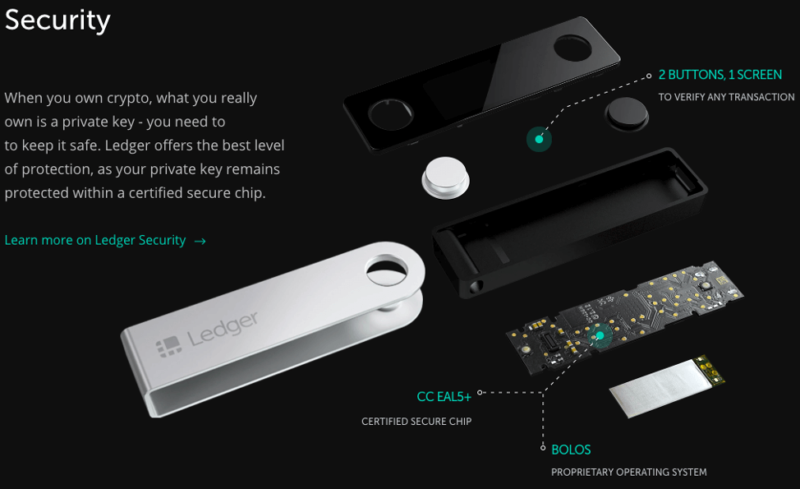
There’s an old saying in the crypto world “not your keys, not your crypto”. The keys of course refer to private keys and the logic behind that is if you don’t know your private keys, then really, the wallet is at high risk. As a result, “cold storage wallets” have really taken off in recent years and the Ledger Nano X is one of the best out there.

Ledger Nano

Compatibility and Price

The Ledger Nano X is more than just a bitcoin wallet. This wallet is compatible with over 1,500 different cryptocurrencies and can even sync up with hot wallets via Bluetooth technology or via good old fashioned USB. Surely, something this advanced must be expensive right? At $150, the Ledger Nano X is actually one of the more affordable cold storage bitcoin wallets out there.

Manage Portfolio with Ledger Live Software

Another great addition to this device is the software that comes with it. Just like with other bitcoin wallet apps, the Ledger Live app allows you to see your transaction in a visual format, even though it’s a cold storage hardware device. You can buy Bitcoin and crypto with this software as well as manage your transactions, check portfolio growth, and send and receive crypto.

Typically, cold wallets are challenging to use but this one is great for all skill levels and above all, it’s extremely safe. That being said, not even hardware wallets are 100% safe from fraudulent activity. As always, be careful of fake emails or text messages from the scammers claiming to be from Ledger asking you for your private keys or pin code. There have been reports of people losing their crypto from such phishing scams so always be cautious of anyone asking for private information regarding your funds.

Buy Ledger Nano

3. Exodus

Moving on from hardware wallets and back to bitcoin wallet apps, we have Exodus. As mentioned earlier, there is a whole new wave of crypto users entering the market now and many are overwhelmed with the features of some bitcoin wallets out there. If this sounds like you or someone you know, then perhaps Exodus is the best bitcoin wallet for you. Exodus is well known as the easy to use wallet for beginners.

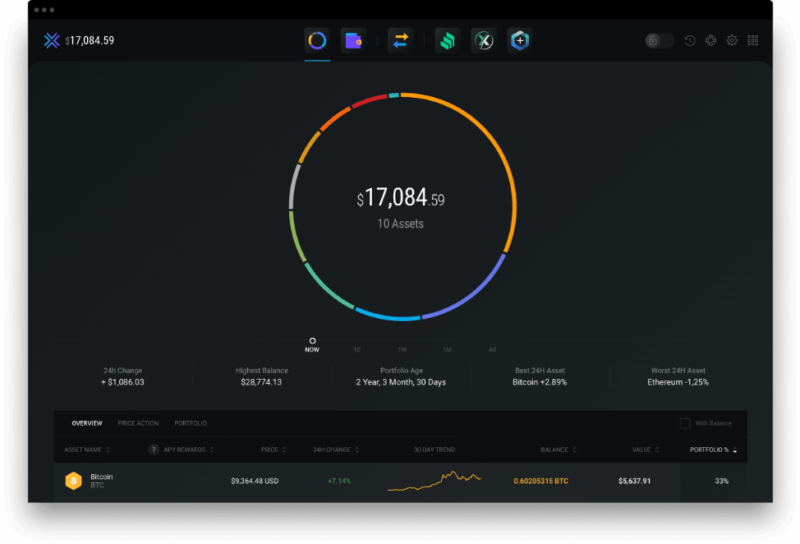
Exodus

Interface

You can see the interface is extremely intuitive and easy to use. With a built-in exchange feature, buying Bitcoin and trading crypto is extremely easy and also, quite safe. Even though it is a hot wallet storage device, meaning the wallet is fully “online” Exodus remains a safe option and has not been hit with any major attacks.

Customer Support

In addition to having a great tech team on board, it seems Exodus has outstanding customer support as well. Again, this goes back to a key feature for beginners who are just learning the ins and outs of cryptocurrency. It’s nice to have someone online to chat with about any questions (no matter how stupid they are) without judgment. Exodus has that and if you’re looking to get a crash course on all things crypto, their customer support chat is a good place to start.

The Downside for Advanced Crypto Traders

While being simple and user-friendly is certainly a big plus for beginners,  the more advanced crypto users out there may see this as a downside. When it comes to advanced features, Exodus is severely lacking and since it is a closed source wallet, the code is not available for anyone and everyone to see. This is a security concern for some who prefer a more “hands-on approach” to their crypto. Beginners may be completely fine trusting the Exodus team with their crypto but this could be a minor red flag for tech-savvy blockchain enthusiasts out there.

All that being said, Exodus is clean and simple. Perfect for those just learning how to navigate the market.

Download Exodus

4. Electrum

In many ways, Exodus was a perfect segue into our next bitcoin wallet (which also starts with an “E”). Electrum is a bitcoin wallet that is the opposite of user friendly but extremely loaded with great features. For those that are more advanced crypto traders or long-term holders, then Electrum is the one for you. Electrum is fully open source, meaning since its creation in 2011, Electrum has been modified by various developers/clients. Now, you don’t have to be a developer to use it. Anyone can, but it’s nice to have this open-source feature for the techies out there.

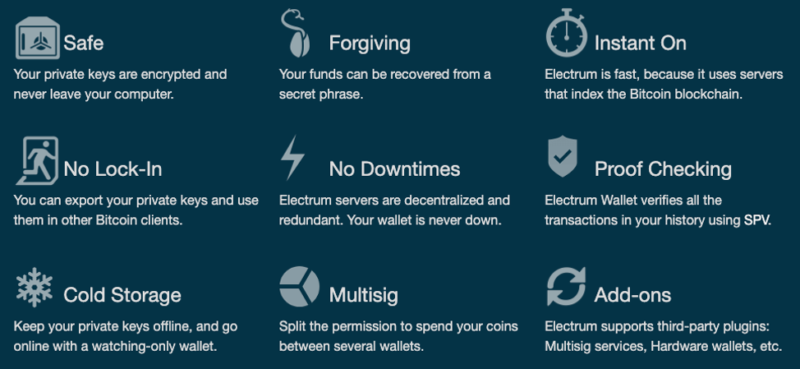
Electrum

Up until recently, Electrum was only computer-based but has since added applications for Android. While that may be a tad inconvenient for iOS users, it is actually very secure. On the computer, private keys are encrypted and never leave your computer. Your Bitcoin wallet is only accessible through a secret seed phrase. All private keys are yours and are stored entirely offline. Furthermore, your private key is never shared with the server that connects the Bitcoin network to Electrum. The server doesn’t store accounts and never asks for any personal information.

Lastly, remember Ledger, the hardware wallet we discussed earlier? Good news for Ledger fans here. Electrum was developed in such a way that supports hardware wallets like Ledger. Hence, your private keys can be stored safely offline on the hardware wallet while you can use Electrum’s software to send and receive crypto whenever you wish if you prefer Electrum over the Ledger Live software.

Another downside to Electrum is the supported coins. Electrum only supports Bitcoin, making this the Bitcoin wallet for the true Bitcoin maximalists. That aside, Electrum is a very safe Bitcoin wallet that’s fast and stable. The Bitcoin community has truly embraced this app as “their wallet” and as a result, they make sure to take great care of it.

Download Electrum

Bitcoin wallet roundup: Which one is the best?

We’ve covered five amazing Bitcoin wallets here today, each one bringing something unique to the table. As for which one is the best, that one is for you to decide. Just to review, YouHodler does seem like the most “complete” Bitcoin wallet as it allows users to get a crypto-backed loan, earn interest on crypto, convert crypto, securely store crypto and multiply crypto via innovative lending tools. However, it may be good to use that in tandem with a hardware wallet such as the Ledger Nano X as well. That way, you get the best of both worlds in terms of Bitcoin wallet functionality and security.

As for the other wallets on this list, they are certainly worth researching as well. Crypto is very much a self-service industry and the more you research on your own, the better your decisions will be. In the meantime, we hope this review was helpful to you, and stay tuned for many more like it!

Filed under: Cryptoassets, Money

Changelly Review: A Simple and Low-Cost Way to Buy Crypto?

Last updated: September 29, 2022Leave a Comment

Changelly Review 2021

Trade crypto on Changelly

If you’re looking for a simple and low-cost way to exchange cryptocurrencies like Bitcoin and Ethereum – you might be considering Changelly.

This popular cryptocurrency exchange offers a good selection of digital coins to choose from and you can easily deposit funds with fiat currency.

Best of all, Changelly will strive to find you the best rate possible when you make an exchange – which it does by algorithmically scanning prices at several third-party platforms.

But, is Changelly the right cryptocurrency exchange for you?

In this review, I cover the ins and outs of what Changelly offers. This includes everything from supported cryptocurrencies, payment methods, fees, safety, and more.

What is Changelly?

Changelly

Changelly is a cryptocurrency exchange that does things a little bit differently from the status quo. The main concept of this platform is that it will aim to get you the best price possible when you buy cryptocurrencies. It does this through an in-house algorithm that is able to scan major exchanges in real-time.

After all – and like any financial marketplace, cryptocurrency bid and ask prices can and will vary from exchange to exchange. For example, while Bitcoin might be priced at $32,200 at Binance, over at Bittrex the digital currency might be priced at $32,300.

how does Changelly work 2021

This is an arbitrary example, but it explains the main concept of Changelly nonetheless. That is to say, when you make a Bitcoin purchase at this platform, Changelly will facilitate the transaction for you by completing it with the best-priced exchange at the time.

How Does Changelly Work?

The exchange process at Changelly is relatively simple. The initial process will, however, depend on whether you already have a cryptocurrency to exchange, or if you need to make a purchase with your bank card.

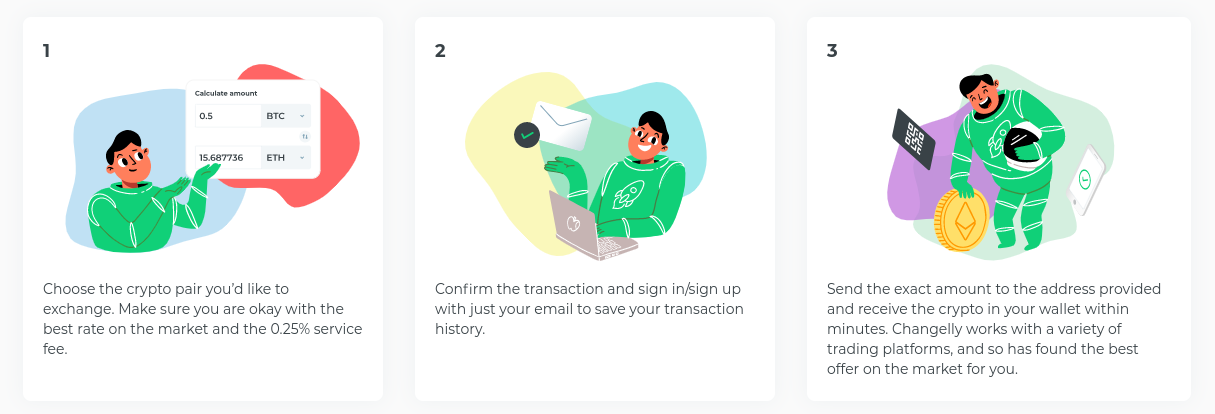
Nevertheless, the general exchange process at Changelly is as follows:

Step 1: Enter Exchange Requirements

First and foremost, you’ll need to visit the Changelly website and enter your exchange requirements.

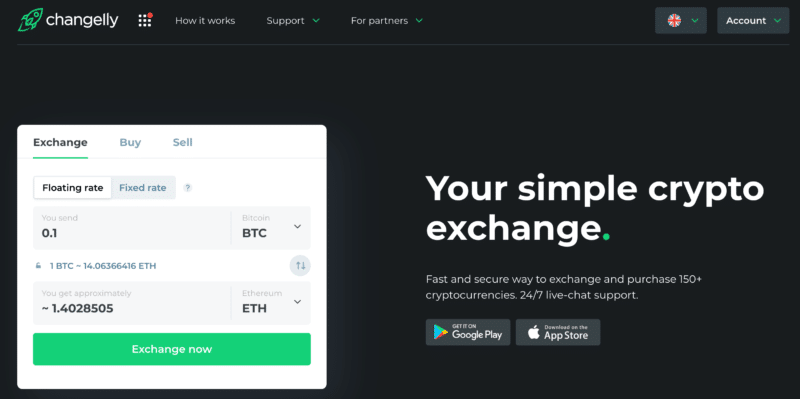
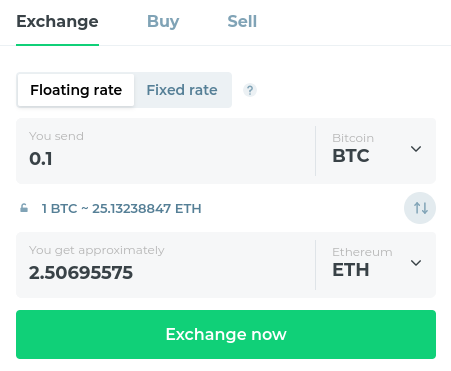
This requires the two cryptocurrencies that wish to exchange. In the example image below, you will see that I am exchanging Bitcoin into Ethereum. You can change the coin by clicking on the respective drop-down list.

You will also need to enter the amount that you wish to exchange. In my example, I have 0.1 BTC that I wish to exchange into ETH. As soon as you enter a figure, the exchange rate will update in real-time.

how does Changelly work?

Changelly is telling me that the current BTC/ETH exchange rate is 25.13238847. This means that for 0.1 BTC, I will get approximately 2.50695575 ETH.

There are two things to mention about the exchange rate that you see in the order box. Firstly, this is, according to Changelly, the best exchange rate that it is able to get at the time of the order. As I briefly mentioned earlier, it will obtain the exchange rate from one of its partnered cryptocurrency exchanges – such as Binance or Bittrex.

If you are happy with the exchange rate on offer, you can proceed to the next step by clicking on the ‘Exchange Now’ button.

Step 2: Review Details and Enter Recevning Wallet Address

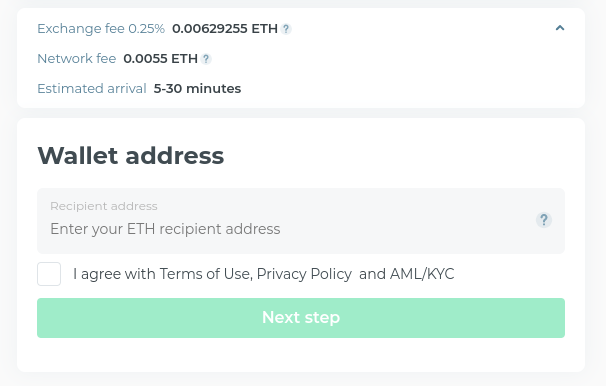
Next, you will get to review the details of the exchange you wish to make. It is all but certain that there will be a very slight difference between the price you saw on the homepage and the price you are now being shown. This is just a case of market forces, not least because cryptocurrency prices change on a second-by-second basis.

how does Changelly work 2021

Nevertheless, if everything looks good – you will then be asked to enter your ‘receiving’ cryptocurrency wallet address. Be very careful here not to enter the address that you are sending the coins from. In my example, as I am looking to exchange Bitcoin into Ethereum, I need to enter the ETH wallet address that I want to receive the coins.

Crucially, and unlike most cryptocurrency exchanges in the online space, Changelly does not offer a wallet of any kind. On the contrary, as soon as it has made the exchange for you, it will forward your coins to the stated wallet address.

Step 3: Sign-in or Register

Once you click the ‘Next Step’ button, Changelly will prompt you to sign in to your account. If you don’t have an account with the provider at this stage, you can open one.

Take note, Changelly is well-known for doing things by the book – meaning that you will be required to provide one form of ID. Unless you are based in Israel, this will need to be a copy of a valid passport.

Step 4: Send Cryptocurrency to Changelly Wallet

Once you have signed in or opened an account, Changelly will then ask you to confirm the transaction one last time. Once you do, the provider will give the wallet address that you need to send the funds to. To clarify, this is the cryptocurrency that you currently have and wish to exchange.

In my example, this means that I would need to send Bitcoin to the BTC wallet controlled by Changelly. This will be a unique wallet address, which allows Changelly to complete the exchange in just a few minutes.

That is to say, as soon as it receives the funds – it can send forward the exchanged cryptocurrency to your private wallet. Once again, this is the wallet address that you provided in Step 2.

Changelly Supported Cryptocurrencies

Changelly offers a good selection of digital currencies – both large and small. For example, if you’re looking for large-cap projects – you’ll find the likes of Bitcoin, Ethereum, Ripple, Chainlink, and Bitcoin Cash.

You will also find a relatively extensive list of less liquid altcoins – such as Energi, BitDegree, Bitcoin Diamond, Numeraire, and Power Ledger.

changelly supported coins

For a full overview of which cryptocurrencies Changelly supports check out the Changelly website.

Changelly Exchange Fees

Like all cryptocurrency exchanges in the online space – Changelly is in the business of making money. It does this by charging a ‘mark-up’ on the best-priced exchange rate that it is able to find you. This used to stand at 0.50% (which is what most third-party Changelly reviews state).

However, this fee has since been reduced to 0.25%. Whether or not this is competitive is somewhat debatable. On the one hand, there are definitely better commission rates available in the market. For example, Binance charges 0.1% per trade, and with eToro one needs to consider the applicable spread.

With that said, by using one of the aforementioned exchanges, you will only get the price offered by that specific platform. In the case of Changelly, the provider will find you the best rate possible at the time of the transaction.

Ultimately, there is no way of knowing whether the savings you can make by finding the best price outweigh the commission fee of 0.25%.

Changelly Payment Methods

The cheapest way to make an exchange at Changelly is to deposit funds with a cryptocurrency. In doing so, the only commission that you will pay is the 0.25% mark-up that I mentioned in the section above.

However, if you don’t currently have any cryptocurrencies at your disposal, Changelly allows you to make a deposit with fiat currency.

Although this might sound convenient, make no mistake about it – Changelly is one of the most expensive cryptocurrency exchanges I have come across when it comes to fiat currency deposits.

Before I get to that, I should also note that the platform isn’t overly clear on what it charges on each deposit method. Instead, I had to do a lot of digging to find the information I required.

So, if you want to deposit funds with an everyday bank card, this needs to go through a payment processor that Changelly is partnered with. It is partnered with three providers for this purpose – MoonPay, Indacoin, and Simplex.

  • If opting for MoonPay, the total deposit fee amounts to a whopping 7.5% of the transaction amount.
  • Indacoin is even more costly at 10%. Changelly doesn’t state the fee when using Simplex.
  • Without a doubt – there are much cheaper options in the market if you wish to use your debit card to buy cryptocurrency.
  • Even Coinbase – which is costly at 3.99%, is cheaper.
  • With that said, Binance charges 2% on debit and credit card deposits.

However, eToro doesn’t allow you to withdraw your cryptocurrencies out, the provider wouldn’t be suitable if you are planning to then go and use Changelly with your newly purchased coins.

The other fiat currency deposit option that you have at Changelly is a SEPA bank transfer (Europeans only). This, however, also attracts a highly unfavorable commission at 5% of the transaction amount!

With this in mind, you might want to reconsider using Changelly if you want or need to use a debit card or bank transfer to deposit funds.

Is Changelly Safe?

First and foremost, Changelly isn’t a regulated cryptocurrency exchange. This isn’t a major surprise, as most platforms in this industry operate without a regulatory license. Crucially, there is, of course, an element of trust that needs to take place when you use Changelly.

changelly best features

After all, you will be required to deposit cryptocurrency into the provider’s wallet before you receive your coins. The good news is that once the transaction is complete, the coins are sent straight to your private wallet. This means that there is no longer a requirement to trust Changelly.

Changelly Review: The Verdict?

In summary, I found that Changelly comes with both its pros and cons. In terms of the positives, the platform offers a simple and innovative way to exchange one cryptocurrency for another. All you need to do is deposit the funds into the wallet address provided, and Changelly will take care of the rest.

Perhaps, the biggest attraction of using this platform is that Changelly will strive to get you the best price possible on your chosen cryptocurrency.

See also: The best crypto trading apps

It does this through its in-house algorithm that will scan real-time prices at some of the largest cryptocurrency exchanges in the space. In return for this, you will need to pay a mark-up of 0.25% – which is reasonable.

On the flip side, Changelly is disappointing when it comes to fiat currency deposits. As I discussed, the minimum commission on debit card deposits is 7.5%, and SEPA payments will cost you 5%. Ultimately, if you do decide to use Changelly, it’s best to do so once you already have cryptocurrencies to hand.

Buy crypto on Changelly

Filed under: Cryptoassets, Money

  • « Previous Page
  • 1
  • …
  • 4
  • 5
  • 6
  • 7
  • 8
  • …
  • 11
  • Next Page »

Latest Padel Match

Jean Galea

Investor | Dad | Global Citizen | Athlete

Follow @jeangalea

  • My Padel Experience
  • Affiliate Disclaimer
  • Cookies
  • Contact

Copyright © 2006 - 2026 · Hosted at Kinsta · Built on the Genesis Framework