Jean Galea

Health, Wealth, Relationships, Wisdom

  • Start Here
  • Guides
    • Beginner?s Guide to Investing
    • Cryptocurrencies
    • Stocks
    • P2P Lending
    • Real Estate
    • Forex
    • CFD Trading
    • Start and Monetize a Blog
  • My Story
  • Blog
    • Cryptoassets
    • P2P Lending
    • Real estate
  • Consultancy
    • Consult with Jean
    • Consult a Lawyer on Taxation and Corporate Setups
  • Podcast
  • Search

Understanding Fiscal and Monetary Policy: Tools That Shape the Economy

Published: December 25, 2024Leave a Comment

Fiscal and monetary policy

Fiscal and monetary policy are the two primary tools governments and central banks use to influence a nation’s economy. While they have distinct mechanisms and objectives, their interplay can significantly affect economic stability, growth, inflation, and employment. Understanding how these policies function is essential to grasp the broader economic picture.

What Is Fiscal Policy?

Fiscal policy refers to the decisions made by a government regarding its spending and taxation. These decisions directly influence the economy by altering the level of aggregate demand, which is the total demand for goods and services within an economy.

Key Components of Fiscal Policy

  1. Government Spending:
    • Increased spending on infrastructure, education, and healthcare can stimulate economic growth by creating jobs and boosting demand.
    • Conversely, reducing spending can help control inflation or reduce national debt but may slow economic growth.
  2. Taxation:
    • Lowering taxes increases disposable income for consumers and businesses, encouraging spending and investment.
    • Raising taxes can reduce demand and slow down an overheating economy.

Types of Fiscal Policy

  • Expansionary Fiscal Policy:
    • Involves increased government spending or tax cuts to stimulate economic growth, often used during a recession.
  • Contractionary Fiscal Policy:
    • Entails reducing government spending or increasing taxes to control inflation, typically employed during periods of economic overheating.

What Is Monetary Policy?

Monetary policy is the process by which a central bank, such as the Federal Reserve in the U.S., controls the money supply and interest rates to achieve specific economic objectives, such as controlling inflation or promoting employment.

Key Tools of Monetary Policy

  1. Interest Rates:
    • Central banks adjust benchmark interest rates to influence borrowing and lending. Lower rates encourage borrowing and spending, while higher rates aim to reduce inflation by slowing down economic activity.
  2. Open Market Operations:
    • Central banks buy or sell government securities to influence liquidity and interest rates in the economy.
  3. Quantitative Easing (QE):
    • Involves creating money to purchase long-term securities, injecting liquidity into the financial system.
  4. Reserve Requirements:
    • Central banks can change the amount of reserves banks must hold, impacting how much money they can lend.

Types of Monetary Policy

  • Expansionary Monetary Policy:
    • Involves lowering interest rates or increasing the money supply to boost economic activity, often used in a recession.
  • Contractionary Monetary Policy:
    • Entails raising interest rates or reducing the money supply to combat inflation.

How Fiscal and Monetary Policy Interact

Fiscal and monetary policies often work together to influence economic outcomes. However, their effectiveness depends on coordination and timing.

  1. Complementary Policies:
    • For example, during a recession, expansionary fiscal policy (increased government spending) and expansionary monetary policy (lower interest rates) can jointly stimulate demand and economic growth.
  2. Conflicting Policies:
    • When fiscal policy is expansionary (e.g., increased government spending), but monetary policy is contractionary (e.g., higher interest rates), the two can offset each other, leading to mixed economic results.
  3. The Role of Expectations:
    • Economic agents, such as businesses and consumers, often base their decisions on expectations of future policies. Mixed signals from fiscal and monetary authorities can create uncertainty, reducing the effectiveness of both policies.

Case Study: December 2024 Market Reaction

The recent market crash following Federal Reserve Chair Jerome Powell’s December 2024 announcement highlights the delicate balance between fiscal and monetary policy. The announcement included a modest interest rate cut but signaled caution regarding inflation, setting the stage for potential tensions with anticipated fiscal policies under the incoming Trump administration.

  1. Powell’s Announcement:
    • The Federal Reserve reduced its benchmark interest rate by 25 basis points but projected a slower pace of rate cuts in 2025. Powell emphasized that inflation remained above the Fed’s 2% target, warranting a conservative approach.
  2. Trump’s Fiscal Policy Expectations:
    • The incoming administration’s proposed tax cuts, deregulation, and increased government spending are expected to boost demand. However, such expansionary fiscal policies could further exacerbate inflationary pressures.
  3. Market Reaction:
    • Investors interpreted the Fed’s cautious stance as a sign of potential conflict between fiscal expansion and monetary tightening. This uncertainty led to a sharp sell-off in equities, with major indices experiencing significant declines.
  4. Long-Term Implications:
    • If fiscal policies under Trump lead to inflation while the Fed maintains a conservative monetary stance, the economy could face challenges such as higher borrowing costs, reduced investment, and slower growth.

The Balance of Power: Who Drives the Economy?

The relative influence of fiscal and monetary policy depends on the economic context:

  • During recessions, fiscal policy often takes the lead by directly stimulating demand through government spending and tax cuts.
  • In periods of inflation or economic overheating, monetary policy plays a more prominent role by controlling money supply and credit availability.

However, mismatches between fiscal and monetary policies can create economic instability. For instance, excessive government spending during a period of high inflation can undermine the central bank’s efforts to stabilize prices.

Conclusion

Fiscal and monetary policies are powerful tools for managing an economy, each addressing different aspects of economic health. While fiscal policy directly impacts demand through government spending and taxation, monetary policy influences credit, liquidity, and inflation through the money supply and interest rates.

The success of these policies often hinges on coordination and timing. When aligned, they can foster economic growth and stability. However, conflicts between the two—such as expansionary fiscal policy paired with contractionary monetary policy—can lead to uncertainty and mixed outcomes. Understanding how these tools work together is key to navigating economic fluctuations and achieving long-term financial stability.

Filed under: Banking, Money

Understanding Interest Rates: How They Shape the Economy and Influence Global Currencies

Published: December 23, 2024Leave a Comment

Interest ratesInterest rates are among the most influential tools in the financial world, wielded by central banks to regulate economic activity and maintain stability. But how do they work, and why do they matter so much? Moreover, how do decisions by the U.S. Federal Reserve (Fed) ripple beyond the United States, impacting currencies like the euro and the lives of people in other economic zones? Let’s break it down.
What Are Interest Rates?

At their core, interest rates represent the cost of borrowing money or the reward for saving it. For borrowers, they determine how much must be repaid in addition to the principal amount. For savers, they reflect the return on their deposits.

Central banks, like the Federal Reserve in the U.S. or the European Central Bank (ECB) in the Eurozone, set a benchmark interest rate. This rate acts as a reference for banks when lending money to one another and influences the rates offered to businesses and consumers.

Why Do Interest Rates Matter?

Interest rates are a critical lever in managing economic activity:

  1. Encouraging or Discouraging Spending:
    • When rates are low, borrowing becomes cheaper, encouraging individuals and businesses to take loans for spending or investment. This boosts economic activity.
    • Conversely, higher rates make borrowing more expensive, discouraging spending and investment, which can cool an overheating economy.
  2. Controlling Inflation:
    • Inflation occurs when prices rise too quickly, eroding purchasing power. Central banks may raise interest rates to reduce spending and slow inflation.
    • When inflation is too low or the economy is sluggish, central banks may lower rates to stimulate growth.
  3. Influencing Employment and Growth:
    • Lower rates generally lead to more business investments and job creation, while higher rates may slow growth and potentially increase unemployment.

Money Printing and Its Role in the Economy

Money printing, or quantitative easing (QE), is another powerful tool used by central banks, often in conjunction with interest rate policies. To understand this, we must first explore how money is created in the modern financial system.

How Money is Created

  1. Central Bank Creation:
    • Central banks create money electronically. For example, the Federal Reserve doesn’t physically print dollars but adds reserves to banks’ accounts in the central banking system.
    • This newly created money is typically used to purchase financial assets, such as government bonds, injecting liquidity into the economy.
  2. Fractional Reserve Banking:
    • Commercial banks play a significant role in money creation through lending. When you deposit money in a bank, only a portion of it is held in reserve; the rest is loaned out.
    • For example, if a bank holds $1,000 in reserves and has a reserve requirement of 10%, it can lend out $900. The borrower spends this money, which is then deposited in another bank, allowing further lending. This process effectively multiplies the initial deposit, expanding the money supply.
  3. Quantitative Easing (QE):
    • In QE, the central bank creates money to purchase long-term financial assets like government bonds or mortgage-backed securities.
    • This increases the balance sheets of financial institutions, encouraging them to lend more to businesses and consumers, which stimulates economic activity.

Impact of Money Printing

  1. Lowering Long-Term Interest Rates:
    • By buying large quantities of bonds, central banks increase their prices and reduce their yields, which are a proxy for long-term interest rates.
  2. Stimulating Borrowing and Spending:
    • The increased liquidity and lower borrowing costs encourage businesses and consumers to take loans and spend, boosting economic activity.
  3. Preventing Deflation:
    • In times of economic downturn, money printing helps prevent deflation by maintaining liquidity and ensuring there’s enough money circulating in the economy.
  4. Boosting Asset Prices:
    • QE often leads to higher stock and real estate prices as investors seek returns in riskier assets due to the abundance of cheap money.

Risks of Excessive Money Printing

While money printing can help stabilize economies during crises, excessive use can lead to problems such as:

  • Inflation:
    • When too much money chases too few goods, prices rise, eroding purchasing power.
  • Currency Depreciation:
    • Over-reliance on money printing can weaken a currency’s value compared to others, making imports more expensive.
  • Asset Bubbles:
    • Excess liquidity can inflate the prices of assets like stocks and real estate, leading to unsustainable bubbles that may burst.

During the COVID-19 pandemic, for example, significant money printing by central banks worldwide helped economies recover but also contributed to inflationary pressures in subsequent years.

The Fed’s Role in the Global Economy

The Federal Reserve’s decisions have a far-reaching impact, given the U.S. dollar’s status as the world’s primary reserve currency. Changes in the Fed’s interest rates can:

  1. Strengthen or Weaken the Dollar:
    • Higher U.S. rates attract foreign investors seeking better returns, increasing demand for the dollar and strengthening its value.
    • A stronger dollar can make U.S. exports more expensive and less competitive globally but reduces the cost of imports, benefiting U.S. consumers.
  2. Affect Capital Flows:
    • When the Fed raises rates, investors may pull money out of other economies to invest in the U.S., leading to capital outflows from emerging markets and potentially weakening their currencies.
  3. Set a Global Benchmark:
    • Many countries’ currencies and economic policies are tied, either directly or indirectly, to the dollar. A change in U.S. rates can force other central banks, like the ECB, to adjust their policies to maintain competitiveness or economic stability.

Impact on the Euro and the Eurozone

When the Fed changes rates, it can create significant ripple effects in the Eurozone:

  1. Exchange Rate Dynamics:
    • A stronger dollar often means a weaker euro. This can make European exports more competitive globally but increases the cost of importing goods priced in dollars, such as oil.
  2. Economic Policy Pressure:
    • If the Fed raises rates and the ECB keeps them low, the euro’s value may drop further. To counterbalance, the ECB might need to adjust its policies, even if it conflicts with domestic economic goals.
  3. Consumer Impact:
    • A weaker euro can lead to higher prices for imported goods, contributing to inflation in the Eurozone and reducing the purchasing power of consumers.

How It Affects People in the Eurozone

The decisions by the Fed can influence daily life in the Eurozone in several ways:

  • Cost of Living: Changes in exchange rates can affect the prices of imported goods, energy, and travel.
  • Savings and Loans: If the ECB adjusts its rates in response to the Fed, it can impact mortgage rates, savings returns, and credit availability for European citizens.
  • Job Markets: Currency fluctuations and capital flows can affect industries reliant on exports or foreign investments, influencing job opportunities.

When the Fed Announces Interest Rate Changes

The Federal Reserve’s Federal Open Market Committee (FOMC) typically meets eight times a year to discuss and decide on interest rate policy. These meetings are closely watched by investors, economists, and policymakers worldwide. The dates are pre-scheduled and publicly available, providing a regular cadence for market anticipation.

When the Fed announces a change in interest rates:

  1. Immediate Market Reaction:
    • Asset valuations, such as stocks, bonds, and real estate, can experience swift shifts. For instance, higher rates often lead to a drop in stock prices as borrowing costs rise and future cash flows are discounted more heavily.
    • Bond prices typically fall when rates increase because existing bonds with lower yields become less attractive compared to newly issued bonds.
  2. Impact on Risk Appetite:
    • Higher interest rates can reduce the appeal of riskier assets, such as equities and emerging market investments, as safer options like U.S. Treasury bonds offer better returns.
    • Conversely, lower rates can push investors toward riskier assets in search of higher yields.
  3. Real Estate Valuations:
    • Changes in rates directly influence mortgage costs. Higher rates often lead to cooling housing markets as borrowing becomes more expensive, while lower rates can spur demand and drive up property prices.
  4. Currency Movements:
    • The dollar’s value can rise following a rate hike as global investors seek higher returns, further impacting international trade and financial markets.

Understanding the timing and impact of these announcements is crucial for investors and policymakers, as they provide insight into the Fed’s assessment of the economy and its future trajectory.

The Interconnected World of Interest Rates

In our interconnected global economy, no country operates in isolation. Central bank policies, especially from major economies like the U.S. and the Eurozone, have far-reaching effects. For individuals and businesses, understanding these dynamics is essential for making informed financial decisions, whether it’s about investing, borrowing, or planning for the future.

Interest rates are more than just numbers; they are a reflection of economic health and a tool for shaping the path forward. As the Fed and other central banks navigate complex challenges, their decisions will continue to shape not only their domestic economies but also the global financial landscape.

Filed under: Banking, Money

Banking Options for Businesses in Malta – Is it Possible to Open an Account?

Published: March 17, 2023Leave a Comment

Malta, a small island nation in the Mediterranean, has long been a popular destination for businesses seeking a favorable tax environment and robust regulatory framework. However, opening a bank account in Malta as a business entity has become increasingly challenging in recent years due to the country’s low-risk policies. In this article, I will explore the banking options available to businesses in Malta and discuss how to navigate these challenges.

The Big Players: Bank of Valletta and HSBC

The largest banks in Malta are Bank of Valletta and HSBC. While these institutions offer a wide range of banking services and have a strong presence in the country, they have adopted low-risk policies that make it difficult for many businesses to open accounts. This is due in part to Malta’s unfortunate greylisting a few years ago. Although the country is no longer grey-listed, the financial sector has tightened up significantly to curb any abuses.

The chances of opening a bank account with these two banks are slim, especially if it’s for a non-traditional business. They are simply not willing to take any chances and are not very interested in attracting new business.

Alternative Banking Options: Agribank and Sparkasse

For businesses that encounter difficulties opening accounts with Bank of Valletta and HSBC, there are alternative banks that may prove more amenable. Agribank, an agricultural and commercial bank, has had some success in accommodating businesses unable to establish accounts with larger banks. Similarly, Sparkasse Bank Malta, a subsidiary of the German Sparkassen Group, has been known to provide banking services to companies facing challenges with the larger institutions.

Other banks that operate in Malta and could potentially serve as alternatives include APS Bank, Lombard Bank, and FIMBank. These banks may be more accommodating to foreign businesses, but it is essential to research their specific requirements and policies to determine whether they are a good fit for your company.

It is quite common for these alternative banks to charge an application fee, in order to cover their costs of processing the application and determine if your business would be a good fit. They will also typically charge extra fees on a yearly basis when compared to the larger banks that don’t have any fees beyond the usual card fees and currency conversion fees.

The Hassle-Free Option: Wise (formerly TransferWise)

For businesses seeking a more straightforward solution, Wise (formerly known as TransferWise) is an excellent option. This fintech company provides borderless accounts, allowing businesses to receive and make payments in multiple currencies with minimal fees. While Wise is not a traditional bank, it offers many of the core banking services that businesses need, such as a debit card and currency conversion.

Wise’s borderless accounts are especially useful for businesses with international transactions and make it easier to manage finances without dealing with the stringent requirements of Maltese banks.

Open a business account with Wise

Conclusion

While opening a bank account in Malta as a business entity can be challenging due to the country’s risk-averse banking policies, there are options available for those who persevere. By considering alternative banks like Agribank and Sparkasse or using innovative financial solutions like Wise, businesses can successfully establish their banking presence in Malta and reap the tax benefits of operating in this country.

Filed under: Banking, Money

The Best Online Bank Accounts in Europe in 2025

Last updated: September 10, 20254 Comments

bunq bank account europe

Online banks are all the rage these days, as they tend to be very straightforward to get signed up with, in comparison to traditional banks. They also provide better user interfaces on smartphones as well as lower fees. All in all, the personal or business user ends up getting a much better deal when compared to a traditional bank.

If you travel a lot or work with multiple currencies, the advantages are even bigger, as many online banks are able to exchange money seamlessly within their mobile app, with better rates than those offered by your local banks.

Read more: The Best Crypto-Friendly banks in Europe

I’ve had some bad experiences with banks in Malta (extreme levels of due diligence and no support for crypto transactions) and also banks in Spain (unprofessionalism, unexpected charges, outright discrimination and account closures).

The truth is that traditional banking is not going through its finest moment, and many European countries have a collection of shitty banks, being honest, and it’s wiser to use one of these online banks than hassle with the local banks.

Here are some of the best ones that I’ve had the pleasure of using over the past years.

bunq

Bunq

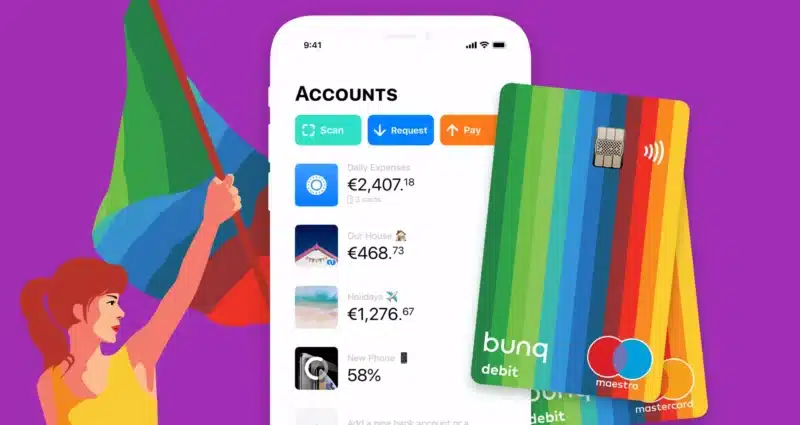
bunq is a Dutch neobank founded in 2012 and licensed under the Dutch Central Bank. It has quickly grown into one of Europe’s most flexible and sustainability-focused online banks, with a strong appeal for digital nomads, expats, and freelancers. Opening an account takes only a few minutes via the mobile app, and bunq offers a range of plans to suit different needs.

bunq Free

bunq Free is the no-monthly-fee entry plan. It lets you open up to three bank accounts, each with its own IBAN, and provides a virtual card compatible with Apple Pay and Google Pay. You earn weekly interest on your balances (up to 3% depending on currency), get zero-fee FX conversions on the first €1,000 per year, and enjoy eco-friendly perks like one tree planted for every €1,000 you spend. Withdrawals are available twice a month at €2.99 each. It’s an ideal way to try bunq’s ecosystem at no cost while still enjoying multi-IBAN flexibility and sustainable banking.

bunq Premium

bunq Premium (€9.99/month) unlocks the full suite of features. You can create up to 25 sub-accounts with their own IBANs, issue multiple physical and virtual cards, and benefit from ZeroFX real exchange rates when spending abroad. Premium users also earn weekly interest, can set up shared accounts for joint finances, and access automation tools for saving and scheduling payments. On top of this, bunq plants a tree for every €100 spent, making Premium not only feature-rich but also environmentally friendly.

bunq Business

bunq Business (from €12.99/month) is designed for freelancers and companies. It supports 22 currencies and provides local IBANs in several European countries, making it easy to get paid across borders. Business users can open up to 25 sub-accounts, automate invoicing and expenses, and connect directly with popular accounting platforms. Team members can be issued their own cards with real-time spending controls, and the app streamlines day-to-day operations. With its multi-currency support and fast onboarding, bunq Business is an excellent fit for entrepreneurs and growing companies.

Verdict
bunq combines flexibility, sustainability, and powerful financial tools in a modern package. Whether you’re an individual looking for multi-IBAN management, a frequent traveler who values real exchange rates, or a business owner needing streamlined operations, bunq offers tailored solutions that make everyday banking smarter and greener.

Open a Bunq account

Revolut

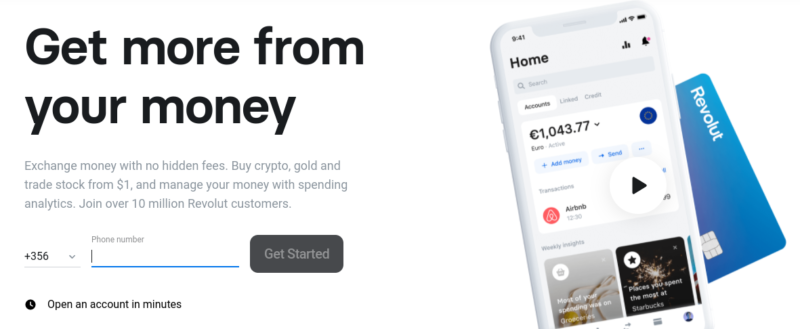
Revolut sign up

Read more: my in-depth review of Revolut

Revolut offers digital banking services through a contactless card or free mobile app that is available to both Apple and Android users.

It allows users to make transactions in over 150 currencies at competitive rates, with international transfers in 30+ fiat currencies and transparent pricing. Monthly allowances for ATM withdrawals and fee-free FX depend on your plan and region.

I’ve had a Revolut account ever since they’ve launched and have encountered zero problems with them. Revolut also lets you buy, sell, and withdraw supported cryptocurrencies to external wallets on supported tokens and networks.

Open a Revolut account

N26

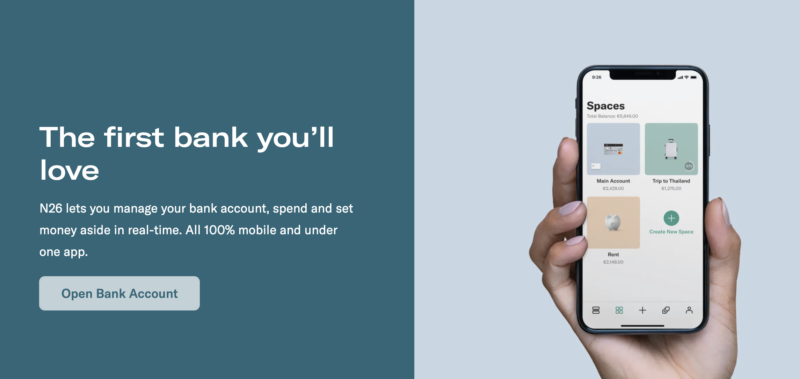
n26

N26, a German bank with the very latest technology and an amazing mobile app through which you manage your account.

I recommend opening an account with N26, which is a new breed of bank that is totally app-based. This is the future of banking, so they give you best-in-class digital facilities such as an app and website to go with it, while also helping you track your expenses.

Read my in-depth review of N26 for more information.

If you live in Spain and you’re looking for the best commission-free Spanish banks, N26 is a great choice. This is because you will get a Spanish IBAN, which makes it easy to work with direct debits with local enterprises.

Open an N26 account

Wise

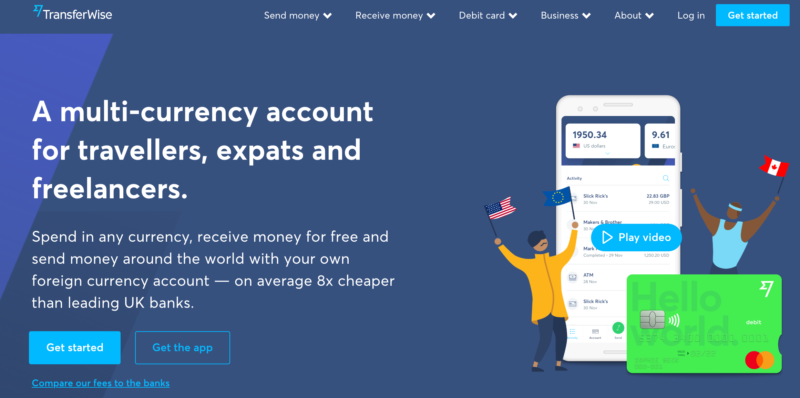
Wise Borderless Review

Before you move abroad consider opening a Wise multi-currency account. You get your own free local bank account details in Europe, UK, US, Australia and New Zealand so you can have a local bank account before arriving.

It’s a great multi-currency account solution and is perfect for those who conduct business in multiple currencies.

It comes with a debit card so you can pay and withdraw money at ATMs once you come to Spain with much lower fees than with your bank.

Read my full Wise Borderless review or go ahead and open an account using the link below.

Open a Wise account

Conclusion

Online banks have transformed the way we manage money across Europe. Revolut and Wise are excellent choices for currency exchange and global transfers, while N26 provides a streamlined everyday banking experience. However, if you want a combination of flexibility, sustainability, and powerful tools for both personal and business use, bunq stands out as the best all-round option.

With multi-IBAN accounts, instant onboarding, weekly interest payouts, and a clear focus on eco-friendly initiatives, bunq offers more than just convenience—it gives you control of your finances in a smarter, greener way.

Open a Bunq account today

Filed under: Banking, Money

The Best Crypto-Friendly Banks in Europe

Last updated: February 02, 202643 Comments

Buy cryptos

Converting from fiat to crypto and vice versa remains one of the big issues for Bitcoin and other crypto adoption, especially in certain countries.

Traditional banks, due to various reasons including government pressure, have been slow to adapt to the new realities of digital assets like Bitcoin and other cryptocurrencies.

Read now: The best crypto debit cards in Europe

I suspect a significant fear of having to cover all their bases for KYC/AML requirements as one of the other reasons that they have been quite wary of their customers transacting with crypto exchanges over the past years.

Binance Card

Unfortunately, this makes it hard for private or corporate crypto investors to find good onramps and offramps to deal with crypto if their banks put up significant obstacles to doing so.

Further reading: The Best Crypto Exchanges in Europe

The United States is currently the place where it’s easiest for citizens to buy and sell Bitcoin and other cryptocurrencies. Not only does it have a long tradition of tech innovation, but it’s the home base of many crypto entrepreneurs, educators and crypto companies.

If you live in the US, you will find that many banks understand crypto and allow you to transfer money to and from exchanges, but things are different in many European countries.

For example, in Malta, the self-proclaimed “blockchain island”, it has become almost impossible to buy any crypto using a local bank account, as most of the limited number of banks available there block transactions to exchanges or threaten to close your account if you did any transfers in the past that they were not able to block.

[Read more…]

Filed under: Banking, Cryptoassets, Money

  • « Previous Page
  • 1
  • 2
  • 3
  • 4
  • 5
  • Next Page »

Latest Padel Match

Jean Galea

Investor | Dad | Global Citizen | Athlete

Follow @jeangalea

  • My Padel Experience
  • Affiliate Disclaimer
  • Cookies
  • Contact

Copyright © 2006 - 2026 · Hosted at Kinsta · Built on the Genesis Framework