Jean Galea

Health, Wealth, Relationships, Wisdom

  • Start Here
  • Guides
    • Beginner?s Guide to Investing
    • Cryptocurrencies
    • Stocks
    • P2P Lending
    • Real Estate
    • Forex
    • CFD Trading
    • Start and Monetize a Blog
  • My Story
  • Blog
    • Cryptoassets
    • P2P Lending
    • Real estate
  • Consultancy
    • Consult with Jean
    • Consult a Lawyer on Taxation and Corporate Setups
    • AI Consultancy for Business
  • Podcast
  • Search

Healthy Porridge Recipe

Last updated: November 17, 20224 Comments

I’ve recently switched to porridge for my choice of morning fuel. Here’s the recipe I use for preparing this delicious and nutritious hot dish.

Ingredients

To cook this recipe we only need a few ingredients. For best results, use high quality organic ingredients. Below are the oats, nuts, and sultanas I use on a daily basis.
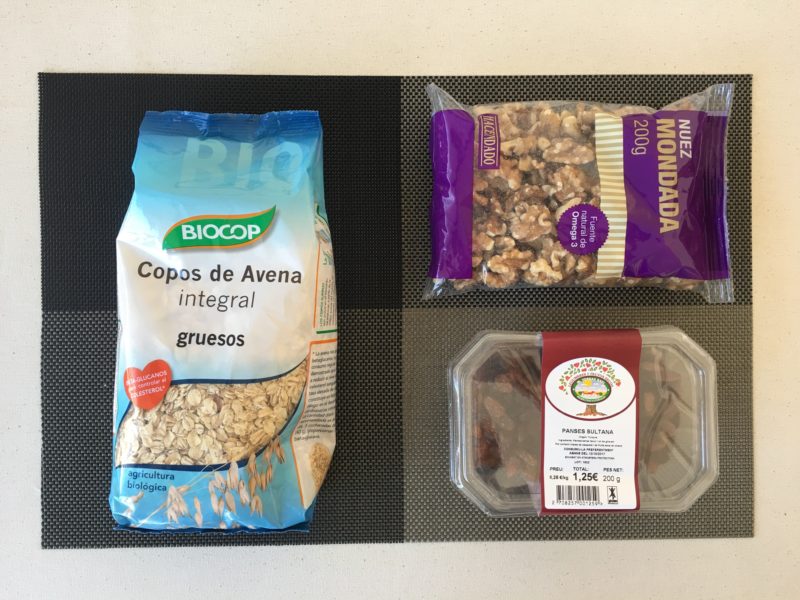
Here’s what we need for one plate of porridge:

  • 60g oats
  • 20g sultanas
  • 10g walnuts
  • pinch of salt
  • 270ml of water

Directions

To get cracking, you will need a small pot and ideally a kitchen scale. I bought the Smart Weigh scale from Amazon and am very happy with it. It allows you to use the tare functionality which makes it much easier than remembering the previous weight of things and calculating the difference. Once you click the tare button it will reset to zero, so you can then add the next ingredient very easily in accordance with the recipe.

This particular scale also has several types of measurement, which is convenient as I use both grams and milliliters in this recipe.
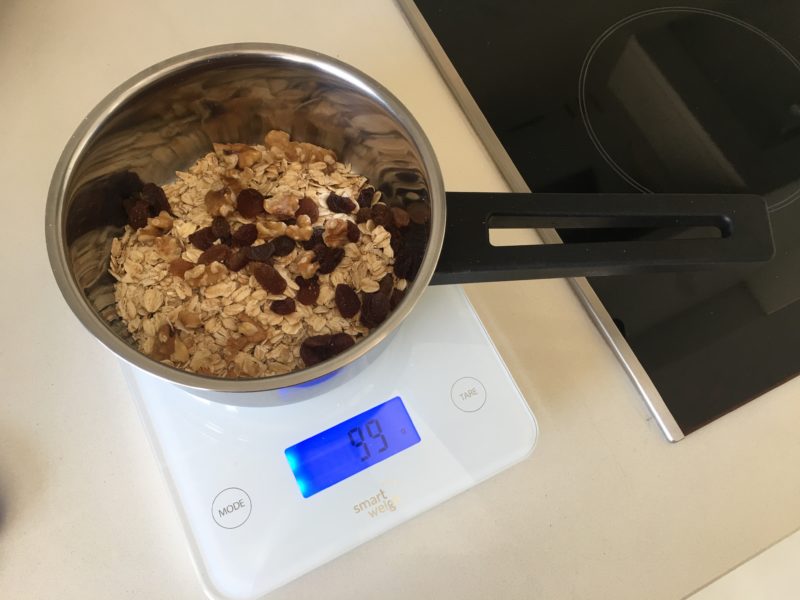

Put all the ingredients in a small pot and set on a hob. Start off with full heat until the porridge starts simmering.

Then shift downwards and continue cooking on low heat. Wait until the texture is creamy; that’s your signal that the porridge is ready to serve. You can experiment and see what consistency you like best, then record the number of minutes it took you. You can then stick to that number of minutes in the future.

Variation: Instead of sultanas, you can also use berries or bananas. If you decide to do so just add the berries/banana around a minute before the porridge is ready to serve, instead of putting them with the oats from the start as in the case of sultanas.

Note: Different kinds of oats have varying water absorption properties, so be sure to adjust the water quantity depending on that. If you see the water drying up but the oats don’t have the required consistency yet, just add a bit more water.

Filed under: General

The Best Productivity and Relaxation Music

Last updated: April 05, 20244 Comments

music

Music is a very important thing in my life; I listen to a wide range of music styles, have experience in DJing, and play basic guitar and piano. In this article I will focus on music styles and apps that help me immerse myself in work and shut the rest of the world out.

Research on Music’s Effectivity

There is some good research done with regard to music and concentration:

Music stabilizes mental, physical and emotional rhythms to attain a state of deep concentration and focus in which large amounts of content information can be processed and learned. Baroque music, such as that composed by Bach, Handel or Telemann, that is 50 to 80 beats per minute creates an atmosphere of focus that leads students into deep concentration in the alpha brain wave state. Learning vocabulary, memorizing facts or reading to this music is highly effective. On the other hand, energizing Mozart music assists in holding attention during sleepy times of day and helps students stay alert while reading or working on projects.

Music Streaming Services

Music streaming services have revolutionized the way we listen to music. They offer vast libraries of songs and albums, personalized recommendations, and the ability to stream music on multiple devices, making it easier than ever to discover and enjoy music on demand.

The size of the music libraries offered by Spotify, Amazon Music, Google Play Music, and Apple Music are similar, with all four services offering over 70 million songs.

While all four services have a vast library of songs, the specific selection of music may differ between the platforms. Some songs or albums may be available on one platform but not on the others, so it may be worth checking the libraries of all four services to see which one offers the specific content you are looking for. Additionally, the pricing and features offered by each service may differ, so it is important to compare them and choose the one that best meets your needs and budget.

For general background music, I like to discover new music from the following styles:

  • Instrumental Jazz
  • Instrumental Bossa Nova

I don’t have any favourite jazz or bossa nova bands so I rely on Spotify to find new albums whenever I get tired of what I’m currently listening to.

Ambient music works really well for tasks such as programming and tech related work. Here are my recommendations:

  • Brian Eno
  • Tycho
  • Jens Buchert
  • Emancipator
  • Kraftwerk
  • Jean-Michel Jarre

While remaining in the electronic realm, trance and electro sometimes work well for me, especially when I need music that packs more punch and infuses a sense of urgency to what I’m doing. This can turn out to be ideal also in the afternoon when I generally tend to feel a bit sleepy. I don’t have too many favourites here, although I do love to listen to the album Berlin Calling from Paul Kalkbrenner every now and then. The Tron soundtrack is also awesome, as is that of The Social Network.

When I need to be really pumped up and I don’t mind lyrics I turn to my favourite music in the form of euro dance and rock. I have an extensive euro dance collection from the late 90s and early 00s and that’s what I put on in these occasions. My favourite rock band is Queen and they are usually the ones on my playlist when I need some comforting music to help me through some menial work that I would be dreading doing.

You can also check out classical music such as Vivaldi’s Four Seasons. Many people work well with classical music. It’s not my favorite for working but I do use it at times when I’m tired of everything else.

At times all I need is some background noise; I might use some white noise collections on Spotify, Coffitivity, or Noisli.

Spotify

Spotify is a digital music, podcast, and video streaming service that provides access to millions of songs, albums, and other audio content. It was founded in 2006 in Sweden and has since become one of the largest and most popular streaming services in the world. With Spotify, users can stream music on demand, create playlists, discover new music, and listen to podcasts.

The service is available as a free, ad-supported version, as well as a premium version that offers additional features, such as offline playback and higher quality audio. Spotify also provides a platform for artists to share their music and reach a large audience, and it offers a variety of tools for music discovery, such as curated playlists and personalized recommendations based on users’ listening habits. Overall, Spotify is a popular choice for people who want to access a large library of music and audio content from anywhere, at any time, and on any device.

I use Spotify (€9.99/month in Spain, or €6.99 in Malta), and they have geographical pricing in play, see this interactive chart of Spotify prices around the world. Most other services have similar regional pricing schemes.

Amazon Music

Amazon Music ($9.99 or $14.99 for a family plan) is a music streaming service offered by Amazon. It provides access to a vast library of songs, albums, playlists, and podcasts, as well as live radio stations and original content. Amazon Music is available as a standalone service or as part of Amazon’s Prime membership, which includes other benefits such as free shipping, access to Prime Video, and more.

With Amazon Music, users can stream music on demand, create playlists, download songs for offline playback, and access personalized recommendations based on their listening habits. The service also provides a platform for artists to share their music and reach a large audience. Amazon Music integrates with Amazon’s Alexa virtual assistant, allowing users to control playback using voice commands. Overall, Amazon Music is a popular choice for people who are already Amazon Prime members or who are looking for a music streaming service that is closely integrated with other Amazon services.

Apple Music

Apple Music (€9.99 or €14.99 for a family plan) is a music and video streaming service developed by Apple Inc. It allows users to stream over 70 million songs, as well as a large collection of music videos, live concerts, and exclusive content from artists. Users can also create their own playlists, listen to curated playlists and radio stations, and access expert recommendations based on their listening history.

In addition to music streaming, Apple Music also offers music downloads, allowing users to store music locally for offline playback. The service is available on Apple devices such as iPhone, iPad, Mac, and Apple TV, as well as on Android and Windows devices through a dedicated app. Apple Music also integrates with Siri, Apple’s virtual assistant, allowing users to control their music with voice commands. Overall, Apple Music is designed to provide a comprehensive music experience for its users, combining the best of traditional music services with cutting-edge technology and a focus on artists and their work. The new Apple Music Sing feature allows you to turn off voice tracks, converting any song into an instrumental piece, potentially suitable as a background for focused work.

Music and Sound Therapy Apps

These apps provide audio content, such as music and soundscapes, aimed at promoting relaxation, sleep, focus, and well-being. They use various techniques, such as binaural beats, psychoacoustics, and neuropriming, to create personalized audio experiences that are designed to have a positive impact on the brain and body.

This type of technology is often referred to as “music therapy” or “sound therapy” and is gaining popularity as a tool for improving mental health and overall well-being.

Brain.fm

Brain.fm is a website and app that offers audio programs designed to enhance focus, relaxation, and sleep using sound patterns and music. It is based on the principles of binaural beats and other sound frequencies that are believed to have an impact on the brain and promote various cognitive and emotional states.

Brain.fm claims to use artificial intelligence and scientific research to create soundscapes that can help users focus, sleep better, or reduce anxiety and stress. The app provides access to a library of audio programs that users can choose from based on their desired outcome.

Focus@Will

Focus@Will is a website and app that provides music specifically designed to help people concentrate and increase their productivity. It is based on the concept of “neuropriming,” which involves using specific types of music to stimulate different areas of the brain and enhance focus.

The app features a library of more than 50 channels of music that have been specifically selected and composed to promote focus and minimize distractions. The channels range from classical music to nature sounds and ambient soundscapes. Focus@Will claims to use science and research to create its music and states that it has been tested and proven to increase focus and productivity. The app allows users to customize their listening experience by adjusting the volume, tempo, and type of music, and also includes a timer to help users stay focused for a set period of time.

Endel

Endel is a mobile app and web platform that provides personalized audio for better sleep, focus, and relaxation. Endel uses a proprietary algorithm to generate real-time, adaptive soundscapes based on specific parameters like the time of day, weather, and user’s preferences. The soundscapes produced by Endel are designed to enhance sleep quality, improve focus and concentration, and reduce stress and anxiety.

The app offers a variety of sound profiles that users can choose from depending on their needs, and the audio adapts in real-time to provide a personalized experience. The app is based on the principles of psychoacoustics, which is the study of how sound affects the human brain and body, and is aimed at helping people improve their well-being through sound.

Alternative Music Apps

Digitally Imported

Digitally Imported (DI.FM) is a web-based music streaming service that specializes in electronic dance music (EDM) and other dance music genres. It was established in 1999 and has since grown into one of the largest online music streaming platforms for electronic dance music fans. DI.FM offers over 80 channels of hand-curated music from a wide range of dance music genres, including trance, house, techno, and more. The service also offers personalized recommendations, song information, and a user-friendly interface.

In addition to its web-based service, DI.FM also offers a mobile app for iOS and Android devices, allowing users to stream music on the go. The service offers both free and premium subscriptions, with the latter offering ad-free listening, higher-quality audio, and offline playback. Overall, DI.FM is designed to provide a comprehensive and immersive music experience for fans of electronic dance music and other dance music genres.

Coffitivity

Coffitivity is a mobile app and website that recreates the ambient sounds of a coffee shop to boost creativity and productivity. It provides users with a background soundtrack of café noise, including the sounds of people chatting, espresso machines, and gentle background music, to create a calming and inspiring environment for work, study, or relaxation.

The idea behind Coffitivity is that the moderate level of background noise in a coffee shop can help people focus and be more productive, while also reducing stress and improving mood. The app is available for both iOS and Android devices, as well as on the web. Users can choose from a selection of different coffee shop sounds, or create a customized mix of sounds to suit their preferences.

Noisli

Noisli is a Chrome browser extension that provides ambient soundscapes to help you focus, relax, or sleep. It offers a variety of sound options, including white noise, rain, thunder, wind, forest, and coffee shop sounds, among others. The extension can be used for productivity, to reduce stress and anxiety, or for background noise while working, studying, or reading. You can customize the sound mix to your liking and save your favorite combinations for later use.

YouTube

I’m including YouTube as an alternative app as it isn’t strictly for music, but many still use it as their main platform for listening to and discovering music.

I typically use YouTube on my secondary monitor to listen to DJ sets from the channel Cercle and some similar ones.

Hope this is helpful and I’d love to know what music you all listen to while working!

Filed under: Thoughts & Experiences

Best Commission-Free Banks in Spain (Updated 2026)

Last updated: March 10, 2026294 Comments

Best Commission-Free Banks in Spain

Spanish banking has improved, but it still has a long way to go. If you’ve lived here for any amount of time, you’ve probably dealt with opaque fee structures, branch-only services, staff who treat you like an inconvenience, and a general culture of extracting money from customers in ways that feel designed to confuse.

I’ve been living in Barcelona since 2012 and have been through the full Spanish banking experience — opening accounts, getting refused, watching fees appear out of nowhere, and eventually finding a setup that actually works. This guide is the result of that experimentation.

The good news: you no longer need to settle for a traditional Spanish bank as your primary account. Digital banks have matured significantly, and a combination of the right online bank plus one traditional option for backup will serve you better than anything a Caixabank branch can offer.

What You Actually Need From a Bank in Spain

Before getting into the options, it’s worth understanding what “working in Spain” actually requires from a bank account.

The key issue is the Spanish IBAN. Spain runs on SEPA direct debits, and a surprising number of Spanish companies — utilities, gym memberships, landlords, insurance providers, government services — will only accept a Spanish IBAN (starting with ES) for direct debits. Some will refuse a foreign IBAN outright, others will accept it in theory but fail in practice.

This is not a minor inconvenience. It affects your electricity bill, your internet provider, your health insurance, your Hacienda tax payments. If your bank can’t give you a Spanish IBAN, it cannot be your primary Spanish account.

Beyond the IBAN, you’ll want:

  • No monthly maintenance fees (or very low fees for premium features)
  • A debit card that works everywhere
  • A decent mobile app
  • English-language support (or at least a functional app that doesn’t require calling anyone)
  • Access to Bizum (Spain’s peer-to-peer instant payment system — it’s used constantly here)

With that framework in mind, here are the banks I actually recommend.

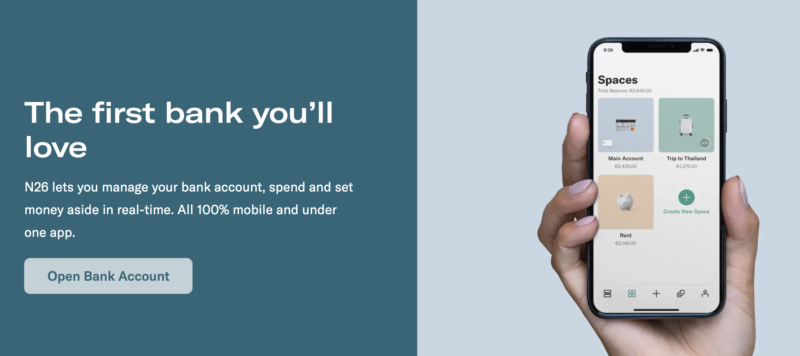
1. N26 — Best Overall for Expats in Spain

N26 is my top pick, and it has been for years. It’s a German bank (licensed by BaFin, Germany’s financial regulator), but it assigns every Spanish customer a genuine Spanish IBAN. You get all the protection of a German bank with an account that behaves like a local one.

This matters more than it might seem. I’ve had zero issues setting up direct debits with Spanish companies using my N26 IBAN — utilities, subscriptions, everything. It just works in the way a Spanish IBAN is supposed to work.

A few things that make N26 stand out beyond the IBAN:

  • Desktop access. Most neobanks are mobile-only. N26 has a proper web interface, which matters when you’re doing anything requiring a real screen.
  • Clean, fast app. Instant notifications, clear transaction history, easy controls for freezing your card or adjusting limits.
  • Bizum support. Available on all plans, so you can split a restaurant bill or pay the plumber without friction.
  • Wise integration. International transfers are handled through Wise directly inside the app, which means mid-market exchange rates when sending money abroad.
  • €100,000 deposit protection under the German Deposit Guarantee Fund.

N26 has over 8 million customers across Europe, and it’s been operating since 2013 — this is not a startup experiment. That said, it’s Europe-only; if you move outside the EU, your account gets closed.

N26 Plans in Spain

  • Standard — Free. No monthly fee, Spanish IBAN, Mastercard debit card, Bizum. This is all most people need.
  • Smart — €4.90/month. Adds sub-accounts (Spaces), partner discounts, and a choice of card colors.
  • Go — €9.90/month. Travel and purchase insurance through Allianz, unlimited free ATM withdrawals abroad.
  • Metal — €16.90/month. Premium metal card, comprehensive insurance package, airport lounge access discounts, higher ATM limits.

The free Standard account is genuinely good. I’ve used it as my primary Spanish account without ever feeling like I was missing something essential.

Read my full N26 review for a deeper breakdown.

Open an N26 Account

2. Revolut — Best for Everyday Spending and Travel

Revolut is the most feature-rich neobank out there and, with 70+ million customers, it’s become the de facto spending card for anyone traveling through Europe. Currency exchange at interbank rates, instant spending notifications, easy card controls, a solid budgeting interface — it’s genuinely excellent for day-to-day use.

Revolut now offers Spanish IBANs. If you open a Revolut account in Spain today, you’ll automatically get an ES IBAN. Existing customers with Lithuanian IBANs are being migrated to the Spanish branch — once migrated, you get an ES IBAN as your primary identifier (your old LT IBAN still works). So the old objection about Revolut not working for Spanish direct debits is no longer valid.

That said, I still rank N26 above Revolut as a primary Spanish account. N26 gives you desktop access (Revolut is mobile-only), BaFin regulation (the strongest in Europe), and a longer track record of seamless Spanish IBAN functionality. Revolut is the better spending and travel card; N26 is the better bank account.

That said, Revolut earns its place as a powerful companion account. Use it for:

  • Spending abroad — currency exchange at interbank rates with no markup on the standard daily limit
  • Splitting costs with friends through the app
  • Holding and converting between multiple currencies
  • Budgeting and analytics features
  • Cryptocurrency and stock trading (paid plans)

One significant limitation: Revolut is mobile-only. There is no desktop interface. If you prefer to manage your finances from a computer, that’s a real constraint.

Revolut Plans in Spain

  • Standard — Free. Currency exchange up to a monthly limit, basic card controls, Bizum.
  • Plus — Low monthly fee. Priority customer support, purchase protection, higher limits.
  • Premium — €8.99/month. Unlimited currency exchange, overseas medical insurance, higher ATM limits.
  • Metal — €15.99/month. Metal card, cashback on card payments, comprehensive travel insurance.
  • Ultra — €45/month. Concierge service, highest limits across the board, exclusive Ultra card.

The free Standard plan is useful for travel and currency exchange. Most expats living in Spain will find Standard or Plus sufficient as a secondary card.

Read my full Revolut review or the N26 vs Revolut comparison if you’re deciding between the two.

Open a Revolut Account

3. Wise — Best for International Transfers and Multi-Currency

Wise (formerly TransferWise) isn’t a bank — it’s an Electronic Money Institution regulated by the FCA in the UK. That distinction matters: your money is safeguarded but not covered by traditional deposit insurance schemes the way a licensed bank would be.

For international transfers, though, Wise is in a category of its own. It uses the mid-market exchange rate — the real rate you see on Google — and charges a transparent, low percentage fee. No hidden spread, no inflated exchange rates, no surprise charges on the receiving end.

The Wise account also gives you local bank details in over 10 currencies, including EUR, GBP, USD, and AUD. If you receive income in multiple currencies, or regularly send money to family abroad, this is genuinely useful.

Where Wise fits in a Spanish banking setup:

  • Receiving international payments in foreign currencies
  • Sending money internationally (especially outside the EU)
  • Holding balances in multiple currencies simultaneously
  • Complementing N26 when you need to do cross-currency transfers

I wouldn’t use Wise as a standalone Spanish account — it’s not designed for that. But as part of a multi-account setup alongside N26, it covers a gap that neither N26 nor Revolut quite fills for complex multi-currency needs.

Read my full Wise review for more detail on how it works.

Open a Wise Account

4. BBVA — Best Traditional Spanish Bank

If you need a traditional Spanish bank — for a mortgage, for dealing with Spanish bureaucracy that insists on a “real” bank, or simply as a backup — BBVA is the one I’d point you toward.

Their Cuenta Online is genuinely commission-free — no maintenance fees, no minimum balance requirements, no conditions. This is notable in Spain, where even “free” accounts often have hidden strings attached. BBVA’s mobile app has consistently won awards and is far better than anything offered by Caixabank or Santander. They also offer English-language service, which alone puts them ahead of most Spanish banks.

BBVA won’t replace N26 as your primary account — the experience isn’t as clean, and you’ll occasionally have to deal with branch visits and Spanish-language bureaucracy — but it’s the most competent of the traditional options and worth having in your toolkit for situations where a local bricks-and-mortar bank is required.

Open a BBVA Cuenta Online

Banks to Avoid (or Be Cautious About)

Sabadell

I had an account with Sabadell for a while and I’d steer clear. The fee structure is opaque, customer support is poor even by Spanish banking standards, and their online banking interface — despite recent updates — still feels like it was designed in 2008. There are better options at every price point.

ING España

ING used to be my top recommendation for commission-free banking in Spain, and for a while it genuinely was. Then things went sideways.

ING has a policy of letting all incoming international transfers through without question — and then, months later, suddenly demanding documentation about every single one of them. I’m talking about transfers that were already processed and settled. They wanted proof of origin, invoices, contracts — for transactions that in some cases were years old. Retrieving all of that is enormously time-consuming and stressful, especially when you’re a freelancer or business owner with complex income sources.

Worse, during the COVID crisis they blocked clients’ accounts while all of this was going on. People who needed access to their money — during a pandemic, when families were under real financial pressure — were locked out. I find that kind of behavior indefensible. A bank’s job is to help during difficult times, not pile on more difficulty.

Their customer support is phone-only, with long wait times, and the staff can barely answer basic questions. On top of all that, the Cuenta NÓMINA is now conditional — you need a minimum monthly salary deposit to keep it fee-free, which rules out most freelancers and self-employed people.

Stay away from this bank.

Caixabank, Santander, and the rest

Spain’s big traditional banks are fine if you have no choice — and sometimes you genuinely don’t, for certain mortgages or specific financial products. But as primary accounts for day-to-day use, they’re expensive, bureaucratic, and their digital products lag far behind the neobanks. Unless you specifically need something only they offer, there’s no good reason to use them.

Documents You’ll Need

This is where a lot of people get stuck. Here’s what each type of account typically requires.

Traditional Spanish Bank (First Account)

Opening your first account with a traditional bank in Spain usually requires:

  • Valid passport or EU national ID card
  • NIE (Número de Identificación de Extranjero) — your Spanish tax identification number
  • Proof of address in Spain (rental contract, utility bill, or padron municipal certificate)
  • Proof of income or employment (payslip, employment contract, or tax declaration)
  • In some cases: proof of legal residence status

Getting your NIE is the critical step. Without it, most traditional banks won’t open an account for you. The NIE application process involves a trip to a police station (or a Spanish consulate if you’re applying from abroad) and can take weeks. Sort this out early.

Traditional Spanish Bank (Second Account, Once You Have NIE)

Once you have an NIE and an existing Spanish bank account to show, the process is much simpler. Most banks will only need:

  • Passport or national ID
  • NIE
  • Your existing Spanish bank account details

Digital Banks (N26, Revolut, Wise)

This is where the neobanks shine. The requirements are minimal:

  • Valid passport or national ID
  • A smartphone for identity verification (selfie + document photo)
  • An email address

No NIE required. No proof of address. No visit to a branch. The verification is done entirely in-app and usually takes less than 10 minutes. For most expats, this means you can have a working N26 account within a day of arriving in Spain, long before you’ve sorted out the Spanish bureaucracy required for a traditional account.

The Discrimination Reality

I want to be direct about something that gets glossed over in most expat banking guides: banks in Spain discriminate, and they do it routinely.

My wife is Russian. She was refused by multiple Spanish banks before we found one that would open an account for her — not because of any issue with her documentation or finances, but simply because of her nationality. The refusals came without explanation, in the way that Spanish bank staff sometimes refuse things without telling you exactly why.

I’m Maltese — an EU citizen. I was refused at one bank despite Malta being a full EU member state. The staff member apparently wasn’t familiar with Malta and decided that was grounds for refusal. No appeal, no escalation, just a polite no.

This is the reality for a lot of non-Spanish, non-Western European people living here. The discrimination is usually informal rather than codified policy, but it’s consistent enough that you need to account for it. Traditional banks have discretion in who they accept, and they use it.

The practical implication: digital banks like N26 and Revolut don’t have this problem. Their verification is automated and nationality-blind. If your documents are valid and you pass the KYC check, you get an account. This is one of the strongest arguments for making a neobank your primary account rather than trying to force a relationship with a traditional Spanish bank that may not want your business.

My Recommended Setup

Here’s what I’d suggest for most expats in Spain in 2026:

  • Primary account: N26 Standard — free, Spanish IBAN, works for all direct debits, desktop access, Bizum. This is your main account.
  • Secondary account: Revolut Standard or Plus — use it for travel, foreign currency spending, and any situation where the Revolut feature set is useful.
  • International transfers: Wise — whenever you’re sending money outside Spain or receiving income in another currency.
  • Traditional backup: BBVA Cuenta Online — keep one if you eventually need it for a mortgage, for Spanish bureaucracy, or as a fallback. But don’t pay fees for it.

For a broader look at digital banking options across Europe, see my guide to the best online banks in Europe. If you’re also looking at investment accounts, I’ve covered the best stock brokers in Spain separately.

Spanish Banking Glossary

Spanish bank documentation loves jargon. Here’s a quick reference for the terms you’ll encounter most often.

  • Cuenta corriente — Current account. Your standard everyday bank account.
  • Cuenta de ahorro — Savings account. Usually offers a small interest rate and may have withdrawal restrictions.
  • Tarjeta de débito — Debit card. Linked directly to your account balance.
  • Tarjeta de crédito — Credit card. Spend now, pay later. Spanish banks often push these aggressively — be careful about accepting credit products you don’t need.
  • Domiciliación — Direct debit. The instruction you give to allow a company to pull payments from your account. This is why the Spanish IBAN matters — many Spanish companies will only accept domiciliaciones from ES IBANs.
  • Transferencia — Bank transfer. Standard SEPA transfer.
  • Bizum — Spain’s instant peer-to-peer payment system, linked to your phone number. Essential for splitting bills with Spanish people. Available on N26 and Revolut.
  • NIE (Número de Identificación de Extranjero) — The tax ID number required for most financial and legal activity in Spain as a foreigner. Get this sorted early.
  • DNI (Documento Nacional de Identidad) — Spanish national ID. Only applicable if you’re a Spanish citizen.
  • Comisión de mantenimiento — Account maintenance fee. What you’re trying to avoid.
  • Seguros — Insurance products. Spanish banks cross-sell these constantly. Home insurance, life insurance, payment protection — often attached as conditions to loans or mortgages. Read the fine print before agreeing to anything.
  • Hipoteca — Mortgage. Spanish mortgage law changed significantly in 2019, giving borrowers more protections. If you’re buying property, get independent legal advice.
  • Comisión por descubierto — Overdraft fee. Going into negative balance in Spain triggers automatic fees that can compound quickly. Keep a buffer.

Final Thoughts

Spanish banking in 2026 is genuinely better than it was a decade ago, largely because the neobanks forced the traditional players to improve. But the underlying culture — the bureaucracy, the discrimination, the preference for complexity over clarity — hasn’t changed much.

The smart move is to stop fighting the system and work around it. N26 gives you a Spanish IBAN without the Spanish banking experience. Revolut handles your travel and currency needs. Wise takes care of international transfers. And if you ever need a traditional Spanish bank, BBVA is the least painful option among the incumbents.

That combination covers everything. Use it.

Filed under: Banking, Money

Best Online Stock Brokers in Spain 2026

Last updated: March 10, 202667 Comments

Best Online Stock Brokers in Spain

Investing from Spain is perfectly doable. But it comes with a bureaucratic layer that investors in the UK, Germany, or the US simply don’t have to deal with. If you’re choosing a broker as a Spanish tax resident, you can’t just pick the cheapest option — you need to factor in tax reporting obligations, the Modelo 720, and how different broker structures affect your annual filing burden.

I’ve been investing from Barcelona since 2013. I’ve navigated Modelo 720 filings, dividend withholding credits, and the joys of explaining foreign brokerage accounts to Spanish tax advisors. This article covers what actually matters for investors living in Spain — the tax context, which brokers make sense here, and why for passive index fund investors, the answer might surprise you.

If you want deep-dive reviews of the major European brokers — Interactive Brokers, DEGIRO, Scalable Capital, eToro, and Trading 212 — I’ve covered those in detail in my Best Online Stock Brokers in Europe guide. This article focuses specifically on the Spain angle.

Why Spain Makes Broker Selection More Complicated

Spain has a functioning stock market and a reasonably sophisticated financial system, but Spanish banks and brokers are — in my experience — expensive, bureaucratic, and not particularly investor-friendly. The big banks (Santander, BBVA, CaixaBank) offer brokerage accounts as an afterthought, with commissions that have no place in a serious investment strategy.

The result is that most savvy Spanish investors end up with foreign brokers. That’s fine — and for many asset classes, it’s clearly the better choice. But it creates a reporting burden that doesn’t exist if your assets stay in Spain.

The two obligations you need to know about:

  • Modelo 720 — Annual declaration of foreign assets (bank accounts, securities, real estate) with a combined value over €50,000. Filed with the Agencia Tributaria. Miss it or get it wrong and you’re looking at potential penalties.
  • Modelo D-6 — Annual declaration of investments in foreign companies and funds. Less talked about than Modelo 720 but also mandatory. Filed with the Registro de Inversiones at the Ministry of Economy.

Neither of these declarations means you owe more tax — they’re disclosure obligations, not tax events. But they add administrative complexity and, if you’re paying an accountant to handle them, real cost. This is the lens through which you should evaluate broker choice in Spain.

The Modelo 720 Question

Modelo 720 was introduced in 2012 during Spain’s financial crisis, ostensibly to catch capital flight. The original penalty structure was savage — disproportionate to the point that the EU Court of Justice ruled it incompatible with EU law in January 2022. Spain revised the penalties. But the filing obligation itself remains.

The threshold is €50,000 per asset category (bank accounts, securities, real estate) held outside Spain as of December 31. If you hold more than €50,000 in a foreign brokerage account, you file. Once you’ve filed an initial declaration, you only need to refile if the balance has increased by more than €20,000 since the last declaration, or if you’ve closed positions.

In practice, if you’re a serious long-term investor with a growing portfolio, you’re filing Modelo 720 every year or every other year. It’s not the end of the world — I do it annually and it’s become routine — but it’s something to plan for. I have a full guide to Modelo 720 in Spain if you want the details.

The key broker implication: assets held at a Spanish broker do not trigger Modelo 720. If your entire portfolio lives at a Spanish institution, this obligation disappears entirely.

MyInvestor: The Best Option for Spanish-Based Passive Investors

If your investment strategy is buy-and-hold index funds — which is mine, and which I’d argue is the right approach for most people — then MyInvestor deserves serious attention.

MyInvestor is a Spanish neobank and broker backed by Andbank, a well-established Andorran banking group. It’s regulated by the Banco de España and covered by the Spanish deposit guarantee scheme (FGD) up to €100,000. Not a startup. Not a crypto platform dressed up as a broker.

Here’s what makes it stand out for index investors in Spain:

Commission-Free Index Fund Investing

MyInvestor gives you access to institutional-class Vanguard and iShares index funds with zero purchase commission. These are the same funds used by pension schemes and large institutional investors — low expense ratios, broad diversification, the real thing. Access to these funds through a Spanish bank with no entry fees is genuinely unusual.

The Traspaso Tax Advantage

Spain has a tax rule that exists nowhere else in Europe: you can switch between investment funds without triggering a taxable event. This is called a traspaso (fund transfer), and it’s one of the most valuable tax tools available to Spanish investors.

In practical terms: if you hold a Vanguard Global Stock Index Fund and want to rebalance into a bond fund, you can make that switch without paying capital gains tax on the accumulated gains. The tax is deferred until you eventually sell out of the fund system entirely. Over a long investment horizon, this is a meaningful compounding advantage.

The catch: this only works with funds domiciled or registered with a Spanish share class. ETFs don’t qualify — only mutual funds (fondos de inversión). And both the source and destination fund need to be available at the same broker, or the broker needs to support outgoing transfers.

MyInvestor supports traspasos between its fund range. This alone makes it worth considering for anyone building a long-term fund portfolio in Spain.

No Modelo 720

Because MyInvestor is a Spanish entity, assets held there are not foreign assets. No Modelo 720 filing. No Modelo D-6. Your Agencia Tributaria reporting is straightforward — MyInvestor provides an annual tax report and pre-populates the relevant sections in the Renta declaration.

For investors approaching or above the €50,000 threshold, this is a real practical advantage.

Robo-Advisor Option

If you want a fully automated approach, MyInvestor offers a robo-advisor product that builds and rebalances a diversified index fund portfolio based on your risk profile. The fees are low by Spanish standards. It’s a reasonable option for investors who want simplicity over control.

My take: if you’re comfortable choosing your own funds, skip the robo-advisor and build the portfolio yourself. The fund selection at MyInvestor is good enough that you don’t need the wrapper.

Open a MyInvestor Account

International Brokers for Spanish Residents

For investing in individual stocks, ETFs, and assets beyond what Spanish brokers offer, international brokers remain the better choice. They’re cheaper for stock trading, offer broader market access, and have better platforms. The trade-off is the Modelo 720 and D-6 filing obligations if your holdings exceed the thresholds.

I use DEGIRO as my primary broker for ETF and stock investing. It’s solid, low-cost, and the platform works well for buy-and-hold investing. For more active traders or those with larger portfolios, Interactive Brokers is the professional-grade option — deeper market access, better margin rates, more sophisticated order types.

For detailed reviews of each broker — fees, platforms, pros, cons — see my Best Online Stock Brokers in Europe guide. What follows here is the Spain-specific context for each.

DEGIRO — Spain Tax Notes

DEGIRO handles W-8BEN automatically, which reduces US dividend withholding tax from 30% to 15%. You’ll still need to declare this on your IRPF and claim a foreign tax credit for the 15% withheld — but at least you’re not giving the IRS 30% off the top. DEGIRO provides an annual tax report that makes this manageable.

Currency conversion costs are worth watching. DEGIRO charges a small FX fee when buying US-listed stocks in dollars. Not a deal-breaker for buy-and-hold investors, but it’s a real cost to factor in.

Modelo 720 applies once your DEGIRO portfolio exceeds €50,000. Read my full DEGIRO review for platform details.

Interactive Brokers — Spain Tax Notes

Interactive Brokers is the strongest all-round platform for sophisticated investors. For Spanish residents, it offers something valuable: clear, detailed tax reporting that makes Modelo 720 preparation straightforward. Their annual reports break down positions, valuations, dividends, and transactions in the format you need.

IB also handles W-8BEN and offers direct access to a huge range of international markets including European exchanges that DEGIRO doesn’t cover. If you’re investing in anything beyond mainstream ETFs and stocks, Interactive Brokers is worth the slightly higher complexity.

eToro — Spain Tax Notes

eToro is fine for commission-free stock investing, and the social/copy trading features appeal to a certain type of investor. From a Spanish tax perspective, it works like any other foreign broker — Modelo 720 applies above the threshold. Their tax reporting has improved but is still not as clean as DEGIRO or Interactive Brokers. Read my eToro review for the full breakdown.

Tax Guide for Spanish Investors

Understanding how your investment income is taxed in Spain is non-negotiable if you’re going to do this seriously. The Spanish tax system treats investment income separately from earned income, which is actually favorable compared to countries that tax everything at the marginal rate.

Capital Gains Tax (Ganancias Patrimoniales)

Capital gains from investments are taxed at the following rates in 2025/2026:

  • First €6,000: 19%
  • €6,000 – €50,000: 21%
  • €50,000 – €200,000: 23%
  • €200,000 – €300,000: 27%
  • Over €300,000: 28%

These rates apply to gains realized from selling shares, ETFs, and funds. Note that capital gains and losses can be offset against each other within the same tax year. Losses can also be carried forward for up to four years to offset future gains.

Dividend Taxation

Dividends are taxed using the same progressive scale as capital gains (the base del ahorro). Foreign dividends add a layer of complexity because they’re typically subject to withholding tax at source before they reach your account.

For US dividends specifically: without a W-8BEN form on file with your broker, the IRS withholds 30%. With a W-8BEN, it drops to 15% under the US-Spain tax treaty. That 15% withheld is claimable as a foreign tax credit in your Spanish Renta declaration, so you’re not paying double tax — you’re paying Spanish rates with a credit for what the US already took. Your broker should handle the W-8BEN; confirm that it does before investing in US-listed assets.

Modelo D-6

This one catches people off guard. Modelo D-6 must be filed annually with the Directorate-General of International Trade and Investments (part of the Ministry of Economy) whenever you hold investments in foreign companies or funds. The filing covers your position as of December 31 of the prior year and any transactions during the year.

It applies regardless of the amount — there’s no €50,000 threshold like Modelo 720. If you have a single share in a foreign company, technically you should file. In practice, enforcement has been patchy, but it’s a real obligation. If you work with a tax advisor (gestora), make sure they know about this one — not all of them do.

The Fund Switching (Traspaso) Advantage, Explained

This deserves more attention than it usually gets in personal finance discussions in Spain.

Most Spanish investors focus on fees and platform quality when choosing a broker. The traspaso advantage is less visible but potentially more valuable over a long time horizon.

Here’s a concrete example. Say you’ve built up €100,000 in a Vanguard Global Stock Index Fund over ten years. Your cost basis is €60,000 — so you’re sitting on €40,000 of unrealized gains. You decide you want to shift 20% into bonds as you approach your goals.

With an ETF (which you’d hold through DEGIRO or Interactive Brokers), selling €20,000 worth would trigger a capital gains event. Depending on your total gains for the year, you’d owe somewhere between 19% and 23% on the realized profit. That’s real money leaving your portfolio before you’ve even redeployed it.

With a fund held at MyInvestor via traspaso, you transfer the equivalent amount directly into a bond fund with no taxable event. The tax on those gains stays deferred — potentially for decades, continuing to compound in the meantime.

Over a 20-30 year investment horizon, the difference in after-tax outcomes is substantial. This is the kind of structural advantage that systematic investors should build around.

The limitations are real: traspaso only works between mutual funds, not ETFs; both funds need to be accessible at your broker; and the fund range available at Spanish brokers is narrower than what you can access via international platforms. But for the core index fund portion of a long-term portfolio, the traspaso makes a strong case for keeping that portion at MyInvestor.

My Setup and Recommendation

Here’s how I actually invest from Spain, for whatever it’s worth.

I use DEGIRO as my primary broker. Most of my portfolio is in ETFs — broad market index funds, mostly Vanguard and iShares. DEGIRO’s platform is good, the fees are low, and I’m comfortable navigating the Modelo 720 filing each year. It’s become a routine part of my annual tax process rather than a burden.

If I were starting fresh today — or if I were building a pure index fund portfolio without individual stock picking — I’d give MyInvestor serious weight, particularly for the traspaso advantage and the simplified tax reporting. The no-Modelo-720 benefit matters less to me personally since I’m already in the habit of filing it, but for someone just starting out and building toward that €50,000 threshold, keeping assets in Spain is a real simplification.

My practical recommendation for most Spanish investors:

  • For index fund investing (your core long-term portfolio): MyInvestor. No Modelo 720, traspaso advantage, Vanguard and iShares access, zero commission. Hard to beat for passive investors.
  • For ETF investing, individual stocks, or broader market access: DEGIRO for most investors; Interactive Brokers if you need professional-grade tools or access to non-standard markets.
  • For pure simplicity: MyInvestor only. Accept the narrower investment range in exchange for zero administrative overhead and the fund switching advantage.

One thing I’d avoid: putting serious investment capital with Spanish banks. The fees are still too high, the fund selection is often restricted to their own products, and the platforms range from mediocre to bad. There are better options.

If you’re new to investing in Spain and want broader context, my best banks in Spain guide covers the banking side. And if you’re looking at crypto as part of your portfolio, see my guide to buying Bitcoin.

The Spanish tax system for investors is genuinely manageable once you understand it. The Modelo 720 sounds intimidating, but after the first year it’s routine. The traspaso advantage is a legitimate edge worth using. And the broker options available to Spanish residents today — between MyInvestor locally and DEGIRO or Interactive Brokers internationally — are genuinely good.

Don’t let the bureaucracy stop you from investing. Figure out the filing requirements once, set up the systems, and get on with building your portfolio.

Open a MyInvestor Account

Open a DEGIRO Account

eToro is a multi-asset investment platform. The value of your investments may go up or down. Your capital is at risk. Past performance is not an indication of future results. Trading history presented is less than 5 complete years and may not suffice as basis for investment decision. Copy Trading does not amount to investment advice. Cryptoasset investing is highly volatile and unregulated in some EU countries. No consumer protection. Tax on profits may apply.

Filed under: Expat life, Money, Stock market

An Introduction to Padel (aka Paddle)

Last updated: March 20, 202323 Comments

Padel final Sevilla

Meet my favorite sport: Padel (or Paddle, as it is sometimes referred to in the English-speaking community).

My Padel Story

Until 2015, I’d been a football (soccer) fan all my life and I used to enjoy practicing this sport on a weekly basis with my friends back in Malta. It was my favorite sport by far. However, once I started playing padel it immediately replaced football’s place in my life. I became thoroughly addicted to this sport and many years later I still can’t get enough of it.

Before trying padel, I’d played a few racket sports sporadically, mostly tennis and table tennis, and I enjoyed both of them.

In 2015, while holidaying in Seville, I saw some people playing padel and I was captivated. I made a promise to myself to try out this strange sport whenever I had the chance. I had no idea what it was called back then.

I later learned that it was called padel and that it is very popular all around Spain. One of the first things I did upon my arrival in Barcelona was to attend a padel meetup. Thus I fulfilled my earlier promise. I was hooked from the very first match I played. Soon enough I was trying out different rackets and reading all the material I could get my hands onto.

Padel-Barcelona-friends

Padel is a very social sport, here’s a photo with some friends from the Barcelona meetup.

I took the sport very seriously and continue to enjoy watching and playing it. You can read about my full padel journey here.

So What is Padel?

Padel is a very social sport. It is always played in doubles format, unlike tennis where the main focus is on the singles matches. It is also very easy to learn compared to tennis, so you don’t even need lessons to start playing with your friends. This is especially true if you have played other racket sports in the past. Here in Barcelona, one can find various tournaments called Americanas which mean that everyone plays against everyone, changing partners for every match. As you can imagine you can get to know a lot of people during such tournaments. They’re the perfect place for expats to make new friends especially if you want to make some local friends.

The sport is essentially a combination of tennis and squash and is great for players of all ages and skills. The court is one-third the size of a tennis court and is enclosed with wire mesh and glass walls which you can play off when you need to. Rules are a mixture of squash and tennis, and use the same scoring system as tennis. Compared to tennis it is less focused on strength and more on tactics and psychology.

Padel in its current form was invented by Mexican millionaire Enrique Corcuera in the 1960s, although we can trace back its origins to 1890 when it was played by British sailors in the lower levels of their navy ships. The first padel courts in Spain were built in 1974, in Marbella. Spain counts with nearly 10,000 padel courts (about the same number as Argentina where the game was developed earlier), approximately 4 million regular players, and the number of registered players is continuously increasing. Sales of paddle rackets in Spain are nearly four times that of tennis rackets.

Padel is very popular in Spain and Argentina as it’s been played in these countries for decades, however, many other countries are experiencing a padel boom and are catching up. We might in fact be entering the golden age of Padel as it is currently the fastest-growing racket sport in the world.

With Spain being a very popular tourist destination, many tourists are getting introduced to Padel there and then taking their new-found hobby back to their countries. This is currently one of the main drivers behind Padel’s growth in Europe. World Padel Tour and Premier Padel, the biggest worldwide competitions, also help create interest outside of Spain.

Building padel courts is also a great investment opportunity since courts are smaller than tennis and the rental is paid by four people, therefore maximizing revenues. It is, therefore, more feasible to build padel courts versus tennis courts, especially in densely populated areas where the cost of land is very high.

Essential Padel Equipment

If you’re interested in trying padel, you’ll need the following equipment:

  1. Padel racket: Padel rackets are solid, perforated, and stringless. They are usually made of composite materials, such as carbon fiber or fiberglass, and are lighter than tennis rackets. When choosing a padel racket, consider factors such as weight, balance, and shape to find the one that best suits your playing style and skill level.
  2. Padel balls: Padel balls are similar to tennis balls but with slightly less pressure. Make sure to purchase balls specifically designed for padel, as using tennis balls can affect the gameplay and damage your racket.
  3. Court shoes: Proper footwear is crucial for playing padel, as it provides the necessary grip and support for the quick movements and changes of direction typical of the sport. Look for court shoes with padel-specific soles, good cushioning, and lateral support.
  4. Comfortable sportswear: Wear comfortable, breathable sportswear that allows for freedom of movement during the game. Padel-specific clothing is available, but any sportswear suitable for tennis or other racket sports will work just as well.
Padel Racquet

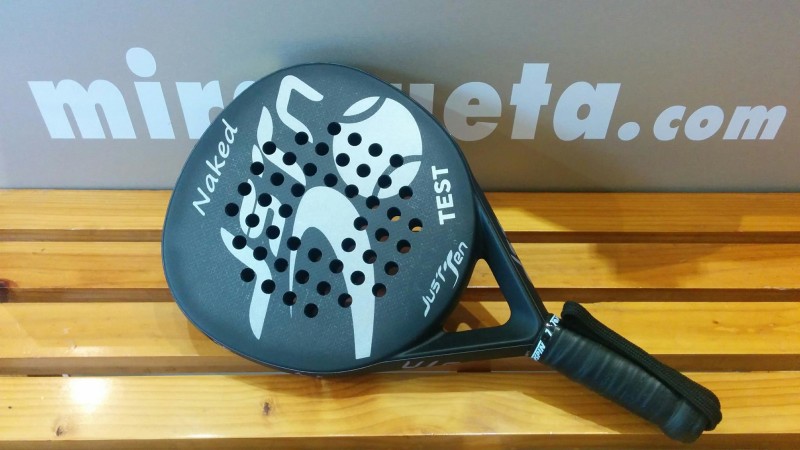
My racket

Watching Padel

At a professional level, both men’s and women’s matches are very exciting to watch. However, I’d say the women’s matches are better if you are watching to learn new techniques.

The men’s matches are more exciting as the points tend to be longer and crowd-pleasers such as smashes and out-of-court play are more common. However, since they are played at breakneck speed it’s hard to follow the particular movements of the players and hence harder to learn from. Of course you can always grab a recording and play it in slow motion to learn how your favorite player hits the ball. It’s just very hard to do so when you’re watching live games.

YouTube video

Padel tournaments are not only for the pros. Any padel player can also join amateur tournaments that are held in many cities in Spain. We are now seeing international amateur padel tournaments start to take place, as it’s becoming a profitable niche in the sports tourism sector.

If you’re in Barcelona you can join our Barcelona padel community on Facebook.

Have you ever played padel or seen it being played? I’d love to hear from padel players from all around the world!

Filed under: Padel

  • « Previous Page
  • 1
  • …
  • 84
  • 85
  • 86
  • 87
  • 88
  • …
  • 92
  • Next Page »

Latest Padel Match

Jean Galea

Investor | Dad | Global Citizen | Athlete

Follow @jeangalea

  • My Padel Experience
  • Affiliate Disclaimer
  • Cookies
  • Contact

Copyright © 2006 - 2026 · Hosted at Kinsta · Built on the Genesis Framework