Jean Galea

Health, Wealth, Relationships, Wisdom

  • Start Here
  • Guides
    • Beginner?s Guide to Investing
    • Cryptocurrencies
    • Stocks
    • P2P Lending
    • Real Estate
    • Forex
    • CFD Trading
    • Start and Monetize a Blog
  • My Story
  • Blog
    • Cryptoassets
    • P2P Lending
    • Real estate
  • Consultancy
    • Consult with Jean
    • Consult a Lawyer on Taxation and Corporate Setups
  • Podcast
  • Search

πŸ”₯ Mintos Review 2026 – My Results in 9 Years and Over €150,000 Invested

Last updated: January 15, 202695 Comments

Open a Mintos account

Mintos is a peer-to-peer lending platform in Europe. Like many other FinTech companies of this type, it is based in the Baltic region; in Latvia specifically.

Currently, Mintos has four offices employing more than 160 people in Riga, Vilnius, Berlin and Warsaw.

Mintos started operating in 2015 but has experienced rapid growth due to getting many things right and becoming popular with financial bloggers due to its ease of use and transparency.

The average interest rate is around 12%, with close to 500,000+ investors registered worldwide and 600m euros under administration.

Another important statistic to look at is the loan book growth, and here again, Mintos is doing very well as can be seen in the following screenshot.

Mintos loans funded statistics

The total money invested so far is higher than 8 billion Euros, which is a staggering number for such a young platform. There is no doubt that Mintos is the biggest player in P2P lending in Europe at the moment, with over 50% market share of the total p2p lending market. There are some good competitors, but none of them provide the security and track record that Mintos does.

The management team of Mintos is clearly displayed on the website with links to the Linkedin profiles of each person on the team. Mintos is currently the biggest employer in the P2P lending space.

Being able to view the team and also check out various YouTube videos with their CEO Martins Sulte enhances the feeling of transparency and peace of mind. I am one of those who take a look at these pages on a website and use them when judging whether I should invest on a platform or not. Everything counts.

I have personally interviewed Martins on my podcast Mastermind.fm, so be sure to check out that episode if you like podcasts.

Mintos is a platform that is in line with EU law, so when you invest you won’t have any trouble with your accountant or tax authorities back home in terms of explaining what you are doing.

Finally and very importantly, Mintos as a company is profitable, so they are not only running on investor money but are actually turning a profit, which means that they have a much higher chance of standing the test of time compared to some other competitors that are still in startup mode.

how mintos stacks up against other asset classes

The biggest number of investors come from Germany, Spain and the Czech Republic respectively, but this is mostly a reflection of those countries’ familiarity with this type of investing. There are more than 340,000 investors that have used Mintos and they come from 90+ countries.

More than 60 lending companies offer their loans on the Mintos platform, with over 25,000 people working at these companies and spread over 33 countries, so you can have a global reach when investing on Mintos.

The company supports 10 languages via its multilingual support team, while the website is available in 6 languages and there are loans available in 10 currencies.

[Read more…]

Filed under: Money, P2P Lending

Should You Invest in Peer-to-Peer Lending in 2026?

Last updated: March 10, 20268 Comments

The world looked very different for P2P lending investors in 2018. Bank savings accounts paid next to nothing. Government bonds were a joke. If you wanted your money to actually grow, you either accepted equity risk or you went looking for alternatives β€” and P2P lending, offering 10-15% annually, was a compelling answer.

That case is more nuanced today.

The ECB deposit facility rate sits at 2.00% as of early 2026 (down from a peak of 4.00%, but a world away from the near-zero rates of 2018). High-yield savings accounts in Europe now offer 2.0-2.3% at regulated neo-banks. The US 10-year Treasury yields around 4.1%. Investment-grade corporate bonds in USD yield roughly 4.5%.

None of this kills the P2P lending thesis. But it changes the calculation β€” and any honest assessment of whether you should invest in P2P lending in 2026 has to start from that reality.

P2P platforms solve two enduring problems:

  • Investors want returns above what mainstream instruments offer
  • Borrowers β€” individuals and small businesses β€” need access to credit at competitive rates

The question is whether the risk premium P2P lending offers is still worth taking. Let me walk through the comparisons, updated for where we actually are in 2026.

P2P Lending vs. Crypto Lending

By crypto lending, I mean platforms where you earn interest on crypto assets, or where crypto serves as collateral for loans. The mechanics differ from traditional P2P lending, but the role in a portfolio is similar: an alternative yield above what conventional instruments pay.

After the catastrophic failures of Celsius and BlockFi in 2022, the crypto lending space consolidated hard. The platforms that remained β€” including YouHodler and Nexo β€” survived partly through better risk management and partly through operating in jurisdictions with clearer regulatory frameworks. I’ve reviewed both recently and both remain operational.

The rates are attractive β€” YouHodler offers up to 20% APY on stablecoins, and Nexo offers up to 15% on fiat EUR β€” but the risk profile is meaningfully different from traditional P2P lending. You’re taking on custody risk, platform risk, and, in the case of crypto-collateralized loans, the volatility of the underlying assets. These are not equivalent risks.

I still think crypto lending platforms are worth considering as part of a diversified alternative yield portfolio, but I’d be cautious about sizing them too large given the sector’s history.

P2P Lending vs. Crowdfunding

Peer-to-peer lending is sometimes called crowdlending, and the distinction with crowdfunding matters. With product crowdfunding (think Kickstarter), you’re funding a project in exchange for the product itself β€” there’s no financial return to calculate. That’s a different beast entirely.

What’s more relevant as a comparison is real estate crowdfunding, where you’re participating in a deal and receiving a percentage return. I’ll cover that in the next section.

P2P Lending vs. Real Estate Deals

There are many ways to invest in real estate, but comparing apples to apples means looking at real estate crowdfunding platforms where you earn a stated yield.

In 2026, real estate crowdfunding equity projects in Europe are returning 9-13% IRR, while debt-based real estate lending projects typically yield 7-10% annually. These returns have actually risen compared to 2018 (when the typical range was 3-7%), largely because the underlying cost of capital has increased across the board.

So the gap between P2P lending and real estate crowdfunding has narrowed. In 2018, P2P at 12% versus real estate crowdfunding at 5% was a significant spread. Today, with real estate crowdfunding debt deals at 8-9% and P2P lending at 10-12%, the differential is smaller β€” and real estate debt has the advantage of property as collateral.

This makes real estate crowdfunding more competitive as an alternative. The choice increasingly comes down to liquidity preferences, loan type exposure, and how much you want to dig into individual deals.

P2P Lending vs. Bank Savings

This comparison has shifted the most dramatically since I last updated this article.

In 2018, bank savings accounts were effectively paying nothing β€” sometimes below inflation. Today, you can get 2.0-2.3% at regulated neo-banks like Trade Republic, N26, and Revolut on EUR deposits protected by EU deposit guarantee schemes up to €100,000. That’s not spectacular, but it’s no longer embarrassing.

Does this change the P2P lending calculus? It shifts it. P2P lending on a platform like Mintos (currently averaging around 11-12% on the primary market) still offers a substantial premium over bank savings β€” roughly 8-10 percentage points. But that premium comes with meaningful risk: platform risk, loan originator risk, and liquidity risk that simply doesn’t exist with a guaranteed savings account.

The right framing now: bank savings are a legitimate option for your emergency fund and short-term capital. They’re not a reason to skip P2P lending β€” but they’re also no longer a strawman in the comparison.

P2P Lending vs. Company Bonds

The bond landscape has changed significantly since 2018 too. Back then, bond yields were paltry β€” corporate investment-grade bonds in Europe were paying 2-3%, and making the comparison to P2P lending was almost unfair.

Today, US investment-grade corporate bonds yield around 4.5%, and EU high-yield bonds are in the 5-7% range depending on credit quality. The 10-year US Treasury sits at roughly 4.1%.

P2P lending still beats bonds on headline yield. But the comparison is now more genuinely competitive. A diversified investment-grade bond ETF gives you 4-5% with excellent liquidity, deep regulatory protection, and a mature secondary market. P2P lending offers potentially 10-12%, but with far less liquidity, no secondary market backstop, and the real possibility of capital loss on individual loans or originator defaults.

If you’re going to take meaningful credit risk (and both high-yield bonds and P2P lending involve credit risk), then P2P lending’s higher yield is still a reasonable reason to prefer it. But the “why would you own bonds at all?” argument that was easy to make in 2018 is much harder today.

P2P Lending vs. Stocks

Over the past five years (2021-2025), the S&P 500 delivered approximately 14.8% annualized total returns β€” exceptional by historical standards, driven largely by the dominance of US mega-cap technology companies. MSCI World has underperformed this on a pure basis, though global diversification has its own merits.

So stocks look like they’ve beaten P2P lending handily over this period. A few important caveats though.

First, those equity returns came with severe drawdowns β€” the S&P 500 was down roughly 18% in 2022. P2P lending delivered its 10-12% through that period with far lower volatility. Whether that matters depends entirely on your psychology and time horizon.

Second, past equity performance is not a forecast. Five years of exceptional US equity returns is not a baseline expectation going forward.

I still recommend stocks (particularly globally diversified index funds) as the core of a long-term investment portfolio. P2P lending makes sense as a complement β€” not a replacement β€” for a portion of your portfolio where you want yield with lower equity-market correlation.

Stocks, gold, and cryptocurrencies are separate conversations, but for completeness: none of these make P2P lending redundant.

Downsides of P2P Lending

Risk

P2P lending carries moderate-to-significant risk, and it’s worth being precise about the types. Platform risk (the platform itself collapses or freezes withdrawals) is the most dramatic β€” and it’s happened. Loan originator risk (the companies generating loans go bust) is the most common failure mode on Mintos-style marketplace platforms. And general credit risk (borrowers default at higher rates than expected) increases sharply during economic downturns.

Diversification across platforms, loan originators, and individual loans helps, but it doesn’t eliminate these risks. In a severe recession, all of those risks can materialize simultaneously.

The good news is that ECSP (European Crowdfunding Service Providers) regulation, which came fully into force in November 2023, has meaningfully raised the compliance bar for platforms operating in the EU. Platforms now require EU-wide authorization, follow standardized disclosure rules, and operate under proper regulatory supervision. The “Wild West” era of European P2P lending is over β€” which is mostly a positive development, even if some platforms exited the market during the transition.

Time Investment Required

Investing on a platform like Mintos can be as simple as enabling automated investing (their Core Loans portfolio), depositing money, and letting the algorithm handle allocation. That takes minutes.

But if you’re going to spread across multiple platforms, dig into loan originator financials, and actively manage your portfolio, you’re talking about a real time commitment.

I’ll be honest about something here. When I look at the income reports published by P2P investing bloggers, I often wonder how the math works. Spending 20+ hours a month to earn €100 in monthly interest doesn’t make financial sense. The explanation, in many cases, is that the real income is affiliate commissions β€” platforms pay bloggers well for referrals, which creates an obvious incentive to recommend platforms enthusiastically regardless of actual merit. I get those commissions too. Worth being transparent about that.

My practical recommendation: use automated investing tools and don’t let P2P lending consume your weekends. If a platform doesn’t offer a hands-off automated option, that’s worth weighing against the returns.

Advantages of P2P Lending

A Yield Premium That Still Exists

Despite the changed rate environment, P2P lending still offers a meaningful yield premium over mainstream alternatives. Mintos is currently averaging around 11-12% on its primary market. Bondora’s Go & Grow β€” a more liquid, hands-off product β€” pays a fixed 6% with daily liquidity. PeerBerry, Robocash, and other platforms cluster in the 8-12% range.

Compare that to 2.0-2.3% at neo-bank savings accounts, 4.5% on investment-grade corporate bonds, or the uncertain future returns of equities. The premium is still real, even if it’s no longer as overwhelming as it was when the risk-free rate was near zero.

The honest framing in 2026: P2P lending makes sense as a yield-enhancing allocation within a diversified portfolio. It shouldn’t be your only investment, but a 10-20% allocation to P2P lending across 2-3 platforms is a defensible position for someone with a medium-to-high risk tolerance and a multi-year time horizon.

Learning About Investing

This is a point I feel strongly about, and it doesn’t get stale.

When I started investing in P2P platforms and real estate crowdfunding, the explicit goal was to learn how different asset classes actually work β€” from the inside, with real money at stake. That experience is genuinely valuable.

You learn how credit risk is assessed. You learn what loan originator financials look like. You learn how liquidity works (or doesn’t) under stress. You experience the psychological reality of watching your portfolio value fluctuate, which no book can fully prepare you for.

What do you do when platforms start reporting elevated late loan rates? How do you react when a loan originator suspends repayments? And what does it feel like to earn steady yield during a year when equity markets are down 20%?

Knowing how you react to these situations is worth a lot. It helps you understand your actual risk tolerance, not the theoretical one you’d report on a questionnaire. And that self-knowledge makes you a better investor across everything you ever do.

The monetary return from a small initial P2P allocation may be modest. The education is not.

What This Looks Like in Practice

If you’re new to P2P lending and want to explore it, here’s how I’d approach it in 2026:

Start with one or two established, ECSP-licensed platforms. Use their automated investing tools β€” don’t try to hand-pick loans when you’re starting out. Invest an amount you’re genuinely comfortable not touching for 12-18 months. Watch how the platform handles periods of elevated defaults. Pay attention to your emotional reactions.

For a low-maintenance entry point, Bondora’s Go & Grow is worth looking at β€” 6% with daily liquidity, simple, regulated, no need to think about individual loans. For higher returns with more complexity, Mintos remains the most liquid and transparent option in Europe, and its Core Loans automated portfolio makes it reasonably hands-off.

You can read my detailed take on all the major platforms in my Best European P2P Lending Platforms article β€” I update it regularly and it covers current platform status, returns, and risks in more depth than is appropriate here.

A Final Note on Taxes

Whatever you decide, make sure you understand the tax treatment of P2P lending income in your country. It’s treated differently across jurisdictions β€” sometimes as capital gains, sometimes as ordinary income β€” and the difference can significantly affect your net return. I’ve covered P2P lending taxation in a separate post, which is a useful starting point before you check the specifics for your country of residence.

Conclusion

P2P lending is a legitimate investment option in 2026. The case for it is more nuanced than it was in 2018 β€” you can no longer point to near-zero bank rates and say the comparison is obvious β€” but the yield premium is real, the industry is more regulated than it’s ever been, and the platforms that survived the market consolidation of 2022-2023 are in better shape.

The honest answer to “should you invest in P2P lending?” is: probably yes, as part of a diversified portfolio, but not to the exclusion of stocks and other asset classes, and not without being clear-eyed about the risks.

Allocate what you can genuinely afford to leave alone for a couple of years. Use automated investing tools. Spread across 2-3 platforms. And use the experience to actually learn about how credit markets work.

My current top recommendation remains Mintos for its liquidity, platform maturity, and range of options. Bondora’s Go & Grow remains the best option if you want simplicity and daily liquidity above maximizing returns. And Twino has meaningfully improved under new management, focusing now on Polish consumer loans under MiFID II regulation.

Don’t just take my word for it β€” or any blogger’s. Read broadly, check the platforms’ own published statistics, and make an informed call with your own money.

Sign up to Mintos

Filed under: Money, P2P Lending

How P2P Lending and Property Crowdlending is Taxed in Spain

Last updated: September 29, 20225 Comments

Crowdlending is very popular in Spain, and I have written about my experience with property crowdfunding platforms in Spain before. For the purposes of this article, crowdlending and crowdfunding are interchangeable as they are treated the same for tax purposes.

This includes P2P lending platforms in Europe;Β as a Spanish resident this income will also be taxed according to the savings rates.

Any interest obtained is declared as benefits from movable capital. This is pretty much the same as profits obtained from deposits or dividends from stocks. You need to declare interest even if that same interest has been re-invested or never withdrawn from the crowdfunding platform. If you receive dividends in 2020, you will declare them in 2021; always one year later.

In the IRPF form, look for box number 23, where you will need to insert the total amount of profits, without discounting anyΒ retenciones imposed by the platform.

If you are receiving dividends from foreign crowdlending platforms, they will be declared in the same way as the Spanish ones. Remember that in the IRPF you declare your worldwide income. There is no other obligation to comply with when investing in foreign platforms.

Most Spanish crowdfunding platforms will automatically deduct 19% from your profits and declare them to Hacienda. Once you access your Hacienda account, you will be able to see all your retenciones.

Income from property crowdfunding is classified as savings income in Spain. There are the following tax bands in place:

  • Spanish tax rate on savings income up to €6,000: 19%
  • Spanish tax rate on savings income from €6,000 to €50,000: 21%
  • Spanish tax rate on savings income over €50,000 to €140,000: 23%
  • Spanish tax rate on savings income over €140,000: 27%

You might have noticed that the lowest band is 19%, and that is why the Spanish crowdfunding platforms automatically pay tax of 19% on your behalf. If your income from such platforms is higher than €6,000, you will have to pay additional tax according to the bands above.

If you are participating in property crowdfunding on platforms that are based outside of Spain, they will normally send you the full proceeds from any dividends or capital gains due to sales of property. You will then have to declare the income on your IRPF tax form, which is due for submission between April and June of the following year.

I hope that helps you understand what taxes you typically have to pay after investing in property crowdfunding platforms.

Note that you will also have to take into consideration the Modelo 720 when thinking about taxation and reporting. While modelo 720 does not require the declaration of any loans given out to thid parties, you might have idle cash sitting in your platform’s accounts and sometimes these need to be declared.

If you have any further questions let me know and I’ll do my best to answer them.

You can find more information about paying taxes in Spain on this site.

__________________
Please note that I am not an accountant or financial advisor, the above is the fruit of my personal research, and might contain inaccuracies. Before you submit any tax returns, I highly recommend you contact a tax consultant or accountant to check your numbers.Β 

Filed under: Money, P2P Lending

πŸ’Ά The Best European P2P Lending Platforms in 2026

Last updated: March 10, 202694 Comments

Best European P2P lending platforms

I’ve been investing in P2P lending since 2016. Over that time I’ve put real money into more than a dozen platforms, watched a handful fail, and seen others grow into properly regulated businesses that now manage hundreds of millions in investor assets.

The market looks very different in 2026 than it did when I started. Interest rates across Europe are no longer near zero, which changes the calculus on what counts as a good return. Platforms that survived the 2020 pandemic disruption and the 2022 war in Ukraine have proven something. And the regulatory picture has improved significantly β€” several platforms now hold MiFID II licenses, which gives investors meaningful legal protections.

Below are the platforms I currently consider the best options for European investors. I’ve invested in all of them personally. This is not a list of every platform that exists β€” I also maintain a list of platforms I’d avoid.

Best European P2P Lending Platforms in 2026

  • Mintos β€” read my review
  • Hive5 β€” read my review
  • Debitum β€” read my review
  • Lonvest β€” read my review
  • Swaper β€” read my review
  • PeerBerry β€” read my review
  • LANDE β€” read my review
  • RoboCash β€” read my review
  • Bondora β€” read my review

Let’s look at each platform in detail.

Mintos

Mintos P2P lending platform

Mintos is the largest P2P lending marketplace in Europe and the platform where I’ve put the most capital β€” 150,000 euros over the years. Founded in 2015 in Riga, Latvia, it now counts over 600,000 registered investors and has facilitated more than 16 billion euros in loans. Those aren’t marketing figures; they reflect a platform that has genuinely scaled.

What sets Mintos apart from most competitors is its regulatory standing. The platform holds an investment firm license from the Latvian Financial and Capital Market Commission (FCMC) and operates under the MiFID II framework. That gives investors real legal protections β€” not just a buyback guarantee backed by the word of a small loan originator. Returns currently average around 11-12% annually, with loan originators across more than 30 countries and a secondary market where you can exit positions if needed.

The auto-invest tool works well once you dial in the settings. I’d recommend studying the loan originator ratings carefully before you set it and forget it β€” not all originators on the platform carry the same risk profile.

See also: My full Mintos review β€” I’ve invested 150,000 euros

Sign up to Mintos

Hive5

Hive5 launched in 2022 and has quickly become one of my favorite platforms to watch. It’s incorporated in Croatia and operates primarily out of Vilnius, Lithuania. The platform has grown to over 19,000 investors with more than 83 million euros in loans funded β€” solid traction for a platform only a few years old.

Returns are at the higher end of what’s available in this space: 12-15% annually, with all loans covered by a buyback obligation if a payment is delayed beyond 60 days. The minimum investment is 10 euros, and the interface is clean and straightforward.

One caveat worth mentioning: Hive5 is not currently regulated by a financial authority, and there is structural overlap between the platform and some of its loan originators. That’s a concentration risk you should weigh up. I cover this in more detail in my review.

See also: My full Hive5 review

Sign up to Hive5

Debitum

Debitum focuses exclusively on business loans β€” secured, collateralized, and backed by tangible assets. It’s been operating since 2018, has over 10,000 registered investors, and has facilitated more than 74 million euros in loans. The platform runs a 90-day buyback guarantee with a 15% penalty applied to loan originators who delay repayments, which creates a real incentive for originators to stay current.

What I find particularly compelling about Debitum is its regulatory setup. The platform holds a MiFID II investment firm license from the Latvian FCMC β€” the same regulator that oversees Mintos. Returns average 9-12% annually. It’s a more conservative profile than some of the higher-yield platforms here, but the business loan focus and zero-default track record since launch give it credibility.

If you want exposure to SME lending with a proper regulatory backstop, Debitum is worth a close look.

See also: My full Debitum review

Sign up to Debitum

Lonvest

Lonvest P2P lending platform

Lonvest launched in 2023 and is the newest platform on this list. It targets returns of up to 13% annually, offers a 60-day buyback guarantee, and accepts a 10 euro minimum investment. The platform is unregulated, which is a meaningful risk given its short track record.

I’ve included it here because the early signals are positive, but treat it as a small allocation within a broader P2P portfolio rather than a cornerstone holding.

See also: My full Lonvest review

Sign up to Lonvest

Swaper

Swaper P2P lending platform

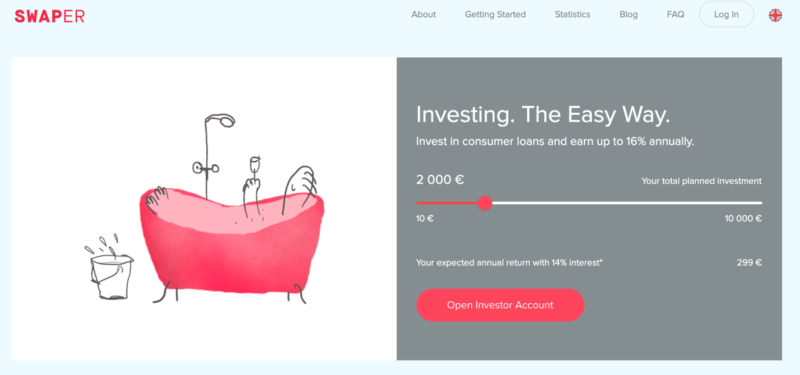
Swaper has been running since 2017 and has now passed 1 billion euros in total funded loan volume, with over 10,000 investors on the platform. It offers short-term consumer loans from originators operating in Spain, Estonia, North Macedonia, and Peru. The headline rate is 14% annually, rising to 16% for portfolios above 25,000 euros.

Effective yields land closer to 12-13% in practice once you account for cash drag β€” periods when funds sit uninvested waiting for new loans. The team navigated the pandemic and the 2022 geopolitical disruption without losses to investors, which is a track record that deserves credit. The platform is simple by design: there’s no secondary market, so you commit capital until loans mature.

See also: My full Swaper review

Sign up to Swaper

PeerBerry

PeerBerry P2P lending platform

PeerBerry launched in 2017 and has grown consistently since. The platform now has over 110,000 registered investors, has funded more than 3.24 billion euros in loans since inception, and paid out 48 million euros in interest to investors β€” 10.6 million of that in 2025 alone. Average annual returns sit around 11%.

The platform’s most notable achievement: it was the only P2P platform to fully repay investors affected by loans tied to war-impacted regions, returning all 51.4 million euros without a single euro under recovery. That’s not nothing. PeerBerry offers auto-invest and buyback guarantees across its loan portfolio. The interface is clean and the reporting is straightforward.

See also: My full PeerBerry review

Sign up to PeerBerry

LANDE

LANDE agricultural P2P lending

LANDE occupies a niche that no other platform on this list touches: agricultural loans for farmers in Eastern Europe, secured by first-rank mortgages on farmland and agricultural assets. Founded in 2019, the platform now has over 8,500 investors and has funded more than 32 million euros in loans.

Returns range from 10-14% annually. What stands out is the collateral structure β€” the average loan-to-value ratio on the platform is around 37%, which is extremely conservative. All loans carry first-rank mortgage security, meaning LANDE investors sit ahead of everyone else in the repayment queue in the event of default. To date there have been no capital losses for investors. LANDE also invests its own capital alongside investors in every project, which is the kind of skin-in-the-game arrangement that aligns incentives properly.

See also: My full LANDE review

Invest on LANDE

RoboCash

RoboCash has been running since 2017 and is fully automated by design β€” you set your parameters and the platform handles everything from loan selection to reinvestment. The platform is backed by the Robocash Group, a profitable consumer finance company with operations across Southeast Asia and Europe. Over 41,000 investors have used the platform, and total funded volume has passed 1.2 billion euros.

Returns range from 8-13% annually, with all loans covered by a 30-day buyback guarantee β€” the shortest buyback window on this list, which means you’re not waiting two months to recover capital from a delayed loan. The parent company reported a net profit of $4.7 million in the first half of 2024, reflecting an 18% year-on-year increase. That financial health matters: a strong parent is what gives buyback guarantees their actual value.

See also: My full RoboCash review

Sign up to RoboCash

Bondora

Bondora P2P lending platform

Bondora is one of the oldest platforms in European P2P lending, and I’ve been investing there since 2016. I’ve achieved a 17% return over the course of my time on the platform, though I should be honest that Bondora’s most visible product today β€” Go & Grow β€” operates at a fixed 6% rate rather than the higher returns available through manual or portfolio investing.

Bondora has been profitable for eight consecutive years, which is a statement very few platforms in this space can make. Go & Grow appeals to investors who want simplicity and daily liquidity at the cost of a lower yield. If you want higher returns, the standard portfolio products are still available, but they require more active management and come with more variability. Either way, Bondora’s longevity and profitability make it one of the most credible operators in the market.

See also: My full Bondora review

Invest on Bondora

What About Other Platforms?

There are plenty of platforms I haven’t listed here β€” and some of them I’d actively steer you away from. Not every platform that runs a nice-looking website and promises high returns deserves your money. Check my list of worst P2P lending platforms before committing capital anywhere. I maintain that list specifically because many reviewers in this space prioritize affiliate commissions over honest assessments.

Who Can Invest?

All nine platforms listed here accept investors from across the European Union. Most also accept investors from non-EU European countries. If you’re based outside Europe, some platforms will still accept you β€” check each platform’s registration flow for current eligibility rules.

Among European countries, Germany has historically had the largest concentration of P2P investors. German investors have driven significant volume on platforms like Mintos and PeerBerry. High purchasing power combined with low returns on traditional savings products made P2P lending an obvious fit, and that dynamic hasn’t disappeared even as European interest rates have risen from their post-2008 lows.

What Returns Can Investors Realistically Expect?

In 2026, realistic net returns on well-managed P2P portfolios across European platforms fall in the 8-12% range. That’s after accounting for cash drag, occasional defaulted loans, and any platform-level risks that materialize.

That range is worth contextualizing. European savings rates have risen from near zero to somewhere in the 2-4% range for short-term deposits, depending on the bank and country. High-yield bond ETFs yield 5-7%. P2P lending still offers a meaningful premium over both β€” but the spread has compressed compared to the 2015-2021 period when bank savings paid essentially nothing.

The platforms advertising 14-16% headline rates tend to have higher underlying risk, shorter track records, or significant cash drag that eats into effective yields. I don’t chase the top of that range. The platforms I weight most heavily in my own portfolio target 10-12%, with strong regulatory standing and multiple years of clean track record behind them.

Risks of P2P Lending

P2P lending is an alternative investment with real risks. Platform failure, loan originator default, liquidity risk, and regulatory change can all affect your returns β€” or your ability to access your capital at all. Buyback guarantees protect against individual borrower defaults but not against the insolvency of the loan originator making that guarantee.

I’ve written a detailed guide on whether P2P lending is safe that covers these risks properly. Read it before you invest.

Alternatives to P2P Lending

If you want to diversify your alternative investment allocation beyond P2P loans, European real estate crowdfunding platforms are the most natural complement. They typically offer similar yield ranges β€” 8-12% depending on the platform and deal structure β€” backed by property assets rather than consumer or business loans. The liquidity profile is different (terms tend to be longer) but the collateral quality can be higher.

Crypto yield products are not an alternative I’d recommend at this point. The collapse of Celsius, BlockFi, and several other centralized crypto lenders in 2022 wiped out significant investor capital. Whatever eventually emerges in that space will need a much longer track record before it belongs in the same conversation as regulated P2P platforms.

Conclusion

If you’re new to P2P lending and want to start somewhere sensible, I’d suggest opening accounts with Mintos, Hive5, or PeerBerry first. All three have real scale, track records that span at least one major market disruption, and interfaces that don’t require a manual to navigate.

Once you’re comfortable with how the asset class works, branching out across two or three additional platforms is a reasonable way to reduce single-platform concentration risk.

Before you invest, make sure you understand how P2P income is taxed in your country. I’ve written about how P2P lending is taxed in Spain, which may be useful if you’re a Spanish resident. And read my guide on the risks of P2P lending before putting real money to work.

Have you invested in any of these platforms? What has your experience been? Leave a comment below.

Filed under: Money, P2P Lending, Top Post

How Are Profits from Peer to Peer Loans Taxed?

Last updated: February 18, 20211 Comment

If you’ve been investing in P2P loan platforms such as Mintos or Twino, you will need to know how the profits you make will be taxed.

This is a general rule for all your investments. Always consider the tax impact of any investment you do. Different asset classes and investments can be taxed in different ways, so you need to look at that as it will affect your net return, sometimes in a drastic way.

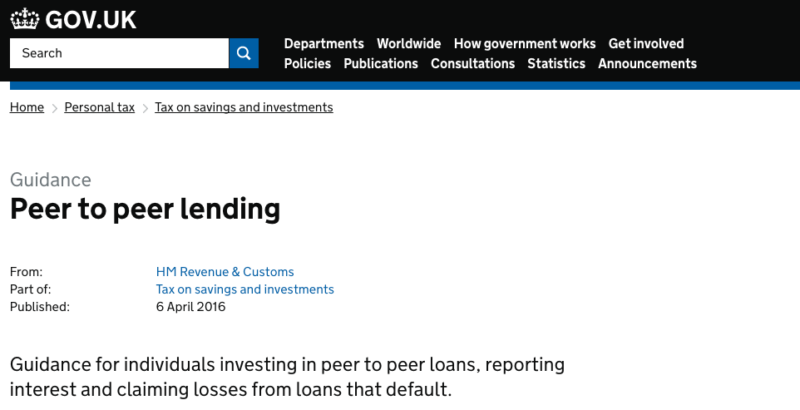
The UK tax authority has issued a good guide that should be applicable to many other countries in the EU too, although it’s always important to check with your country’s authorities for specific guidance.

The advantage of peer to peer loans for lenders is that they can generate higher interest rates that exceed the interest that could be earned from banks and other financial institutions.

P2P loan platforms alsoΒ give borrowers an alternative to the finance which they may get from standard financial intermediaries.

[Read more…]

Filed under: Money, P2P Lending

  • « Previous Page
  • 1
  • …
  • 4
  • 5
  • 6
  • 7
  • Next Page »

Latest Padel Match

Jean Galea

Investor | Dad | Global Citizen | Athlete

Follow @jeangalea

  • My Padel Experience
  • Affiliate Disclaimer
  • Cookies
  • Contact

Copyright © 2006 - 2026 · Hosted at Kinsta · Built on the Genesis Framework